

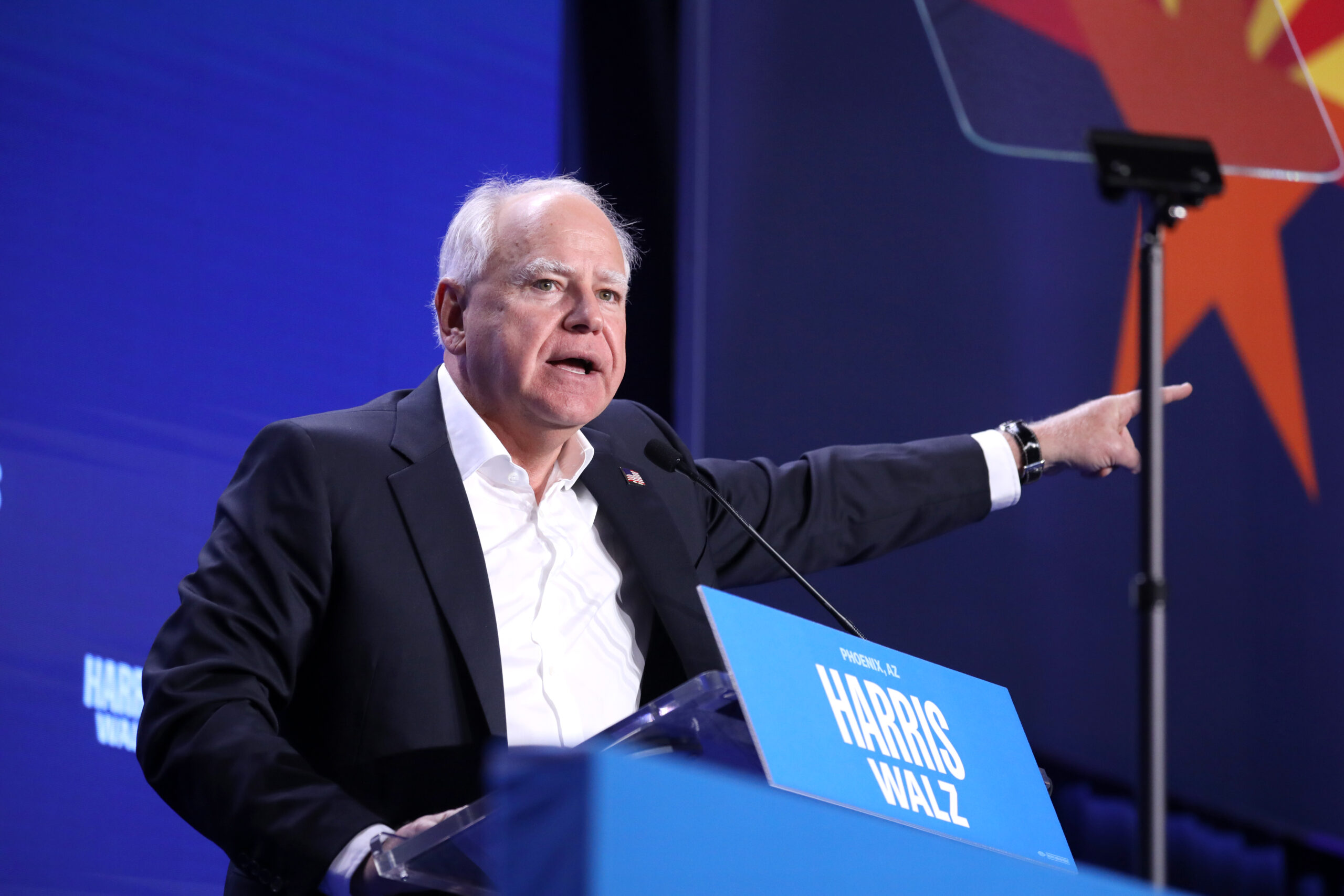
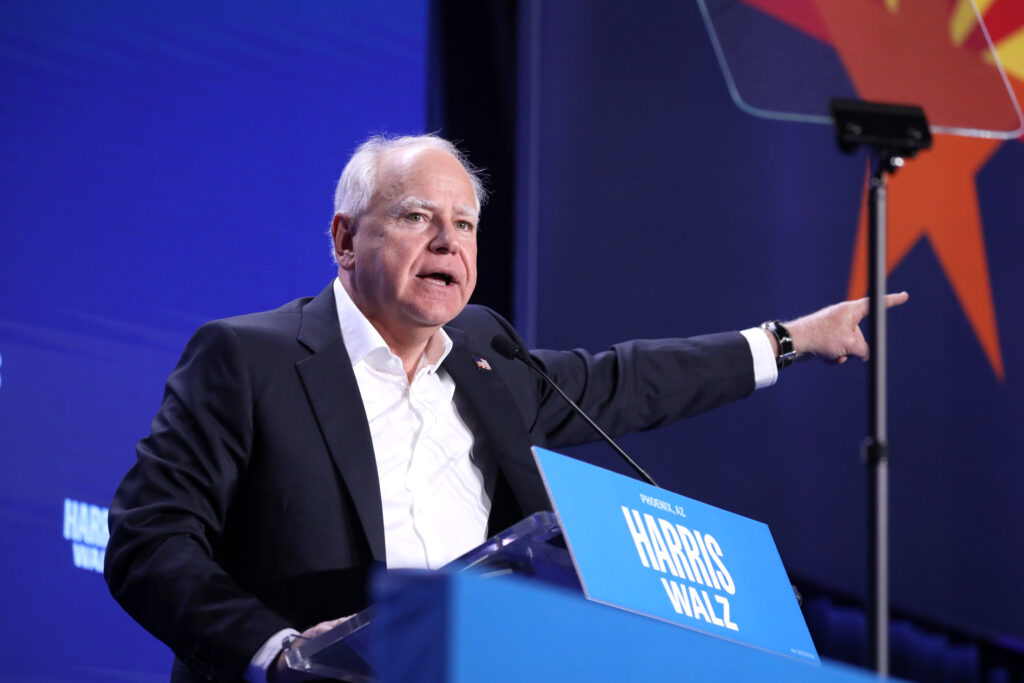
Minnesota Governor Tim Walz has turned a local immigration crackdown into a national flashpoint, warning that his state could slide into a story future generations read with the same horror as Anne Frank’s diary if leaders do not change course. His comparison of federal raids to Nazi occupation is not just a moral gut punch, it is a direct challenge to President Donald Trump’s use of immigration power inside a state that insists it did not ask for this fight.
At the center of the clash are heavily armed federal teams, a deadly shooting, and families who now plan their days around the possibility of an Immigration and Customs Enforcement knock at the door. Walz is betting that blunt language, and a very public confrontation with the White House, is the only way to stop Minnesota from becoming the kind of cautionary tale people study in history class instead of a place where kids feel safe walking to school.
The shooting that lit the fuse
The immediate spark for Walz’s warning was an ICE-related shooting that left a woman dead and turned a simmering policy dispute into a full-blown crisis. Federal agents opened fire during an operation in Minnesota, and state officials quickly made clear they did not accept the federal version of what happened or the level of force that was used. According to early accounts, the woman was in a car when agents said she posed a threat, a claim that local leaders have treated with deep skepticism as they demand answers from Washington and from the immigration teams on the ground.
Walz’s frustration hardened into open confrontation when he publicly called on President Donald Trump to pull federal agents out of the state, arguing that their presence was escalating tensions instead of keeping anyone safe. In one account, the Minnesota governor pressed Trump to remove the Immigration and Customs Enforcement officer teams after the shooting, insisting that the operation had gone badly wrong and that the community was paying the price for a federal show of force that Minnesota never requested. That demand, laid out as he described the shooting and its fallout, set the tone for everything that followed.
Walz moves to ready the Minnesota National Guard
Even as he blasted the federal operation, Walz signaled that he was not going to leave state residents to fend for themselves if the situation spiraled. He issued what he called a “warning order” to prepare the Minnesota National Guard, a step that does not immediately deploy soldiers but puts them on notice that they may be called up. The move underscored how seriously he views the risk of unrest or further violence around the immigration raids, and it sent a message to both the White House and local communities that the state is willing to use its own muscle to keep order on its own terms.
Walz has described Guard members as “soldiers in training” who could be activated if federal actions keep ratcheting up the pressure in immigrant neighborhoods. By putting the Guard on a formal footing, he effectively created a parallel security track that answers to Minnesota rather than to Washington. That step, which he tied directly to the ICE-related shooting that occurred in the state, was detailed when he explained his warning order and the conditions under which those soldiers might be sent into the streets.
Calling Trump directly and demanding ICE pullback
Walz has not limited his criticism to press conferences or social media posts, he has taken his case straight to President Donald Trump. After the shooting, Minnesota Governor Walz spoke with Trump and then went public with a blunt request: remove ICE agents from Minnesota and halt the raids that had already left one woman dead and entire neighborhoods on edge. In that conversation and in his public comments, he framed the issue as a basic question of whether the federal government would respect a state’s plea to stop an operation that local leaders say is doing more harm than good.
Trump, for his part, has tried to project calm, telling reporters that he and Gov. Walz are on a “similar wavelength” after their phone call, even as tensions in Minnesota remain high. The president has continued to defend the Immigration and Customs Enforcement officer involved in the shooting and the broader crackdown, signaling that he sees the operation as a necessary enforcement push rather than an overreach. That split screen, a governor warning of chaos and a president insisting they are aligned, was captured in coverage of Trump’s comments about being on the same page with Walz despite the tensions roiling Minnesota.
From policy dispute to Nazi occupation rhetoric
The clash might have stayed inside the usual boundaries of a federal versus state fight if Walz had not reached for one of the most charged comparisons in modern history. In public remarks, Tim Walz compared Trump’s ICE crackdown in Minnesota to the Nazi occupation described by Anne Frank, arguing that the atmosphere federal agents have created in immigrant neighborhoods echoes the fear and secrecy that defined her story. By invoking Nazi rule, he was not just criticizing tactics, he was accusing the Trump administration of importing a style of control that belongs in history’s darkest chapters, not in the Twin Cities.
Walz has been explicit that he sees a straight line between the way families are hiding from immigration sweeps and the way Anne Frank and her family hid from Nazi authorities. He has described Trump’s ICE presence in Minnesota as an occupation that residents never consented to, and he has framed the deployment of additional federal enforcement personnel as a moral crisis rather than a routine law enforcement decision. Those comments, which likened the crackdown to a Nazi occupation and criticized the influx of federal enforcement personnel to the state, instantly raised the stakes of the debate.
“Children hiding in their houses” and the Anne Frank echo
Walz’s most haunting line has been about the kids caught in the middle. He has said that Minnesota now has “children in Minnesota hiding in their houses, afraid to go outside,” a picture that deliberately mirrors the image of Anne Frank staying out of sight in an attic. Many of the governor’s supporters grew up reading that story, and he has leaned into that shared memory to argue that what is happening in his state is not some abstract policy dispute but a lived experience of fear that kids will remember for the rest of their lives.
In the same breath, Walz has warned that if leaders do not act, the story people tell about Minnesota could end up sounding uncomfortably close to the one they learned from Anne Frank’s diary. He has described the current situation as beyond normal politics, saying it defies ordinary description and demands a moral response rather than a technocratic one. His comments about children hiding, and his reference to how many of his listeners grew up with Anne Fra as a touchstone, are the clearest window into why he reached for such a heavy historical comparison.
Families, grief, and accusations of gaslighting
Behind the rhetoric are real families who have lost loved ones and now find their grief pulled into a national argument. Walz has pointed to the parents of those killed in the raids and related incidents, accusing the Trump administration of dragging their dead children into political spin instead of owning up to mistakes. He has said that to have “the most powerful man in the world” talk about a family’s loss with “absolutely no evidence” to back up his claims is a form of gaslighting that adds cruelty to tragedy.
Those accusations are aimed squarely at Trump and senior White House figures, whom Walz says are creating dangerous circumstances for everyone involved by justifying aggressive tactics after the fact. He has argued that the federal narrative around the shooting and the raids is designed to shift blame onto the dead and away from the agents who pulled the trigger or led the operations. His charge that Trump and his team are gaslighting the country, laid out in detail as he described how the administration talked about one family’s loss, was captured in reporting that quoted him saying the behavior defied all description.
Pressing Trump to end ICE operations in Minnesota
Walz has turned that moral argument into a concrete demand: he wants Trump to end ICE operations in Minnesota, not just tweak them. He has framed the request as a matter of state sovereignty and basic decency, saying that Minnesota Governor Tim Walz did not invite this level of federal enforcement and will not quietly accept it now that it has led to bloodshed. In his view, the only way to reset trust is to pull the agents out, pause the raids, and rebuild any future cooperation on terms that respect local judgment.
That push has included public letters, televised remarks, and direct appeals that tie the current crackdown to the kind of story people usually associate with faraway places and long-ago regimes. Walz has warned that if Trump refuses to change course, Minnesota risks becoming a case study in how a modern democracy allowed fear-driven policy to override its own values. His insistence that the president end the ICE operations in Minnesota is the practical flip side of his Anne Frank warning, a policy demand to match the historical analogy.
Online backlash, support, and “history’s gravest chapters”
Once Walz invoked Anne Frank, the internet did what it always does and split into camps. Some users accused him of trivializing the Holocaust, arguing that no modern American policy, however harsh, should be compared to Nazi atrocities. Others said he was exactly right to reach for that analogy, pointing out that history’s worst abuses often began with smaller steps that people dismissed as temporary or necessary. The phrase “history’s gravest chapters” started popping up as people debated whether Minnesota was now brushing up against those pages.
Netizens have dissected Walz’s language, the images of children hiding, and the footage of heavily armed agents moving through Minneapolis streets, trying to decide whether the comparison clarifies the stakes or inflames them. Many of the online arguments circle back to the same core question: does calling out echoes of Anne Frank help prevent a slide into something worse, or does it risk numbing people to the unique horror of the Holocaust. That debate, captured in coverage of how Netizens responded, has turned Minnesota’s immigration fight into a global conversation about how societies remember and use their darkest history.
Holocaust analogies, Operation Metro Surge, and what comes next
Walz has not backed away from the Holocaust framing even as critics push back. He has described the immigration sweep in Minneapolis as akin to the Holocaust in the sense that it forces people to hide in their own homes, afraid to step outside or answer a knock at the door. Minnesota Gov Tim Walz has tied that fear directly to Trump and the federal agents on the ground, saying that Trump and the operation’s commanders have created a climate that feels like occupation rather than law enforcement. His comments about kids hiding in houses, afraid to go outside, were highlighted as he blasted Trump and the federal agents behind the Minneapolis sweep.
At the same time, Walz has zeroed in on the specific federal initiative driving the raids, known as Operation Metro Surge, which he says has turned the Twin Cities into a testing ground for Trump’s hardest line on immigration. Minnesota Gov Tim Walz has argued that Donald Trump’s immigration crackdown in the Twin Cities, carried out under the banner of that operation, is exactly the kind of campaign that Anne Frank’s story warns against. His criticism of the Trump administration after the death of Alex Prettis and the shooting of Renee Nicole Good, and his description of the crackdown as echoing Nazi tactics, were laid out in reports on how he cited Anne Frank while attacking the Trump admin in the face of Operation Metro Surge.
More from Vinyl and Velvet:

Leave a Reply