

You watched the Super Bowl for football, but TPUSA turned the halftime into a culture war spotlight. That stunt didn’t bridge anyone’s gaps — it pushed people farther apart and turned a weekend spectacle into another political flashpoint. If you wanted unity, this was the opposite: TPUSA’s “All‑American” show amplified division more than it offered any common ground.
Expect a walkthrough of how the counterprogramming unfolded, who showed up, and how social and mainstream media reacted to the move. You’ll see why a stunt meant to rally a base instead became a mirror reflecting how polarized public rituals have become.
Keep an eye on the next sections for specific reactions, the lineup and platforms involved, and what this moment says about the Super Bowl now serving as a cultural battleground.
The All-American Halftime Show: How TPUSA Ignited the Divide
TPUSA staged a rival halftime event that framed cultural identity as a binary choice. The show prioritized patriotic symbolism and a curated lineup to directly challenge the NFL’s mainstream halftime headliner.
Origins and Purpose of the Alternative Halftime Show
Turning Point USA organized the All-American Halftime Show as a direct counterprogram to the Super Bowl halftime spectacle. You should know it began after comments about cultural representation amplified tensions, and TPUSA moved quickly to position its event as a celebration of “faith, family and freedom.”
The group pitched the show to appeal to conservative audiences dissatisfied with mainstream entertainment choices, framing it as a corrective to what it called elite cultural tastes. TPUSA presented the concert as both a political statement and a community event, aiming to convert cultural disagreement into a visible media moment.
The event’s promotional messaging and timing — starting minutes before the NFL halftime window — made it an intentional rival rather than a complementary performance.
Star Lineup and Notable Performers
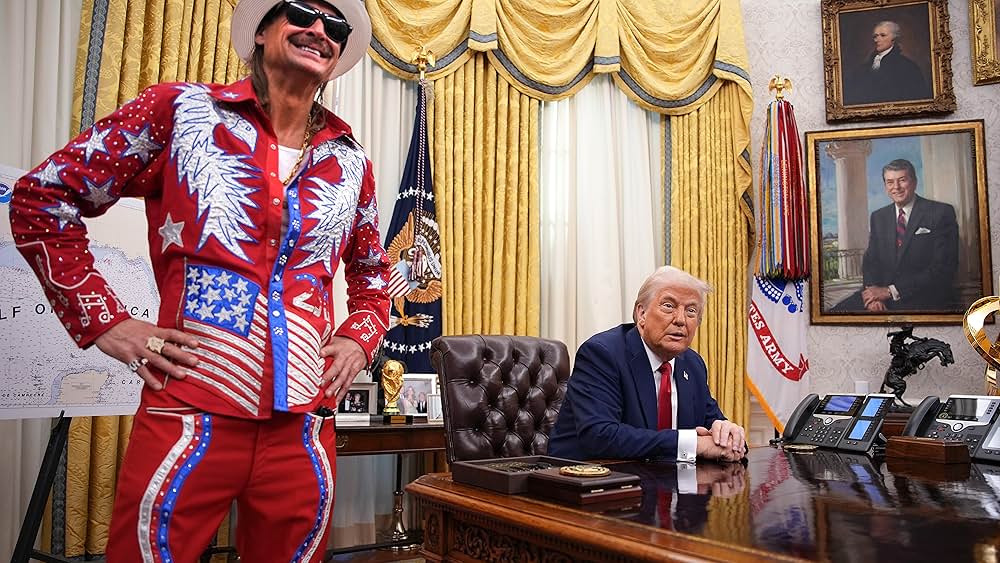
TPUSA assembled a roster of country and rock acts to reinforce its cultural message. You saw Kid Rock headline, with performances by Brantley Gilbert, Lee Brice, and Gabby Barrett among others.
Each artist carried specific appeal: Kid Rock’s persona bridges rock and conservative performance spaces; Gilbert and Brice represent contemporary country with working-class themes; Barrett brought mainstream country-pop recognition.
TPUSA also used production elements — pyrotechnics, lighted wristbands, and a tribute segment — to create a spectacle comparable to the Super Bowl experience. The group streamed the event on its platforms and reported multi-million viewer figures on its livestreams, signaling that the alternative drew measurable attention.
Contrasting Themes: Patriotism vs. Mainstream Entertainment
TPUSA emphasized overt patriotic visuals and lyrics that celebrated blue-collar identity and national symbols. You noticed song choices and stage rhetoric that highlighted the red, white, and blue and explicitly honored the organization’s founder.
The Super Bowl halftime show leaned into global pop culture and bilingual performance styles that aimed for broad, cross-demographic appeal. That contrast made the split about cultural values as much as musical taste.
Because TPUSA framed its production as a corrective, the event deepened polarization: it left little room for shared fandom and instead made the halftime moment a marker of political and cultural allegiance.
Relevant coverage and event details appear in TPUSA’s event page and reporting on the All-American Halftime Show. For the event overview, consult TPUSA’s official event description (https://www.tpusa.com/events/the-all-american-halftime-show).
Reactions and Fallout: From Social Media to Mainstream Media
The response fractured quickly: some viewers praised TPUSA’s event as a needed counterprogram, while many others saw it as a political stunt that deepened the divide around the NFL halftime choice. Coverage moved from viral clips and memes to cable-news panels and op-eds.
Public and Media Criticism
You saw immediate pushback across platforms after TPUSA announced the “All‑American Halftime Show.” Social feeds filled with clips contrasting the conservative lineup — including Kid Rock and country acts — with clips of Bad Bunny’s rehearsals for the NFL halftime show at Levi’s Stadium. Critics argued TPUSA’s event framed entertainment as culture-war theater rather than a community moment.
Mainstream outlets flagged mixed messaging: some columnists called the rival show a publicity play, while others questioned whether streaming the TPUSA concert on partisan outlets like The Daily Wire or OAN would actually reach a broad Super Bowl audience. Reporters noted that the move forced networks and the NFL to address politicized viewer expectations instead of focusing on the game.
Claims of Unity and Division
TPUSA marketed the event as a unifying, family-friendly alternative celebrating “faith, family, and freedom.” You likely noticed that claim landed differently depending on where you watched it. Supporters embraced the language as a corrective to what they described as the NFL’s politicized artist choice; opponents called it performative and exclusionary.
Analysts pointed to the paradox: a show billed as unifying arguably amplified partisan identity signaling. Coverage compared the stated intent to the real effect — more viewers sorting themselves by platform and political allegiance than converging on a single cultural moment. The NFL halftime show, meanwhile, retained its mainstream slot, complicating TPUSA’s claim it could replace the traditional halftime experience.
Celebrity and Political Responses
High‑profile reactions threaded through both entertainment and politics. Charlie Kirk promoted the TPUSA lineup aggressively, using social channels to spotlight performers and stream links. Jesse Watters and other right‑leaning commentators amplified the event on cable segments, urging viewers to switch channels during the break.
On the other side, entertainers and industry figures pushed back. Some country artists aligned with TPUSA faced criticism from peers who argued musicians should avoid partisan tie‑ins during a national broadcast. You heard Erika Kirk and others on social platforms debating whether mixing politics and halftime spectacle helps careers or just fuels backlash. The result: a polarized celebrity conversation that mirrored the larger media debate.
Broader Impact: The Super Bowl as a Cultural Battleground
The Super Bowl now functions as a contested stage where choices about culture, identity, and commerce play out in public. You’ll see clashes over who gets to represent “American spirit,” how audiences split their attention, and what lasting changes these fights leave for entertainment.
The Rise of Alternative Broadcasts
Alternative halftime broadcasts turned into a deliberate tactic in 2026 when Turning Point USA aired its All-American Halftime Show opposite Bad Bunny’s set. You might notice this isn’t just a single streaming event — TPUSA used social platforms (YouTube, X, Rumble) and allied networks to reach viewers who wanted a different tone from the traditional Super Bowl halftime spectacle.
That strategy signals a shift: political groups and niche media can program live, high-profile alternatives that mirror the structure of mainstream broadcasts. For you, that means major live events are now open terrain for organized counter-programming, and producers will plan shows knowing rival broadcasts can siphon both viewers and ad narratives.
Viewer Choices and Audience Fragmentation
You choose how to watch the halftime moment: the NFL’s production on broadcast TV or an alternative feed on social platforms. That decision reflects more than taste; it maps political, generational, and platform preferences. Younger viewers may stream clips and highlights, while other groups tune into a curated “patriotic” lineup during the same time slot.
Audience measurement becomes messier. Traditional Nielsen-style ratings capture one stream; social view counts and concurrent streams across platforms capture another. For you, that means advertisers and rights holders must reconcile fractured metrics to understand reach and influence.
Long-Term Effects on American Entertainment
Expect live event producers to factor ideological splits into planning. The Super Bowl halftime has become a test case: artists, brands, and networks will negotiate risk differently when rival broadcasts can refract public reaction instantly. You’ll see contracts with clearer content clauses and contingency promotion plans.
Culturally, this dynamic can accelerate niche programming and make large-scale events feel less “national” and more segmented. The Super Bowl’s role as a unifying spectacle weakens when alternative shows claim to represent an opposing vision of American culture. For you, that means future “cultural revolutions” in entertainment will more often be fought across simultaneous screens rather than in a single shared moment.
Where to Watch and Who Was Involved
The event streamed on multiple conservative-friendly platforms and leaned on familiar media partners to reach audiences outside the NFL broadcast. Performers included country and rock artists, while TPUSA organized promotion and distribution through its own channels.
Platforms and Broadcast Partners
You could stream the All-American Halftime Show directly on Turning Point USA’s social channels, including YouTube and X, and on Rumble. Partner platforms carried the show as well: Daily Wire+ offered the stream to subscribers, and conservative cable outlets such as One America News Network and Real America’s Voice aired the program for cable viewers. Some faith-focused and niche networks also carried the feed, expanding reach beyond social media.
Streaming links appeared on TPUSA’s site and social posts so you could find the stream without relying on mainstream services. This distribution mix targeted audiences who prefer non-NFL, right-leaning outlets and created multiple ways for viewers to tune in live.
Key Organizations and Stakeholders
Turning Point USA organized and branded the event as the “All-American Halftime Show,” so TPUSA handled booking, promotion, and the official streaming hubs. Media partners like Daily Wire+ provided a paid streaming outlet, while One America News Network and Real America’s Voice supplied cable distribution and promotional support. Smaller conservative or faith-based outlets — including TBN and niche streaming sites — took secondary feeds or reruns.
Artists billed for the show were drawn primarily from country and rock genres, chosen to appeal to the intended audience. You, as a viewer, encountered a coordinated effort: TPUSA set the agenda, partner platforms amplified the reach, and the talent lineup delivered the performance content.
More from Vinyl and Velvet:

Leave a Reply