

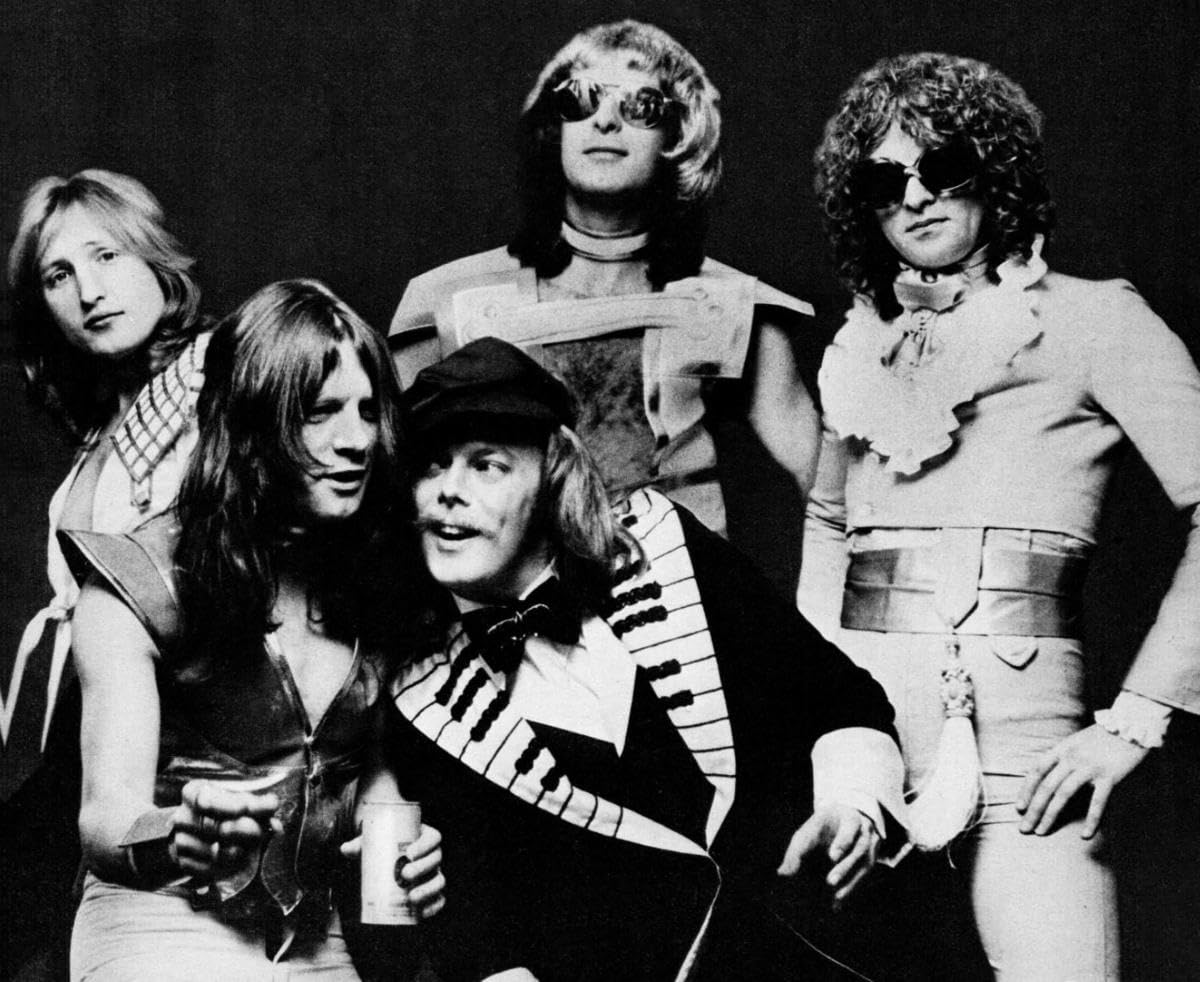
The glam rock crown has a new jewel, and it is not coming from the usual suspects like T. Rex or Roxy Music. Earlier this year, a panel of critics singled out Mott the Hoople’s 1972 single “All the Young Dudes” as the greatest glam rock song ever recorded, a verdict that instantly reignited debate among fans. The track, written and produced by David Bowie, has long been a cult favorite, but this latest accolade pushes it firmly into the center of the genre’s story.
For anyone who has ever shouted along to its chorus, the decision feels less like a surprise and more like overdue recognition. “All the Young Dudes” is not just a glitter-era anthem, it is the song that rescued a band on the brink and captured a generation’s mix of swagger, confusion, and hope in under four minutes.
How “All the Young Dudes” grabbed the glam rock throne
When a new ranking of glam rock singles landed earlier this year, it was “All the Young Dudes” that came out on top, named the greatest glam rock record of all time. The list zeroed in on singles, and this 1972 release rose above a crowded field of sequined heavyweights to claim the number one spot. The decision effectively anointed the track as the definitive glam statement, placing Mott the Hoople’s anthem at the center of a genre that once revolved around London clubs, stacked heels, and radio-friendly rebellion, a status underscored by the way critics framed it as the standout among classic glam hits in Key Points.
The choice also highlights how glam’s legacy has shifted over time. While early histories often centered on marquee names, this new coronation recognizes the way “All the Young Dudes” fused chart ambition with a more street-level sense of youth culture. The ranking, compiled by Uncut and reported in Feb, singled out the single’s impact and durability, noting that the song’s mix of singalong hooks and outsider attitude still feels fresh decades later, with All the Young topping the list as the ultimate glam rock single.
The Bowie factor: a glam icon behind the curtain
Part of what makes this victory so compelling is the man behind the song. David Bowie did not just hand Mott the Hoople a tune, he wrote, produced, and contributed to “All the Young Dudes” at a moment when his own Ziggy Stardust persona was reshaping rock culture. His fingerprints are all over the track, from the theatrical build of the verses to the way the chorus feels like a rallying cry for kids who never quite fit the mainstream. That creative role is spelled out in reporting that credits Bowie with writing and producing the single and adding his own touch in the studio, with David Bowie explicitly named as the writer and producer.
Bowie’s involvement also reframes the song as a kind of bridge between his own glam universe and Mott the Hoople’s rougher, pub-rock roots. At the time, he was already pushing boundaries with androgynous fashion and sci‑fi storytelling, and he channeled that same sensibility into a track that let Mott the Hoople sound both tougher and more glamorous. The result is a record that feels like a collaboration between two visions of early 1970s rock, one that now sits at the top of glam’s hierarchy thanks in part to Bowie’s behind-the-scenes role, which contemporary coverage in Feb highlights as central to the single’s creation and success.
Mott the Hoople’s near‑breakup and sudden rebirth
Before “All the Young Dudes,” Mott the Hoople were not obvious candidates to front the greatest glam rock song ever. The band had been grinding through the late 1960s and early 1970s with limited commercial payoff, and by 1972 they were close to calling it quits. That is the backdrop that makes the song’s success feel almost mythic: a group on the verge of collapse suddenly handed a lifeline that would not only keep them together but turn them into glam rock legends. Reporting on the band’s history notes that the single, released in 1972, effectively transformed Mott the Hoople from cult favorites into a band identified with the glam movement.
That turning point is echoed in a retrospective that looks back at the day the single hit the world. The piece recalls how the track, released in Jul 1972, “turned Mott the Hoople into glam rock legends,” and emphasizes that it was written by David Bowie specifically to save the band from breaking up. The story paints a vivid picture of a group on the edge suddenly handed a future, with Released on that day becoming shorthand for the moment Mott the Hoople stepped fully into glam’s spotlight.
Why this particular anthem still hits so hard
Part of the reason “All the Young Dudes” keeps climbing lists and playlists is that it nails the emotional core of glam rock. The song is built around a chant‑ready chorus, but the verses sketch out a world of bored kids, dead‑end jobs, and pop‑culture daydreams, all delivered with a mix of sarcasm and sincerity. Critics who revisited the track for the new ranking pointed to its combination of swagger and vulnerability, arguing that it captures the glam era’s sense of performance as survival, a quality that helped it rise to the top as the Greatest Glam Rock of All Time.
Another factor is sheer catchiness. Separate coverage of the band’s catalog has described the track as one of the catchiest songs of the 1970s, noting how its melody and structure lodge in the brain after a single listen. That analysis points out that hard rock does not always produce earworms, but that Mott the Hoople managed exactly that with this single, a point underscored by a piece that calls the song the “catchiest” example of its era and highlights how the band’s performance amplifies Bowie’s writing, with Hard rock singled out as an unlikely source for something so instantly memorable.
The song’s place in glam history, then and now
Glam rock’s peak in the early 1970s produced a flood of iconic singles, from stomping anthems to glitter‑covered ballads, and “All the Young Dudes” arrived right in the middle of that wave. The genre was at its height in that period, with bands leaning into theatrical fashion, big riffs, and radio‑ready hooks, and Mott the Hoople’s 1972 release slotted neatly into that landscape while also feeling slightly apart from it. Contemporary retrospectives on the era describe how the glam rock genre was at its height in the early 1970s and position Mott the Hoople’s 1972 rock anthem as a defining entry in that moment, with the band’s Rock Anthem Ranked at the very top of the style’s canon.
That status has only solidified with the latest round of praise. Coverage of the new ranking notes that “All the Young Dudes” has now been singled out not just as a classic, but as the greatest glam song of all time, a phrase echoed in commentary that celebrates the track’s enduring pull. One piece, published in Feb, flatly calls All the Young the greatest glam song of all time and notes that other candidates reportedly included heavy hitters from across the genre, which only sharpens the sense that this particular 1972 anthem has finally claimed the spotlight it always deserved.
That broader reassessment has also fed into a renewed appreciation of Mott the Hoople’s role in rock history. Separate write‑ups on the band’s legacy emphasize how their 1972 rock anthem has been ranked the greatest glam rock record of all time and how that recognition reframes them as central players in a story often dominated by a handful of bigger names. One analysis of the band’s catalog, which revisits the track’s structure and impact, reinforces that point by again describing Mott the Hoople’s 1972 rock anthem as the Greatest Glam Rock of All Time, effectively closing the loop between critical consensus and fan devotion.
More from Vinyl and Velvet:

Leave a Reply