

A college student thought she was doing the right thing when she quietly reported a classmate for cruel jokes about her disabilities. Instead of support, she says the same tight-knit friend group flipped the script, accused her of “spreading lies,” and tried to freeze her out socially. Her story comes at a time when disabled students are already fighting to be believed, and when schools are struggling to sort genuine need from bad-faith drama.
Behind that messy friend-group fallout is a much bigger tension on campuses: disabled students are asking to be taken seriously, while a loud chorus insists that accommodations are being gamed. The result is a climate where one complaint can spiral into character assassination, and where institutions sometimes seem more worried about reputational risk than about the students caught in the middle.
The quiet cost of not being believed
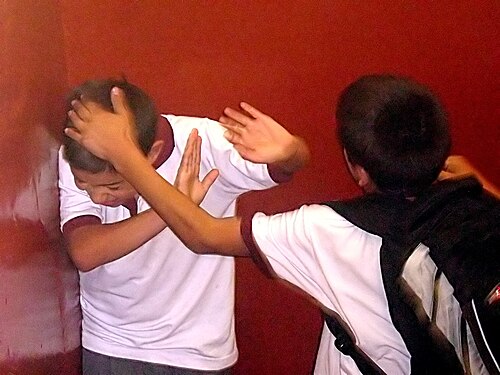
In the student’s telling, the conflict started small. A girl in her social circle allegedly mocked the way she walked, joked about her medical appointments, and implied she was “milking it” for extra time on exams. When she finally reported the comments to a staff member, she expected at least a basic check-in. Instead, word somehow got back to the group, and the response was swift: she was labeled a liar, accused of trying to “ruin someone’s life,” and slowly pushed out of shared group chats and hangouts. What may look like petty drama from the outside is, for a disabled student, a direct hit to the fragile sense of safety that makes school bearable.
That fear of not being believed is already baked into how many disabled students move through education. A disabled undergraduate at the University of Michigan has gone so far as to file a federal lawsuit after professors allegedly accused her of using AI on assignments that she says came from her own outlines and content. In that case, the student, identified as Doe in related reporting, provided medical and psychological documentation that her disabilities include obsessive compulsive disorder and attention deficit hyperactivity disorder, yet she still found herself defending her integrity instead of getting straightforward support. When a student who already has a paper trail of diagnoses is treated as suspect, it is easy to see why someone in a smaller social dispute might assume no adult will take her word over a popular friend group.
When institutions fail disabled students twice
The dynamic shows up long before college. In Hartford, a former student named Aleysha Ortiz is suing after graduating from Hartford Public High School with honors despite saying she cannot read or write, a claim that has been detailed in coverage of her lawsuit. A separate report on Hartford Public Schools followed a graduate who earned a diploma while describing herself as unable to read or write, raising questions about how many red flags were ignored along the way in Hartford Public Schools. Those stories are not about petty friend-group politics, but they echo the same theme: adults looked away or chose the path of least resistance, and a disabled student paid the price.
Families of younger kids tell similar stories about schools treating disability-related behavior as a discipline problem instead of a support need. In one case, a mother of a six-year-old named Isaiah described how staff allegedly disregarded his special needs and even called the police, as shown in footage of Isaiah at school. When a system responds to disability with suspicion or punishment, it sends a clear signal to students like the young woman in that friend group: if she speaks up about cruelty, there is a real risk that the adults will either shrug or decide she is the problem.
The “fake disability” narrative and its fallout
Layered on top of all this is a loud narrative that many students are faking or exaggerating disabilities to get ahead. Reports have claimed that across the United States, a significant number of college students, including up to 40% of students at Stanford University, may be receiving accommodations in ways that critics describe as an abuse of the system. One write-up framed it bluntly, stating that recent reports suggest up to 40% of students at Stan are part of a wider pattern of alleged gaming of disability accommodations. In a viral video, a creator walked through a graph and joked that if people thought Indians were the kings of Jagar, they should “look” at how students were working the system, as seen in an Instagram reel that name-checks Indians, Jagar and the phrase “Look at this graph.”
Inside Stanford, that skepticism has become an internal debate. An op-ed by a Stanford student went viral after she argued that many of her classmates were taking advantage of the university’s disability services, a claim highlighted in a widely shared video that referenced Feb and Stanford by name. That kind of discourse filters down into everyday student life. When a friend group already half-believes that accommodations are mostly a hustle, it becomes easier for them to dismiss a disabled peer’s complaint as “spreading lies” instead of facing the possibility that someone in their circle was cruel.
More from Vinyl and Velvet:

Leave a Reply