

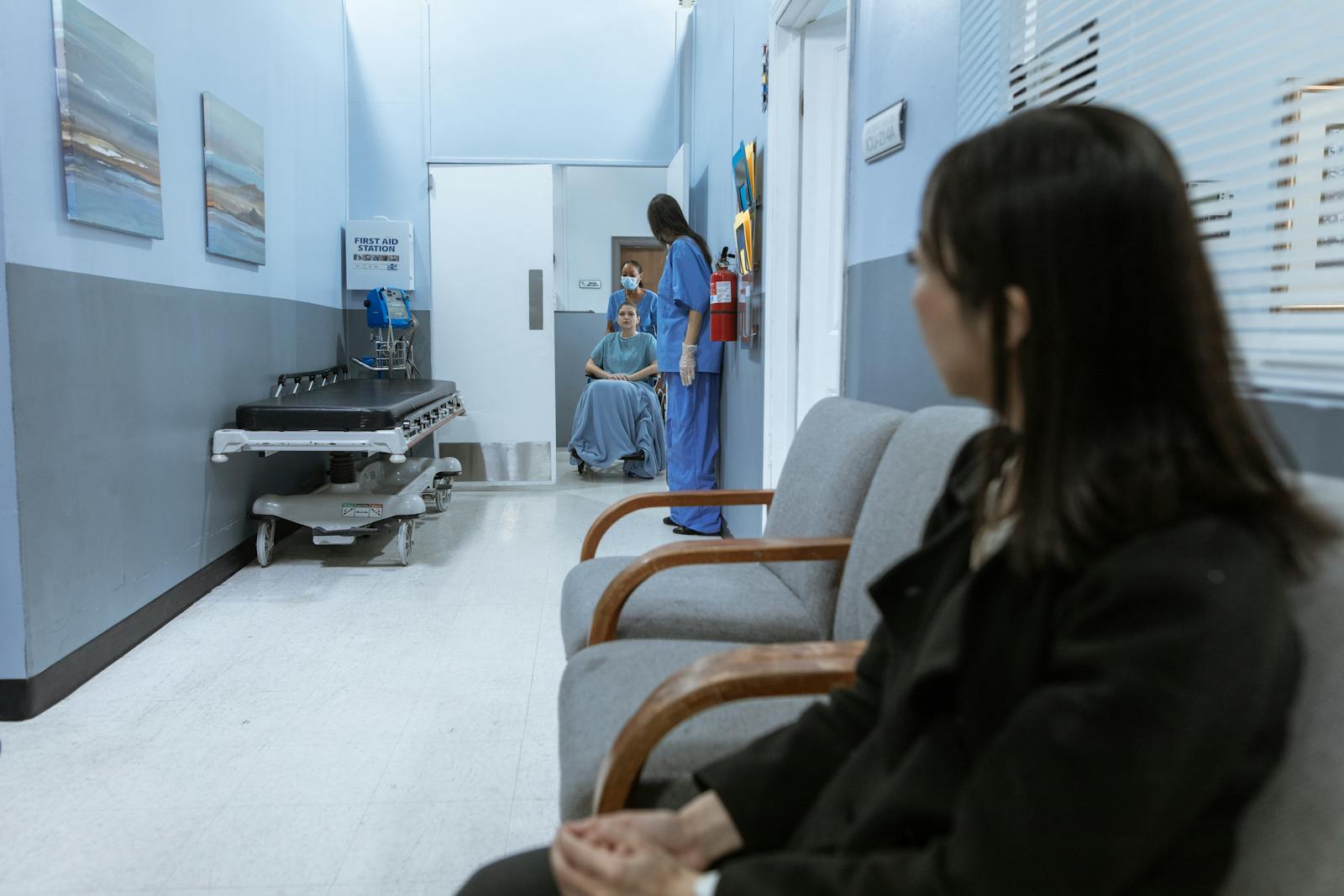
A 49-year-old woman walked into a Dayton-area hospital on a Monday night in March 2026 with a gunshot wound to her back. She came alone. She told staff she had been shot at home. Police later arrested her boyfriend, alleging he had pulled the trigger and let her drive herself to the emergency room.
The case, reported by WHIO, follows a pattern that emergency physicians and domestic violence researchers have documented for years: victims of intimate partner violence arrive at hospitals alone, minimize their injuries, and leave staff to piece together what really happened. The gap between what a patient says at triage and what investigators later uncover can be the difference between a treated wound and a solved crime.
Alone at the ER door
The National Domestic Violence Hotline estimates that roughly one in four women and one in nine men in the United States experience severe physical violence from an intimate partner in their lifetime. Many of those injuries end up in emergency departments, but victims rarely arrive saying, “My partner did this.” Fear of retaliation, financial dependence, immigration concerns, and deep distrust of law enforcement all keep people quiet.
In the Ohio case, the woman’s solitary arrival was itself a red flag. Gunshot wounds trigger automatic law enforcement notification in every state, and when the patient’s account does not match the injury, investigators start looking for the person who is not in the room. Her boyfriend was arrested and faces felony charges.
Hospital-based violence intervention specialists say this dynamic plays out daily in ERs across the country. Screening tools like the HITS questionnaire (Hurt, Insult, Threaten, Scream) are recommended by the Joint Commission, which accredits most U.S. hospitals, but implementation is uneven. A 2023 study in the Journal of Emergency Medicine found that fewer than half of Level I trauma centers had a formal intimate partner violence screening protocol embedded in their electronic health records.
When stitches tell a bigger story
Not every domestic violence case involves a gun. In Fargo, North Dakota, prosecutors charged Fernando Lucio with stabbing a woman in her apartment, leaving a deep laceration on her forehead that required stitches. According to Valley News Live, the case was treated not as a minor assault but as a serious violent crime tied to an intimate relationship.
That distinction matters legally. A superficial scratch might support a misdemeanor charge. A wound deep enough to require sutures, especially on the head or face, can push a case toward felony assault or attempted homicide, depending on the jurisdiction and the weapon involved. Prosecutors and investigators look at the medical record closely: wound depth, location, the type of instrument that could have caused it, and whether the victim’s explanation is consistent with the physical evidence.
For ER staff, the challenge is recognizing when a patient who says “I fell” or “I cut myself cooking” is actually describing an attack. Advocates say the most effective hospital programs pair clinical screening with on-site social workers or victim advocates who can speak privately with patients, away from anyone who accompanied them.
Violence that follows victims inside the hospital
Hospitals are not just where domestic violence is discovered. In some cases, they become the scene of the violence itself.
In October 2022, CBS News reported that Nestor Hernandez, described by authorities as a jealous boyfriend, opened fire inside Methodist Dallas Medical Center while at the hospital for the birth of his girlfriend’s child. Investigators said he killed two hospital employees before being shot by an off-duty police officer working security. The attack turned a maternity ward into a crime scene and forced a national conversation about how hospitals screen visitors and manage threats from intimate partners.
In Allentown, Pennsylvania, a district attorney in early 2026 found that an officer was justified in shooting a woman at a former hospital building after she allegedly posed an imminent threat to the officer and two EMS medics. The review described a tense encounter in a medical setting where law enforcement had to make split-second decisions surrounded by people who were there for care, not confrontation.
These incidents have pushed hospital security teams to rethink their approach. The International Association for Healthcare Security and Safety reported a 40% increase in violent incidents at U.S. hospitals between 2012 and 2022, driven in part by domestic disputes that spill into clinical spaces. Some systems have responded with weapons screening at entrances, panic buttons in exam rooms, and partnerships with local police for faster response.
The cost of treating victims as suspects
When police respond to a domestic violence call, the line between victim and suspect can blur in dangerous ways. The case of Ryan Waller, a Phoenix-area man shot during a home invasion in 2006, became a widely cited example of what happens when law enforcement treats a wounded person as a suspect first and a patient second. Waller survived the initial shooting but sat through hours of police interrogation with a bullet lodged in his head. He later died from his injuries. Critics, including his family, argued that faster medical intervention could have saved his life.
The Waller case is not a domestic violence story in the traditional sense; the shooters were two men who broke into the home he shared with his girlfriend, Heather Quan, who was killed in the attack. But it resonates with DV advocates because it illustrates a systemic problem: when someone is injured in a violent incident involving a partner or a home, the instinct to investigate can delay the urgency to treat.
Survivors of police shootings have raised similar concerns. A woman whose boyfriend was fatally shot by an Illinois officer in 2020 spoke from her hospital bed about feeling targeted even as she tried to recover. These accounts underscore a tension that runs through every case where violence, medicine, and policing collide: the people who most need care are often the last to receive it.
What hospitals can do differently
The gap between what hospitals could catch and what they actually catch remains wide. The American College of Emergency Physicians recommends universal screening for intimate partner violence, but “universal” in practice often means a single yes-or-no question buried in an intake form that a patient fills out in a crowded waiting room, sometimes with the abuser sitting next to them.
Programs that work tend to share a few features: private screening away from companions, trained advocates available around the clock, warm handoffs to shelters and legal aid, and follow-up contact after discharge. Parkland Memorial Hospital in Dallas, the same system where the 2022 maternity ward shooting occurred, has since expanded its family violence intervention team and added behavioral threat assessment protocols for high-risk visitors.
For the woman in Ohio who walked into an ER alone with a bullet in her back, the hospital did what it was supposed to do: it treated her wound and called police. But advocates say the real measure of a hospital’s response is not whether it reports a gunshot wound, which is legally required, but whether it catches the cases where the injury looks like an accident and the patient insists everything is fine.
Those are the cases that go home.
If you or someone you know is experiencing domestic violence, contact the National Domestic Violence Hotline at 1-800-799-7233 or text START to 88788. Help is available 24/7.
More from Vinyl and Velvet:

Leave a Reply