

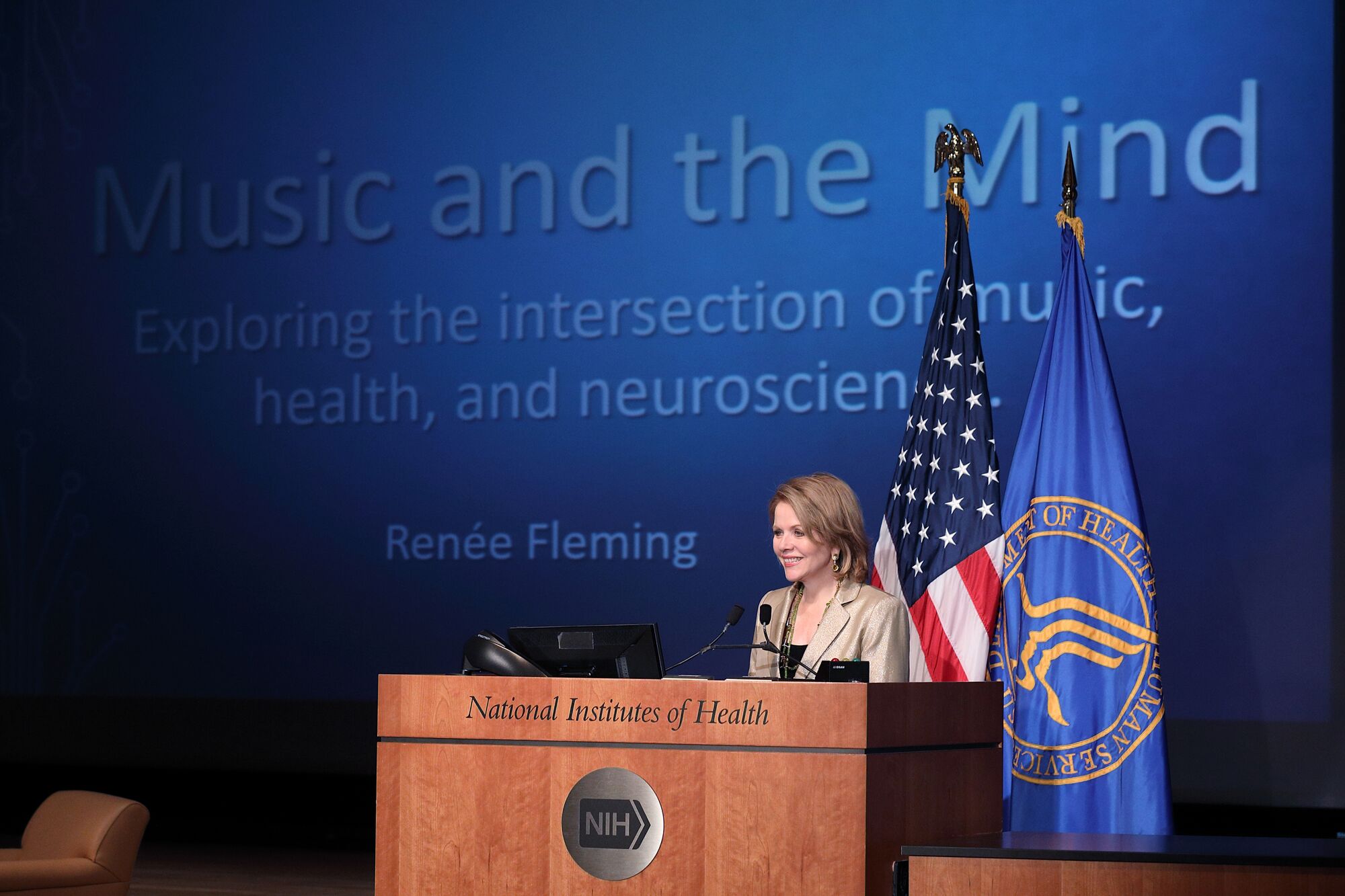
Renée Fleming has quietly stepped away from a pair of high‑profile spring concerts at the Kennedy Center, pulling out of dates that were being sold as a marquee homecoming for one of America’s most celebrated sopranos. Her exit lands at a tense moment for the institution, which is already facing a wave of artist withdrawals and a broader reckoning over its direction and leadership.
The center is publicly framing Fleming’s move as a simple scheduling issue, but the timing, the politics around the venue, and her long history with the place make the decision feel bigger than a routine calendar clash. For audiences, it means a very different kind of evening than the one they thought they were buying, and for the Kennedy Center, it is another high‑visibility crack in an already stressed façade.
What exactly Fleming canceled
Renée Fleming had been booked for two orchestral concerts in May, a pair of programs that were marketed as a chance to hear the star soprano in a familiar hall with a full symphonic backdrop. According to multiple accounts, she has now withdrawn from both of those May sets, leaving the Kennedy Center to retool programs that had been built around her name and repertoire. One report notes that she pulled out of Two scheduled appearances, a detail that underscores how central she was to the spring calendar at the Kennedy Center.
The concerts were not small chamber evenings tucked into a side space, they were mainstage events that had been promoted to subscribers and casual ticket buyers alike as a chance to hear a Grammy‑decorated voice in full flight. One account describes her as The Grammy‑winning soprano singer who had agreed to two May sets at the venue, a reminder that the marketing hook here was not just the orchestra but Fleming herself. With her departure, the Kennedy Center is now promising that a new soloist and repertoire will be announced later, while stressing that the remainder of the program remains unchanged, a line that first appeared in a statement highlighted by Broadway statements.
The official explanation, and what is left unsaid
Publicly, the Kennedy Center is keeping the explanation as bland as possible. In its notice to the press and ticket holders, the institution cited “a scheduling conflict” as the reason Fleming would no longer appear in the May concerts. That phrase appears in multiple write‑ups, which quote the center’s language almost verbatim and then note that administrators quickly reassured audiences that a new soloist and repertory would be named later. The wording about a scheduling conflict and the promise that the rest of the program remains intact are laid out clearly in coverage of her cancellations.
What is missing so far is any personal explanation from Fleming herself. Reports note that she did not offer comment about the decision, leaving the center’s brief statement as the only on‑the‑record rationale. That silence stands out because she has not been shy about speaking publicly on artistic issues in the past, including her work on initiatives like Music and the Mind and her advocacy for arts education. One account points out that, As of Friday, the replacement program “Gaffigan Conducts Appalachian Spring” had already been listed as the show’s substitute, and that Fleming had declined to elaborate on the change, a detail captured in a New York report.
A longtime Kennedy Center insider steps away
Part of what makes this cancellation sting is Fleming’s deep history with the building. She is not just a visiting star, she is a former artistic advisor to the Kennedy Center who has helped shape programming and outreach there over the years. One account explicitly describes her as an ex‑artistic advisor to the institution, underscoring that she has been part of the internal brain trust, not just a name on a marquee. That same report notes that she had been involved in projects that framed her as a thought partner on issues like the Age in Arts and Culture, tying her closely to the center’s public mission as laid out in coverage.
She is also part of the Kennedy Center’s lore as an honoree. Renée Fleming was a recipient at the Kennedy Center Honors, a moment captured in images credited to Kennedy Center Honors Tasos Katopodis and Getty Images, and she has often been held up as a kind of house favorite. Another report on her withdrawal reminds readers that she has been a featured interpreter of American composers like Aaron Copland and Charles Ives in that hall, and that the now‑scrapped concerts were to include music by Copland, Charles Ives and others, details that appear in a detailed account.
How the program is being reshaped
With Fleming out, the Kennedy Center has moved quickly to show that the concerts themselves will not vanish, only change shape. Administrators have told audiences that a new soloist and repertoire will be announced at a later date, while emphasizing that the rest of the orchestral program remains as originally planned. That line, “A new soloist and repertoire will be announced at a later date, and the remainder of the program remains unchanged,” appears in multiple reports and is quoted directly in a piece that first relayed the center’s statement.
At the same time, there are already signs of a more concrete pivot. As of Friday, “Gaffigan Conducts Appalachian Spring” had been listed as the replacement show, a title that signals a shift toward a conductor‑driven program built around Copland’s Appalachian Spring rather than a star‑soprano vehicle. That detail, spelled out in the same report that notes Fleming’s silence, suggests that the orchestra and its music director are stepping into the spotlight she vacated. The new program’s focus on Appalachian Spring also keeps a thread of continuity with the American repertoire that Fleming was expected to sing, a connection that is made explicit in the replacement listing.
Part of a broader wave of artist pullouts
Fleming is not the only one walking away from the Kennedy Center right now, and that context matters. One report frames her as the latest in a string of performers who have canceled appearances at the venue, noting that she joins a growing list of musicians who have moved away from the performing arts institution in recent months. That same account describes her as The Grammy‑winning soprano singer who has now canceled two May sets, placing her squarely in a pattern of high‑profile withdrawals that have become a storyline of their own in recent coverage.
Another piece tracks who has canceled their Kennedy Center performances since the venue’s leadership and branding became flashpoints, listing Fleming alongside other artists and companies that have pulled out. That report notes that, Since the power of the venue’s board to rename the center is currently in dispute, NPR continues to refer to the Kennedy Center using its original name, even as other entities adopt different branding. It also points out that in February 2025, another prominent figure announced a break with the institution after its president, Deborah Rutter, and other leaders were ousted by Trump, a sequence that helps explain why so many artists are now reassessing their ties to the venue.
The Trump factor and the name‑change fight
Hovering over all of this is the political storm around the Kennedy Center’s identity in the Trump era. One widely shared social‑media post about Fleming’s withdrawal refers to a “Trump‑Kennedy Center” and declares that the venue “Sees More Cancellations After Name Change,” tying her exit directly to a rebranding that added Donald J. Trump’s name to the institution. That same post notes that Two more acts have canceled upcoming events at the Donald J. venue, suggesting that Fleming’s decision is part of a broader backlash to the new naming and to President Trump’s direct involvement in reshaping the board, as described in the post.
At the same time, other reporting stresses that the power of the board to rename the center is still being contested, which is why NPR and some arts organizations continue to use the original Kennedy Center name in their coverage. That dispute over what to call the building is not just a branding quirk, it is a proxy for a deeper fight over who controls the institution’s mission and how closely it should be aligned with the current administration. One detailed rundown of recent cancellations notes that the ouster of Deborah Rutter and other leaders by Trump has become a key turning point in that debate, a point that is spelled out in reporting that tracks the fallout.
Washington National Opera and the institutional shake‑up
The ripples from the Kennedy Center’s internal changes are not limited to solo artists. Washington National Opera, one of the institution’s flagship resident companies, has already announced that it is leaving the building entirely. Last week, the opera said it was leaving the Kennedy Center, citing changes to the institution’s business model and available resources, a blunt assessment that suggests deep disagreement over funding priorities and artistic control. That explanation is laid out in detail in a report on Washington National Opera’s move to new venues like GWU’s Lisner Auditorium, which describes how the company is reorienting itself away from the center.
That departure, coming just days before Fleming’s cancellation became public, paints a picture of an institution in flux rather than a stable home base for the city’s major performing arts groups. When a resident company decides it can no longer make the numbers or the governance structure work, it sends a signal to individual artists that their own relationships with the venue may need to be reconsidered. In that light, Fleming’s move looks less like an isolated scheduling hiccup and more like another data point in a broader institutional shake‑up that includes board fights, branding battles, and a rethinking of how the Kennedy Center fits into Washington’s cultural ecosystem, as outlined in the opera’s announcement.
Audience frustration and the practical fallout
For ticket holders, the politics and governance debates are background noise compared with the simple fact that the star they paid to hear will not be onstage. Reports on Fleming’s withdrawal note that the Kennedy Center has been notifying buyers about the change and offering the standard menu of options, including keeping tickets for the retooled program or seeking refunds or exchanges. One account that relays the center’s explanation of a scheduling conflict and its promise of a new soloist also makes clear that the institution is trying to project business‑as‑usual calm, even as it fields questions from patrons who had circled the dates specifically to hear Fleming, a tension captured in coverage of her appearances.
There is also the softer, less quantifiable hit to the Kennedy Center’s reputation as a reliable presenter of big‑name talent. When a figure as established as Fleming cancels, and when that cancellation lands alongside news of Washington National Opera’s exit and other artist withdrawals, it feeds a perception that the institution is in a period of instability. One report that walks through the recent string of cancellations notes that Soprano Renée Fleming and a children’s theater production are among those who have pulled out, and that these moves are adding pressure around the San Francisco Ballet’s own relationship with the Kennedy Center, a dynamic described in a piece on how scrutiny is mounting around the Ballet.
What Fleming’s move signals for artists watching from afar
Even without a personal statement from Fleming, her decision sends a message that other artists are likely to hear loud and clear. She is a high‑status insider, a former artistic advisor and Kennedy Center Honors recipient whose relationship with the institution has been unusually close. When someone in that position quietly steps back from Two scheduled appearances, as one social‑media post put it, it suggests that the calculus about performing there is changing even for those with deep ties. That post, which framed her withdrawal as part of a pattern at the Trump‑Kennedy Center, has been widely shared among theater and opera circles, amplifying the sense that her move is about more than a crowded calendar, as reflected in the Facebook notice.
More from Vinyl and Velvet:

Leave a Reply