

Queen Elizabeth II’s private reaction to Prince Andrew’s entanglement in the Jeffrey Epstein scandal has long been the subject of speculation inside royal circles. Now, a single, cutting word attributed to the late monarch has emerged as a defining glimpse into how she really viewed her “favorite son” once the allegations threatened the institution she spent a lifetime protecting. Behind that one-word verdict lay fury, disappointment, and a steely determination to contain the damage to the Crown.
Far from a moment of maternal indulgence, the Queen’s response is described by insiders as a calculated, almost clinical assessment of Andrew’s explanations. It captures the collision between personal loyalty and constitutional duty, and shows how a monarch famed for restraint could still deliver a devastating judgment without ever raising her voice.
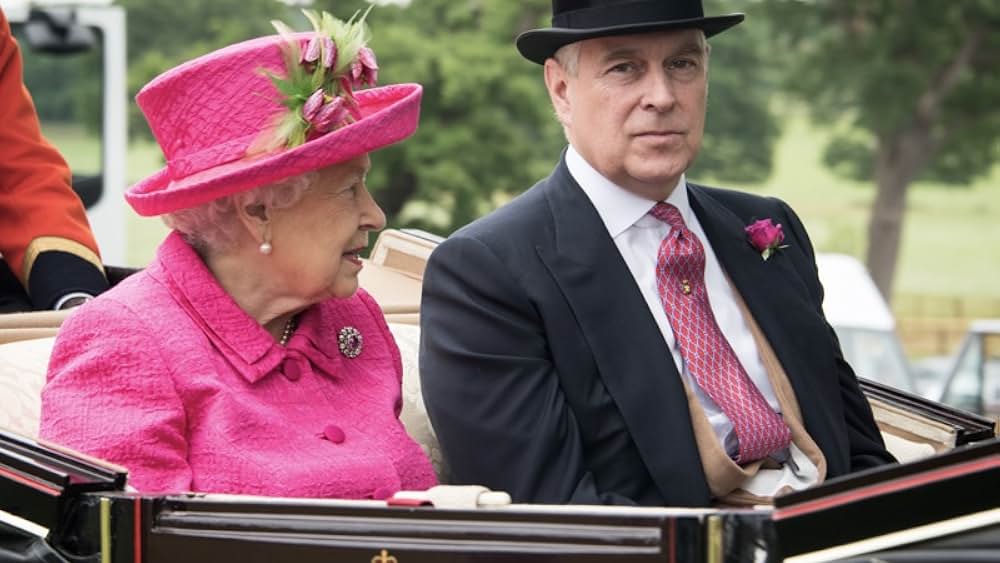
The scandal that shattered a royal reputation
By the time Prince Andrew sat down to explain himself to Queen Elizabeth II, the allegations surrounding his friendship with Jeffrey Epstein had already shredded his public standing. The Duke of York faced intense scrutiny over his association with the convicted sex offender and over claims made by Virginia Giuffre, who alleged that she had been trafficked to have sex with him when she was a teenager, allegations Andrew has consistently denied. The scandal was not just about one royal’s judgment, it was about whether the monarchy could distance itself from a man whose name had become synonymous with Epstein’s network.
Inside Buckingham Palace, aides understood that the crisis was existential for Andrew’s role and potentially corrosive for the wider family. The Queen, who had weathered decades of royal turbulence, was confronted with a son insisting he had done nothing wrong while the public watched every move. It was in this fraught context that Andrew, stripped of much of his public work and facing civil litigation, sought to persuade his mother that he was the victim of misunderstanding rather than misconduct.
Andrew’s plea and the Queen’s single-word verdict
According to royal accounts, Prince Andrew requested a private audience with the Queen to set out his side of the story in detail. He reportedly walked her through his relationship with Jeffrey Epstein and his version of events regarding Virginia Giuffre, attempting to convince her that the allegations were unfounded and that he had been unfairly maligned. After listening in silence, the monarch is said to have paused before offering a single, pointed assessment of his explanation: “Intriguing.”
That one word, delivered without elaboration, has been described by palace insiders as a withering judgment rather than a sign of curiosity. One account notes that the brevity of the Queen’s response was no accident, with sources saying she chose it to convey distance and doubt while maintaining her trademark composure. In that reading, “intriguing” functioned as a polite but icy way of signaling that she was far from convinced by what she had just heard.
Why “intriguing” cut so deep
For a monarch who rarely offered personal commentary, the choice of “intriguing” carried layers of meaning. Courtiers have suggested that the Queen used the word to register skepticism without engaging in a direct confrontation with her son. One palace insider characterized the remark as “icy,” explaining that it allowed her to express displeasure and disbelief while still operating within the understated, almost coded language that defined her public and private style. In royal parlance, such understatement can be more devastating than an outright rebuke.
Observers close to the family interpreted the remark as a signal that the Queen believed Andrew’s account was incomplete at best. A royal expert later said that she wanted to show Andrew her displeasure without raising her voice, describing the response as a way to convey both disapproval and emotional distance. The comment has been framed as an example of how the Queen could express anger and skepticism without engaging emotionally, a hallmark of her approach to family crises.
Inside the private audience: what Andrew claimed
Accounts of the meeting between Queen Elizabeth II and Prince Andrew suggest that the Duke of York tried to present a detailed defense of his conduct. He is said to have reiterated that he had no recollection of ever meeting Virginia Giuffre and questioned the authenticity of a widely circulated photograph that appeared to show them together. In his telling, he had been caught in the crossfire of Epstein’s notoriety and was being unfairly linked to crimes he insisted he did not commit.
Those close to Andrew have long emphasized that he has always denied Giuffre’s claims and maintained that he did not engage in any sexual misconduct. During the audience, he reportedly leaned heavily on this line, insisting that his memory and the circumstances supported his innocence. Yet, as later reporting on the Queen’s reaction made clear, his mother’s cool response suggested that she viewed his narrative with caution, even as she listened carefully to what Andrew had to say.
From favorite son to liability for the Crown
For much of her life, Queen Elizabeth II was widely understood to have a particular soft spot for Prince Andrew, sometimes described within the family as her “favorite son.” That reputation made her eventual response to the Epstein scandal all the more striking. The shift from indulgent affection to cold appraisal underscored how far Andrew’s situation had deteriorated, and how severely it threatened the monarchy’s standing. The Queen’s one-word reaction has been read as the moment when maternal loyalty gave way to institutional necessity.
Behind palace walls, courtiers reportedly watched as the Queen recalibrated her relationship with Andrew in real time. While she continued to show him personal kindness, her decisions about his public role grew increasingly unsentimental. The man who had once enjoyed a privileged position at the heart of the royal family was now seen as a reputational risk, and the monarch who had long protected him began to treat him as a liability that had to be managed rather than a son who could be defended at all costs.
Fury behind closed doors
Publicly, Queen Elizabeth II maintained her usual composure as the scandal unfolded, but accounts from those close to the family suggest that her private feelings were far more intense. Insiders have described her as “privately furious” with Prince Andrew as the Epstein affair engulfed the monarchy, a rare glimpse of anger from a figure renowned for emotional restraint. The fury was not only about the allegations themselves, but also about the way Andrew’s choices had dragged the institution into a crisis that could not be easily contained.
According to those familiar with the palace mood, the Queen felt that Andrew had shown catastrophic judgment in his association with Jeffrey Epstein and in his handling of the fallout. The sense of betrayal was sharpened by the knowledge that he had long enjoyed her trust and affection. One account of the period notes that Queen Elizabeth was deeply angered as the Epstein scandal engulfed Prince Andrew and the wider royal family, a mood that helps explain the chill embedded in that single word, “intriguing.”
How the Queen moved to contain the damage
Once it became clear that the controversy around Prince Andrew was not going to fade, Queen Elizabeth II is reported to have acted decisively to protect the monarchy. She oversaw a series of steps that effectively removed him from public life, including the suspension of his royal duties and the stripping of his military affiliations and royal patronages. These moves signaled that the institution would not allow his personal scandal to overshadow its broader role, even if it meant sidelining a senior member of the family.
Accounts of the period emphasize that the Queen moved swiftly to contain the damage once she had fully grasped the scale of the crisis. In one detailed narrative, an author writing about her later years describes how she listened to Andrew’s explanations, delivered her cool verdict, and then focused on the practical task of limiting the fallout. That account notes that, in his book about the monarch’s final decade, the writer portrays a sovereign who acted swiftly to contain the damage once she realized how serious the Epstein scandal had become for Prince Andrew and the Crown.
The legal backdrop and Andrew’s continued denials
While the Queen was managing the institutional response, Prince Andrew was grappling with the legal and reputational consequences of his association with Jeffrey Epstein. Virginia Giuffre brought a civil case against him in the United States, alleging sexual abuse when she was a teenager, which he denied. The case was eventually settled out of court, with no admission of liability, but the agreement did little to repair his public image. For many observers, the settlement cemented the perception that he was a long-term liability for the monarchy, regardless of the legal outcome.
Throughout this period, Andrew has maintained that he has no recollection of meeting Virginia Giuffre and has questioned the authenticity of the photograph that appears to show them together. Reports on the Queen’s reaction to his explanations note that the ex-prince has always denied the claims, insisting that he has no memory of meeting Giuffre and arguing that the image has been misinterpreted. Yet, in the court of public opinion, his denials have struggled to overcome the weight of association with Epstein and the lingering questions about his conduct.
What the one-word rebuke reveals about the late Queen
The story of Queen Elizabeth II’s “intriguing” remark has resonated because it encapsulates her approach to both family and duty. She did not lash out publicly or offer a dramatic denunciation of Prince Andrew, but she also did not accept his account at face value. Instead, she deployed a single, carefully chosen word that conveyed doubt, disappointment, and a determination to keep her emotions in check. It was a linguistic reflection of a reign built on understatement, discipline, and an acute sense of the Crown’s long-term survival.
In the end, that one-word response stands as a quiet but powerful coda to the relationship between the Queen and the son once thought to be closest to her. It suggests that, when forced to choose between personal affection and the integrity of the monarchy, she sided with the institution she had sworn to serve. The fallout from the Epstein scandal continues to shadow Prince Andrew, but the late Queen’s cool verdict has already entered royal lore as a defining moment, a reminder that even within the most intimate corners of the House of Windsor, the language of power can be as sharp as any public decree.
More from Vinyl and Velvet:

Leave a Reply