

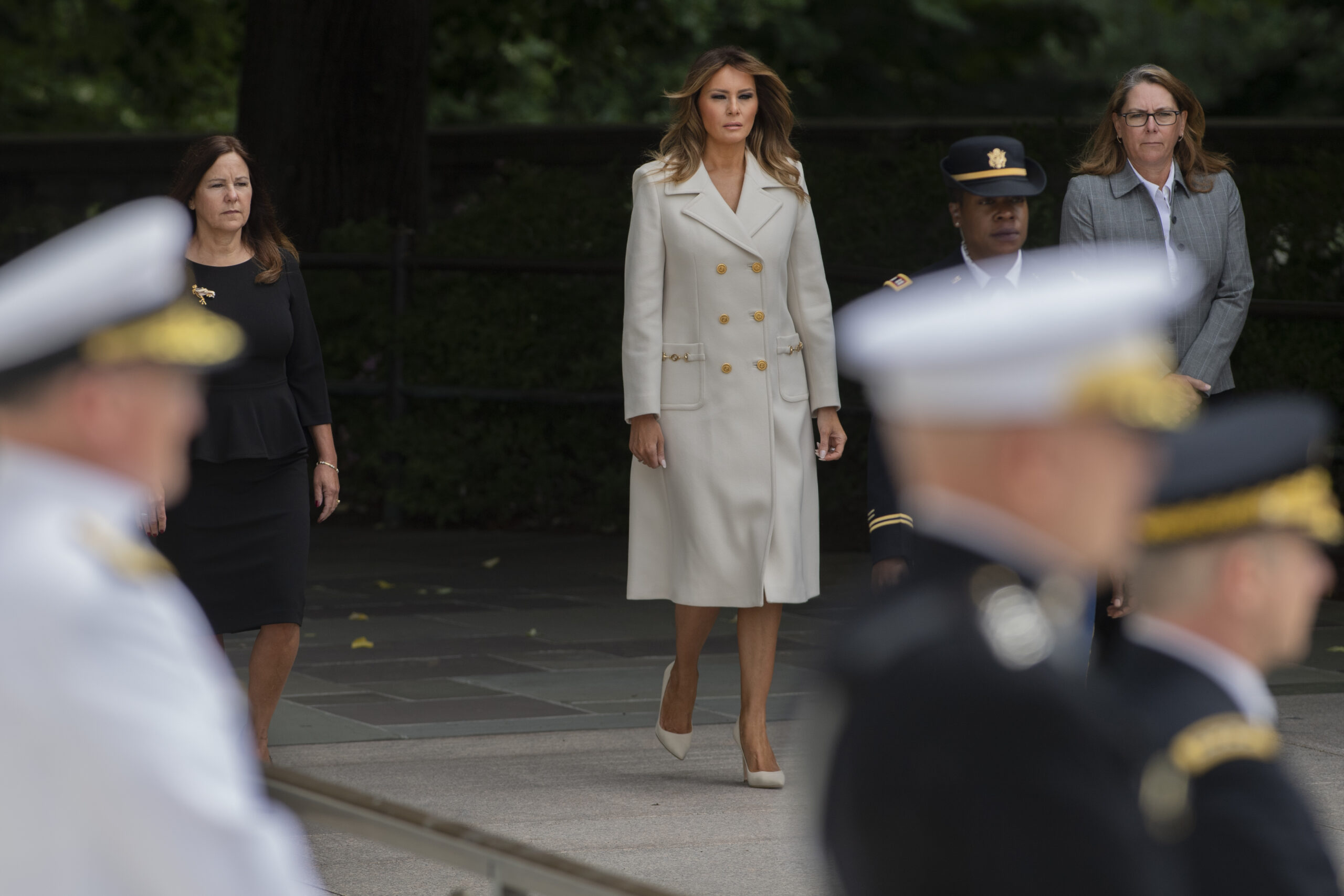
Melania Trump’s glossy new documentary was supposed to be a prestige moment, a $40 million streaming trophy that wrapped glamour, politics, and access into one neat package. Instead, early viewers are roasting it online as slow, stiff, and, in the words of more than a few critics, painfully dull. The gap between the project’s price tag and the public’s patience has turned the film into an instant culture‑war punchline.
The movie, simply titled “Melania,” arrives with the full weight of the Trump brand, Amazon’s checkbook, and a Hollywood comeback story behind it. Yet the louder the marketing gets, the more social media seems to answer with memes, eye‑rolls, and one recurring complaint: for a film promising unprecedented access, there is shockingly little to actually watch.
What “Melania” Actually Is
On paper, “Melania” sounds like the kind of political documentary that should be critic bait. The film follows Melania Trump, the first lady of the United States, through the twenty days leading up to her husband Donald Trump’s second presidential inauguration. Cameras trail her through the White House, onto planes, and into meticulously staged photo‑op moments, promising a behind‑the‑scenes look at a famously private figure. The project is positioned as a definitive portrait, the kind of access that only a sitting first lady and a friendly studio could arrange.
The movie is backed by Amazon MGM Studios, which reportedly paid $40 million for the rights, a staggering sum for a feature‑length documentary. That deal effectively turned “Melania” into a tentpole event for the platform, with a theatrical run through Amazon MGM Studios on January 30 baked into the rollout. The film’s own marketing leans hard on the idea of “unprecedented” access, but as viewers are now pointing out, access is not the same thing as honesty, and glossy proximity alone does not make for compelling cinema.
The $40 m Bet And A $75m Spectacle
Amazon’s financial exposure on this project goes well beyond the acquisition price. The company has reportedly spent over $35 million on marketing alone, plastering Melania’s face across billboards and digital storefronts in cinemas around the world. That is on top of the $40 m and $40 million rights deal, a figure more commonly associated with superhero franchises than with a contemplative political doc. For Amazon, the film is not just content, it is a statement about the kind of access money can buy in Washington.
The spectacle around the project has been just as lavish. At the White House, a VIP screening doubled as a branding exercise, complete with Monochrome catering, black cakes, and branded popcorn buckets for a VIP crowd. The event showcased filmmaker Brett Ratner’s officially sanctioned feature‑length documentary, described as a $75 million production, and turned the East Room into a kind of luxury cinema for political allies. It was a reminder that, inside the Trump orbit, the movie is not a niche art‑house experiment, it is a full‑blown branding campaign.
Inside The Film’s Staged, Static Style
Once the lights go down, though, the tone shifts from opulent to oddly inert. Early viewers have zeroed in on how “Melania” looks less like a vérité documentary and more like a perfume commercial stretched to feature length. Critics have described the footage as staged and static, full of slow‑motion walking shots, gold elevators, and long, silent glares at the camera. The result is a film that feels carefully posed rather than observed, more interested in preserving an image than in revealing a person.
That aesthetic choice might have worked in a shorter, more stylized piece, but stretched across a feature runtime it has become a lightning rod for mockery. Online critics have latched onto the repetition of those slow‑motion sequences as shorthand for everything they find tedious about the project, turning clips of Melania gliding through corridors into looping memes. The sense that viewers are being asked to sit through a very expensive mood board, rather than a story, is fueling the “painfully boring” label that now trails the film across social feeds and Jan reviews.
How The Trailer Primed The Backlash
The trouble started before the premiere, when the trailer dropped and instantly split the internet. Instead of teasing conflict or candor, the preview leaned into the same hyper‑controlled visuals that dominate the finished film, prompting Critics to label it “staged” and “static” almost immediately. Posters for the movie were defaced online, with users scribbling over Melania’s face or adding sarcastic taglines, a sign that the marketing campaign was colliding head‑on with a deeply polarized audience.
Coverage of the trailer framed the project as a high‑risk bet for Melania Trump, whose public image has always been a mix of mystery and meme fodder. By the time the film reached theaters, the narrative was already tilting toward flop territory, with box‑office tracking and social chatter pointing in different directions. The sense that the movie was trying to rehabilitate or reframe her persona, rather than interrogate it, only sharpened the online skepticism.
Online Critics And The “Flop” Discourse
Once general audiences got a look, the internet did what it does best: it turned disappointment into content. On Reddit, one heavily upvoted thread in the Comments Section was blunt, with a user writing, “Who would have thought that nobody wants to watch a feature length documentary about a first lady who barely talks?” Others piled on with jokes about the pacing, the endless shots of marble, and the sense that the movie was made for an audience of one sitting in the Oval Office.
That “flop” framing has spread quickly, helped along by social media users who have not actually seen the film but feel they have absorbed its vibe through clips and commentary. The combination of a massive budget, a polarizing subject, and a reverent tone has made “Melania” an easy target for people who see it as propaganda dressed up as prestige. While box‑office data is still shaking out, the online verdict is already harsh, and it is shaping how potential viewers approach the film, if they approach it at all.
Soft Ticket Sales And A 2,000‑Theater Gamble
Behind the memes, there is a very real financial question hanging over the project: can a heavily branded political documentary actually fill multiplexes. Amazon has pushed the film into a wide theatrical release, opening it in about 2,000 locations and focusing on markets where Donald Trump is especially popular. The strategy is clear: if traditional art‑house audiences are skeptical, maybe the MAGA base will show up out of loyalty.
So far, that bet looks shaky. Early reports from the United Kingdom describe “soft” ticket sales, with Britons largely swerving screenings despite the marketing blitz. The contrast between the packed VIP premiere and half‑empty regular showings underlines the core problem: enthusiasm inside the Trump and Amazon bubbles is not automatically translating into demand from everyday moviegoers, even in territories where curiosity about the first lady might be expected to run high.
Ratner’s Comeback And The Politics Around Amazon
Layered on top of the film’s content is the story of who made it. Filmmaker Brett Ratner, once effectively exiled from Hollywood over misconduct allegations, has used “Melania” as a vehicle for a high‑profile return. Reports describe how he leveraged old industry relationships and the Trump connection to re‑enter the business, a move that has drawn criticism from those who see it as proof that powerful men can cycle back into the industry without real accountability.
For Amazon, partnering with Trump and Ratner at the same time is not just a creative decision, it is a political one. Analysts have framed the documentary as part of a broader effort by Amazon to cozy up to the current administration, aligning itself with the president’s family at a moment when tech regulation and antitrust scrutiny are live issues. That context helps explain why the film feels so carefully managed, and why its reception is being watched as a test of how far audiences will go along with overtly political corporate content.
The White House Premiere Bubble
Inside the White House, the mood around “Melania” has been far more forgiving than on Twitter. At the premiere, guests were treated to Saturday for Ratner’s monochrome‑themed party, complete with black cakes and branded buckets that turned the screening into a kind of lifestyle event. The carefully curated crowd, heavy on loyalists and donors, responded warmly, laughing at gentle jokes and applauding at moments that framed the first lady as stoic and misunderstood.
Some observers have noted that, if one squints hard enough and sets aside the looming political stakes, there is something almost sweet about the way the film captures small domestic moments between Melania and her family. That softer reading, described in dispatches from the premiere as a kind of emotional refuge from “the horrors of everything,” sits awkwardly alongside the online mockery. The gap between the cozy atmosphere in the East Room and the snark outside it shows how tightly controlled spaces can generate their own reality, at least for an evening, even as the broader public conversation moves in the opposite direction.
Trump’s Rave Review Versus Everyone Else
One person who is not conflicted about the film is the president himself. Asked for his verdict, President Trump reportedly offered a two‑word review: “it’s incredible,” later elaborating that the movie is “very, very good.” For a project that already feels designed to flatter its subject, the endorsement from the Oval Office is hardly surprising, but it does underline how much the film functions as an in‑house tribute.
Outside that bubble, formal criticism has been slower to arrive, in part because access to early screenings was tightly managed. Coverage of the project has repeatedly noted that, for a time, the only public review came from the president, a detail that fed the perception of “Melania” as a kind of state‑approved narrative. As more viewers weigh in, that imbalance is starting to correct, but the contrast between Trump’s glowing praise and the internet’s yawns has already become part of the story, cited in pieces asking What it says about the administration’s media instincts.
Can A Controlled Portrait Ever Win Over The Internet
Underneath the jokes about slow‑motion escalators, there is a more serious question about whether a film this tightly managed can ever land with a modern audience. Viewers have grown used to political documentaries that lean into messiness, contradiction, and even unflattering moments, and “Melania” largely sidesteps that tradition. It documents Melania in the run‑up to a major political event, but rarely lets the mask slip, which leaves critics arguing that the movie is more interested in myth‑making than in truth‑telling.
That tension is why the “painfully boring” label stings so much. Boring, in this context, does not just mean slow, it means predictable, a story whose beats feel pre‑cleared by handlers and lawyers. As long as the film stays locked inside that safe zone, it is hard to see how it will change many minds about the first lady, or about the administration she represents. Instead, it risks becoming a very expensive time capsule of how the Trump White House wanted to be seen, preserved in 4K for future viewers who may end up watching it less as a documentary and more as a curiosity from a deeply polarized era.
More from Vinyl and Velvet:

Leave a Reply