

For years, Michael Jackson’s pet chimpanzee was a fixture of pop culture excess, photographed at parties, on tour and even in the studio as a kind of furry mascot for the King of Pop’s surreal lifestyle. Now, new images of Bubbles in his senior years reveal a very different existence, one defined by quiet routines, leafy enclosures and the kind of specialist care that aging great apes rarely receive. The contrast between those all‑night appearances and his current retirement in sanctuary care captures how both celebrity culture and attitudes toward exotic pets have shifted.
Today Bubbles is no longer a prop in someone else’s spectacle but an elderly chimp with his own social circle, health needs and daily rhythms. His journey from the glare of stage lights to a shaded habitat in Florida traces a broader story about how humans treat the animals they once turned into icons, and what it takes to give them a dignified old age after the spotlight moves on.
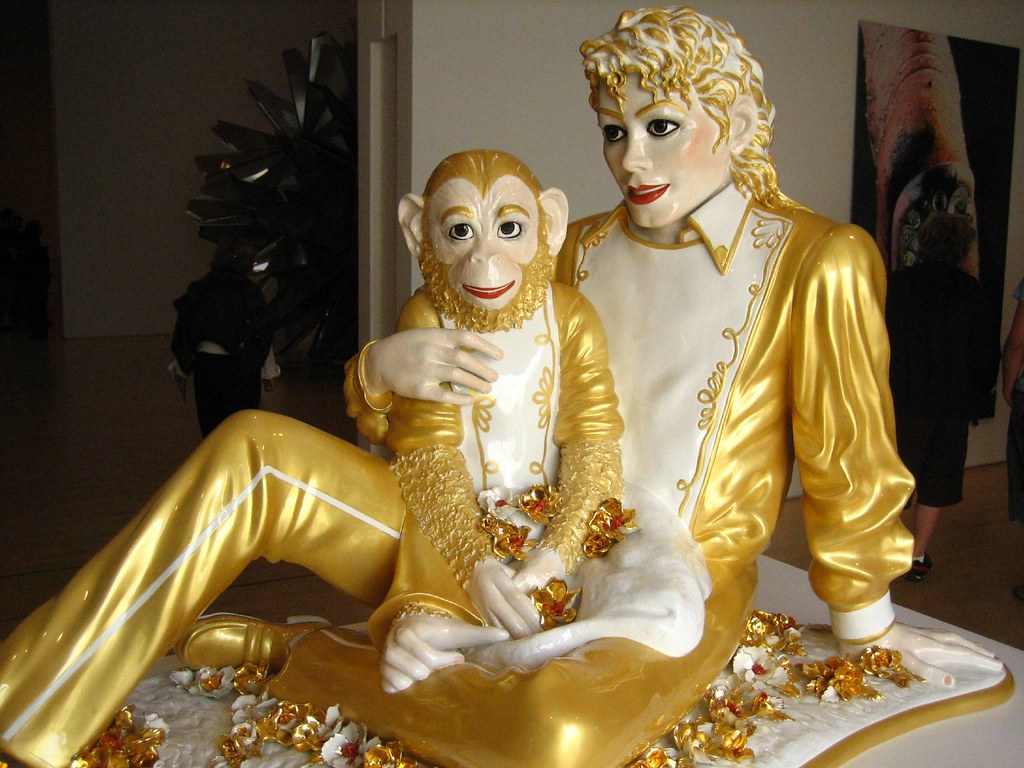
The chimp who became a global celebrity
Bubbles did not start life as a star, but as a young chimpanzee who was swept into the orbit of one of the most famous entertainers on the planet. Michael Jackson acquired him in the 1980s, a period when the singer was redefining pop music and also building the mythology around his own persona, and the animal quickly became part of that narrative. Reports describe how Jackson brought Bubbles into his inner world at the height of his fame, turning the chimp into a constant companion who traveled, posed for photos and appeared in public as a living symbol of Neverland’s fantasy. That early bond, forged when Jackson was still releasing era‑defining records, ensured that Bubbles would be remembered as more than just another exotic pet.
Over time, the chimp’s presence helped cement the image of Jackson as a figure who blurred the line between childhood fantasy and adult celebrity. Bubbles was photographed in studios, backstage and on outings, often dressed or handled in ways that made him appear almost human, which only deepened public fascination with the pair. Later accounts of Jackson’s life routinely mention that he got Bubbles in the 1980s and kept him close during some of his most productive years, a detail that underscores how central the animal became to the singer’s personal brand and to the broader pop culture story of that decade, as reflected in coverage that notes how Michael Jackson and Bubbles were linked in the public imagination.
All‑night parties and the surreal Neverland years
As Jackson’s fame intensified, Bubbles became a fixture at the kind of events that defined the excess of that era, including late‑night gatherings that blurred the line between private life and performance. Accounts of those years describe the chimp accompanying Jackson to parties that stretched long into the night, mingling with guests and adding an extra layer of spectacle to already lavish scenes. The idea of a chimpanzee padding through after‑hours celebrations, sometimes seated at tables or perched on the singer’s lap, fed a media narrative that treated Bubbles as both sidekick and symbol of a lifestyle that seemed detached from ordinary reality.
Those stories have resurfaced in recent coverage that contrasts the animal’s past with his present, noting how he once appeared to “party all night” alongside Jackson before retreating to the private spaces of Neverland. Reports on his current status explicitly frame his earlier life as one of constant exposure, with Bubbles moving through hotel corridors, studios and social events as if he were another member of the entourage. That framing is echoed in new features that revisit the period when Jackson’s chimp was part of the nightly routine, before shifting to describe his quiet retirement, a narrative arc captured in pieces that highlight how new photos now show a very different rhythm.
From tour buses to Florida sanctuary
The shift from tour buses and recording studios to a sanctuary enclosure did not happen overnight, but it marks one of the most consequential changes in Bubbles’ life. As he grew older and stronger, the practical and ethical challenges of keeping a chimpanzee in a human household became harder to ignore, mirroring a broader reassessment of exotic pet ownership. Eventually, Bubbles was moved into professional care, and today he lives in Florida, far from the soundstages and hotel suites that once formed his environment. That relocation placed him among other great apes and under the supervision of specialists trained to manage the physical and psychological needs of animals who can live for decades.
Recent posts by people who have visited or worked with him emphasize that Bubbles is now 42 and settled into a peaceful routine in Florida, a detail that appears in tributes noting that the famous chimpanzee once owned by pop legend Michael Jackson is now living a quieter life in the state. One widely shared message describes how Bubbles, the famous chimpanzee once owned by Michael Jackson, is now 42 and enjoying a peaceful existence in Florida, underscoring how far he has traveled, both literally and figuratively, from the days when he was shuttled between cities as part of a global pop machine.
Inside the Center for Great Apes
Bubbles’ current home is the Center for Great Apes, a sanctuary designed specifically for chimpanzees and orangutans who cannot return to the wild and should not be kept in private homes. The facility provides large, naturalistic enclosures, climbing structures and social groupings that allow the animals to express more of their natural behavior than would be possible in a domestic setting. Instead of being led on leashes through hotel lobbies, Bubbles now navigates elevated walkways and shaded spaces, surrounded by other apes and the sounds of the Florida landscape. His days are structured around feeding, enrichment activities and rest, rather than travel schedules or photo calls.
Running such a sanctuary is expensive, and the Center for Great Apes has been explicit about the financial commitment involved in caring for animals like Bubbles. The organization has stated that the annual care for each animal at the center costs around $17,000 as of 2009, a figure that covers food, veterinary care, staff and maintenance of the specialized habitats. Patti Ragan, the director for the Center for Great Apes, has been cited in profiles that describe how Bubbles is now regarded as calm, gentle and shy, a far cry from the boisterous party companion of his youth and a testament to what long‑term, species‑appropriate care can achieve.
New photos of a quieter, older Bubbles
The latest images of Bubbles have captivated fans who remember him from the height of Jackson’s fame, precisely because they show an animal who has aged into a kind of dignified ordinariness. Instead of sequined jackets or staged photo ops, the pictures reveal a 42‑year‑old chimp with graying features, resting in his enclosure or interacting calmly with his environment. Observers note that his posture and expression suggest a relaxed, contemplative temperament, more in line with an older ape who has settled into a predictable routine than with the hyperactive mascot he once appeared to be. The visual contrast between those serene scenes and the archival shots of Bubbles clinging to Jackson’s arm is striking.
Coverage of these images often frames them as a window into what retirement looks like for an animal that once lived at the center of a global media circus. One widely circulated feature describes how Bubbles used to be present at late‑night gatherings but now spends his days in a quiet sanctuary, with the new photos serving as proof of that transformation. Another report invites readers to sign up for an Editor’s Picks newsletter while recounting how Bubbles once moved through the 1980s pop world and now lives a much slower life, reinforcing the sense that the chimp’s story has entered a final, more reflective chapter.
How social media rediscovered Bubbles at 42
Although Bubbles has been living quietly for years, social media has recently thrust him back into public view, turning his 42nd birthday into a viral moment. Posts on platforms like Instagram have highlighted that Michael Jackson’s famous chimp “just turned 42,” often accompanied by side‑by‑side images of his younger and older selves. These posts frame his life as one of the “best life experiences of all time,” pointing to the extraordinary arc from global tours to sanctuary care and inviting followers to reflect on how unusual it is for a former celebrity pet to reach such an advanced age in relatively good health. The tone is often nostalgic but also tinged with relief that Bubbles appears to be well cared for.
One popular account shared a photo set noting that Michael Jackson‘s famous chimp Bubbles just turned 42 and now lives a more quiet life after the spotlight, a caption that neatly summarizes the story that has captured so much attention. Another widely shared Facebook post similarly emphasizes that Bubbles, the famous chimpanzee once owned by pop legend Michael Jackson, is now 42 and living a peaceful life in Florida, with the author, Willie Gomez, underscoring how enduring the public’s curiosity about the animal remains.
From meme to living, aging animal
As Bubbles’ story has resurfaced online, it has also highlighted the tension between treating him as a meme and recognizing him as a living, aging animal with complex needs. Viral clips and image carousels often lean into the absurdity of a chimpanzee who once attended parties with a global superstar, but the more detailed posts emphasize that he is now a senior ape whose welfare depends on specialized care. One Instagram reel shared by comedian Tony Baker, tagged with phrases like SWIPE, SWIPELEFT and LEFT, uses archival images and commentary from History Photographed to remind viewers that MICHAEL JACKSON’S pet chimpanzee is still alive at an advanced age, prompting a mix of surprise and concern in the comments.
That reel, which notes that Bubbles, the chimpanzee who once lived with MICHAEL JACKSON, remains one of the most recognizable animals in pop culture, illustrates how digital platforms can both flatten and deepen public understanding. On one hand, the story is packaged for quick consumption, complete with SWIPE prompts and nostalgic framing. On the other, it introduces millions of viewers to the reality that this once‑ubiquitous figure is now an elderly chimp whose life is shaped less by spectacle than by the daily routines of a sanctuary, nudging audiences to think beyond the meme and consider the long tail of celebrity pet ownership.
The ethics and cost of celebrity pets
Bubbles’ trajectory has become a case study in the ethical questions surrounding celebrity exotic pets, particularly large primates. When Jackson first brought him into the spotlight, the idea of a pop star traveling with a chimpanzee was treated as quirky rather than troubling, and few mainstream voices questioned what it meant for the animal’s long‑term welfare. Today, with greater awareness of primate cognition and social needs, the notion of keeping a chimp in a human household, subject to tour schedules and media demands, is far more controversial. Bubbles’ eventual move to a sanctuary reflects that shift, acknowledging that even with affection and resources, a private owner cannot provide what a great ape requires over a lifespan that can stretch for decades.
The financial realities underscore why so many former entertainment animals struggle once their working years end. The Center for Great Apes has made clear that caring for each resident costs around $17,000 per year, a figure that highlights the scale of the commitment involved in giving animals like Bubbles a humane retirement. Patti Ragan, who directs the Center for Great Apes, has been quoted describing Bubbles as calm, gentle and shy in his current environment, a description that contrasts sharply with the boisterous image of a party‑hopping chimp. That contrast, documented in profiles of Bubbles, has fueled broader discussions about whether such animals should ever be placed in entertainment roles that leave sanctuaries and nonprofits to shoulder the long‑term burden.
More from Vinyl and Velvet:

Leave a Reply