

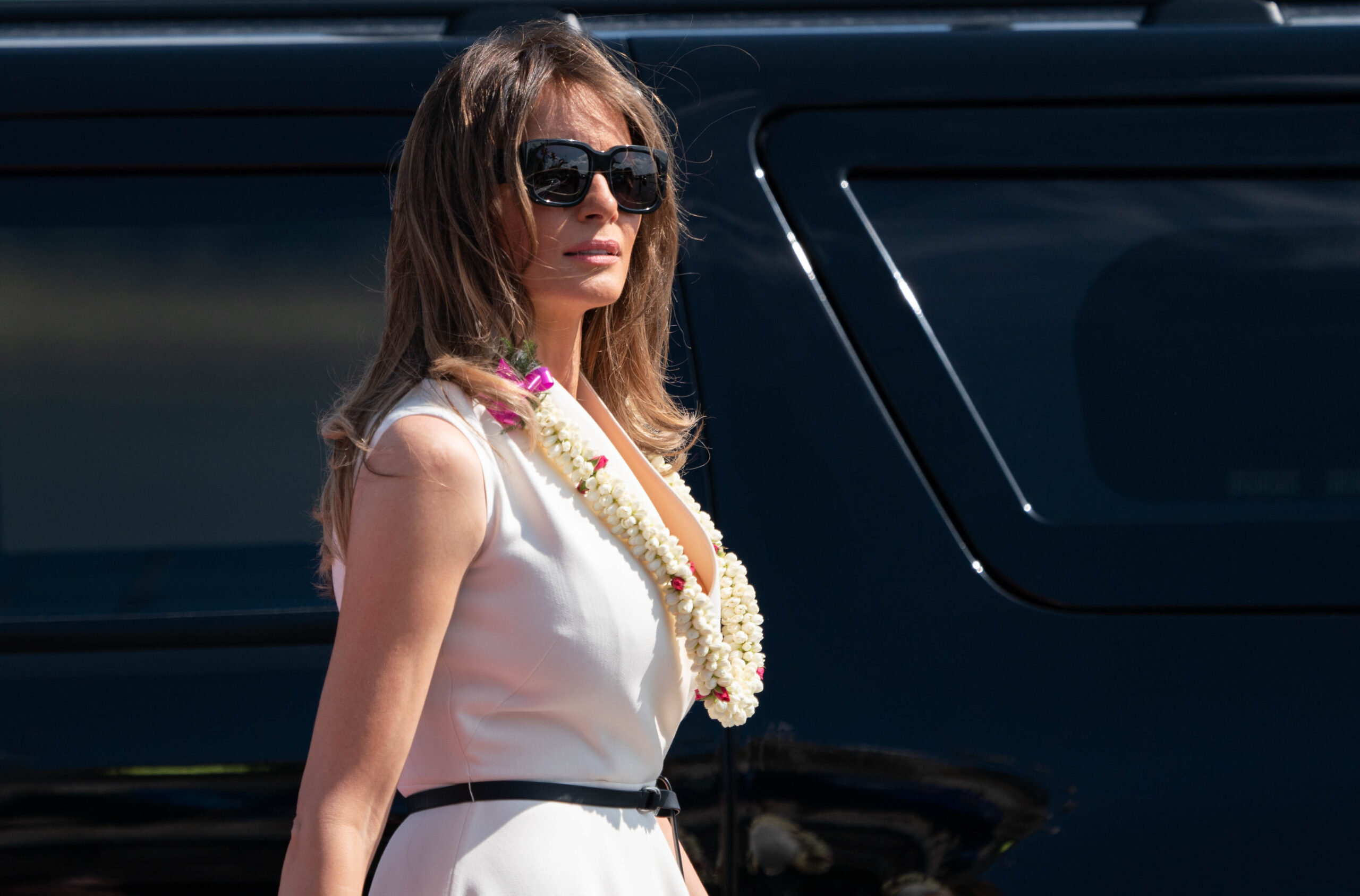
Melania Trump is trying to project grace under fire, calling herself “deeply humbled” just as a glossy new documentary about her life collides with a national uproar. The private White House premiere was meant to be a carefully choreographed moment, but the reaction has been anything but controlled, with critics questioning the timing, the money and the message.
Her understated public note of gratitude now sits at the center of a much louder argument about power, image making and what it means to celebrate a first lady while the country is focused on a deadly federal shooting. The fallout around the Amazon-backed film has turned Melania’s attempt at a soft-focus portrait into a sharp political flashpoint.
The “deeply humbled” message that lit the fuse
Melania Trump’s own words set the tone for the premiere night narrative. After the black-tie screening at the White House, she posted on X that she was “deeply humbled to have been surrounded by an inspiring room of friends, family, and cultural leaders,” describing the evening as as moving as it was unforgettable. That language, polished and almost old-school in its formality, was clearly meant to frame the event as a celebration of community and culture rather than a personal victory lap, even as the cameras and custom décor made it obvious who the star was.
Her message landed in a political environment that was already running hot. The screening came as a nationwide furor intensified over a federal agent’s killing of a Minneapolis man, and critics immediately contrasted the grief and anger in the streets with the glamour inside the executive mansion. The first lady’s post, quoted in full in coverage of the White House event, was held up as proof that she was either serenely above the fray or, as some detractors argued, badly out of step with the country’s mood, a tension that would only grow as more details about the film and its backers emerged in reports.
A lavish White House premiere in the middle of a storm
The screening itself was designed like a Hollywood awards night dropped into Pennsylvania Avenue. Guests arrived at the White House in formalwear, greeted by black-and-white monogrammed popcorn tubs and a full theatrical setup that turned the East Room into a boutique cinema. The event was billed as an exclusive first look at the documentary before it opens in U.S. theaters, with the film set to roll out nationwide on January 30 after this carefully staged debut, a detail that underscored how closely the political and entertainment calendars have been braided together in this project, as described in coverage of the premiere.
Inside the room, the guest list read like a cross between a campaign donor file and a Vanity Fair party. Saturday night’s attendees included President Donald Trump, Amazon CEO Andy Jassy, Tim Cook, Mike Tyson and photographer Ellen von Unwerth, a lineup that signaled both corporate muscle and pop culture cachet. That mix of tech titans, sports icons and art-world names, all gathered under the chandeliers while protests built outside over the Minneapolis killing, sharpened the sense that the administration was leaning into spectacle at a fraught moment, a contrast that was widely noted in accounts of who turned up at the screening.
Amazon’s $40 million bet and a global marketing blitz
Behind the red carpet optics sits a very simple fact: this is a massive commercial gamble. Amazon reportedly paid $40 m, spelled out as $40 million, for the rights to the Melania project, a figure that would be eye catching even for a big-budget narrative feature, let alone a political documentary. That price tag instantly raised the stakes for everyone involved, from Amazon founder Jeff Bezos to the executives who greenlit the spend, because it signaled that the company sees Melania Trump not just as a political spouse but as a global content brand worth blockbuster money, a point underscored in detailed accounts of the $40 million deal.
The investment does not stop at the acquisition. Amazon has spent over $35 on marketing for Melania Credit, with images by Thomas Coex for AFP circulating alongside reports that James Warrington Media and Telecoms Editor has been tracking the campaign’s reach and the early box office jitters. That level of promotional spend, layered on top of the production and rights costs, turns the film into a referendum on whether streaming-era political celebrity can reliably move tickets in traditional theaters, a question that hangs over the company’s decision to push the movie hard in the U.K. even as Britons appear to be swerving screenings, according to analysis of Amazon’s marketing blitz.
What the documentary actually shows
Strip away the noise and the film itself is relatively narrow in scope. Melania is an upcoming American documentary co-produced and directed by Brett Ratner that follows Melania Trump over a defined stretch of time, tracking her through 20 days that include the run-up to President Trump’s second presidential inauguration. The project promises an intimate look at her routines, staff interactions and public appearances, positioning her as a central character in a political moment that is usually framed around her husband, a framing laid out in background material on Melania.
The documentary is controversial not just because of who it features but because of when and how it is being released. The film, financed by Amazon, is scheduled to open nationwide in theaters on Jan. 30 and was reportedly planned months before the Minneapolis shooting that now shadows its debut. It focuses on 20 days in Melania’s life rather than the broader policy or humanitarian crises of the administration, a choice that critics say makes it feel like a lifestyle vlog directed by Brett Ratner rather than a probing political document, a comparison that has surfaced in coverage of the 20 days structure.
Brett Ratner’s comeback ride on Melania’s image
For Filmmaker Brett Ratner, the project is more than a high-profile gig, it is a shot at redemption. Once a staple of big studio franchises, he was all but banished from Hollywood after a wave of misconduct allegations, and his name largely disappeared from major credits. Now he is back at the center of a White House-adjacent production, using Melania’s story as the vehicle for a carefully managed return to the industry, a dynamic that has been unpacked in reporting on how Filmmaker Brett Ratner has staged his comeback.
That backstory complicates the film’s reception. Supporters frame Ratner’s involvement as proof that the project has real cinematic ambition, while detractors see it as another example of powerful men using proximity to the Trump White House to launder reputations. Ratner’s collaboration with Amazon and Melania Trump over those 20 days, from the second inauguration preparations to quieter moments in the residence, turns the documentary into a layered narrative about image rehabilitation on multiple fronts, a theme that hovers over both the creative choices and the marketing push described in coverage of Ratner’s renewed partnership with Amazon.
Critics, soft ticket sales and the “flop” question
Even before the White House premiere, the project was fighting an uphill battle with critics. Early reactions to the trailer were brutal, with Critics describing it as “staged” and “static,” and social media users sharing images of defaced posters that mocked the film’s glossy tone. Some commentators argued that the footage made Melania Trump look more like a carefully lit influencer than a first lady navigating real-world crises, a perception that fed into broader skepticism about whether audiences would pay to watch what one outlet compared to a lifestyle vlog directed by Brett Ratner, as detailed in coverage asking if the film is a big flop.
On the business side, early indicators have not been reassuring. Reports of “soft” ticket sales in the U.K., where Britons have been swerving screenings despite Amazon’s heavy marketing, suggest that the film may struggle to convert political notoriety into box office momentum. That disconnect between the scale of the campaign and the apparent lack of enthusiasm at the multiplex has already prompted questions about whether the $40 million rights deal and the over $35 in promotional spending can be justified, especially if the film’s performance in the U.S. mirrors the lukewarm response abroad, a concern that hangs over the analysis of Amazon’s soft ticket sales.
Political backlash: “Read the room” and AOC’s fury
The harshest blowback has not come from film critics but from political figures and activists who see the premiere as a symbol of skewed priorities. Rep Alexandria Ocasio Cortez, a prominent progressive voice, blasted the administration for hosting the screening amid several unfolding crises, arguing that the decision to roll out a red carpet at the White House while the country was processing a federal agent’s killing of a Minneapolis man showed a stunning lack of empathy. She framed the event as part of a broader pattern in which the Trump White House leans into spectacle instead of grappling with the human cost of its policies, a critique that was widely shared as her comments on the screening circulated.
Outside Congress, the phrase “Melania Trump Told To ‘Read The Room’ Over Documentary Stunt” captured the mood among many online commentators. One critic, identifying themselves as having deep respect for the First Lady and having been honored to meet her, still argued that staging such a lavish event at this moment “feels disconnected from reality,” a sentiment that echoed across posts urging corporate leaders like Tim Cook to speak up rather than stay silent on Trump. The tone of those reactions, summed up in lines like “There is tone-deaf, and there’s this,” shows how quickly the premiere became shorthand for elite insulation, a narrative that hardened as social media amplified the “Read The Room” critique.
Inside the room: Melania’s allies and the curated vibe
Despite the criticism, however, Melania seemed pleased with the event, and the atmosphere inside the White House screening was described as warm and celebratory. Guests mingled under soft lighting, sipping drinks and posing for photos before settling into their seats, while staff circulated with those black-and-white monogrammed popcorn tubs that quickly became a visual shorthand for the night. The first lady’s “deeply humbled” post was echoed in private conversations, with attendees praising her poise and the film’s intimate access, a mood captured in accounts that noted how, Despite the backlash, Melania appeared genuinely moved as the credits rolled and the room rose for a standing ovation, details that emerged in coverage of the screening.
Melania Trump has long preferred tightly controlled environments, and this premiere fit that pattern. Earlier in the week, she had given a sneak peek of the Amazon movie at the White House with a black-tie screening setup that included custom popcorn tubs and carefully managed photo ops, a preview that telegraphed just how curated the main event would be. That earlier showing, described as Melania Trump giving a first look at the Amazon project inside the White House, helped build buzz among loyalists and influencers, reinforcing the sense that the film is as much about reinforcing her chosen image as it is about documenting reality, a point underscored in accounts of the sneak peek
More from Vinyl and Velvet:

Leave a Reply