

Megyn Kelly has ignited a fresh political firestorm by branding Hillary Clinton “disgusting” and accusing the former secretary of state of putting people in danger with her response to a fatal Immigration and Customs Enforcement shooting in Minneapolis. The clash centers on Clinton’s praise for protesters and her description of the killing of Renee Good as “murder,” which Kelly argues crosses a line from criticism into incitement. Their confrontation, unfolding through social media posts and podcast commentary, shows how the country’s deepest arguments over immigration enforcement are now being fought in real time over the language public figures choose.
At stake is more than a single online spat. Kelly is warning that Clinton’s rhetoric could fuel hostility toward federal agents, while Clinton and her allies insist that calling out what they see as “lawless violence” is a moral obligation. The dispute is unfolding as President Donald Trump continues to defend aggressive immigration enforcement, turning the Minneapolis shooting into a proxy battle over how far critics can go when they challenge ICE.
Kelly’s ‘disgusting’ charge and the claim of endangering lives
Megyn Kelly’s broadside came after Hillary Clinton publicly aligned herself with activists who confronted ICE following the shooting of Renee Good in a residential Minneapolis neighborhood. On her show, Kelly said she was appalled that Clinton appeared to celebrate protesters who surrounded and berated agents, calling the former secretary of state “disgusting” and insisting, “You’re directly endangering lives” by validating that kind of confrontation. In Kelly’s telling, Clinton is not simply criticizing policy, she is encouraging a climate in which federal officers are treated as villains and potentially targeted, a concern she underscored while discussing the Minneapolis ICE shooting.
Kelly’s critique has two parts: that Clinton mischaracterized the shooting itself and that she irresponsibly elevated the protesters’ response. She argued that praising activists who swarmed agents outside their homes risks normalizing harassment of law enforcement families and could escalate into violence. In one segment, she framed Clinton’s comments as a deliberate attempt to delegitimize ICE as an institution, warning that such rhetoric might embolden those who already view agents as enemies. Kelly’s language was especially sharp when she said Clinton’s stance was “disgusting” because, in her view, it sacrifices the safety of individual officers to score political points, a theme she returned to while referencing Clinton’s online post about the fatal encounter with Good.
Her podcast remarks went further, suggesting that Clinton’s words could have real-world consequences even if she did not spell out exactly how. Kelly stressed that when a figure with Clinton’s profile endorses protesters who label an ICE agent a killer, it can be read as a green light for more aggressive tactics. She tied that concern directly to the Minneapolis case, arguing that Clinton’s framing of the shooting as murder, combined with her praise for those who confronted ICE, amounted to a dangerous narrative that paints agents as legitimate targets. Kelly’s warning about “directly endangering lives” echoed through follow-up coverage that highlighted how she chastised Clinton for celebrating the protesters and insisted that such messaging could escalate tensions around immigration enforcement.
Clinton’s ‘murder’ language and solidarity with ICE protesters
Hillary Clinton’s comments that triggered Kelly’s fury came in the wake of the shooting of Renee Good by an ICE agent during an operation in Minneapolis. Former Secretary of State Hillary Clinton described the fatal shooting of Renee Good by an ICE agent as “murder,” aligning herself with left-wing activists who had already used that term and sharply rebuking President Trump’s immigration agenda in the process. In her post, she argued that the administration’s approach to enforcement reflects a desire to reshape the country, saying that “they want to mold America to their cruelty,” a phrase that cast the killing as part of a broader pattern rather than an isolated tragedy linked to ICE’s actions in Minneapolis.
Clinton did not stop at condemning the shooting. She explicitly praised the protesters who confronted ICE in the neighborhood where Good was killed, casting their actions as a necessary stand against what she called “lawless violence.” In one message, she wrote that “in the face of this administration’s lawless violence, solidarity is the answer,” a line that framed the demonstrations as a moral counterweight to federal power rather than a threat to public order. Her argument was that communities have a right, even a duty, to push back when they believe agents have abused their authority, a stance she reinforced while discussing how ICE’s conduct in Minneapolis reflected deeper problems in immigration enforcement.
Clinton’s language fit into a broader critique of Trump-era immigration policy that she has sharpened over time. She has portrayed ICE’s most controversial operations as expressions of cruelty, warning that “they want to mold America to their cruelty” and arguing that the agency’s tactics are reshaping the country’s moral boundaries. In coverage of her remarks, she was identified as “Hillary Clinton” speaking about “ICE” and “America,” with her comments juxtaposed against financial-planning content under the banner “Should You Leave Assets,” a reminder of how political messaging now competes with lifestyle advice in the same digital spaces. That juxtaposition appeared in a piece that highlighted how Clinton tied the shooting to a larger story about cruelty in immigration enforcement.
What the Minneapolis shooting reveals about ICE, accountability, and political risk
The Minneapolis case itself is still under scrutiny, and the facts on the ground are central to understanding why the rhetoric has become so heated. According to accounts of the incident, an ICE agent shot Renee Good during an operation in a residential area, prompting immediate protests and accusations that the agent had used unjustified lethal force. Former Secretary of State Hillary Clinton said the agent “murdered” Good, while Democratic Gov. Tim Walz called it a tragedy and urged patience as investigators reviewed what happened. Local coverage noted that the station identified as WPVI reported on the shooting and emphasized how quickly agents sometimes must make decisions and act within seconds, a detail that underscored the split between those who see the shooting as criminal and those who view it as a split-second law enforcement judgment tied to the ICE agent’s actions in Minneapolis.
That tension has only deepened as more political figures weigh in. One report highlighted the figure “198” in connection with the coverage, a reminder of how even granular metrics can become part of the narrative as advocates and critics parse every detail. For Kelly, the key point is that leaders should not prejudge the agent’s conduct or label it murder before investigations are complete, especially when such language might inflame public anger. For Clinton and the protesters she praised, the shooting is already evidence of a system that treats immigrant communities as expendable, which is why she urged “solidarity” and argued that “in the face of this administration’s lawless violence, solidarity is the answer,” a line that was quoted in coverage of her response to the ICE shooting.
The clash between Kelly and Clinton also reflects how media figures and politicians now operate in overlapping spheres. Kelly, a former cable news anchor turned podcast host, used her platform to argue that Clinton’s words could inspire copycat confrontations with ICE, warning that “you’re directly endangering lives” when you celebrate protesters who surround agents at home. She repeated that theme in multiple segments, including one where she criticized Clinton’s social media post about Good’s killing and suggested that such framing could lead to more harm, a concern detailed in coverage of how Kelly chastised Clinton’s praise for protesters.
At the same time, reporting on the Minneapolis shooting has stressed the complexity of split-second decisions in the field. One account noted that agents sometimes must make life-or-death choices within seconds, a point used to argue that outside observers should be cautious about definitive judgments. That nuance appeared in coverage that cited WPVI and explained how the ICE agent’s actions were being reviewed, including the detail that “198” was associated with the report, as part of a broader look at how the shooting is being evaluated. The result is a volatile mix: a deadly encounter still under investigation, a former secretary of state calling it murder, a high-profile commentator calling that response disgusting, and a political climate in which every word about ICE can carry real risk for both agents and the communities they police.
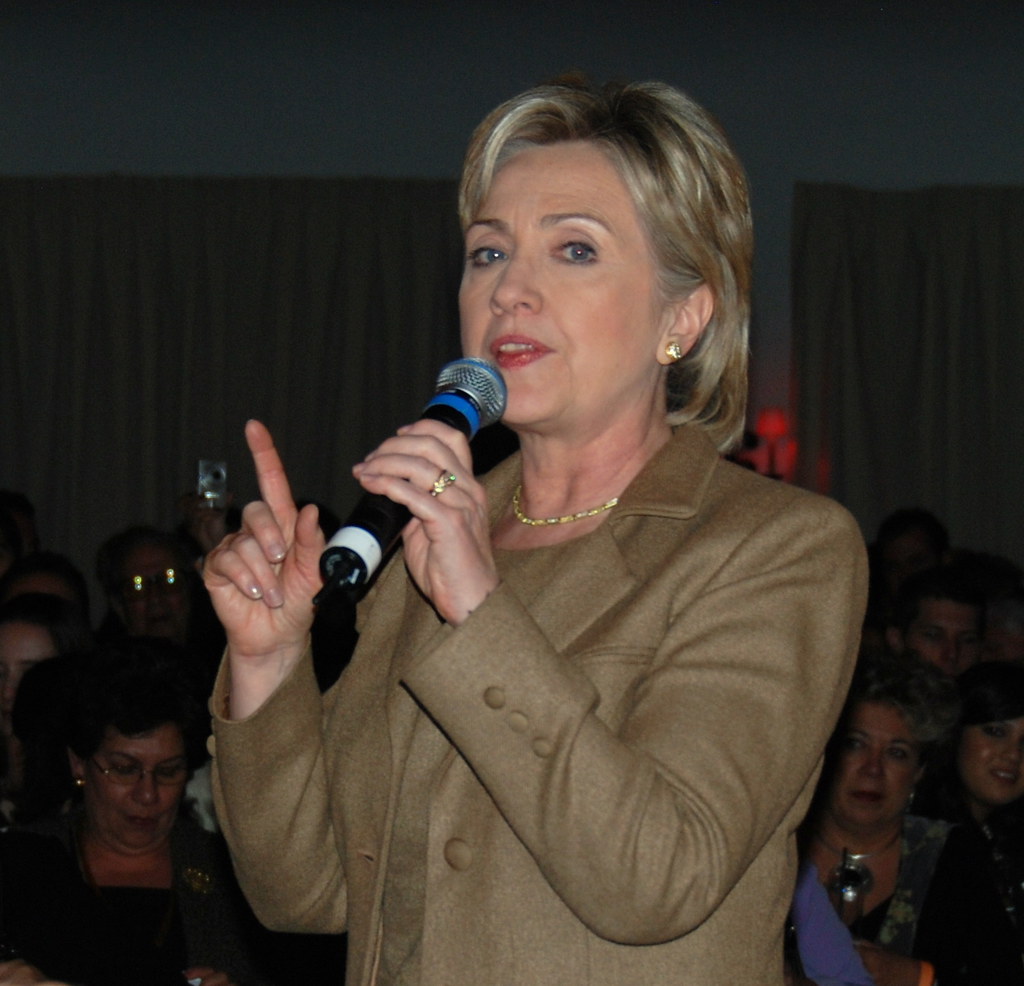
Even the way the story has been visually framed underscores its intensity. One report paired images of Megyn Kelly and Hillary Clinton, noting “Megyn Kelly, Hillary Clinton (Getty Images)” as it recounted how Kelly accused Clinton of endangering lives with her praise for protesters and her description of the shooting. That same coverage pointed out that Kelly claimed Clinton’s post could lead to more harm, though she did not specify exactly how, reinforcing the idea that the real fight is over the potential consequences of political speech about the ICE protesters and the Minneapolis shooting. Another account of the controversy highlighted how Megyn Kelly slammed Hillary Clinton for praising ICE protesters and warned that “you’re directly endangering lives” when you celebrate activists who confront agents in a residential Minneapolis neighborhood, a line that captured the stakes of Kelly’s attack on Clinton’s response.
More from Vinyl and Velvet:

Leave a Reply