

Former Congresswoman Marjorie Taylor Greene has turned a hypothetical question about parenting a transgender child into a fresh flashpoint in the national fight over school sports. Pressed on whether having a trans son or daughter would change her mind, she said she would “absolutely” still oppose what she calls “boys in girls’ sports,” framing the issue as a matter of fairness for women rather than family loyalty.
Her comments landed as the Supreme Court weighs whether state bans on transgender athletes can stand and as Republicans in the House advance broader restrictions on gender-affirming care. The result is a revealing snapshot of how personal hypotheticals, courtroom arguments, and legislative campaigns are converging around one of the most charged cultural debates in American politics.
Greene’s uncompromising answer on a hypothetical trans child
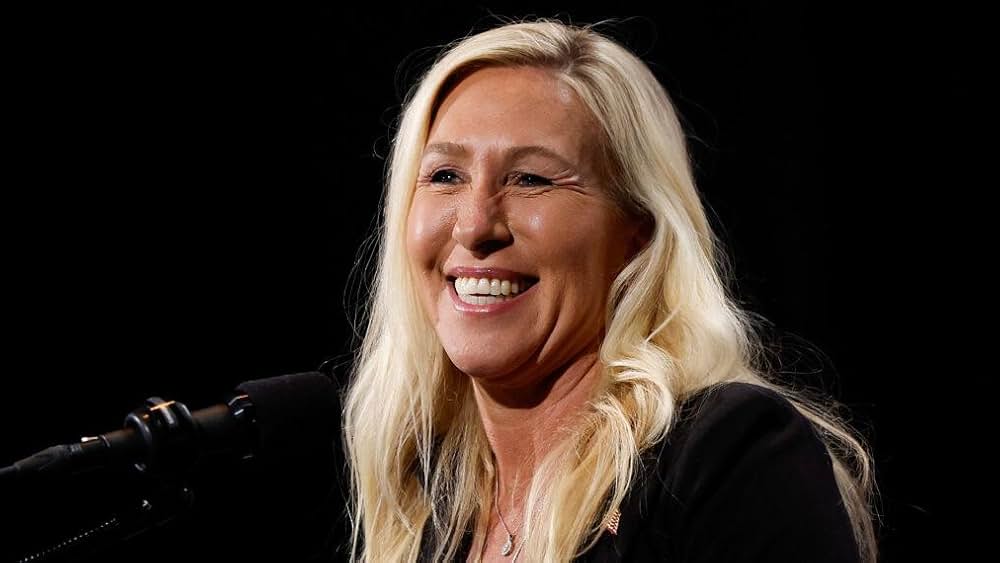
Marjorie Taylor Greene’s latest remarks came during a televised exchange in which she was asked if having a transgender child would soften her opposition to trans girls competing in girls’ sports. She replied that she “absolutely” would not change her position, insisting that her priority would remain what she describes as protecting girls and women from unfair competition. In her telling, the issue is not about rejecting a child’s identity but about refusing to allow what she repeatedly calls “boys” to enter female categories, language that directly misgenders transgender girls and women and signals how she defines the terms of the debate.
Greene has tied that stance to a broader narrative about safeguarding women’s athletics, arguing that biological differences give transgender girls an inherent edge that undermines what she calls a “fair competitive advantage” for cisgender women. In the interview, she invoked the idea that she would stand firm even in her own family, a point echoed in coverage that describes how she told a CNN host she would oppose trans athletes in women’s sports “even if she had [a] trans kid,” and how she framed her position as necessary to “protect girls and women’s sports” when she described her reasoning.
Inside the CNN exchange and Greene’s “life isn’t fair” defense
The confrontation that crystallized Greene’s position unfolded on CNN, where she was pressed on whether her rhetoric accounts for the lived reality of transgender youth. According to a transcript that identifies the anchor as BROWN, the segment opened with “Breaking news” about the Supreme Court hearing arguments in cases that could determine the future of transgender participation in sports, before turning to Greene’s record and her insistence that “women’s sports must be protected.” The setup underscored how her comments were not an isolated soundbite but part of a live debate over what the law should allow, as BROWN linked the courtroom fight to Greene’s push for categorical bans in school athletics, a connection reflected in the segment transcript.
Greene’s response leaned on a blunt mantra: “Life isn’t fair.” In coverage of the interview, she is quoted using that phrase as she defended excluding transgender athletes from women’s sports, arguing that some young people will inevitably be disappointed by eligibility rules and that, in her view, the priority must be cisgender girls who might lose scholarships or titles. Reports on the exchange note that Greene told the CNN host she would hold that line even if it meant telling a hypothetical trans child they could not compete with girls, a stance summarized in accounts that describe how Greene defended excluding trans athletes and emphasized that her position would not change inside her own home.
A long-running campaign against transgender rights
Greene’s comments on sports are not a one-off; they sit atop a broader record of targeting transgender rights in Congress. Earlier, House lawmakers narrowly approved a Bill that would criminalize certain transgender medical treatments, including surgeries for minors, after a contentious Wednesday vote that Greene championed. The measure, described as a “Bill to ban transgender surgeries,” was advanced by Republicans who sponsored the legislation and framed it as a way to restrict gender-affirming care, a move detailed in reporting on how the House passed her proposal.
That legislative push helps explain why Greene’s hypothetical about a trans child carries more weight than a cable-news thought experiment. She has already translated similar arguments into concrete policy, from criminal penalties for doctors to categorical bans on participation in girls’ sports, and she has done so while styling herself as a defender of “girls and women’s sports.” Accounts of her recent interview note that she told the host she had previously introduced legislation to keep what she calls “biological males” out of female categories and that she saw that effort as part of a broader mission to protect women, a framing echoed in descriptions of how she recounted her earlier bill.
Supreme Court signals and the legal stakes for sports bans
Greene’s hard line is unfolding against a legal backdrop that could soon reshape how states regulate transgender athletes. The Supreme Court is now hearing oral arguments in what BROWN described on air as “blockbuster cases” that could determine whether state-level bans on trans participation in school sports survive. In that same segment, BROWN told viewers that the “Breaking news” from the Supreme Court involved disputes over whether such bans violate federal protections, while also repeating that “women’s sports must be protected,” language that underscored how the justices are being asked to weigh competing claims of fairness and equality, as reflected in the CNN transcript.
Outside the courtroom, advocates are warning that the outcome will ripple far beyond track meets and swimming lanes. One account of the Supreme Court fight notes that Rights groups are tracking the cases as part of a broader crackdown that includes detentions of LGBTQ patrons in places like Baku and new criminal penalties for parents who consent to gender-affirming care, underscoring how sports bans sit within a larger pattern of restrictions. That same reporting describes how these Rights organizations see the Court’s signals that it may uphold transgender sports bans as a green light for states to go further, including targeting parents who consent to care for their children, a concern laid out in coverage of how Rights groups are reacting.
How Greene’s stance fits the GOP’s broader culture-war strategy
Within the Republican Party, Greene’s rhetoric on transgender athletes is both distinctive in tone and aligned with a wider strategy. Coverage of her recent interview identifies her as Former Congresswoman Marjorie Taylor Greene and notes that she has become a leading voice on the right for strict bans, even as some Republicans worry about alienating suburban voters. One report by Alexander Hall describes how Greene’s comments landed just as the Supreme Court signaled it may uphold transgender sports bans, and how party leaders are weighing whether to double down on the issue or pivot to economic themes, a tension captured in analysis that credits Alexander Hall with detailing those internal debates.
At the same time, Greene’s insistence that she would not support a trans child’s participation in girls’ sports has become a rallying point for activists who see any compromise as a betrayal. Multiple accounts of her comments highlight how she repeated that she “absolutely” would not back down, even when asked to imagine a trans child of her own, and how she framed that as consistent with her past bills and public statements. Those reports describe how Marjorie Taylor Greene has used the issue to sharpen contrasts with Democrats and to pressure HOUSE GOP LEADER BLAST and other party figures to embrace similar language.
More from Vinyl and Velvet:

Leave a Reply