

Maksim Chmerkovskiy has never been shy about saying exactly what he thinks, and his reaction to Jordan Chiles and Ezra Sosa’s Dancing With the Stars freestyle kept that reputation firmly intact. The longtime pro broke down their high‑energy routine with the blunt mix of praise and critique that fans expect from him, zeroing in on what worked, what did not, and why this partnership felt different from the season’s other finalists.
Instead of treating the freestyle as a simple victory lap, Maks framed it as a test of Jordan’s growth and Ezra’s creativity, then walked viewers through where the pair soared and where he felt they left points on the floor. His commentary turned a fan‑favorite performance into a case study in how DWTS rewards risk, personality, and polish at the end of a long season.
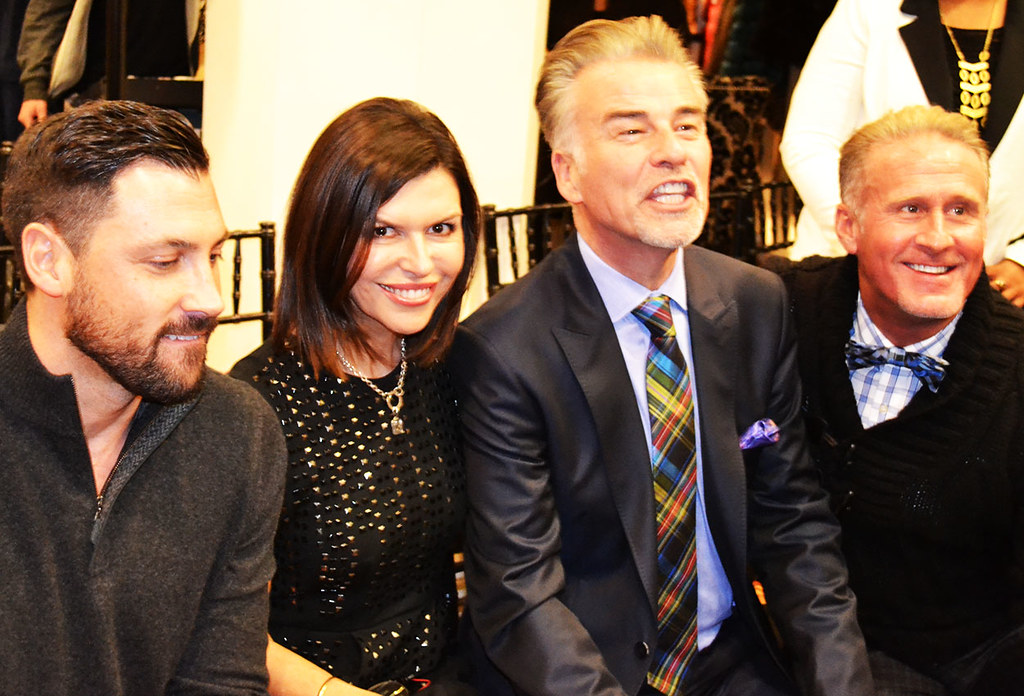
Maks breaks down the power and pressure behind Jordan and Ezra’s freestyle
From the moment Jordan Chiles and Ezra Sosa hit the floor for their freestyle, Maksim Chmerkovskiy focused on the sheer athletic power they brought to the stage and how that energy needed to be shaped into a story. He highlighted Jordan’s explosive tumbling and sharp lines as proof that her Olympic‑level training translated into ballroom, then contrasted that with the emotional vulnerability the show had been asking from her all season. In his view, the freestyle finally let her lean into both sides at once, turning the routine into a showcase of strength and personality rather than just tricks.
At the same time, Maks did not gloss over the pressure that comes with a finale performance, especially for a celebrity who is used to being judged on tenths of a point. He pointed out that Jordan’s competitive instincts could be seen in the way she attacked every pass, which sometimes edged into tension instead of ease. That balance between control and freedom is what he has often called the “final boss” of DWTS, and his breakdown of their freestyle framed it as the closest she had come to solving that puzzle across the season’s run, a payoff that echoed the judges’ reaction and the fan buzz that followed.
Why Maks thinks Ezra’s choreography mattered as much as Jordan’s star power
Chmerkovskiy also zeroed in on Ezra Sosa’s role in shaping the freestyle, arguing that the choreography was just as crucial as Jordan Chiles’ star wattage. He praised Ezra for building a routine that leaned into Jordan’s acrobatics without turning the number into a gymnastics exhibition, threading in enough traditional content to satisfy ballroom purists while still feeling like a celebration of who she is outside the show. In Maks’s analysis, that balance is what separates a memorable freestyle from a forgettable one, because it tells the audience exactly why this partnership worked.
He was equally candid about where he felt the choreography could have gone further, suggesting that a few transitions looked crowded and that a slightly cleaner structure might have given the big moments even more impact. For Maks, those notes were not a takedown but a sign of how high he rated Ezra’s potential as a choreographer and on‑air personality. By treating Ezra’s creative choices with the same seriousness he applied to Jordan’s performance quality, he underscored how DWTS has evolved into a show where pros and troupe members can build their own followings through bold, distinctive routines.
What Maks’s reaction says about DWTS freestyles and fan expectations
Beyond the specifics of Jordan and Ezra’s number, Maksim Chmerkovskiy used his reaction to make a broader point about what freestyles have become on Dancing With the Stars. He noted that finales now carry an expectation of spectacle, with fans looking for viral‑ready moments, intricate staging, and personal storytelling all packed into a few minutes. In that environment, he argued, a routine like Jordan and Ezra’s has to do more than just impress technically, it has to feel like the natural endpoint of the journey viewers have watched week after week.
His commentary also tapped into the way DWTS fandom has shifted, with social media dissecting every lift, costume choice, and judge’s comment in real time. Maks acknowledged that Jordan’s background as an elite gymnast brought a built‑in audience that expected perfection, then pointed out how the freestyle invited those fans to see her as a performer rather than just a medal‑chaser. By walking through both the highs and the rough edges, he gave that online conversation a more nuanced framework, one that treated the routine as a complex piece of entertainment instead of a simple “nailed it” or “missed it” moment.
More from Vinyl and Velvet:

Leave a Reply