

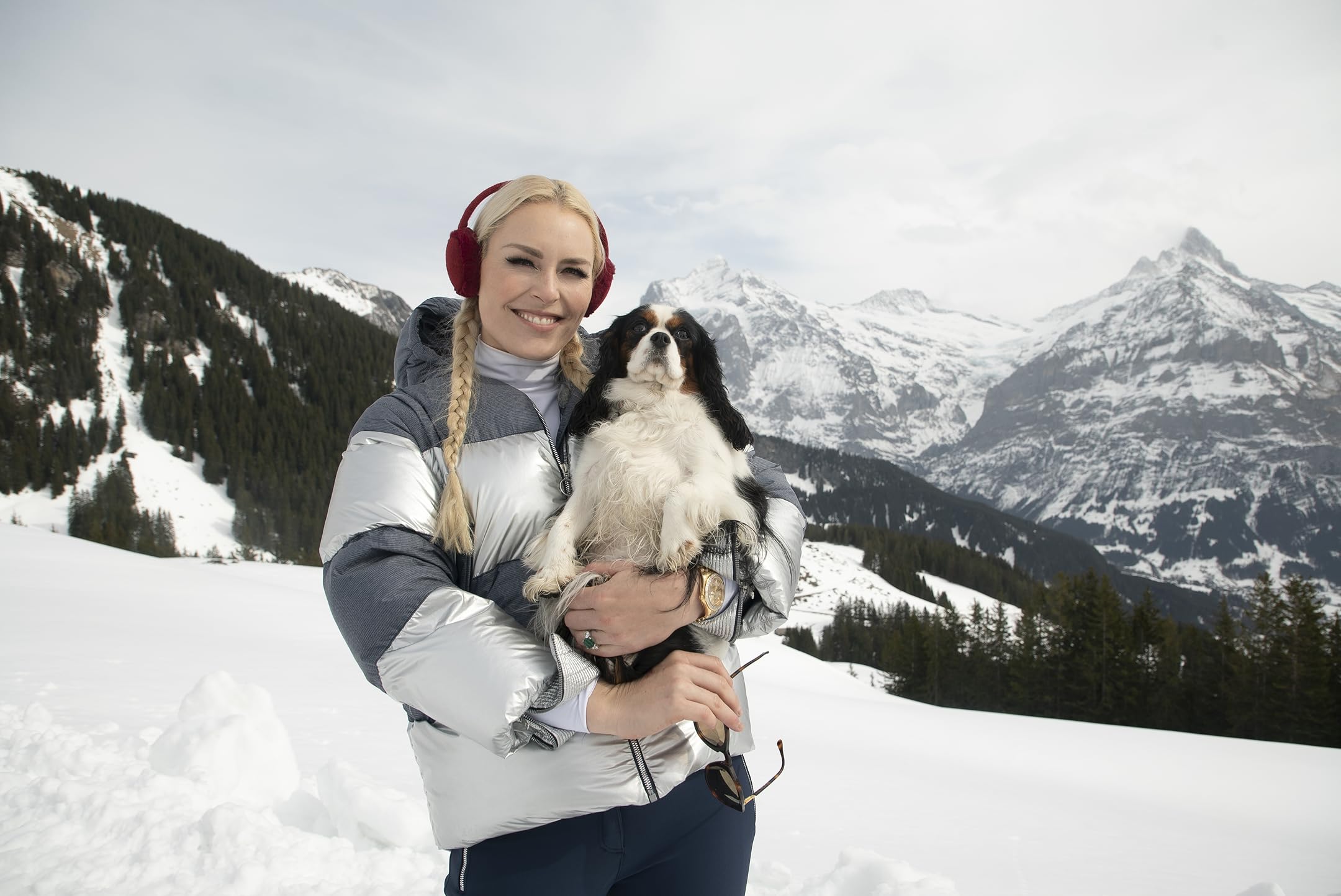
You will feel the weight of Lindsey Vonn’s week the moment you learn what happened: she crashed in the downhill at the 2026 Winter Olympics and, while recovering in a hospital bed, lost her 13-year-old dog Leo the very next day. That double blow—severe injury and the death of a longtime companion—left Vonn grappling with both physical pain and deep personal loss.
She announced Leo’s passing on Instagram, calling him her “first love” and describing how his illness and passing coincided with her own medical emergency. The following sections will explore the crash and injuries, Vonn’s recovery and reflections, and the emotional aftermath of losing a pet so close to such a public career moment.
For more on Vonn’s announcement and details about Leo, see the People coverage of the news.
Lindsey Vonn’s Heartbreaking Double Loss After 2026 Winter Olympics Crash
Vonn suffered a severe crash in the women’s downhill at Cortina d’Ampezzo and learned her longtime dog Leo died the next day. The sequence left her managing major medical care while grieving a close companion.
Details of Lindsey Vonn’s Crash During the Women’s Downhill
Vonn crashed seconds after leaving the start gate in the women’s downhill at the Milano Cortina 2026 Games, catching her arm on a gate and tumbling onto the course. Photographs from the race, including images distributed by AP photojournalist Jacquelyn Martin, show medical staff attending her on the slope before she was transferred to a local hospital in Cortina d’Ampezzo.
Team officials reported Vonn sustained a complex tibia fracture and required multiple surgeries; she underwent at least a third operation while still in Italy. Coverage noted she had previously competed despite a ruptured ACL, underscoring how much she pushed to race. Her hospital bed recovery and surgical updates became focal points for reporters and fans following the incident.
Saying Goodbye to Leo: Timeline and How She Learned the News
Leo, Vonn’s beloved dog, died the day after her crash, according to Vonn’s own updates to followers. She posted that she received the news while still hospitalized, which compounded the physical trauma with immediate personal loss. The timing — one day after the downhill crash — made the death especially devastating for Vonn and those close to her.
Friends and handlers relayed the information to Vonn while she recovered in the hospital in Cortina. Details about Leo’s cause of death were not widely shared; Vonn’s messages emphasized grief rather than specifics. The rapid succession of events created intense emotional pressure as she navigated post-op care and early recovery protocols.
The Bond Between Lindsey and Leo Through Adversity
Vonn often described Leo as a constant companion through her career highs and injuries, including prior surgeries and rehabilitation periods. Leo accompanied her during training blocks and quiet recovery stretches, becoming part of the support network that helped her stay grounded during long comebacks. Their bond had public visibility: Vonn shared photos and anecdotes about Leo on social platforms over the years.
Losing Leo right after a high-profile crash amplified the sense of loss. Teammates and former coaches noted how important animals can be for athletes’ mental health during recovery, and Vonn’s references to Leo highlighted that emotional role. Those close to her said the dog’s presence was a steadying force during both competitive seasons and time spent on the sidelines.
How Family, Friends, and Fans Are Showing Support
Family members, former teammates, and the U.S. ski federation quickly offered messages of support through social posts and media statements. Fans left tributes on Vonn’s social channels, sharing memories of Leo and sending wishes for her surgical recovery. High-profile athletes and broadcasters who covered the Milano Cortina Olympics also posted condolences and encouragement.
On-site personnel and friends coordinated to help manage logistics as Vonn prepared to return to the U.S. after surgery, ensuring medical records and travel arrangements were in place. Local reporters in Cortina and outlets such as the AP and major broadcasters relayed both her medical updates and the news about Leo, which helped concentrate public support while respecting Vonn’s need for privacy.
Injuries, Recovery, and Reflections on Lindsey Vonn’s Career and Resilience
Lindsey Vonn faces both a severe physical recovery and an emotional reckoning after the crash and the loss of her dog. Medical details, surgical steps, and moments from her career show how her body and mindset have been tested repeatedly.
Nature and Extent of Lindsey Vonn’s Injuries
Vonn suffered a complex tibia fracture in her left leg after crashing early in the downhill at the 2026 Winter Olympics. Imaging and reports describe multiple fracture lines and joint involvement, which classify it beyond a simple break and increase the risk of long-term stiffness and arthritis. Her injury followed an already fragile situation: she had ruptured her left ACL nine days earlier and had skied with that torn ACL into the Olympic downhill start.
The combination of an ACL tear and a complex tibia fracture requires careful stabilization to protect joint alignment. That instability explained the use of an external fixator during transport and the need for staged surgical repairs. Those details matter because they affect decisions on weight-bearing, rehabilitation timelines, and the potential for future procedures.
The Impact of Multiple Surgeries and Her Medical Journey
Vonn underwent four surgeries in Italy before being cleared to return to the U.S., reflecting a staged approach common for high-energy limb injuries. Initial operations focused on controlling bleeding, stabilizing bone fragments with external fixation, and addressing soft-tissue damage. Follow-up procedures aimed to convert temporary fixation to internal fixation when swelling permitted and to repair or reconstruct surrounding ligaments where feasible.
Multiple surgeries increase infection, stiffness, and recovery-time risks, and they extend inpatient stays—hence her week in an Italian hospital. Surgeons typically balance early stabilization against waiting for optimal conditions for definitive fixation. That strategy affects physical therapy milestones: guarded range-of-motion work, progressive weight-bearing, and long-term strengthening to restore function for an elite skier or daily life.
Leo’s Role During Lindsey’s Past Injuries and Major Career Moments
Leo accompanied Vonn through many recoveries and high points, providing emotional support during repeated surgeries and rehab cycles. Dogs like Leo often serve as steady companions in hospital stays and during the long, solitary stretches of physical therapy after injuries such as ACL ruptures or knee surgeries. Vonn’s career included major setbacks—ACL tears, multiple knee operations, and a partial right knee replacement before her 2024 comeback—periods when a pet’s presence eased isolation.
Fans and teammates noted Leo in social-media posts and behind-the-scenes videos, where he appeared during quieter recovery days and in celebratory moments after World Cup finals. That consistent presence made Leo part of Vonn’s coping network, not just a pet but a source of routine and comfort amid medical uncertainty and high-pressure competitions.
Looking Forward: Vonn’s Recovery and Emotional Healing
Clinicians will likely prescribe a phased rehabilitation plan emphasizing pain control, infection surveillance, and progressive mechanical load on the tibia. Early goals include protecting the repair, preventing contractures, and maintaining conditioning without stressing the healing bone. Months of supervised physical therapy, gradual weight-bearing under radiographic guidance, and possible hardware removal or revision are realistic expectations for a complex tibia fracture paired with ligament injury.
Emotionally, Vonn must process both the end of her Olympic comeback and the death of Leo. Grief can slow motivation and complicate rehab adherence, so integrating psychological support into recovery is important. Public updates and controlled social-media sharing may help her stay connected to fans while she navigates medical decisions and the slow work of rebuilding mobility and daily routines.
Relevant reading on her hospitalization, surgical timeline, and recovery context appears in accounts of her treatment in an Italian hospital and return to the U.S. after four surgeries.
More from Vinyl and Velvet:

Leave a Reply