

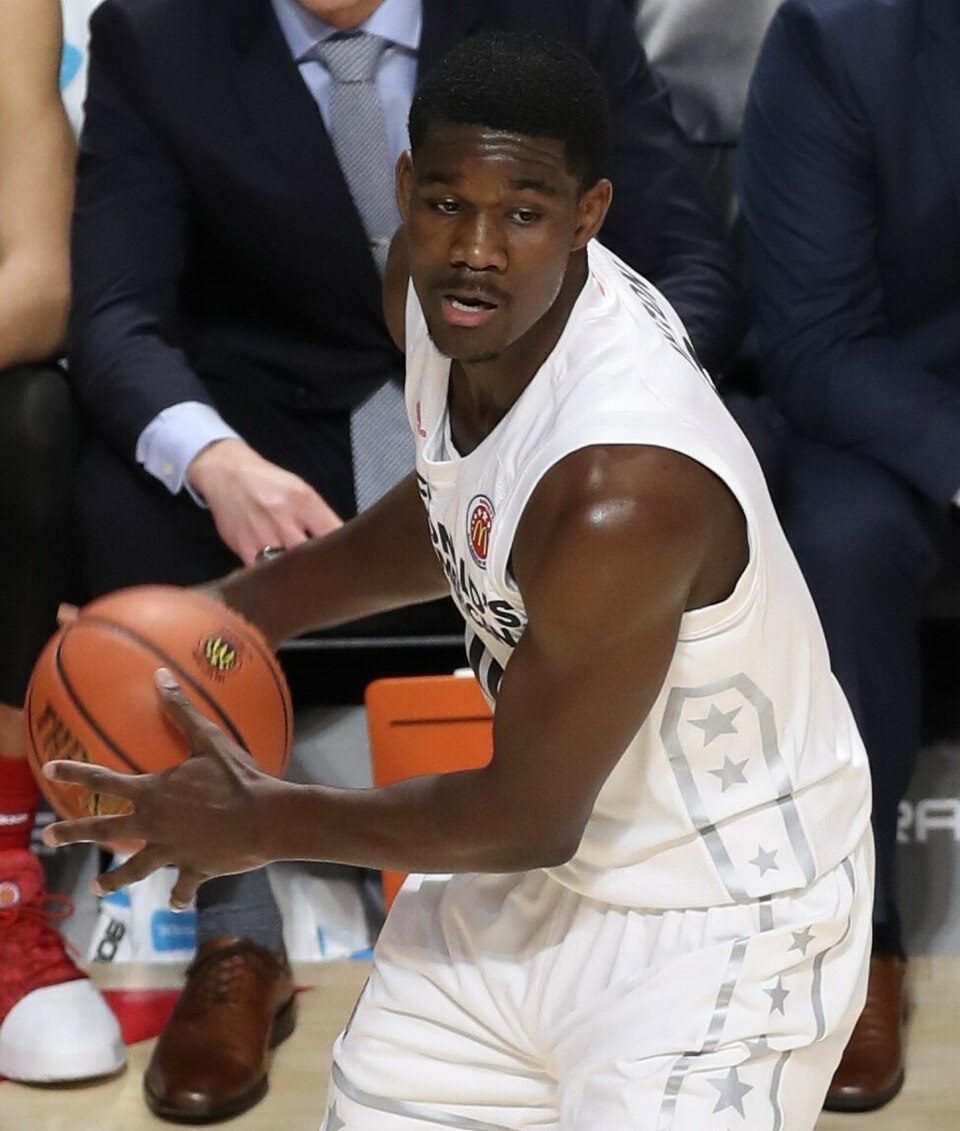
You’ll want the facts up front: Los Angeles Lakers center Deandre Ayton was briefly detained at Lynden Pindling International Airport in the Bahamas after authorities suspected he had a very small amount of marijuana, and he was released quickly after investigators determined the substance wasn’t in his bag. The investigation did not lead to charges, and both team and league officials declined to comment.
You’ll get a concise timeline of what happened at the airport, why Bahamian law mattered in this situation, and how the incident might affect Ayton’s role with the Lakers and any NBA response. Expect details about the detention itself, reactions from Ayton’s camp, and what this could mean for the remainder of his season.
Details of Deandre Ayton’s Detention in the Bahamas
Ayton was stopped and briefly held at Nassau’s main international airport after authorities identified a small quantity of marijuana during a bag check. His lawyer says the substance belonged to someone else and Ayton was released after a short investigation.
Incident Timeline at Lynden Pindling International Airport
Deandre Ayton was detained on Feb. 17 while attempting to travel through Lynden Pindling International Airport in Nassau. Royal Bahamas Police Force officers inspected luggage and located what they described as a very small amount of marijuana during a search.
Ayton remained at the scene while officers conducted inquiries and checked whether the substance was in his bag. The detention lasted only a short time; police quickly determined the material was not in Ayton’s personal bag and released him without charges.
Reuters reported the sequence of events and noted Ayton’s release. The brief nature of the detention and the lack of formal charges were central to how the incident unfolded publicly.
Circumstances Behind Marijuana Possession Suspicion
Airport staff or law enforcement found a small quantity of what they believed to be marijuana during a routine or targeted search of passenger luggage. The quantity was repeatedly described in reports as “very small,” suggesting possession rather than intent to distribute.
Bahamas law still criminalizes possession of marijuana, which explains the immediate police involvement despite the item’s size. Reports indicate the substance appeared to be in a bag that investigators initially associated with Ayton, prompting the short detention and follow-up checks.
Media accounts emphasize that the discovery occurred at a security checkpoint or baggage inspection area. No public indication has emerged that Ayton admitted ownership; instead, statements point to the substance being in another person’s bag.
Role of Lawyer Devard Francis and Immediate Release
Devard Francis, Ayton’s lawyer, issued a statement saying investigators saw the marijuana was not in Ayton’s bag and that Ayton was released expeditiously. Francis’s remarks to Reuters framed the incident as a short investigation that concluded without charges.
Francis acted as the public spokesperson, clarifying that Ayton cooperated with authorities and was not charged. That legal representation likely helped coordinate Ayton’s prompt release and manage communication with Nassau authorities and the media.
The lawyer’s statement formed the basis of many reports and was cited by outlets covering the incident. Francis stressed the small amount involved and that Ayton, a Bahamas native, faced no further legal action that day.
Legal Status of Marijuana in the Bahamas
Possession of marijuana remains illegal in the Bahamas; local police can detain individuals found with controlled substances even in small amounts. This legal context explains why Royal Bahamas Police Force officers treated the discovery at the airport as a matter requiring investigation.
The Bahamas has not aligned with jurisdictions that decriminalized or legalized recreational marijuana; travelers can face scrutiny for carrying or being linked to small amounts. Reporters noted that although the NBA no longer tests players for marijuana under the current CBA, Bahamian law governs conduct inside its borders.
Because Ayton is a Bahamian national and a public figure, the enforcement and immediate release drew attention in both local and international media, including Reuters, which relayed the official sequence and lawyer statements.
Impact on Lakers, NBA Response, and Ayton’s Season
The incident prompted quiet responses from both the organization and the league, raised questions about roster and rotation decisions, and arrived as Ayton was managing knee soreness and evaluating his role ahead of roster moves.
Team and League Officials Decline Comment
Team spokespeople and NBA public relations did not provide statements when contacted about the Bahamas detention, and the Lakers’ media relations unit declined to comment on any disciplinary or investigatory steps. League officials similarly issued no public response, signaling either an ongoing review or a decision to await formal reports from local authorities before acting.
The lack of comment leaves operational questions unresolved for the Lakers’ front office and coaching staff. Internal evaluations typically consider legal outcomes, team policy, and timing relative to the season; those factors will drive any personnel decisions more than media speculation.
Ayton’s Performance and Recent Lakers Tenure
Deandre Ayton, a former No. 1 overall pick, has been the Lakers’ primary center since signing last offseason. He averages roughly 8.5 rebounds per game and provides interior scoring, but appearance and effort have drawn both praise and criticism at times.
Ayton has missed games recently with knee soreness, creating opportunities for Jaxson Hayes to play increased minutes. That rotation fluctuation, plus Ayton’s $8.1 million player option and the Lakers’ offseason cap flexibility, keeps his status under regular evaluation as the team weighs production, chemistry with LeBron and the supporting cast, and long-term fit.
All-Star Break Context and Next Steps
The incident occurred as the team paused for the All-Star break, a timing that complicates immediate responses. Breaks often allow teams to investigate off-court issues without rushing roster decisions, and the Lakers will likely coordinate with legal counsel and the league before determining any internal measures.
Practical next steps include medical clearance for Ayton’s knee, review of travel and conduct policies, and internal meetings about rotation plans ahead of the Clippers game and the remainder of the regular season. The organization also must consider public-relations messaging that balances player privacy and franchise standards.
Background: Phoenix Suns, Portland Trail Blazers, and Career Stats
Ayton entered the NBA as the No. 1 overall pick after a standout Arizona season and spent his early career with the Phoenix Suns. He later had a stint with the Portland Trail Blazers before joining Los Angeles, giving him experience in multiple playoff-aspiring systems.
Across his career, Ayton has been known for rim scoring and rebounding; current single-season numbers show him around 8.5 rebounds per game and solid field-goal efficiency inside the paint. Those metrics factor heavily into how the Lakers evaluate him against alternatives and possible free-agent or trade options.
More from Vinyl and Velvet:

Leave a Reply