

You will want to know exactly why Kid Rock’s alternative Super Bowl halftime event vanished from X just hours before it was scheduled to air. The show was removed from the platform at the last minute, forcing Turning Point USA and its viewers to scramble for alternate ways to watch.
Expect a clear timeline of what happened, how the removal affected viewers and organizers, how the event compares to Bad Bunny’s halftime show, and which moments still caught attention despite the platform snag. This post will unpack the licensing and platform issues, highlight notable performances and tributes, and summarize the wider reactions across media and politics.
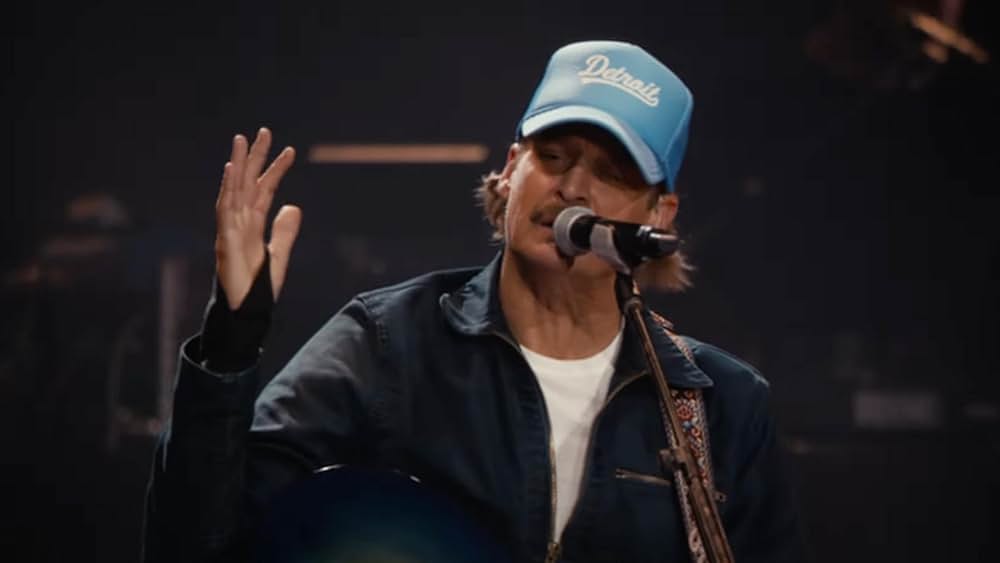
Overview of Kid Rock’s Super Bowl Halftime Event
Turning Point USA organized a roughly 30-minute counterprogrammed halftime stream featuring country and rock acts, aiming to offer a patriotic, “All-American” alternative to the NFL’s official halftime performance.
Event Concept and Goals
Turning Point USA positioned the program as a politically themed alternative to the NFL’s halftime, marketed to conservative viewers who objected to the official headliner. The goal emphasized celebrating American musicians and traditional patriotic imagery rather than mainstream pop spectacle. Organizers framed the event as a response to criticism over the NFL’s choice of a Spanish-language headliner, and they sought to draw viewers who wanted a country-inflected halftime experience.
The stream aimed to reach a broad online audience; Turning Point reported millions of live streams. It also sought to raise the organization’s profile and to create a cultural counterweight during a national sporting moment, using music to communicate values important to its base.
Key Performers and Collaborations
Kid Rock headlined the show and performed a mix of his rock hits and country-leaning material. He closed with a cover of the Cody Johnson song “’Til You Can’t,” underscoring the event’s country direction. Country artists Brantley Gilbert, Gabby Barrett and Lee Brice each took turns on the bill, contributing established country singles and crowd-pleasing covers.
The lineup blended rock energy with mainstream country voices to broaden appeal. Collaborations and set choices leaned on patriotic songs—Brantley Gilbert opened with a guitar-led rendition of the “Star Spangled Banner” and played tracks like “Real American.” Producers kept sets tight to fit the halftime window and to sync with the Super Bowl schedule.
“All-American Halftime Show” Identity
Branding emphasized the name “All-American Halftime Show,” using flags, military imagery and photo tributes to reinforce a conservative cultural identity. The program concluded with a tribute to Turning Point founder Charlie Kirk, further tying the event to the organization’s leadership and message. Visuals and song selections aimed to signal traditional American values and country music roots.
The stream presented itself as explicitly alternative to the official Super Bowl halftime show headlined by Bad Bunny, positioning language and aesthetics to contrast the Puerto Rican artist’s performance style. That positioning, combined with a mostly country roster, defined the event’s identity as a politically inflected, patriotic music showcase.
Last-Minute Removal From X Platform
Turning Point USA’s planned halftime stream disappeared from X less than two hours before kickoff, forcing organizers to reroute viewers and adjust on-the-fly distribution plans. Licensing complications, public statements from TPUSA, and quick pivots to YouTube shaped how fans and platforms reacted.
Licensing Restrictions and Logistical Issues
TPUSA said licensing restrictions prevented the stream from airing on X, with the group citing issues outside its control. Reports indicate the removal occurred close to showtime, after promotional links and posts had already circulated widely on X.
That timing left little room to secure alternative digital rights or confirm retransmission permissions with the NFL or third-party rights holders.
Technically, the takedown behaved like a platform enforcement tied to copyright and broadcast rights; organizers shifted to YouTube, where the event ultimately streamed. YouTube’s established livestream infrastructure let TPUSA restore access quickly, though streaming on YouTube still required TPUSA to manage discoverability, moderation, and monetization differently than on X.
Official Statements by Turning Point USA
Turning Point USA publicly framed the removal as abrupt and outside their control, blaming licensing restrictions for the sudden change. They provided updates through their channels and encouraged viewers to move to the new YouTube link.
TPUSA emphasized that the program would still run, and posted guidance for viewers on where to watch, including embedding links and social posts that redirected traffic.
X did not publish a detailed public explanation tied to TPUSA’s statements in most reporting, leaving a gap between TPUSA’s account and platform-side rationale. News outlets noted the contrast and quoted TPUSA’s messaging while also citing platform enforcement patterns in similar copyright disputes.
Impact on Viewers and Streaming Platforms
Viewers encountered confusion: some saw broken X embeds and error messages, while others were redirected to the YouTube stream. Turnout on the replacement feed reached millions, but the last-minute move fractured the audience and reduced simultaneous viewership tied to X’s active user base.
Platforms monitored moderation and copyright risks; YouTube handled increased load and comment moderation, while X faced criticism for the timing of the removal.
Legacy and cable-aligned outlets, including Newsmax, covered the disruption and highlighted audience migration patterns. The incident underscored how platform policy, licensing rules, and quick technical pivots can reshape a live event’s reach within hours.
Comparing the Competing Halftime Shows
Bad Bunny delivered a high-production, primarily Spanish-language set that emphasized choreography, Puerto Rican cultural nods, and a large broadcast audience. Turning Point USA’s Kid Rock-led alternative aimed for a politically coded counter-program, streaming separately after a last-minute pull from X and drawing attention for its partisan framing.
Bad Bunny’s Official Halftime Performance
Bad Bunny opened with a tightly choreographed production focused on reggaetón and Latin trap tracks, blending full-band arrangements with backing dancers and set changes. He included explicit Puerto Rican references in wardrobe and visuals, and he performed much of the set in Spanish, which motivated both strong fan enthusiasm and conservative backlash.
Television viewership for the main halftime show was exceptionally high; reports suggested the broadcast may have approached historic levels for halftime audiences. The performance leaned into mainstream pop spectacle while foregrounding Bad Bunny’s musical catalog and identity as a Puerto Rican artist.
Audience Reactions and Social Media Buzz
Reaction split along cultural and political lines. Fans praised the show for its energy, bilingual moments, and parade of hits, using clips and hashtags to amplify highlights across platforms. Critics from conservative circles criticized the language choice, fashion, and political statements tied to the artist’s recent comments.
Parallel chatter surrounded Kid Rock’s set—some viewers tuned into the alternative for novelty or politics, others to compare production values. Social metrics showed heavy sharing for both performances; short-form video platforms carried the most rapid spikes in engagement during and immediately after each set.
Counter-Programming Strategy
Turning Point USA framed the Kid Rock event as an “All-American” alternative to the NFL-backed halftime, positioning it explicitly for viewers disaffected by Bad Bunny’s image and politics. Organizers planned a concurrent stream to siphon viewers from the main broadcast, but licensing restrictions forced the event off X shortly before airtime and onto platforms like YouTube and Rumble.
The strategy relied on political loyalty more than mainstream entertainment reach. That narrowed the potential audience compared with the Super Bowl’s centralized TV broadcast, but it produced concentrated attention within conservative media circuits and landed earned coverage about the tug-of-war between culture and politics.
Controversies and Online Rumors
The event drew sharp attention for lyrics, technical claims, and the political context around Turning Point USA’s alternate halftime show. Social posts questioned whether performances were live, whether lyrics crossed lines, and how political figures framed the event.
Backlash Over Kid Rock’s Lyrics
Many critics flagged lines from songs like “Dirt Road Anthem” and “Bawitdaba” for tone and content during a high-profile moment. Listeners said some verses seemed out of step with a family-oriented broadcast window, prompting calls on social platforms to criticize the choice of setlist.
Supporters pushed back, arguing the songs are staples of his catalog and that editing or context could change perception. Media commentators noted how specific lyrics were clipped and recirculated, which amplified anger and made it harder to judge intent from short clips alone.
Rumors of Cancellation
Hours before the performance, posts circulated claiming Turning Point USA’s “All-American Halftime Show” was canceled after artists dropped out. Fact-checkers later reported no official cancellation announcement, and event organizers proceeded with a scaled broadcast pulled from X shortly before airing.
Others alleged lip-syncing and pre-recorded vocals, pointing to moments where audio and mouth movements appeared mismatched. Kid Rock denied those claims in interviews, and commentators traced some confusion to technical issues and alternate feeds rather than a deliberate pre-record.
Political and Cultural Reactions
Political figures such as Charlie Kirk promoted the event as a conservative alternative, while critics framed it as a partisan stunt tied to larger culture-war debates. Coverage included statements tying the halftime choice to broader support for Donald Trump among some attendees and promoters.
Cultural observers debated whether the backlash reflected genuine offense at lyrics or was amplified because the show aligned with a political faction. Social media threads showed polarized reactions: defenders emphasizing performance rights, and opponents viewing selection and promotion as intentional political signaling.
Tributes, Notable Moments, and Special Guests
The event mixed political homage, country-leaning performances, and a few shouted endorsements that shaped its tone. Viewers saw tributes to a conservative leader, a compact setlist with familiar hits and covers, and public reactions from political allies that framed the broadcast.
Charlie Kirk’s Legacy and Tribute Segment
Kid Rock and Turning Point USA framed the show as a tribute to Charlie Kirk, who was honored several times during the broadcast. Jack Posobiec opened with a direct shoutout to Kirk, and Kid Rock added a new stanza to his rendition of “’Til I Can’t” referencing faith and Kirk’s influence.
Brantley Gilbert and Lee Brice also acknowledged Kirk; Brice introduced a new song, “Country Nowadays,” with a short dedication. The show used visual nods — flags and red-white-blue staging — to reinforce the memorial tone without a prolonged eulogy.
The segment emphasized Kirk’s role as a conservative organizer and TPUSA founder rather than offering biographical detail. That kept the moment focused and tied to the group’s audience rather than broad historical context.
Highlight Performances and Setlist
Kid Rock headlined a roughly 35-minute program that blended his rock-rap catalog with country covers. He opened with “Bawitdaba” and later performed a cover of Cody Johnson’s “’Til I Can’t,” including the added verse about faith.
Brantley Gilbert performed “Dirt Road Anthem” and other blue-collar country numbers. Lee Brice delivered a three-song set including “Drinking Class,” and Gabby Barrett sang “I Hope” among her contributions.
The show felt tightly produced, with quick outfit changes and a stage band backing each act. Presentation suggested a prerecorded format and kept pacing brisk to fit the counterprogramming slot alongside the Super Bowl halftime.
Messages From Political Figures
Several political figures and commentators were referenced or appeared in brief segments, reinforcing the event’s partisan framing. TPUSA personalities provided onstage commentary; Jack Posobiec’s opening remarks explicitly tied the broadcast to Kirk’s legacy.
Social media posts amplified the event: members of the Republican base, including supporters in the White House, signaled approval publicly. The broadcast avoided long policy speeches, favoring short endorsements and patriotic messaging instead.
The event also carried an implied critique of the NFL’s halftime choice and ICE policies through artist selections and onstage slogans like “God Family Country,” connecting musical choices to current political debates.
Broader Reactions and Industry Impact
The event’s removal from X hours before it was set to air sparked immediate debate about platform moderation, audience reach, and the business risks for alternative broadcasts tied to political organizations. Reactions ranged from streaming metrics shifts to industry discussions about brand safety and performer exposure.
Media Coverage and Viewership Stats
News outlets quickly covered the takedown, noting spikes in searches and social mentions tied to both Kid Rock’s set and the official Super Bowl LX halftime performance. Coverage emphasized viewership fragmentation: some audiences watched Bad Bunny’s halftime on the NFL broadcast, while others tracked the Turning Point USA stream or clips redistributed across platforms.
Preliminary reports suggested smaller live audiences for the alternative stream compared with the NFL’s halftime, but higher-than-expected engagement on conservative platforms and Rumble. Mainstream outlets compared ratings to Seattle Seahawks and New England Patriots game-day broadcasts to contextualize attention, noting the NFL’s halftime still dominated national linear ratings. Advertising partners and streaming distributors monitored minute-by-minute numbers to assess lost ad impressions and distribution liability.
Country Music’s Spotlight on the Super Bowl
Country performers tied to the alternative show—Brantley Gilbert, Lee Brice, and Gabby Barrett—saw a surge of attention linked to political debate rather than musical promotion. Industry editors discussed whether association with a partisan halftime option shifts touring demand or radio play for these artists.
Country radio and festival bookers weighed potential backlash against the marketing boost of national exposure during Super Bowl week. The genre’s audience demographics—important to advertisers—factored into decisions. Coverage also compared country-leaning reactions to the mainstream halftime buzz around Bad Bunny, highlighting how the Super Bowl moment can reshape artist profiles beyond typical country circuits.
Aftermath for Performers and Organizers
Performers faced immediate reputational and commercial consequences. Some promoters reported canceled requests from neutral venues citing brand-safety concerns, while others received new offers from politically aligned promoters. Kid Rock’s profile rose in conservative media, but mainstream festival organizers signaled caution.
Turning Point USA and partner platforms evaluated legal and contractual exposure after the X removal, and they adjusted distribution plans for future events. The NFL and halftime producers used the episode to reinforce centralized broadcast control and sponsorship protections, mindful of comparisons to past halftime controversies involving major franchises like the Seattle Seahawks and New England Patriots that affected league PR cycles.
More from Vinyl and Velvet:

Leave a Reply