

Kid Rock’s latest attempt to fuse country spectacle with MAGA swagger is not going to plan. What was pitched as a red-state roadshow built around big names and small-town stages is now defined by who is bailing rather than who is booked. As more performers walk away, the festival’s politics, branding, and basic viability are all getting dragged into the spotlight.
The unraveling of Rock the Country is not just a messy talent shuffle, it is a stress test for how far artists are willing to ride with overtly partisan branding in 2026. The exits of Ludacris, Morgan Wade, Carter Faith, and others show how quickly a glossy tour can turn into a reputational hazard once fans, activists, and the artists themselves start connecting the dots.
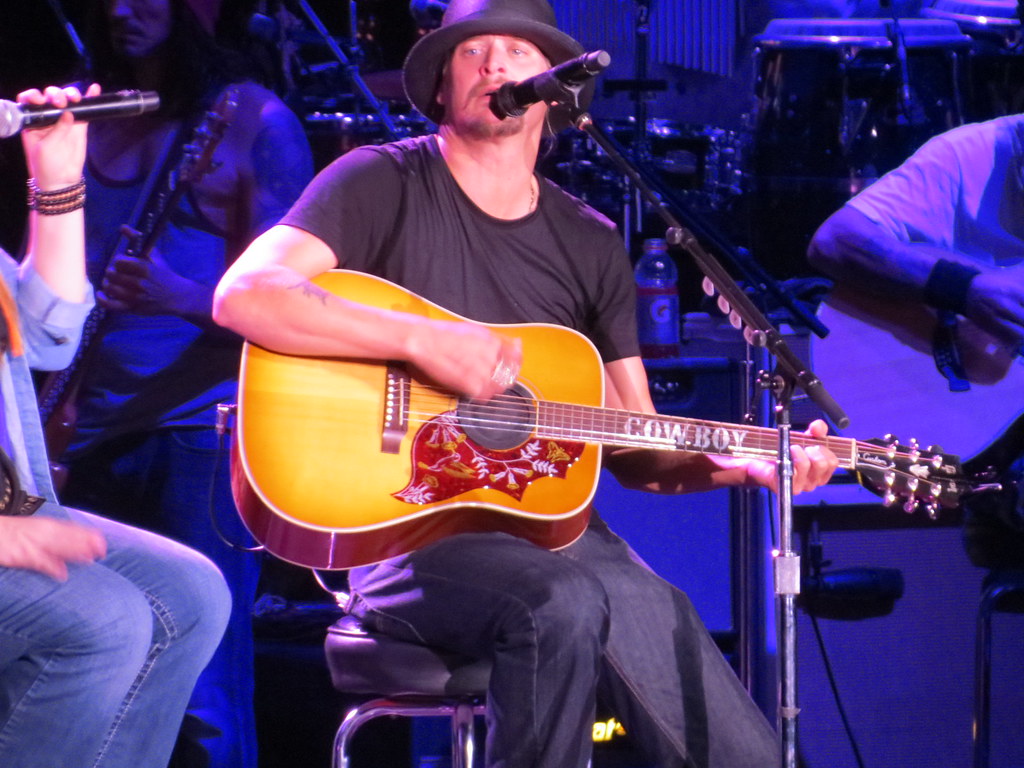
The MAGA-coded roadshow Kid Rock wanted
Kid Rock launched Rock the Country as a traveling country festival that would plant a flag in smaller communities rather than the usual coastal arenas. The official site for Rock the Country lays out a multi-city tour built around Kid Rock as the anchor, with a rotating cast of country and country-adjacent acts meant to turn fairgrounds and fields into full-blown party zones. The pitch is simple: take the tailgate energy of a stadium show, drop it into towns that rarely see national tours, and wrap it in the unapologetic, flag-waving persona Kid Rock has leaned into for years.
That persona is exactly why the festival has been tagged as MAGA-coded from the start. Kid Rock has long aligned himself with conservative politics and has been a vocal supporter of President Donald Trump, so a festival curated and headlined by him was always going to carry that baggage. Reporting on the 2026 lineup notes that Kid Rock announced the new run earlier this year, positioning it as the latest chapter in a country festival he first rolled out in 2024, but the same coverage also highlights how the political overtones are now fueling backlash against Kid Rock’s music.
Ludacris signs on, then backs away from the heat
One of the most surprising names on the 2026 bill was Ludacris, a rapper whose mainstream image is more Fast & Furious than red-hat rally. Earlier this year, Earlier reports flagged his addition to the Rock The Country Tour as a head-turning booking, a crossover move that suggested Kid Rock wanted to broaden the festival’s appeal beyond hardcore country and conservative diehards. The idea of Ludacris trading verses in front of a sea of lifted trucks and American flags was always going to spark conversation, and it did.
That conversation quickly turned into pressure. As the MAGA framing of the tour solidified, Ludacris’s camp moved to distance him from the politics swirling around the event. An Instagram update noted that Ludacris had withdrawn from the 2026 Rock the Country dates across eight U.S. cities, with his team pointing to a “miscommunication” about the nature of the festival. The walk-back underlined a hard reality for artists with broad, mainstream brands: signing onto a tour that fans read as a MAGA rally is not just another gig, it is a political statement that can stick long after the last encore.
Morgan Wade and Carter Faith decide the risk is not worth it
If Ludacris’s exit was the headline-grabber, the departures of Morgan Wade and Carter Faith are the clearest sign that even rising country artists see Rock the Country as a reputational minefield. Both were initially promoted as part of the 2026 lineup, slotted alongside Kid Rock and other Nashville names as the tour’s country core. Coverage of the shakeup notes that Morgan Wade and Carter Faith were billed as part of the traveling festival before quietly stepping away, a move that immediately raised questions about what they were hearing from fans and industry peers behind the scenes.
Their decisions did not stay quiet for long. A follow-up report highlighted that Morgan Wade (left) had been removed from promotional materials, and another update stressed that Morgan Wade and were the latest artists to pull out of the Rock The Country Tour 2026. Wade’s name was scrubbed from the tour’s website, and both artists effectively signaled that whatever exposure the festival offered was not worth being tied to a MAGA-branded event. For young acts trying to build long careers, that kind of calculation is as much about future festival bookings and brand deals as it is about personal politics.
Backlash, brand damage, and the growing no-show list
Once a few names peeled off, the narrative around Rock the Country shifted from “stacked lineup” to “who is left.” Coverage tracking the fallout notes that Rock the Country as Carter Faith and Morgan Wade exited, and that performers were “dropping like flies” from Kid Rock’s controversial tour. Another report framed it bluntly: Artists quit Kid Rock’s festival amid backlash, with two more musicians leaving Rock the Country after Ludacris’s move, as criticism of the lineup’s politics intensified. Each departure reinforced the idea that playing the festival was not a neutral career step but a public stance.
Social media amplified that perception. One widely shared post spelled out that Two more acts had quietly exited the MAGA-coded Rock the Country tour festival after initially appearing on the lineup, underscoring how the event’s branding was being read by fans and critics alike. Another slice of coverage cataloged all the artists who had pulled from Kid Rock’s festival, noting that Ludacris, Morgan Wade and others were now off the Rock the Country bill that Kid Rock had built. The same rundown pointed out that Kid Rock’s own history includes performing at President Donald Trump’s inauguration, a reminder that this festival is not happening in a political vacuum.
What the exodus says about politics and country music in 2026
The Rock the Country drama is not just about one messy tour, it is a snapshot of how fraught the intersection of politics and music has become. Country has long been stereotyped as a conservative stronghold, but the exits from Kid Rock’s festival show a more complicated reality. A detailed breakdown of the lineup shifts notes that Morgan Wade (left) were not alone in reassessing their involvement once the MAGA framing took hold, and that performers are increasingly weighing how festival branding lines up with their own values and fan bases. For artists who want to play both red-state fairs and blue-state theaters, being locked into a partisan image can close doors fast.
The ripple effects extend beyond country, too. A broader look at the touring landscape points out that Fellow rapper Nelly has also faced backlash for performing on conservative stages in the past, including at the first Rock the Country run, and that his own touring plans from New York through early September are now being watched through that lens. When a festival like Rock the Country becomes shorthand for a political movement, every artist on the poster is forced to decide whether the paycheck and exposure are worth the label. For Kid Rock, the growing list of no-shows is a loud answer, and a warning to anyone else thinking about turning a tour into a campaign stop with a merch table.
More from Vinyl and Velvet:

Leave a Reply