

The federal case against Luigi Mangione just took a sharp turn, and it happened in the kind of low‑key courtroom moment that can decide what a jury ultimately hears. After initially siding with prosecutors, a judge changed course and agreed to dig into whether key evidence from Mangione’s backpack should have been seized at all. That pivot, made on a Monday in Jan, has given the accused UnitedHealthCare CEO killer a rare procedural win at a moment when the stakes could not be higher.
The shift is not about guilt or innocence, at least not directly. It is about how far officers could go when they grabbed Mangione’s bag, opened it up, and pulled out the items that now sit at the center of the government’s case. If the search is ruled out of bounds, some of that material may never make it in front of a jury.
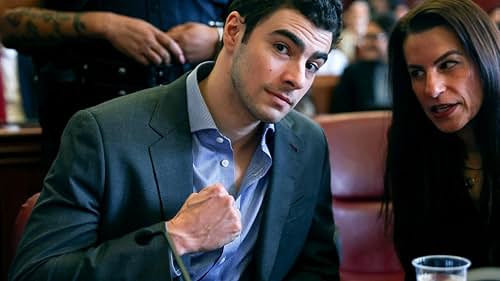
The backpack that could reshape the case
The judge overseeing the federal prosecution signaled early on that the backpack search was likely to stand, then reversed course and agreed to hold a short hearing to test whether officers crossed a constitutional line. That change of heart came after defense lawyers pressed the court to look more closely at how Mangione was stopped, how the bag was taken, and what officers did before they ever saw a warrant. The new hearing, ordered in Jan, will zero in on the seizure and search of the backpack that officers say contained a notebook and writings tying him to the killing, material that first surfaced publicly through a brief mention on Instagram.
Prosecutors have framed the bag as a kind of mobile crime scene, arguing that what was inside helps connect Mangione to the shooting of the UnitedHealthCare chief executive on a New York City sidewalk in 2024, a link that has been described in more detail in federal filings. Defense lawyers, by contrast, have treated the backpack as Exhibit A in what they say was an overreach by officers who grabbed first and justified later. The judge’s decision to revisit the issue does not mean the defense will win, but it does mean the government now has to defend every step officers took with that bag.
Police protocols under the microscope
The legal fight is not happening in a vacuum. Several Altoona officers have already spent weeks on the stand in a related state court proceeding, walking through how they handled Mangione’s arrest and what they did with his belongings. During that three‑week hearing, those officers described the chain of events that led from a fast‑food parking lot in Altoona, Pennsylvania, to a high‑profile homicide case in Manhattan, testimony that has been recounted in detail through state records. Their accounts now form the backbone of what the federal judge will hear as she weighs whether the backpack search fits within established rules.
At the center of that debate is a simple but consequential claim: officers say they were following Altoona police protocols that require them to promptly search a suspect’s bag for safety reasons and to inventory property. Prosecutors have leaned on those protocols to argue that the search was lawful and routine, a point they have underscored in filings that describe how Altoona procedures shaped the officers’ choices However. The defense is expected to counter that protocol cannot paper over a Fourth Amendment problem if the initial seizure of the bag was not justified in the first place.
A rare midstream win for the defense
For Mangione, the judge’s reversal is a small but meaningful victory in a case that has largely moved on the government’s terms. Earlier coverage of the proceedings framed the decision as a surprise court win, a moment when the defense finally managed to slow the prosecution’s momentum after months of grim headlines about the killing in New York City in 2024, a dynamic captured in one account of how the ruling landed as a Media Error. The hearing itself is expected to be short, but its impact could be outsized if it leads to any of the backpack contents being suppressed.
The judge’s change of mind has also drawn fresh attention to the broader narrative of the case, including how Mangione was tracked from Altoona to New York and how quickly officers moved once they had him in custody. One detailed summary of the ruling noted that the judge, sitting in Los Angeles, had initially declined to hold a separate hearing before deciding in Jan to call in the officers involved in Mangione’s arrest for more focused questioning, a shift that underscored how seriously the court is now treating the backpack dispute in Los Angeles.
What comes next in a closely watched prosecution
The upcoming hearing will unfold in a federal courtroom in NEW YORK, where the judge overseeing the case has already signaled that she wants to keep the proceeding tight and focused. According to a detailed account of her ruling, she decided on Monday in Jan to limit the session to the narrow question of how officers seized and searched the backpack, even as she allowed Mangione to remain held while he awaits trial on charges tied to the CEO’s killing in NEW YORK. That tight framing means the lawyers will have little room for theatrics and will instead have to walk the judge through the minute‑by‑minute choices officers made.
Even with that narrow scope, the hearing carries big implications. One detailed breakdown of the order stressed that the judge wants to know whether the backpack was lawfully searched during the arrest, a question that goes straight to whether the notebook, writings, and any other items pulled from the bag can be used at trial during arrest. Another account of the ruling framed it as part of a broader pattern in which the Judge has been willing to revisit earlier calls as new details emerge, a flexibility that has now given Mangione a fresh opening to challenge the backbone of the government’s evidence on evidence. However the judge ultimately rules, the fight over a single backpack has already reshaped the contours of one of the most closely watched criminal cases of the year, and it has reminded both sides that in high‑stakes litigation, even a midstream change of mind can alter the entire map.
More from Vinyl and Velvet:

Leave a Reply