

Judd Apatow turned what could have been a routine presenting gig at the 2026 Golden Globes into one of the ceremony’s most overtly political moments, using his time on stage to denounce President Donald Trump and warn that “I believe we’re in a dictatorship now.” You watched a room primed for light banter suddenly pivot into sharp-edged commentary as the director and producer blended jokes with a stark assessment of the country’s direction. His remarks instantly reframed an otherwise decorous night as a referendum on how far Hollywood is willing to go in confronting power in the middle of awards season.
For viewers at home, the speech did more than generate a viral clip. It crystallized a mood that had been building across the industry, where actors and directors have increasingly treated the Golden Globes as a platform to challenge the Trump administration’s record on immigration, civil liberties, and democratic norms. Apatow’s decision to speak in such blunt terms, in front of peers and millions of viewers, pushed that simmering tension into the center of the broadcast.
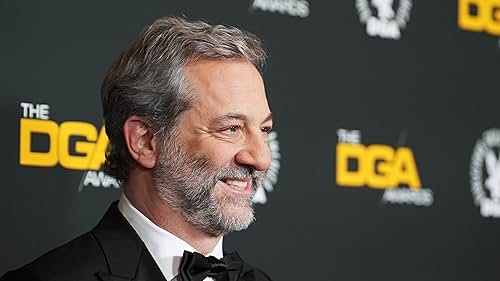
The speech that shattered the room’s polite mood
From the moment Judd Apatow stepped up to the microphone, you could sense he was not interested in a safe, apolitical bit. He used his time to criticize Donald Trump directly, declaring that he believed “we’re in a dictatorship now,” a line that cut through the usual awards-show patter and drew a mix of laughter and unease in the room, according to accounts of his Golden Globes appearance. He framed his comments as both a warning and a punchline, leaning on his comedy instincts while insisting that the stakes of the current political climate were no joke.
Part of what made the moment land so forcefully is that Apatow has long positioned himself as more than just a filmmaker. As an American director and producer, he has used interviews and social media to criticize Trump, and at the 2026 ceremony he folded that activism into a monologue that also nodded to the night’s big winner, the revolutionary saga “One Battle After Another,” which took best picture, musical or comedy in BEVERLY HILLS, Calif. Coverage of the show noted that his remarks, while funny, were unusually pointed for what had otherwise been a carefully managed, relatively restrained broadcast.
A decade-long grudge, a boycott, and a Trump-era breaking point
If you trace Apatow’s history with the Globes, his eruption this year looks less like a sudden outburst and more like the culmination of a long-running grudge. He has joked that he quietly boycotted the Golden Globes for about ten years after his film “Trainwreck” lost best comedy to “The Martian,” a snub he referenced again while presenting, turning his return into a meta-commentary on awards politics and genre confusion that echoed his earlier frustration with The Martian. That long memory gave his Trump critique an extra layer of bite, as if he were settling old scores with the institution while also turning it into a stage for political dissent.
Reports from the room described his presenting stint as essentially a full monologue, with Apatow riffing on his “quiet boycott” and then pivoting into his belief that the United States is sliding into authoritarianism, a line he has repeated in different forms, including the stark phrase “Believe We, Dictatorship Now” highlighted in a Judd Apatow Says recap. For you as a viewer, that history matters, because it shows how a personal feud with the Globes over “Trainwreck” and “The Marti” era decisions evolved into a broader willingness to use the show as a megaphone against Trump.
How Apatow’s outburst fit into a wider night of resistance
Although Apatow’s speech stood out, it did not happen in a vacuum. The 2026 Golden Globes unfolded in a climate where many stars were already signaling opposition to Trump administration policies, including immigration enforcement. On the red carpet and inside the ballroom, celebrities wore “Be Good” pins and other “Be Good Buttons” to protest the Department of Homeland Security and Immigration and Customs Enforcement, turning the Golden Globe Awards into a subtle but coordinated show of resistance. In that context, Apatow’s decision to say out loud that he believed the country was in a dictatorship felt like the verbal counterpart to the symbolic protest you saw on lapels.
Inside the show, most presenters and winners kept their remarks focused on the work, with host Nikki Glaser steering the broadcast toward the awards themselves and only glancing at the “world out of joint” outside the Beverly Hilton. Coverage of Everything that happened that night described the show as generally decorous, which only amplified the impact of Apatow’s sharper tone. His comments became a kind of pressure valve, expressing what many in the room appeared to feel but were reluctant to say outright.
A chorus of criticism, from Apatow to Ruffalo to foreign filmmakers
By the time Apatow spoke, you had already seen other artists use the Globes stage to challenge Trump. Earlier in the evening, actors and directors spoke out against the administration, including a filmmaker who, after winning Best Foreign Language Film for “The Secret Agent,” called it “a very important moment” to defend creative freedom and human rights, according to a detailed account of Best Foreign Language speeches. That international perspective reinforced the idea that concerns about democratic backsliding under Trump are not confined to American artists.
Apatow was also not the only high-profile figure to call out Trump directly. Actor Mark Ruffalo joined him in criticizing the president and the state of the world, with coverage noting that both men used their time at the Globes to speak bluntly about the administration while still weaving in humor and references to projects like The Martian. Another report on how Judd Apatow recently slammed Donald Trump at the Golden Globes emphasized that his remarks came as the American director and producer was presenting for “One Battle After Another,” tying his political critique directly to the night’s biggest Golden Globes winner. For you, the takeaway is clear: Apatow’s blast at Trump was not an isolated rant, but part of a broader, increasingly coordinated push by Hollywood to confront the president in one of its most-watched rooms.
More from Vinyl and Velvet:

Leave a Reply