

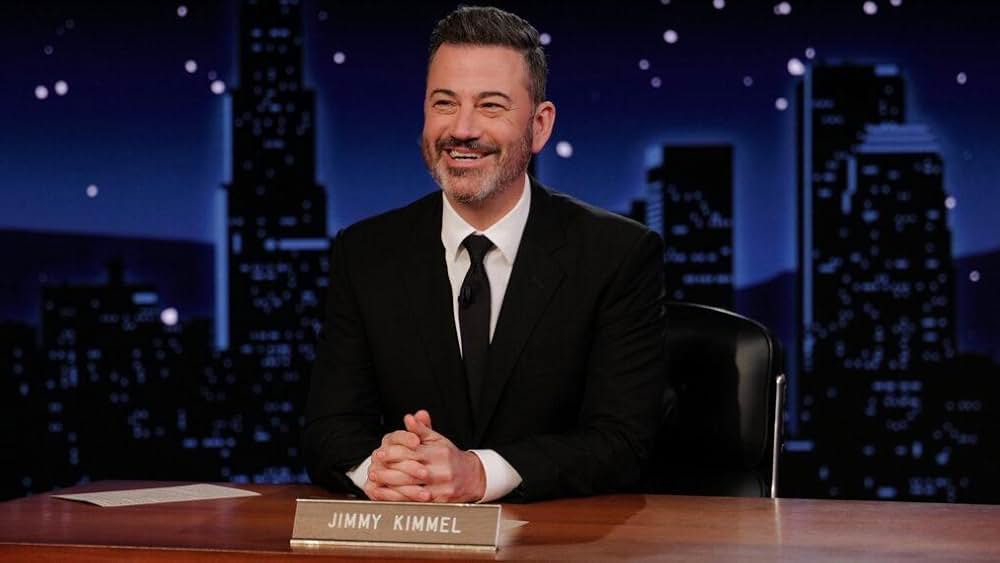
Jimmy Kimmel is back in the political crosshairs, and this time the fight is not just with the White House but with the regulators who oversee his industry. As the Federal Communications Commission sharpens its focus on how late-night shows handle politics, Kimmel is openly warning his viewers that he may need them in his corner again.
The late-night host has turned a familiar feud with President Donald Trump into a fresh test of how far a comedian can go before federal rules start to bite. What looks like another round of jokes and jabs is also shaping up as a serious battle over what counts as news, what counts as entertainment, and who gets to decide.
The new FCC notice that set off alarms
The latest flashpoint is a public notice from the Federal Communications Commission that zeroes in on television talk shows and their political content. The agency’s staff signaled that programs built around interviews and commentary might not be able to dodge long standing rules that kick in when candidates for office appear on air. In practical terms, that means late-night shows could be treated more like traditional broadcasters when they put politicians in the chair, even if the segment is wrapped in jokes and sketches.
According to the FCC’s own description, the notice issued in Jan is meant to clarify how equal time and related obligations apply when candidates show up on programs that blend comedy, interviews, and current events. The guidance, which arrived after months of public sparring between President Trump and several late-night hosts, makes clear that the agency is now looking directly at talk shows as part of its broader regulatory net, a shift that has rattled producers who long assumed they were safely on the entertainment side of the line, as reflected in the agency’s public notice.
Why Jimmy Kimmel feels singled out
Jimmy Kimmel has been a recurring foil for President Donald Trump, and that history colors how he and his audience are reading the FCC’s move. Kimmel has used his ABC platform to mock the president’s policies and personal behavior, turning monologues into viral clips that circulate far beyond the show’s usual late-night slot. When regulators suddenly start talking about tightening rules around political content on talk shows, it is not hard for viewers to connect the dots between those monologues and the new scrutiny.
The timing is hard to ignore. The FCC’s Jan notice arrived after Chair Brendan Carr had already drawn attention with comments that some interpreted as a warning that the agency could go as far as pulling broadcast licenses if lines were crossed. That backdrop makes it easier to see why Kimmel and his team might feel that a general policy clarification is, in practice, aimed squarely at the kind of pointed political comedy that has defined his clashes with Trump, a concern that is echoed in coverage of how the FCC is now targeting TV talk shows.
“I might need your help again”: Kimmel’s on-air warning
Rather than keep his worries behind the scenes, Kimmel has taken them straight to his viewers. On a recent episode, he told his studio audience and the millions watching at home that he “might need your help again,” a line that instantly framed the regulatory fight as a public campaign rather than a quiet legal dispute. The phrasing was deliberate, a reminder that his viewers have rallied before when he has been under political pressure and that he expects the same kind of grassroots energy if the FCC’s actions start to threaten his show.
That on-air appeal did more than generate a few headlines. It signaled that Kimmel sees the FCC’s notice as part of a broader pattern in which political power is used to lean on critics in the media. By asking for help, he is effectively inviting his audience to treat the regulatory process as something they can push back against, whether through public comment, social media pressure, or simply by paying closer attention to how the rules are being written, a stance he underscored when he flagged the new FCC announcement on his show.
Equal time rules and why late-night suddenly cares
At the heart of the FCC’s move is a set of rules that most viewers rarely think about but that broadcasters live with every election cycle. Equal time requirements are designed to prevent stations from giving one candidate a free megaphone while shutting out rivals, by forcing them to offer comparable access when they put a candidate on air. For decades, late-night shows largely sidestepped those obligations by positioning themselves as entertainment, not news, even when they booked presidents, senators, and hopefuls looking for a viral moment.
The new guidance suggests that this comfortable separation may be eroding. When the FCC staff points out that talk shows which regularly feature political figures and discuss current events could fall under the same umbrella as more traditional news programs, it raises the possibility that a Kimmel interview with a candidate might trigger equal time demands from opponents. That would complicate booking decisions, force producers to weigh the regulatory cost of every political guest, and potentially chill the kind of freewheeling conversations that have become a staple of modern campaigns, a risk that is spelled out in the agency’s focus on talk show obligations.
Brendan Carr’s hard line and the threat of licenses
FCC Chair Brendan Carr is not a background character in this story. His earlier remarks about the possibility of pulling broadcast licenses if stations cross certain lines gave critics a concrete fear to latch onto. When the person who oversees the country’s communications rules floats the idea that a network’s license could be at risk, even in a hypothetical, it lands with real weight inside corporate boardrooms and late-night writers’ rooms alike.
Those comments now sit alongside the Jan notice as part of a pattern that many in the industry see as a harder line from the agency. For a host like Kimmel, who works on a broadcast network that depends on its FCC license to reach viewers over the air, the idea that political jokes or pointed interviews could someday be cited in a license fight is not an abstract worry. It is a direct link between the tone of his monologue and the legal status of the station that carries it, a link that becomes more plausible when the same chair who raised license questions is also steering the new focus on TV talk shows.
Trump’s long-running feud with late-night comics
President Donald Trump’s relationship with late-night television has been adversarial from the start, and Kimmel has been one of the most consistent thorns in his side. The host has mocked Trump’s speeches, policies, and personal style, turning the president into a recurring character in sketches and monologues. Trump, in turn, has treated late-night as another front in his media wars, blasting hosts on social media and framing their criticism as proof of bias in the entertainment industry.
That history matters because it shapes how both sides interpret the FCC’s latest moves. When a president who has publicly clashed with Kimmel is in office at the same time that the agency he oversees is tightening its grip on politically charged talk shows, it is easy for critics to see the pattern as more than coincidence. Even if the FCC insists that its Jan notice is a neutral clarification of existing rules, the backdrop of Trump’s battles with Kimmel and other hosts makes the new scrutiny feel like part of a broader campaign to rein in unfriendly voices on national television, a perception reinforced by the way the notice explicitly targets TV talk shows as a category.
How networks and producers are recalculating risk
Behind the scenes, the FCC’s shift is forcing networks and producers to rethink how they handle political content on shows like Kimmel’s. Booking a candidate used to be a relatively simple calculation about ratings, buzz, and the host’s comfort level with the guest. Now, executives have to factor in whether a single appearance could trigger equal time claims, complaints to the FCC, or even become fodder in a broader regulatory fight that drags the network into Washington’s crosshairs.
That recalculation could subtly reshape what viewers see. Producers might steer away from lesser known candidates who are more likely to demand equal time if they feel shortchanged, or they might limit political interviews to moments that can be clearly framed as newsworthy events, which the FCC has historically treated differently. The Jan notice’s focus on how talk shows handle political figures and current events means that every decision about who sits on the couch and what they talk about now carries a layer of legal risk that was easier to ignore before the agency explicitly called out talk show content.
Audience power in a regulatory fight
Kimmel’s call for help is not just rhetorical flair, it reflects a real shift in how television personalities think about their leverage. Viewers are no longer just ratings numbers, they are potential advocates who can flood regulators with comments, pressure lawmakers, and shape the public narrative around what the FCC is doing. By telling his audience that he might need them again, Kimmel is effectively building a political constituency for his show, one that can be mobilized if the regulatory screws tighten.
That strategy mirrors how other media figures have responded when they feel targeted by government action, turning their platforms into organizing tools. In the context of the FCC’s Jan notice, it suggests that any attempt to enforce stricter rules on late-night political content could quickly spill out of the legal realm and into a public brawl, with viewers, advocacy groups, and politicians all weighing in. The fact that the agency has now formally highlighted TV talk shows as a regulatory concern gives Kimmel and his peers a clear focal point for that kind of audience driven pushback.
What this showdown means for political comedy
The clash between Jimmy Kimmel and the FCC is about more than one host or one show, it is a test of how political comedy fits into a media system governed by rules written long before viral clips and streaming highlights. If late-night programs are treated more like traditional news outlets whenever they host candidates or dive into policy debates, the genre could lose some of its spontaneity, as lawyers and compliance officers start to shape what is safe to say. That would mark a real shift from the anything goes spirit that has defined late-night in the Trump era.
On the other hand, the very public nature of this fight could also cement political comedy as a recognized, protected part of the national conversation. By pushing back against what they see as overreach, hosts like Kimmel are arguing that satire and sharp criticism are not side shows but central to how viewers process politics. The outcome of the FCC’s Jan initiative, and how aggressively it is enforced against TV talk shows, will help determine whether that argument gains ground or whether late-night’s political edge gets dulled by regulatory caution.
More from Vinyl and Velvet:

Leave a Reply