

Jennifer Aniston has finally said the quiet part out loud about the feature that helped turn her into a global beauty reference point: the glossy, golden hair that fans have copied for decades. In a recent conversation, she casually admitted that the famous blonde is “fake,” explaining that her real hair is a very different color from the one the world associates with her. The remark instantly reframed years of red-carpet photos and salon inspiration boards, and it landed with extra force because it came from someone whose image has been so closely tied to a single hairstyle.
Her confession did not arrive as a carefully staged reveal but as an offhand clarification about her roots, both literal and figurative. By acknowledging that the iconic shade is the product of dye, extensions, and styling, Aniston invited fans to reconsider how much of Hollywood beauty is constructed, and how much pressure sits behind a supposedly effortless look.
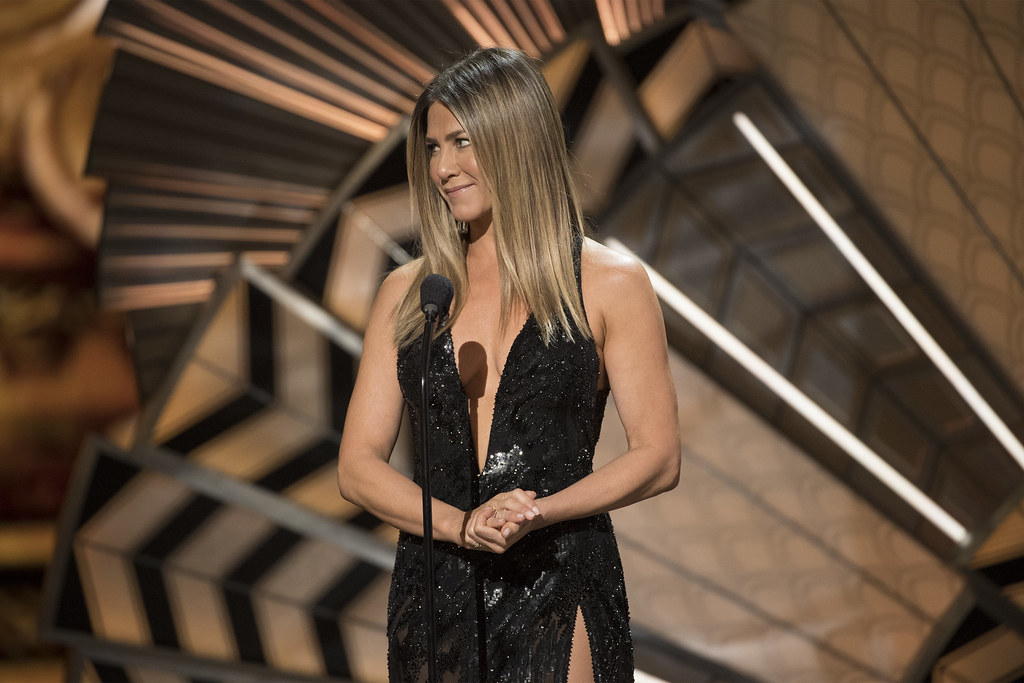
‘This [hair] is fake’: Aniston’s candid reveal and her real color
The turning point came when Jennifer Aniston, speaking earlier this Jan, joked that the hair people think of as naturally hers is not the real story at all. She described herself as a natural brunette and, gesturing to her current look, said, “This [hair] is fake,” a line that has since ricocheted across social media and celebrity coverage, including detailed breakdowns of how her silky blond hair has been maintained over the years by colorists and stylists who helped build her signature image for the camera. That blunt admission, delivered with a shrug, undercut the long-standing assumption that the woman who launched “The Rachel” haircut simply woke up with perfect highlights, a myth that has been carefully fed by glossy photos and red-carpet appearances and is now being unpacked in pieces that trace her evolving hair care routine and color history through interviews with Aniston and stylists such as those cited by writer Leah Degrazia.
Her comments have been echoed and amplified in other coverage that quotes her describing the blond as something she puts on rather than something she is, with one widely shared account noting how she matter-of-factly told an audience that she is actually a brunette and that the hair fans see is the result of color and styling choices that can be changed or even abandoned. In one retelling, she is quoted responding “Yes. Well that was, you saw that answer right? Did that work? That I was a natural brunette? This [hair] is fake,” a slightly rambling but revealing exchange that shows how she has started to lean into the gap between her public image and her natural appearance, a moment captured in detail in a piece on how she considers ditching the look altogether.
From ‘The Rachel’ to ‘fake’ blonde: how a TV haircut became a beauty battleground
For context, it helps to remember that Jennifer Aniston has been “hair famous” since the 1990s, when “The Rachel” on Friends turned a layered shag into a cultural event and cemented her as a style reference point. Over the years she has spoken about how that cut, and later transformations for roles like her dark, severe look in Horrible Bosses, were the product of intense behind-the-scenes negotiation, with one profile noting that she “fought for” one of her most polarizing hair changes and that the shift away from the familiar blonde was “not an easy battle,” a reminder that even an A-lister has to push to change a look that studios and audiences think they own, as detailed in a feature on how Jennifer Aniston transformed her hair for that film.
Her new candor about being a brunette slots into a broader conversation about American beauty standards that have long privileged blondness, especially for women in Hollywood. One analysis framed her revelation as a twist in the “oldest American beauty war,” the blonde vs brunette divide, pointing out that Aniston has now explicitly said she is naturally dark-haired and that the light, straight, sometimes bobbed styles that defined her public image were the result of deliberate coloring and styling choices that aligned her with a particular ideal, a dynamic unpacked in a piece that notes how Jennifer Aniston fits into that American beauty war.
Playing with Cox’s hair, revisiting brunettes, and what comes next
The most vivid illustration of how Aniston is reframing her image came in a lighthearted moment with her longtime friend and Friends co-star Courteney Cox. As Aniston played with Cox’s hair, she reminisced about a time she herself was on-screen as a brunette, recalling her role as Julia in a 2011 project and using that memory to underline that her natural color is closer to Cox’s dark shade than to the bright blonde fans expect. That exchange, which unfolded as she casually handled Cox’s hair and contrasted it with her own, has been cited as a key moment in which she “reveals her natural hair color, which isn’t blonde,” and it has been widely shared as a reminder that the woman whose highlights have been endlessly analyzed is, at the root, a brunette, a point captured in coverage that describes how As Aniston played with Cox’s hair she made that contrast explicit.
Her willingness to joke about the artifice has also opened the door to speculation about whether she might eventually abandon the blonde entirely. Some reports describe her musing about “ditching” the fake hair and embracing a darker, more natural look, while others highlight how she has framed the blonde as something she can take or leave, not a requirement. In one widely circulated account, she is quoted explaining to an audience that her iconic blond hair is “completely fake,” a phrase that has been repeated in stories that track her comments alongside reactions from fans and co-stars like Cox, who has publicly praised Aniston’s work in Horrible Bosses and its sequel, saying “I love Horrible Bosses … You were a badass dentist,” a line preserved in a piece that notes how Cox celebrated that darker, edgier version of her friend.
How the ‘fake’ hair admission reshapes a decades-long image
What makes Aniston’s admission resonate is not just the novelty of a celebrity confessing to dye and extensions, which are hardly secrets in Hollywood, but the way it punctures a specific fantasy that has followed her since Friends. For years, fans have treated her blond as a kind of genetic blessing, something that could be approximated with the right salon visit but never fully replicated, and stylists have built entire consultations around “Jennifer Aniston blonde” as a reference point. Her new comments, including the line “Oh, this is like the character I played” as she gestured to her hair, recast that shade as a costume piece, akin to wardrobe or makeup, a framing that has been picked up in coverage that quotes her declaring her iconic blond hair is “fake” while noting that she is known for her silky blond hair in countless Getty Images photos.
That shift also intersects with a booming market for products that promise “Aniston hair,” from glossing treatments to clip-in pieces that mimic her volume and shine. Beauty retailers already sell items that explicitly reference her look, and the renewed attention to how constructed that look is will likely fuel even more interest in tools that can create it at home, whether through color kits, styling devices, or hairpieces similar to those promoted in online product listings. At the same time, her acknowledgment that she is, at base, a brunette aligns her with a growing number of high-profile women who are choosing to show their natural texture and color, even if only between projects, a trend that has been chronicled alongside stories that revisit how she has “revealed her famous hair is fake” and how that revelation has been received by fans who grew up with her on television, as in reports that describe how Jennifer Aniston framed the confession.
In some tellings, the moment has even been packaged with a touch of wry humor, with one write-up headlined in a way that begins “Jennifer Aniston Reveals Her Famous Hair Is” and then leans into the word “Fake, Sorry, Friends,” a nod to the millions of viewers who first met her as Rachel Green and assumed the hair was as real as the character. That same piece describes her as a “Famously blonde actress” while underscoring that the color is the result of years of dye and styling, a juxtaposition that captures the tension between the image and the reality and is encapsulated in a feature titled Jennifer Aniston Reveals Her Famous Hair Is fake. Another account, which opens by noting that she has “long been known for her hair,” traces the arc from The Rachel to her more recent roles and then circles back to her new comments, quoting her directly and pointing out that the woman who helped define 1990s hair trends is now the one dismantling the illusion, a narrative laid out in a story that explains how Gabriela Silva chronicled the reaction. For fans who once carried a photo of “The Rachel” into the salon, the message is clear: the most famous hair in television history was always a role, not a birthright.
More from Vinyl and Velvet:

Leave a Reply