

Jelly Roll’s physical transformation has become one of the most dramatic in popular music, with the country star shedding close to 300 pounds while his career exploded. Instead of turning to GLP-1 medications, he has framed the change as a hard-fought battle with addiction, therapy, and daily discipline. His story now stretches from a maximum weight well over 500 pounds to a Men’s Health cover body, and he is using that arc to argue that sustainable weight loss is possible even without the new class of blockbuster drugs.
As GLP-1 prescriptions surge across the United States, his decision to go another way has turned into a cultural flashpoint. Jelly Roll is not dismissing medical help outright, but he is adamant that his own path relied on confronting food the same way he once confronted cocaine and alcohol. The details of how he did it, and why he talks about it so bluntly, reveal as much about addiction and stigma as they do about diet and exercise.
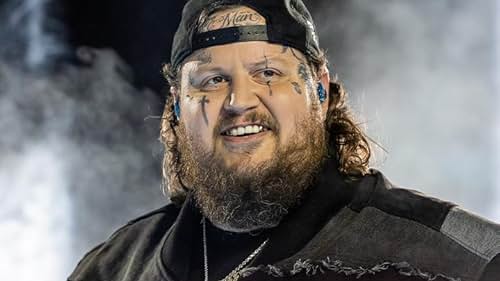
From 540 Pounds To Men’s Health: The Scale Of His Transformation
Jelly Roll has been open about just how far he had to go to reclaim his health. At his heaviest, he has said the scale climbed to 520 lbs to 265 lbs, a swing that puts his total loss in the neighborhood of 275 pounds. Another detailed account of his journey describes it as a 275-pound transformation, specifying that he went from 540 to 265 pounds, which underscores how long he lived in a body that was not just heavy but medically dangerous. Those figures line up with newer coverage that notes the country singer is now down 275 pounds from where he was in 2020, a period that coincided with his breakout as a mainstream star.
Earlier reporting captured the same arc in smaller snapshots, noting that Jelly Roll had already dropped 200 lbs and was still committed to losing more. Another profile framed his progress as 183 pounds lost since he overhauled his lifestyle, a reminder that the numbers have evolved as he has continued to slim down. What has not changed is the scale of the effort: he is now 41, as highlighted in a feature that shows Jelly Roll, now 41, running arena stairs, boxing, and doing push-ups, a far cry from the man who once struggled to walk across a parking lot without losing his breath.
Why He Rejected GLP-1 Drugs And Called Them “Cheating”
As GLP-1 medications like semaglutide have become shorthand for rapid weight loss, Jelly Roll has been unusually blunt about why he did not go that route. In one recent profile, he is quoted saying that using a GLP-1 medication is “cheating,” a phrase that has ricocheted across social media because it cuts against the growing normalization of these drugs. The same piece notes that he has been featured in a newsletter that invites readers to Sign Up for updates, underscoring how his stance is being packaged as a counterpoint to the GLP-1 boom. He is not arguing that the medications lack medical value, but he is clear that, for him, relying on an injection would have felt like skipping the deeper work of confronting why he overate in the first place.
That framing has drawn both praise and criticism, particularly from people who see GLP-1 drugs as lifesaving tools rather than shortcuts. A separate analysis of Jelly Roll Weight Loss, Navigating GLP medications, Programs, and Metabolic Health points out that these drugs can be part of a comprehensive plan, but they do not erase the need for behavior change. Jelly Roll’s own comments land in that tension: he is effectively saying that his personal recovery demanded a full reckoning with addiction, and that outsourcing appetite control to a prescription would have undermined that process. For fans watching him shrink in real time, the message is as much about identity and integrity as it is about body size.
Treating Food As An Addiction, Not A Willpower Problem
Central to Jelly Roll’s explanation is the idea that his weight was not simply the result of bad choices, but of a genuine addiction to food. He has said explicitly, “I started treating my food addiction like what it was: an addiction,” a line that appears in multiple accounts of his turnaround. In one detailed interview, he describes how he began with therapy and approached eating the way he once approached sobriety, telling an interviewer that he wanted to show people that this kind of change is possible. That same quote appears in a report that notes he told Even before he lost the weight that he was committed to proving skeptics wrong.
Another piece recounts him telling Men and Health that he reframed his relationship with food in the same language he used for drugs, and that he believed people “won’t recognize me” once he was done. That comparison is not rhetorical. In a separate profile, he recalls going to meetings for cocaine, finding a sponsor, and detoxing in grim detail, saying, “I went to meetings for cocaine and found a sponsor and detoxed off of it and s— myself and went through real hard, long nights,” a story captured in a feature that also notes his arrest for aggravated robbery at age 17 and how his daughter was born while he was incarcerated. Those experiences, described in the context of his long nights, are the template he says he used when he finally decided to confront his eating.
Therapy, Hormones, And The Intimacy Crisis That Sparked Change
Jelly Roll has not shied away from describing the most personal consequences of his size, including how it affected his sex life. In one widely shared account, he reveals that intimacy struggles with his wife Bunnie XO were a breaking point, explaining that he looked slimmer than ever but was still struggling in the bedroom. That report notes that Jelly then started hormone therapy and described it as “the best thing I ever did in my life,” a line that appears in coverage of how Jelly Roll’s intimacy issues helped spark a 300lb weight loss. The story frames hormone therapy not as a magic bullet, but as one piece of a broader medical and psychological reset that allowed him to feel present in his own body again.
Therapy runs through these accounts as a constant. In the narrative that quotes him saying he started treating food as an addiction, he also explains that he began with counseling even before he changed his diet. That sequencing matters, because it suggests he saw emotional work as a prerequisite to any physical transformation. The same coverage that details his hormone therapy also emphasizes that he was already in the middle of a broader self-examination, one that included confronting childhood trauma, incarceration, and the pressures of sudden fame. By the time he started losing weight in visible amounts, the groundwork had been laid in private sessions long before the public saw a different body on stage.
From Waffle House Bowls To Healthier Plates
Alongside therapy and hormone treatment, Jelly Roll has made a point of talking about the everyday food choices that added up to his transformation. He has described how he used to rely on heavy comfort meals, including a favorite Waffle House hash brown bowl that symbolized the kind of late-night, calorie-dense eating that kept his weight high. In a recent profile, he explains that he now opts for healthier options, explicitly contrasting that Waffle House staple with more nutrient-dense meals that fit his new lifestyle. The same piece notes that in the article, the singer details how he swapped his beloved Waffle House hash brown bowl for something that would not sabotage his progress.
Those changes are part of a broader pattern of incremental shifts rather than a single radical diet. Another report on his journey notes that he has trained for and completed physically demanding events, and that his Weight Loss Journey has involved consistent exercise as well as food changes. The emphasis on swapping specific meals, rather than endorsing a branded plan, fits with his broader message that he is not selling a program. Instead, he is walking fans through the unglamorous reality of choosing grilled chicken over a hash brown bowl at 2 a.m., again and again, until the habit sticks.
Training Like An Athlete While Touring Like A Star
As his body has changed, Jelly Roll has increasingly trained like an athlete, even while maintaining a punishing tour schedule. Video from a recent documentary-style film shows him working out in arenas before shows, running stairs, boxing, and dropping for push-ups in empty concourses. One feature notes that the film shows Jelly Roll training this way while his medical advisers and family members talk about the stakes of his health. That imagery is a deliberate contrast to the stereotype of the hard-living musician who rolls straight from the bus to the stage without ever seeing a gym.
The Winter 2026 cover story that chronicles his Winter training routine describes him running those arena stairs prior to his shows, turning the venues themselves into makeshift fitness centers. Another account notes that he has trained for specific endurance challenges, which required structured workouts rather than sporadic bursts of effort. The cumulative picture is of a man who has integrated movement into his workday, using the same spaces where he performs “Save Me” to also save his own cardiovascular health.
Manifesting A Men’s Health Cover, Then Earning It
Long before he appeared on a glossy fitness magazine, Jelly Roll was talking about it as a goal. Back in December 2024, he said on the Dumb Blonde podcast that he wanted to be on the cover of Men’s Health by a certain age, a moment captured in a clip that has since resurfaced. The video shows him joking and dreaming, but also speaking with conviction about changing his body and his life. That ambition is referenced in a post that notes, “Back in December 2024, Jelly Roll said on the Dumb Blonde podcast that he wanted to be on the cover of Men’s Health,” tying his current reality back to that early statement.
That manifestation has now become literal. A recent feature notes that the country singer graces the cover of Men and Health’s Winter 2026 issue, celebrating that he is down 275 pounds from 2020. Another detailed story explains that the magazine’s Winter 2026 cover story delves into his 275-pound weight loss journey, including his time in jail and the birth of his daughter while he was incarcerated. For fans who remember him as an underground rapper playing small clubs, seeing him on that cover is more than a fitness milestone; it is a symbol of how far he has traveled socially and physically.
Public Accountability, Instagram Posts, And Mindset Shifts
Jelly Roll has used social media as both a confessional and an accountability tool throughout his transformation. One Instagram post promoting his weight loss story invites followers to “Click the link in my bio to read the full article!” and describes him as a Grammy-nominated singer who lost 200 pounds naturally without drugs, teasing that the full piece covers his mindset shifts and future plans. That framing is deliberate: he is positioning the weight loss not as a secret hack, but as the result of a mental reset that fans might try to emulate in their own lives.
Other coverage of his journey emphasizes that he has repeatedly shared specific figures, like 200 pounds lost, in captions and interviews, using those numbers as mile markers. A separate profile notes that he has lost 200 lbs and is still committed to more, reinforcing the idea that he sees this as an ongoing process rather than a finished project. By talking about his weight in such concrete terms, he invites fans to track his progress alongside him, turning what could have been a private struggle into a shared narrative of change.
Nearly 300 Pounds Lost, No GLP-1s: What His Story Signals Now
At a moment when GLP-1 prescriptions are reshaping the weight loss landscape, Jelly Roll’s insistence that he did it without those drugs carries symbolic weight. One detailed profile of his transformation notes that readers can Sign up for a newsletter from The Looker to follow his story, underscoring how his nearly 300-pound loss is being packaged as a kind of inspirational content. Another version of the same report highlights that he went from 520 lbs to 265 lbs without GLP-1s, reinforcing the headline claim that he lost nearly 300 pounds without drugs and that he sees that choice as central to his identity.
At the same time, medical experts caution that his path is not the only valid one. An analysis of Medications, Programs, and Metabolic Health points out that GLP-1s can be powerful tools for people whose biology or circumstances make lifestyle changes alone insufficient. Jelly Roll’s story, then, is best understood not as a prescription for everyone, but as a case study in what can happen when therapy, hormone treatment, structured exercise, and relentless honesty about addiction line up. For those who see themselves in his past, the message is clear: even without a weekly injection, radical change is possible, but it demands the kind of sustained work that cannot be outsourced to a pharmacy.
More from Vinyl and Velvet:

Leave a Reply