

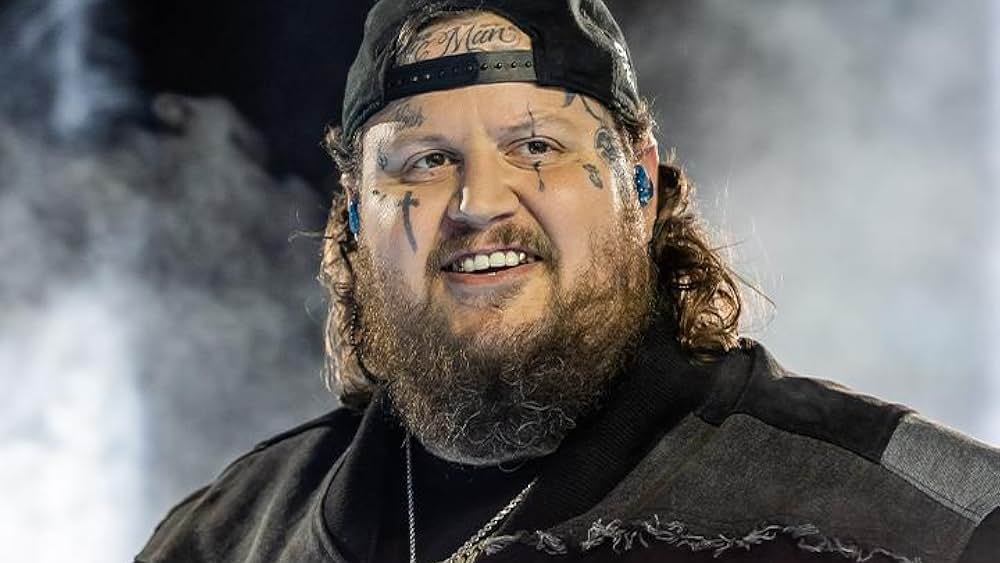
Jelly Roll’s decision to sign on to Kid Rock’s latest touring festival has ignited a political firestorm around an artist who has repeatedly insisted he is “not political.” After the Rock the Country lineup confirmed his name alongside Kid Rock and Jason Aldean, some fans accused the Nashville star of drifting into MAGA territory and flooded social media with anger and disappointment. The backlash is colliding with an earlier controversy over Jelly Roll’s cordial encounter with President Donald Trump, turning one booking into a referendum on what it means when a mainstream act shares a stage with overtly conservative headliners.
Rock the Country: How a Touring Festival Became a Political Flashpoint
The uproar around Jelly Roll starts with the kind of tour he agreed to join. Rock the Country is a multi-city festival built around Kid Rock and Jason Aldean, marketed as a country-focused roadshow hitting eight small towns with a lineup that now includes Jelly Roll and Creed. The 2026 bill, announced on social media, positioned Rock the Country as a star-heavy package, with Kid Rock and Jason Aldean at the top and Jelly Roll and Creed among the marquee draws.
What might once have been read as a straightforward country-rock tour now arrives in a climate where Kid Rock’s brand is tightly bound to conservative politics and Trump-era culture wars. The festival has been described as a politically charged, conservative-leaning event, with critics arguing that its identity is less about genre and more about ideology. That framing means any artist who signs on, including Jelly Roll, is not just joining a bill with Kid Rock and Jason Aldean but stepping into a space many fans already view as a proxy for MAGA-aligned entertainment.
Jelly Roll’s Booking Sparks Accusations of “Going MAGA”
Once Jelly Roll’s name appeared on the Rock the Country poster, a segment of his audience reacted as if a line had been crossed. Fans who had embraced his underdog story and genre-blending sound flooded comment sections accusing him of being “MAGA” simply by agreeing to perform at Kid Rock’s festival. One widely shared reaction argued that “too many of us grew up on you to watch you stand next to this,” capturing the sense of betrayal some listeners felt when they saw Jelly Roll’s name alongside Kid Rock on the festival lineup.
Coverage of the backlash has repeatedly highlighted how quickly the conversation shifted from music to politics. Commenters did not just question the booking, they labeled Jelly Roll “MAGA” and framed his participation as tacit endorsement of Kid Rock’s politics. Reports on the controversy note that fans were “outraged” after the lineup’s release and that the accusations of Jelly Roll being MAGA were tied directly to his decision to join Kid Rock’s festival, not to any explicit statement he made.
Why Rock the Country Is Seen as MAGA-Adjacent
The intensity of the reaction to Jelly Roll is rooted in how Rock the Country itself is perceived. The 2026 touring festival is headlined by Kid Rock and Jason Aldean, two artists who have become lightning rods in the culture wars, and it has been described as a politically charged, conservative-leaning event. An Instagram post announcing that Ludacris was withdrawing from the bill explicitly referred to 2026 touring festival as headlined by Kid Rock and Jason Aldean and framed it as a conservative-leaning space, which helps explain why fans interpret any participation as a political statement.
Other reporting has gone further, describing Rock the Country as “MAGA-adjacent” and noting that its roster is stacked with artists who have publicly aligned with Trump or conservative causes. One breakdown of the lineup pointed out that, along with Kid Rock and Aldean, the 2026 bill features Jelly Roll, Blake Shelton, Miranda Lambert, Brooks & Dunn, Riley Green and others, and tied the tour’s image to Kid Rock’s history of supporting Trump during his. In that context, Jelly Roll’s presence is not read as a neutral career move but as a choice to stand inside a festival many critics already shorthand as a MAGA roadshow.
Ludacris, Nelly and the Domino Effect of Fan Backlash
The reaction to Jelly Roll is also shaped by what happened to other artists on the same bill. When the Rock the Country lineup first circulated, Ludacris and Nelly were among the most surprising names, and the internet quickly began calling them out for agreeing to perform on Kid Rock’s festival. One social media roundup noted that Ludacris was “quietly backing away” after backlash erupted over reports that he was set to perform on Kid Rock’s tour, while fans accused Nelly of being a “sellout” and said they were “heartbroken” to see his name on the same poster.
As criticism mounted, Ludacris formally exited the tour. One report described how Ludacris will no longer be “rocking the country” after the lineup for the country-focused Rock The Country tour was revealed, noting that he dropped off a bill that also featured Kid Rock and Aldean and was widely seen as a MAGA artists’ tour. That same coverage emphasized that Ludacris will no part of the festival while Nelly remains, underscoring how fan pressure is already reshaping the lineup around Jelly Roll even before the tour begins.
Ludacris’s Exit and the “MAGA Fest” Label
Ludacris’s decision to walk away from Rock the Country has become a case study in how quickly a booking can turn into a political liability. In a detailed account of his exit, one report framed the tour as a MAGA-linked event and described how Ludacris pulled out following fan backlash that erupted once his name appeared on the bill. The piece noted that Ludacris Exits Kid after the tour was labeled a “MAGA Fest,” language that crystallized how critics see the entire enterprise.
Another report on his withdrawal stressed that the Rock The Country tour was “MAGA-adjacent” and again listed Jelly Roll among the artists on the 2026 lineup alongside Kid Rock and Aldean, Blake Shelton, Miranda Lambert and Brooks & Dunn. That piece underscored that the tour’s image is inseparable from Kid Rock’s political persona and his visible support for Trump during his first term, which is why Ludacris’s exit is being read as a response to the MAGA-adjacent branding. For Jelly Roll, staying on the bill means navigating a space that another high-profile rapper has now publicly abandoned under political pressure.
Trump’s Cameo and the Festival’s Political Aura
Part of what makes Rock the Country so politically charged is not just who is on stage but who appears around it. Reporting on last year’s tour notes that Trump introduced Kid Rock’s set via video, reinforcing the perception that the festival is intertwined with conservative politics rather than merely adjacent to them. One account of Ludacris’s exit pointed out that Trump introduced Kid via video on the previous tour and linked the festival’s orbit to a Turning Point USA event, further cementing its reputation as a conservative showcase.
That history matters for how fans interpret Jelly Roll’s involvement. When a festival has already featured a video introduction from Trump and is headlined by Kid Rock, who has campaigned for the president in the past, audiences are primed to see the entire tour as a political statement. In that environment, Jelly Roll’s decision to stay on the lineup while Ludacris backs out is not judged solely on musical grounds but against a backdrop where Trump’s presence and Kid Rock’s politics are part of the festival’s core identity.
Jelly Roll’s Earlier Trump Moment at the UFC
The Rock the Country controversy is not the first time Jelly Roll has been pulled into a Trump-related storm. Late in 2024, he was spotted at a UFC event shaking hands and smiling with President Donald Trump, a moment that quickly circulated online and sparked debate among fans. A video clip showed Roll with President Donald Trump at the UFC, and the friendly interaction immediately had fans debating what, if anything, it said about his politics.
That UFC handshake set the stage for the current accusations. For some critics, the festival booking looks like a pattern that began when Jelly Roll appeared comfortable greeting Trump in a high-profile arena. The UFC moment did not feature any explicit endorsement, but it did show Jelly Roll smiling and engaging with the president in a way that some fans interpreted as alignment. When that image is combined with his decision to join Kid Rock’s festival, it becomes easier for detractors to argue that he is drifting into MAGA circles, even as he insists otherwise.
“Not Political”: How Jelly Roll and Bunnie Xo Explain the Trump Encounters
After the UFC clip went viral, Jelly Roll moved quickly to clarify where he stands. In a detailed conversation about the controversy, he said he is “not political” and framed the interaction with Trump as a matter of respect for the office rather than an endorsement. One report on his comments highlighted that Jelly Roll Clears by stressing that he does not see himself as a political figure and that he grew up viewing any meeting with a president as an honor.
His wife, Bunnie Xo, has been equally direct. In a separate account of their response, she explained that “we were told that the president is the highest honor in the world” and that meeting a president is an honor “no matter if you agree with him or not,” a sentiment Jelly Roll agreed with. That conversation, which also referenced When you meet, framed the UFC interaction as a moment of protocol rather than politics. Another profile noted that Jelly also spoke about how “honored” he was to have time with senators in January and included Jelly Roll and in family photos, underscoring how he wants to be seen as a family man and community advocate rather than a partisan figure.
Fans Caught Between Art, Identity and Politics
The clash over Jelly Roll’s Rock the Country booking highlights a broader tension in pop culture: whether fans can separate an artist’s work from the political meaning of the spaces they occupy. For some listeners, his catalog and public persona, built on vulnerability and redemption, feel at odds with a festival that has been branded as MAGA-adjacent and conservative-leaning. That is why the same online spaces that once celebrated his rise from addiction and incarceration are now filled with accusations that he has “gone MAGA” after joining Kid Rock’s music.
At the same time, the festival’s evolving lineup shows that artists are weighing those same questions in real time. Posts announcing that Ludacris is officially of Rock The Country after backlash, along with reports that When the Rock lineup was revealed he quickly became a focal point, show how reputational risk is now part of every tour decision. Another breakdown of the controversy noted that after it was announced Nelly would be performing at Rock’s festival, fans called him a “sellout” and said they were “heartbroken,” illustrating how the same accusations now aimed at Jelly Roll have already been tested on other artists in the Rock the Country orbit.
Where Jelly Roll Stands as the Tour Approaches
As of now, Jelly Roll remains on the Rock the Country lineup, even as the festival’s politics and the departures of other artists keep the controversy alive. The official festival announcement that Rock the Country its 2026 lineup still lists Kid Rock, Jason Aldean, Jelly Roll and Creed among the major acts, and there has been no public indication from Jelly Roll that he plans to follow Ludacris in stepping away. That decision effectively doubles down on his earlier stance that meeting Trump or sharing a bill with conservative stars does not make him a political figure, even if parts of his audience disagree.
More from Vinyl and Velvet:

Leave a Reply