

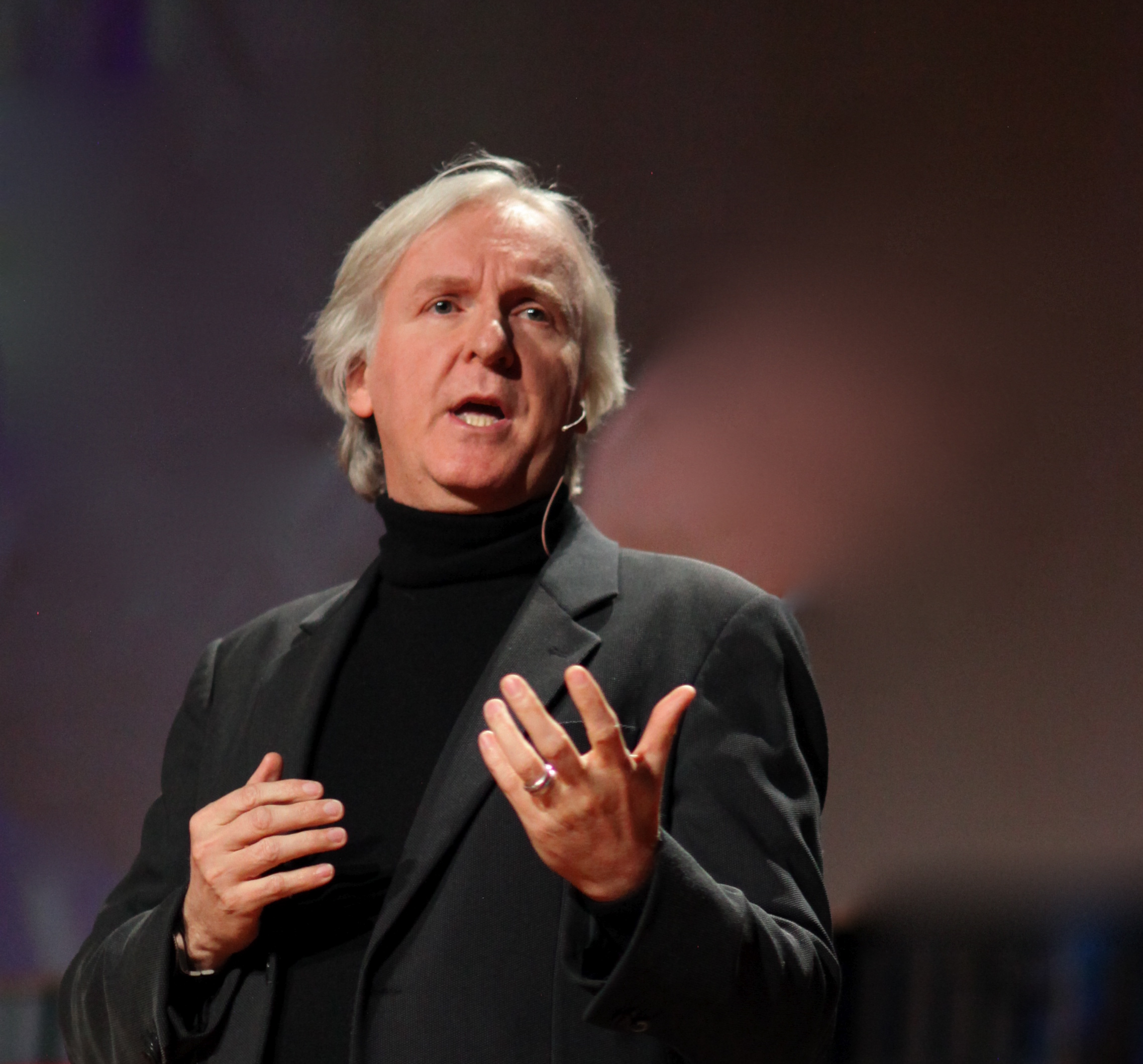
James Cameron is not mincing words about why he packed up his life in the United States and settled on the other side of the world. The filmmaker behind Avatar says he has left America for good, arguing that the country has become so polarized that “everybody’s at each other’s throats” and that staying would have cost him his sanity. In his telling, New Zealand is not a postcard escape but a deliberate choice to live somewhere he believes still trusts science, values social cohesion, and handled Covid in a way the U.S. simply did not.
Coming from a director who has spent decades working inside Hollywood’s machinery, the critique lands with extra force. Cameron is not just venting about politics at a dinner party, he is moving his family, seeking citizenship abroad, and publicly describing Trump’s America as “horrifying” while praising a small Pacific nation for feeling sane. His comments tap into a broader unease about where the U.S. is heading and what it means when one of its most successful storytellers decides the story is better somewhere else.
From Hollywood Powerhouse to Self-Exile
James Cameron has long been one of the most bankable names in film, the mind behind The Terminator, Titanic, and Avatar, and a regular presence on red carpets where photographers like George Pimentel shoot him for outfits such as Getty Images for Disney. That kind of career usually ties a person tightly to Los Angeles, yet Cameron has been steadily loosening those ties, shifting his base of operations and, now, his sense of home. He is not just taking extended location shoots abroad, he is openly describing a permanent break with the country that made him a billionaire filmmaker.
In recent interviews he has framed that decision as a matter of mental health and values rather than lifestyle perks. He has said he is “not there for the scenery” in New Zealand but “there for the sanity,” a pointed contrast with what he sees when he looks back at the United States. The director argues that the U.S. has “turned its back on science” and become so riven by partisan warfare that it no longer feels like a place where people can pull in the same direction, a criticism he has attached directly to his choice to live in New Zealand.
“Everybody’s at Each Other’s Throats”
The line that has followed Cameron around in recent days is his bleak description of the American mood: “Everybody’s at each other’s throats.” He is talking about more than sharp debates on cable news. In his view, the country has become “extremely polarized,” with neighbors, co-workers, and even family members locked into warring camps that treat politics as a zero sum fight. That atmosphere, he suggests, is not just unpleasant, it is corrosive to any sense of shared purpose.
Cameron has linked that polarization directly to his decision to leave permanently, saying he no longer wants to live in a place where basic questions of public health and reality itself are up for partisan dispute. He contrasts that with his adopted home, describing New Zealanders as people who “are, for the most part, sane” and capable of working together. The Avatar director, who moved there after the Covid pandemic, has said he is on track to become a citizen of a country where the political temperature feels lower and where the response to Covid felt like a collective project rather than a culture war.
Covid, Science, and a Tale of Two Countries
For Cameron, the pandemic was the breaking point that turned vague discomfort into a relocation plan. He has been blunt about his view that the U.S. mishandled Covid, criticizing what he calls a rejection of vaccines and a broader hostility to scientific expertise. In his telling, the country’s pandemic response exposed a deeper sickness, where public health guidance became a partisan litmus test and conspiracy theories crowded out basic facts. That experience appears to have convinced him that the polarization he sensed was not just rhetorical but deadly.
He has contrasted that with New Zealand’s approach, praising it as “a place that actually believes in science and is sane and where people can work together cohesively toward a common goal.” Cameron has pointed out that New Zealand effectively eliminated the virus more than once, something he holds up as proof that a small democracy can still rally around evidence and collective sacrifice. His criticism of the American response, including the way some leaders downplayed the threat, has been sharp enough that he has been quoted attacking the U.S. pandemic record in detail, comments that have been highlighted in coverage of how he criticizes his former home.
Why New Zealand Feels “Sane” to Him
Cameron’s praise for New Zealand is not just about case counts and lockdowns. He talks about the country as a place where people still trust institutions enough to follow public health rules, where political disagreements do not instantly turn into existential showdowns, and where daily life feels less like a permanent argument. He has described New Zealand as “sane” compared to the “extremely polarized” U.S., a word choice that makes clear he sees the difference as psychological as much as political.
That sense of sanity is tied, in his view, to how New Zealanders handled Covid as a shared challenge rather than a partisan wedge. He has praised the way people there accepted temporary restrictions to protect one another and how the government’s messaging leaned on science instead of spin. Cameron has said that is “why I love New Zealand,” a country he now describes as home after moving his family there and building a life that feels more grounded than his years in Los Angeles. He has talked about that move in detail, explaining how he relocated his family to New Zealand because it felt like the opposite of the American culture war.
Leaving for “Sanity,” Not Scenery
It would be easy to assume that a director famous for lush world building simply fell in love with New Zealand’s landscapes, the same mountains and coasts that have lured countless productions. Cameron has gone out of his way to knock down that assumption. He has said explicitly that he is “not there for the scenery” but for his “sanity,” framing the move as a mental and moral choice rather than a lifestyle upgrade. For someone who could afford to live almost anywhere, the emphasis on psychological safety is telling.
He has described the U.S. as “going in the wrong direction,” a place where the noise of politics and the erosion of trust made it harder for him to focus on the work and life he wanted. In contrast, he talks about his New Zealand farm as a refuge where he can think clearly, raise his family, and still make ambitious films without feeling like he is marinating in constant outrage. Cameron has sketched that contrast in interviews that describe how he left the “polarized” U.S. for his “sanity,” comments that have been widely quoted in coverage of his decision to settle abroad.
Family, Farm Life, and a Different Kind of Power
Part of what makes Cameron’s move feel permanent is how thoroughly he has rooted his family in New Zealand. He has not just bought a vacation property, he has moved his household, invested in a farm, and built a daily routine that looks very different from the studio lots and Beverly Hills meetings that defined his earlier decades. That shift suggests he is not treating this as a temporary escape from American politics but as a full reset of where and how he wants to live.
On that farm, he has described a life that mixes high tech filmmaking with hands in the dirt, a balance that seems to appeal to someone who has always toggled between cutting edge visual effects and deep environmental themes. Cameron has talked about wanting his children to grow up in a place where community feels less transactional and where public debates are less likely to turn toxic. He has explained that he moved his family to New Zealand for exactly that mix of sanity, science minded policy, and quieter daily life.
Blasting Trump’s America as “Horrifying”
Cameron has not limited his criticism to vague talk about polarization. He has directly taken aim at Trump’s America, describing it as “horrifying” and tying that judgment to his decision to seek citizenship abroad. Coming from a Canadian born director who built his fortune inside the U.S. system, calling the country horrifying is a striking escalation. It signals that he sees the Trump era not as a blip but as a symptom of a deeper drift away from the values he wants to live under.
He has made those comments while in the process of becoming a New Zealand citizen, underscoring that this is not just rhetorical opposition to a president but a literal vote with his feet. Coverage of his remarks has emphasized how he blasted Trump’s America while celebrating the prospect of a New Zealand passport, framing the move as both a personal and political statement. One report described how “James Cameron Blasts Trump’s America as ‘Horrifying’ While Becoming a New Zealand Citizen,” highlighting the way he has linked his new status as a citizen in waiting to his harshest critiques.
Avatar, “Fire,” and the Politics Behind the Spectacle
Cameron’s comments land differently when you remember what his movies have been saying for years. Avatar was a sprawling allegory about colonialism, corporate greed, and environmental destruction, a story that cast militarized extraction as the villain and indigenous connection to nature as the hero. As he promotes sequels like Avatar: Fire and Ash, his public remarks about America’s direction sound less like a sudden political awakening and more like the logical extension of themes he has been threading through his work.
He has appeared at events for Avatar: Fire and Ash while talking about why he no longer wants to live in the U.S., a juxtaposition that underlines how his art and his life are now pointing in the same direction. Coverage has noted that the billionaire filmmaker behind Avatar has been warning about societies that ignore science and exploit their environments for years, and that his decision to leave a country he sees as doing exactly that is consistent with those warnings. Reports describing how James Cameron left the U.S. for his sanity often mention Avatar and Fire in the same breath, treating his relocation as part of a larger narrative about what kind of future he believes in.
What His Exit Says About America Now
When a single filmmaker moves abroad, it does not change a country’s trajectory. But when that filmmaker is James Cameron, and he is loudly saying he left because America feels unhinged and hostile to science, it becomes a kind of cultural weather report. His language about “everybody’s at each other’s throats” captures a feeling that many Americans, on both sides of the aisle, have voiced in quieter terms. The difference is that Cameron has the money and mobility to act on that feeling, and he is choosing to do it in a way that doubles as a public rebuke.
His move also highlights a growing divide between people who still see the U.S. as the default center of gravity and those who are willing to build lives elsewhere when the politics feel unbearable. Cameron is not alone in looking to New Zealand as a haven, but he is one of the most famous to say out loud that he is leaving for sanity, not scenery. Coverage of how Famous director James Cameron is becoming a New Zealand Citizen, and how he blasts Trump’s America as horrifying in the same breath, turns his personal choice into a mirror for a country wrestling with what it wants to be.
More from Vinyl and Velvet:

Leave a Reply