

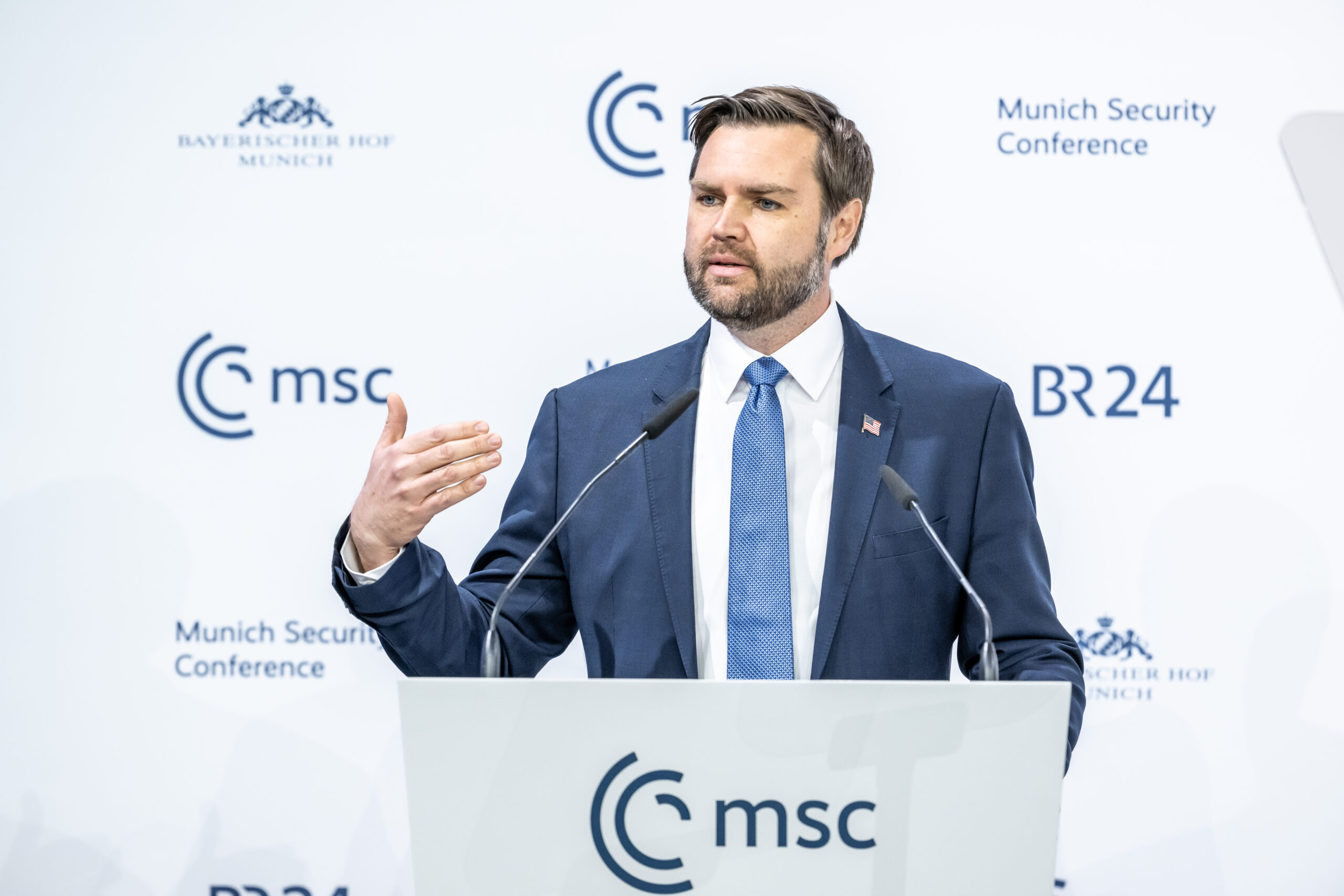
When Vice President JD Vance tried to sell the Trump economy as a ship that just needed time to “turn around,” he probably did not expect to be turned into the punchline of his own metaphor. Comparing the Trump-Vance record to the Titanic handed critics an easy opening, and they rushed in to ask the obvious: does he remember how that story ends. The backlash has turned a routine stump speech into a case study in how a clumsy image can drown out a campaign’s economic message.
Underneath the jokes sits a real fight over who is to blame for high prices and whether voters feel any improvement at all. Vance is betting that frustration with costs will outweigh the mockery, while opponents are just as eager to keep replaying the Titanic line as shorthand for what they see as a sinking economic strategy.
The moment Vance steered into an iceberg
The controversy started when Vice President JD Vance, speaking to supporters about the state of the economy, tried to frame the Trump years as a massive ocean liner that simply needs more time to change course. He argued that the Trump-Vance team inherited an affordability mess and insisted that “you do not turn the Titanic around overnight,” casting the administration as steady captains guiding a huge vessel rather than reckless pilots heading for disaster. In his telling, the problem was not the ship itself but the rough seas created by earlier policies.
That framing landed with a thud once people remembered that the Titanic did not, in fact, turn around at all. Coverage of the remarks noted that Vance was already facing heat for the comparison, with one account bluntly describing him as Vance Eviscerated for to the doomed ship and amplifying the now-famous question, “Does He Know What Happened.” Another report summed up the reaction by saying Vance was facing major backlash over the line, turning what was meant as a reassuring image into a political liability.
How he framed the “affordability crisis”
Vance’s Titanic riff did not come out of nowhere, it was his attempt to wrap a broader economic argument in a vivid story. He has been leaning hard on the idea that “The Democrats talk a lot about the affordability crisis in the United States of America. And yes, there is an affordability crisis,” before pivoting to say that the real culprit is Joe Biden’s agenda rather than the Trump-Vance years. In one version of the speech, he went further, claiming that the squeeze on families was “created by Joe Biden’s policies,” and that the current team is slowly steering away from that damage rather than causing it.
Accounts of the remarks quote him using that exact setup, with one write-up noting that he opened by acknowledging the affordability crunch and then declared it was “one created by Joe Biden‘s policies” before sailing into the Titanic analogy. Another account of the same theme highlighted how he cast “The Democrats” as the ones who talk about the problem while the Trump-Vance team claims to be fixing it, quoting his line about the affordability crisis in the United States of as proof that he knows voters are hurting even as he blames the pain on his opponents.
From stump speech to viral meme
Once the Titanic line hit social media, the reaction was swift and merciless. Liberal commentator Brian Tyler Cohen captured the mood with a simple, incredulous response, asking, “Does… does he know what happened to the Titanic,” a quote that ricocheted across platforms as users clipped and shared the video. That one sentence distilled the broader critique, that Vance had picked the single worst ship in modern history to represent what he insists is a strong economic record.
Coverage of the online blowback noted that the clip quickly spread, with one account pointing out how Cohen’s reaction was highlighted as part of a broader segment that left viewers laughing at the vice president’s choice of metaphor and asking what exactly he was trying to say about the Titanic. Another write-up described how the segment, originally flagged by Mediaite, helped turn the phrase into a meme that critics gleefully replayed ahead of the midterm elections.
Critics pile on with “Did Vance watch the movie” jokes
Once the internet latched onto the Titanic comparison, the jokes practically wrote themselves. One user, posting under the handle @LegalRobert, was quoted asking, “Did Vance ever watch the ending of the movie,” a line that captured the sense that the vice president had wandered into a cultural reference he had not fully thought through. Others riffed on the idea that if the Trump-Vance economy is the Titanic, then the iceberg must be their own policies.
Reports on the reaction highlighted how the mockery kept escalating, with one account noting that another critic quipped that the metaphor suggested the administration was proudly captaining a ship that is about to sink, and that “So, really, his economic metaphor is doing a lot of the work for his opponents.” That same write-up quoted the “Did Vance ever watch the ending of the movie” line and described how, Meanwhile, other Vance critics were turning the metaphor into a shorthand for what they see as a failing economic agenda.
Democrats seize on the “sinking ship” image
Democrats did not waste the opportunity to flip Vance’s metaphor back on him. Party operatives framed the Trump-Vance economy as already taking on water, arguing that if the vice president wants to talk about the Titanic, then he is admitting that the ship is sinking under the weight of high costs. They pointed to specific pain points like health care and housing to argue that the administration’s policies are not rescuing families but leaving them stuck below deck.
One party statement leaned into the imagery, declaring that the Trump-Vance economy is “sinking like the Titanic” and citing data that “Among the biggest drivers of inflation were health care and housing, with health care spending up 25.6% and housing spending up 8.” Another passage from the same statement hammered home that “Today in Ohio, JD Vance compared the Trump-Vance failing economy to not just a sinking ship but the most famous” disaster at sea, using his own words to argue that the Trump team is presiding over a “failing economy” rather than a ship on the mend.
What Vance says about Biden and Harris
Vance’s Titanic analogy is part of a broader effort to pin economic frustration on the previous administration. In a speech in Toledo, he argued that “That is the legacy of the Biden-Harris administration,” accusing Joe Biden and Kamala Harris of leaving behind high prices and strained family budgets. He contrasted that with promises of “lower prices, higher wages, more deportations,” pitching the Trump-Vance agenda as a tough-love course correction that will supposedly bring relief.
Reporting on the Toledo event noted that he singled out “Biden” and “Harris” by name while criticizing “The Biden” team’s approach to housing and other costs, even as he acknowledged that the administration had made some federal housing assistance available. One account described how he used the city’s manufacturing base as a backdrop to argue that the Trump-Vance policies would help small and medium manufacturers grow across Ohio, tying that message to his broader claim that the current economic pain is the direct result of the Biden-Harris administration.
Polling shows voters are not exactly thrilled
For all the noise around the Titanic line, the underlying political reality is that voters are still pretty sour on the economy, which helps explain why Vance keeps returning to the affordability theme. A New York Times/Siena College poll released on a Thursday found that just 32% of voters said the economy was better today than a year earlier, a strikingly low number for any White House trying to claim progress. That figure suggests that even if macro indicators look solid, the lived experience of prices at the grocery store and the gas pump is still rough.
Coverage of the poll emphasized that the 32% number came from a scientific survey of voters, not just online grumbling, and that it landed at a moment when the administration was trying to argue that things were finally turning around. One account tied the poll directly to the Vance controversy, noting that the New York Times and Siena College findings gave him a receptive audience for his affordability message even as his metaphor choice drew ridicule.
“Let him talk, he’s his own iceberg”
Some critics see Vance’s rhetorical misstep as a gift that keeps on giving. One observer, reacting to the speech, was quoted saying, “Let him talk,” before adding, “He’s his own iceberg,” a line that neatly flipped the Titanic story so that the vice president himself becomes the hazard to his own campaign. The implication is that every time he leans into the ship analogy, he reminds voters of catastrophe rather than competence.
Accounts of the reaction described how “US Vice President JD Vance left observers scratching their heads” with the Titanic comparison, noting that he alluded to the ship’s demise while trying to defend the Trump economy. One report quoted the “Let him talk” line and detailed how critics argued that in casting the Trump years as the ship “we’re on,” Vance had accidentally made his own team the villain of that story too, a point highlighted in coverage that said he was his own iceberg. Another passage from the same coverage stressed that “US Vice President JD Vance left observers scratching their heads” with the analogy, underscoring how his attempt at a relatable image instead raised doubts about his political instincts and the way he talks about the ship we’re on.
Why this metaphor sticks
Part of the reason the Titanic line has had such staying power is that it taps into a century of cultural baggage. The ship is shorthand for hubris, class divides, and disaster, which is why critics keep asking whether Vance has really thought through what it means to say the Trump economy is that vessel. One British outlet put it bluntly, noting that “His unusual analogy has left people scratching their heads as, of course, the Titanic was not turned around and it sank after hitting an iceberg,” a reminder that the story ends with lifeboats and loss, not a triumphant turnaround.
Coverage of the fallout has repeatedly circled back to that basic narrative problem, with one account stressing that “His unusual analogy has left people scratching their heads” and pointing out that the Titanic “was not turned around and it sank after hitting” the iceberg, even as Vance tried to argue that federal agents and regulators were the real threat to prosperity. That same report described how critics seized on the fact that he seemed to forget what happened to the Titanic, turning what he meant as a patient, long-term metaphor into a running joke about a ship that never made it to port.
The political cost of a clumsy analogy
In the end, the Titanic episode shows how a single misjudged metaphor can hijack an entire message. Vance wanted to talk about patience, scale, and the difficulty of turning a massive economy, but what stuck was the image of a ship that famously split in two and sank. Opponents have been happy to keep that image afloat, from Democrats branding the Trump-Vance economy as “sinking like the Titanic” to online critics asking if the vice president has ever sat through the final hour of the film.
More from Vinyl and Velvet:

Leave a Reply