

The phrase “world’s most beautiful girl” has been recycled online for more than a decade, attached to child models, grown-up celebrities and now to a viral influencer whose flawless face is sparking a very different kind of scrutiny. What looks at first glance like another overnight beauty sensation is, on closer inspection, a story about synthetic images, nostalgia for earlier child stars and the difficulty of telling what is real in a feed full of filters. The latest influencer to wear the label is probably not who many viewers assume she is, and that disconnect reveals how quickly beauty culture is colliding with artificial intelligence.
The child star people remember, and the AI face they are seeing now
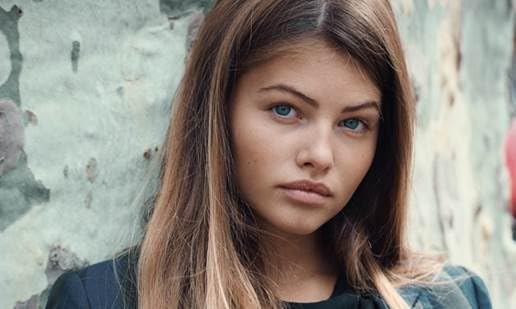
For many social media users, the phrase “most beautiful girl in the world” still evokes the French child model Thylane Léna-Rose Loubry Blondeau, whose early runway photos went viral long before TikTok existed. As a young girl, Thylane became a global talking point after fashion shoots framed her as a miniature adult, sparking debates about the ethics of child modeling. As she grew up, the now adult Rose Loubry Blondeau built a conventional career, working as a French model for luxury brands such as L’Oréal and Versace and even launching her own label after appearing in lists of “100 Most Beautiful Faces.” Her trajectory, from viral child to working professional, is part of why some viewers now assume any new “most beautiful girl” headline must be about Blondeau, even when the images in question show someone else entirely.
Another name that lingers in the public imagination is a Russian child whose blue eyes and porcelain features were widely shared under the same superlative. Coverage of that wave of attention often mentioned how a six year old was being managed like a full time brand, with a mother running her Instagram account and fielding commercial offers. One widely shared profile invited readers to meet the six year old hailed with that title, noting that while most children her age were in school or on playgrounds, her schedule revolved around photo shoots and sponsored posts. A follow up feature again urged readers to meet the child whose account was explicitly described as being run by her mother, underscoring how adult decisions and commercial incentives shaped the image of a supposedly carefree little girl.
The rise of Nia Noir and the suspicion she is not human
The latest figure to inherit the “world’s most beautiful girl” label is not a child at all but a dark haired influencer known as Nia Noir, whose hyper polished selfies have flooded TikTok and Instagram. Commenters have called her the “most beautiful girl in the world” and “a literal gift from the heavens,” language that echoes the breathless praise once directed at child models but now attached to a woman whose features look almost too perfect. Reporting on Nia notes that followers are urged to “Come to the dark side…” in her captions, while the fine print reveals that Nia Noir is not a conventional model at all. Another breakdown of the account highlights how at least one News story framed the reaction, quoting One fan who used that superlative and another who piled on the celestial metaphors, before revealing that the woman in the photos is a digital construct. A further look at the same account, credited to Dan, spells out the twist: Nia’s “skin,” “hair” and “eyes” are the output of generative software, not genetics.
That revelation has fed into a broader debate about whether viewers can still trust what they see on their screens. A widely shared Instagram clip, posted in Jan and viewed hundreds of thousands of times, introduced an influencer described as the “world’s most beautiful girl” and then asked whether she might be AI generated, pointing to telltale signs like overly smooth skin and lighting that never quite changes from shot to shot. The caption on that clip, which invited users to scrutinize the face for artifacts “commonly associated with synthetic content,” came from an account that has been tracking the spread of AI personas and linked directly to the viral Jan post. A second version of the same clip, shared directly on the platform, again described an influencer whose beauty had triggered intense debate, underscoring how quickly the conversation around Nia shifted from admiration to suspicion.
Why AI influencers keep fooling people, and what that means for beauty culture
Nia Noir is not the first digital persona to be mistaken for a living woman, and she will not be the last. In a street experiment in New York, passersby were shown a carousel of influencer photos and asked to guess who was real and who was synthetic, a test that prominently featured the pink haired virtual model Aitana Lopez. Many participants confidently misidentified Image 2, which showed Aitana, as a human, only to be told that she is an AI model. A deeper profile of Aitana Lopez explains that she is the creation of a Spanish software developer named Rubén Cruz, and that Real brands now pay for her to promote products despite her never having set foot in a studio. The same report notes that Rub, Cruz built her to be “always available,” a selling point that human influencers, with their need for sleep and boundaries, cannot match.
More from Vinyl and Velvet:

Leave a Reply