

You stand at the start of a story that changed popular music and urban culture. On August 11, 1973, a back-to-school party at 1520 Sedgwick Avenue in the Bronx—hosted by DJ Kool Herc and his sister—unfolded a new approach to rhythm and crowd energy that would grow into global hip-hop culture. That night’s focus on extended breakbeats and vocal toasting launched techniques and communal practices that became the foundation of DJing, MCing, breakdancing, and graffiti.
Explore how a local block-party solution to boredom and limited space sparked musical invention amid the Bronx’s social and economic pressures. The article traces the party itself, Herc’s technical moves, the four cultural pillars that followed, and how August 11, 1973 radiated outward to shape art, language, and industry worldwide.
Learn which moments and people turned a neighborhood gathering into a movement and why that rec room at 1520 Sedgwick Avenue still matters when you hear a beat that makes you move.
Setting the Stage: Bronx in the Early 1970s
The neighborhood combined dense apartment life, large public spaces for gatherings, and a hard-edged municipal neglect that pushed residents to create their own culture and entertainment.
Community Life at 1520 Sedgwick Avenue
1520 Sedgwick Avenue housed large families in cramped units and acted like a small village verticalized into an 18-story building. Tenants often shared kitchens, music, and childcare informally. Neighbors knew one another across stairwells and laundries, and the building’s rec room functioned as a common living room for teens and parents alike.
Music threaded daily life. Young people practiced dancing in hallways and kids learned DJ techniques with improvised gear. Social bonds there helped spread word of parties and park jams, so an event in a first-floor community room could draw dozens from nearby high-rises.
Effects of Urban Renewal in the South Bronx
By the early 1970s, urban renewal and disinvestment reshaped the South Bronx demographically and physically. Landlords abandoned buildings; arson and neglect rose as a perverse shortcut to insurance payouts. Streets showed boarded storefronts, and municipal services like sanitation and policing were reduced in many neighborhoods.
Those policies concentrated poverty and displaced long-standing small businesses. Transit lines and highways cut through communities, fracturing social networks. The result: fewer formal venues for youth entertainment and a stronger incentive to reuse public spaces and apartment rec rooms for gatherings.
Rise of Block Parties and Local Culture
Block parties and park jams filled the void left by shuttered clubs. People hauled speakers, turntables, and amplifiers into parks, playgrounds, and building basements to make their own nightlife. These outdoor gatherings ran long, centered on percussion-heavy records and featured DJs who learned to extend danceable “breaks.”
Dancing styles, emceeing, and sound-system competition evolved quickly at these events. B-boys and b-girls developed moves on asphalt courts while DJs refined looping techniques. Word-of-mouth and handwritten flyers at spots like 1520 Sedgwick spread invitations, turning local jams into incubators for a new musical and social scene.
The Back-to-School Party and DJ Kool Herc’s Innovation
The event took place on August 11, 1973, in the rec room at 1520 Sedgwick Avenue and centered on a fundraiser that combined social gathering with new DJ techniques. A sister’s effort to raise money, a DJ’s borrowed equipment, and a crowd hungry for dancing created a practical laboratory for sound and rhythm.
Cindy Campbell’s Role and Motivation
Cindy Campbell organized the back-to-school jam to raise money for school supplies. She booked the rec room in their building at 1520 Sedgwick Avenue and spread the word to neighbors and local teens. The party was advertised as a fundraiser and community night, not a commercial concert.
She handled logistics: securing the space, collecting admission, and managing the crowd of teenagers. That practical role made the event possible and gave her brother a structured audience. Cindy’s motivation mixed practical household needs with a desire to create a safe place for local youth to dance and socialize.
Clive Campbell (DJ Kool Herc) and His Musical Roots
Clive Campbell, known as DJ Kool Herc, brought Jamaican sound-system practices to the Bronx. He had grown up around Kingston’s sound-system culture and learned about toasting and heavy bass from local Jamaican setups. Those influences shaped how he selected records and built a loud, dance-focused set.
Herc drew on a diverse record collection—funk, soul, and percussive instrumentals—and watched how dancers reacted to specific drum sections. He observed that the crowd energized during certain breaks and aimed to extend those moments. His background as a technician and access to sound gear let him translate Jamaican DJ methods into a Bronx club context.
The Merry-Go-Round Technique and Breaks
Herc introduced what became known as the merry-go-round: switching between two copies of the same record to extend the instrumental break. He isolated the most danceable drum breaks—often from funk or early rock tracks—and looped them so b-boys and b-girls could dance longer. This technique emphasized rhythm over full song structure.
Key tracks that influenced early breakbeat culture included drum-heavy pieces like The Incredible Bongo Band’s percussion tracks and funk records that featured isolated breaks similar to James Brown’s rhythm sections. By focusing on breaks, Herc turned brief percussive moments into sustained features, shaping the rhythmic backbone of emerging hip-hop.
The Sound System and Atmosphere
Herc’s rig emphasized volume, bass, and clarity to energize a crowded rec room. He used two turntables and a mixer to manually blend records, pushing the speakers to produce a booming low end. That loud, physical sound encouraged movement and gave the dancers immediate feedback.
The atmosphere at the back-to-school jam mixed community intimacy with intense dance focus. Teens from nearby buildings filled the space, responding to extended breaks with energetic b-boy and b-girl routines. The combination of a purpose-built sound system and a receptive crowd turned a neighborhood fundraiser into a reproducible model for future block parties and sound-system events.
Building the Pillars of Hip-Hop Culture
This moment in the Bronx set musical and social practices that gave rise to vocal performance, street dance, and visual art. Each element developed specific roles, techniques, and communities that fed back into the parties and records that spread the culture.
Rise of the Emcee and Coke La Rock
The emcee grew from someone who hyped a crowd into an essential performer who matched rhythms with spoken word. At Kool Herc’s parties, MCs like Coke La Rock moved beyond simple announcements; they developed call-and-response patterns and punchy rhythmic phrases that rode the breakbeats.
Coke La Rock used short, rhythmic lines to energize dancers and to carve out space for personality and competition. His style emphasized timing and crowd control rather than complex lyricism, which set a template for later rappers to build on.
Emceeing also created social roles: MCs judged dancers, introduced records, and mediated battles. That practical function turned into artistry as emcees began writing longer rhymes and developing vocal identities distinct from the DJ’s role.
Breakdancing and B-Boy Culture
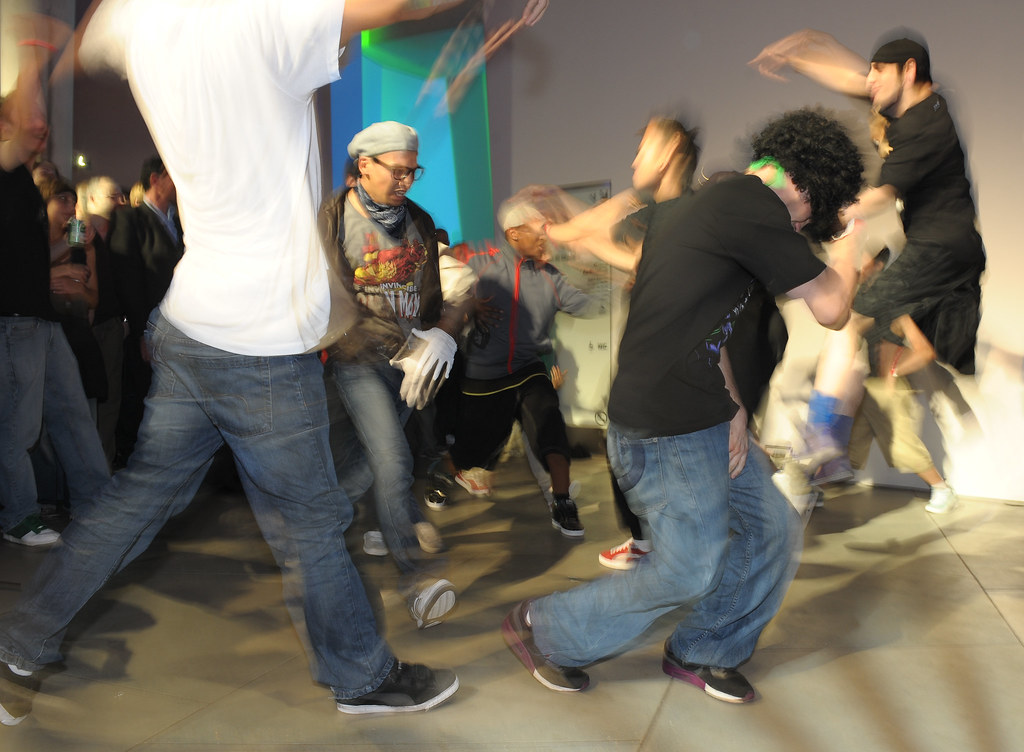
Breakdancing grew directly from extended breakbeats that DJs like Kool Herc looped for dancers. B-boys and b-girls used those longer percussive sections to invent power moves, freezes, and footwork sequences that showcased agility and rhythm.
Crews formed around shared moves and neighborhood ties. Battles became structured events where dancers displayed signature routines, judged on originality, musicality, and technique. These contests encouraged innovation and rapid stylistic evolution.
The dance also carried social meanings: it served as a nonviolent way to resolve rivalry, to earn respect, and to express identity. Moves often referenced funk, martial arts, and acrobatics, making breakdancing a hybrid athletic-art form tied to the music’s beats.
Graffiti Art as Creative Expression
Graffiti turned subway cars, walls, and rooftops into public canvases for names, messages, and visual styles that circulated in the same neighborhoods as the parties. Writers developed tags, throw-ups, and multi-colored pieces to stake territory and gain reputation.
This visual language emphasized lettering, color contrasts, and scale. Artists experimented with layering, outlines, and wildstyle lettering to increase legibility and aesthetic impact. Graffiti crews organized painting runs and competed for visibility, much like dance crews and DJ cliques competed at jams.
Graffiti also documented local histories and identities. Names and murals recorded who belonged to a scene and who influenced it, creating a running, public archive of the community that paralleled the oral and musical records made by emcees and DJs.
The Global Impact and Lasting Legacy of August 11, 1973
The 1973 back-to-school jam at 1520 Sedgwick Avenue changed how DJs used records, how MCs spoke over beats, and how communities used music to build identity. Those technical and social shifts seeded a culture that later spread globally, produced landmark figures, and now gets institutional recognition.
Spread of Hip-Hop from the Bronx to the World
The breakbeat techniques developed by DJ Kool Herc—extending drum sections using two turntables—gave dancers more dynamic rhythms and invited vocal call-and-response. That approach traveled as DJs and partygoers moved through New York parks, clubs, and schools, then into radio and clubs in other U.S. cities. Early adopters like Grandmaster Flash refined turntablism and brought those methods to wider audiences.
By the late 1970s and early 1980s, local scenes formed in Los Angeles, Chicago, London, and beyond. Recordings such as the Sugarhill Gang’s “Rapper’s Delight” amplified hip-hop’s reach, while crews, graffiti, and b-boying created visible local scenes that adapted the Bronx template to regional concerns. The result: a transnational culture grounded in DJ technique, MCing, and community performance.
Influential Figures and Early Documentations
Key figures helped translate the Sedgwick apartment-room innovations into a durable movement. Grandmaster Flash developed cutting and backspin techniques; Coke La Rock and early MCs shaped vocal styles; and later artists and producers built commercial vocabularies. Journalists and historians, notably Jeff Chang in Can’t Stop Won’t Stop, traced these developments and placed August 11 within a larger social and political context.
Documentary coverage, magazine features, and oral histories in the 1990s and 2000s elevated previously local memories into canonical narratives of hip-hop history. Those records preserved details while also prompting debate about single-origin claims versus multiple, overlapping origins. Scholarly and popular accounts together cemented the party’s symbolic status and highlighted a network of practitioners who extended Herc’s ideas.
Anniversaries, Recognition, and Museums
Fifty-year commemorations formalized the party’s place in public memory. Cities, cultural institutions, and media marked anniversaries with concerts, exhibits, and panels; for example, national attention around “50 years of hip-hop” included replicated Sedgwick facades and stadium shows. Lawmakers and cultural leaders have used such milestones to acknowledge hip-hop’s cultural and economic contributions.
The Universal Hip Hop Museum and similar institutions preserve artifacts, oral histories, and ephemera tied to those early parties. Auctions of Herc’s memorabilia and museum exhibits have turned personal items—turntables, flyers, index-card invites—into public artifacts that document the movement’s material culture. Institutional recognition now sits alongside ongoing debates about authorship and the many creators who shaped hip-hop history.
More from Vinyl and Velvet:

Leave a Reply