

You step into a movie theater in 1927 and witness a moment that changes cinema: a film speaks. The Jazz Singer used synchronized sound in short dialogue and musical sequences, and that technical leap pushed audiences and studios to abandon silent films. That single film helped launch talkies and sped the collapse of Hollywood’s silent era by proving sound could transform storytelling and sell tickets.
They will explore how The Jazz Singer achieved synchronized sound, what the film’s music and speech meant to audiences, and why studios raced to retool production and exhibition. Expect a close look at the film’s story, key performances, and the ripple effects that remade the movie business almost overnight.
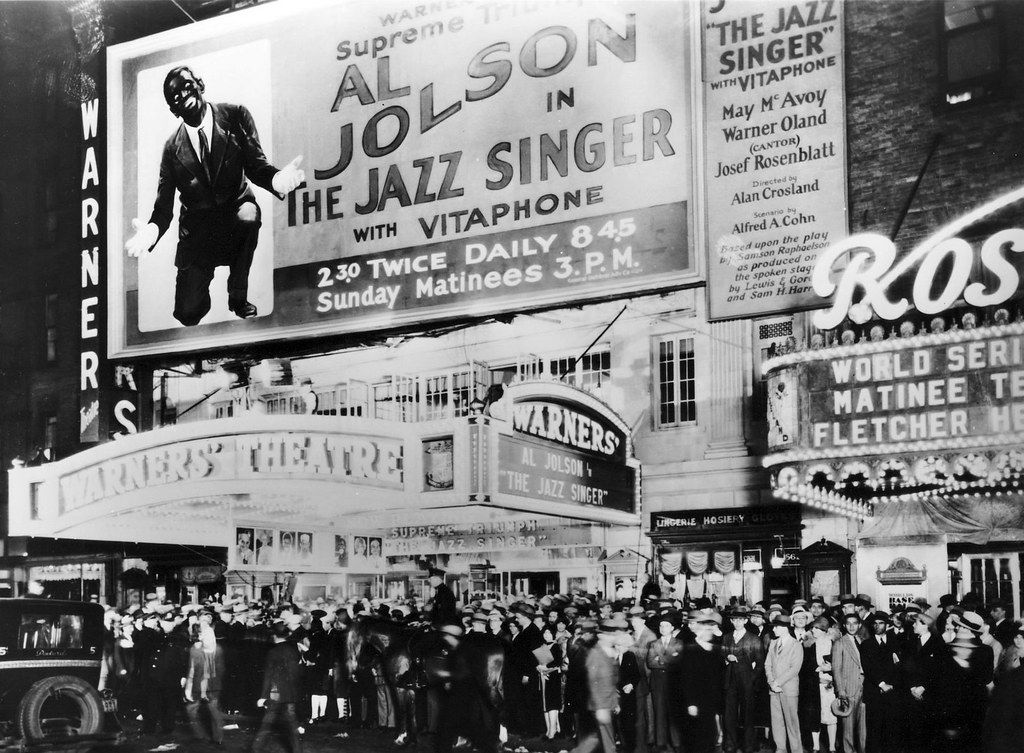
How The Jazz Singer Brought Synchronized Sound to Cinema
The Jazz Singer used a specific disc-based playback system, studio engineering, staged sound scenes, and exacting projection practices to put voice and music next to moving images. These steps forced changes in production, exhibition, and theater equipment almost immediately.
The Vitaphone Sound-On-Disc System
Vitaphone recorded audio onto 16-inch phonograph discs that spun at 33 1/3 RPM. Each disc held roughly ten minutes of sound and matched a single film reel. Projectionists started a disc player in sync with the projector and monitored a cue system to keep image and audio aligned.
The system produced monophonic sound amplified through theater speakers. It avoided optical tracks by keeping audio mechanical, relying on the Vitaphone corporation’s disc turntables and cabling. The approach gave clearer, louder reproduction than live musical accompaniment but remained vulnerable to disc wear, speed variation, and damage.
Key strengths and weaknesses:
- Strengths: high fidelity for the era, ready amplification, simple archival disc format.
- Weaknesses: synchronization drift, limited disc length, fragility of shellac discs, and theater retrofit costs.
Warner Bros, Western Electric, and the Creation of Vitaphone
Warner Bros. partnered with Western Electric and engineers to commercialize the Vitaphone sound-on-disc system. Western Electric supplied microphone, amplification, and speaker technology while Warner Bros. funded and deployed the system in theaters.
George Groves led sound engineering on early Vitaphone productions, supervising on-set recording and mastering discs. The collaboration also involved the Victor Talking Machine Company for pressing discs and the Vitaphone corporation organizing distribution logistics. Together they created business and technical workflows: record each reel’s audio, press synchronized discs, and ship sets to equipped theaters.
This industrial alliance accelerated adoption. Warner Bros. used its distribution network to equip major urban theaters first, which pressured other studios and exhibitors to install compatible playback gear or risk losing audiences.
The Film’s Groundbreaking Sound Scenes
The Jazz Singer contains a handful of synchronized scenes rather than continuous dialogue. Al Jolson’s spoken line “Wait a minute, wait a minute, you ain’t heard nothin’ yet” and several musical numbers like “Toot, Toot, Tootsie” and “My Mammy” were recorded directly to Vitaphone discs.
These sequences combined prerecorded singing and live-stage timing. The musical passages showcased how synchronized speech and song could add immediacy and personality to screen performance. Most of the film, however, remained silent with intertitles and an orchestral score on disc, making the sound scenes stand out as deliberate showstoppers.
Exhibitors reported strong audience reactions to Jolson’s vocal delivery. Those moments demonstrated commercial potential for synchronized speech and helped shift expectations for mainstream films.
Technical and Production Challenges
Recording with Vitaphone forced new on-set practices. Microphones were large and stationary, so actors had to rehearse precise positions. Cameras and sound heads required isolation to reduce mechanical noise, often enclosing cameras in soundproof booths that limited mobility and framing options.
Discs had to be cut live or in close succession, then inspected and pressed. Any error—speed fluctuation, dust, or a cracked disc—could ruin synchronization. Projectionists faced intensive labor: cueing, switching discs between reels, and restarting players to maintain sync across showings.
Broad technical issues included limited frequency range, surface noise from shellac discs, and the need for theaters to install amplifiers and speakers. The problems spurred rapid innovation: improvements in disc mastering, hybrid workflows with Western Electric equipment, and later transitions to sound-on-film optical tracks to solve fragility and sync drift.
Further reading on Vitaphone’s mechanism and historical role appears in a technical overview of the Vitaphone sound-on-disc system.
The Impact on Hollywood and the Collapse of the Silent Era
The Jazz Singer’s mix of spoken lines and songs reshaped moviegoing habits, studio business decisions, exhibition tech, and performers’ careers. The following subsections detail how audiences, box office results, competing studios, and stars responded as silent films gave way to talkies.
Immediate Audience Reactions and Box Office Success
Audiences reacted with intense enthusiasm to Al Jolson’s vocal scenes and musical numbers, especially the improvised lines that felt spontaneous and immediate. Reports from premieres showed packed houses and loud applause, which quickly translated into strong ticket sales where sound-equipped theaters could play the film.
Because few venues had sound equipment at first, many viewers still saw silent prints, but in wired theaters the reaction proved commercially decisive. Warner Bros. turned profits on The Jazz Singer and its follow-up, The Singing Fool, which reinforced the financial case for sound and encouraged rapid theater wiring. The commercial success also made exhibitors prioritize films with synchronized music or dialogue over traditional silent features.
Accelerating the Decline of Silent Films
The Jazz Singer did not instantly eliminate silent films, but it shifted market momentum decisively toward synchronized sound. Studios that had long resisted voice on film found it harder to justify producing expensive silent features when audiences were clamoring for talkies. The silent era’s conventions—intertitles, pantomimed acting, and live musical accompaniment in nickelodeons and larger houses—lost cultural and commercial dominance.
By 1928–1930 the industry moved quickly: many previously planned silent releases were shelved or retooled with soundtracks. Technologies like Vitaphone and Movietone became selling points, not curiosities. The result was a steep decline in the production and promotion of pure silent films as distributors and exhibitors chased the box office advantages of synchronized sound.
Industry-Wide Transition to Talkies
Studios scrambled to adopt sound systems, retrofit stages, and train crews in audio recording and mixing. Warner Bros. invested heavily in Vitaphone; Fox and others promoted Movietone and optical sound-on-film methods. The transition required large capital outlays for soundproofing, microphones, and theater wiring, which reshaped studio budgets and release schedules.
Major companies such as MGM and Universal moved to integrate sound into their production pipelines, often converting musicals and revivals to showcase synchronized audio. The new production workflow emphasized dialogue capture, actor vocal coaching, and new scripting styles. Trade publications and studio executives shifted rhetoric from skeptical to urgent—investment in sound became a near-term survival requirement.
Responses from Other Studios and Stars
Many studios initially resisted, calling sound a fad, but commercial results forced a rapid change of heart. Some firms that once colluded to ignore sound pivoted to licensing or developing systems. Smaller exhibitors faced the hardest choice: invest in wiring or lose audiences to wired houses showing talkies.
Performers experienced varied outcomes. Stage-trained singers and actors with clear voices found new opportunities, while some silent-era stars struggled with diction, accents, or voices that audiences disliked. Studios began testing talent for vocal suitability and sometimes replaced bankable silent stars if their voices didn’t match screen image. The industry-wide shuffle altered career trajectories and accelerated talent turnover as talkies became the new standard.
Inside The Jazz Singer: Story, Cast, and Legacy
The film centers on a cantor’s son who rejects tradition for show business, features Al Jolson’s breakthrough vocal moments, and left a lasting, contested mark on Hollywood’s transition to sound.
Plot Overview and Main Characters
Jakie Rabinowitz, a young cantor’s son, rebels against his family’s expectation that he sing the Kol Nidre in the synagogue. He anglicizes his name to Jack Robin and pursues nightclub success in San Francisco, performing popular songs like “My Gal Sal” and later hits that Jolson made famous on film. Cantor Rabinowitz, played by Warner Oland in some accounts but central as the father figure, represents the pull of religious duty while Sara Rabinowitz (Eugenie Besserer) shows the film’s quieter maternal sympathy.
The plot compresses years into a few dramatic beats: childhood conflict, estrangement, fame, and a climactic return that forces a choice between family duty and stage life. The screenplay adapts Samson Raphaelson’s story and Broadway play, keeping the emotional friction between tradition and modern entertainment at its core.
Al Jolson and Iconic Performances
Al Jolson stars as Jack Robin and delivers the film’s most electrifying moments, including the improvised line “You ain’t heard nothin’ yet!” and songs like “My Mammy” and “Blue Skies.” Jolson’s performance mixed spoken lines, sung numbers, and stage patter recorded with the Vitaphone system, making his voice one of the first heard synchronously in a feature film. His persona—big-voiced, theatrical, and intimate with the camera—helped audiences accept recorded sound as part of cinematic storytelling.
Jolson’s career also included the follow-up hit The Singing Fool (1928), which reinforced his status as a sound-era box-office star. The film’s musical sequences function as dramatic turning points and demonstration pieces for the new technology rather than continuous, fully integrated musical storytelling.
Controversy and Cultural Reflections
The film’s use of blackface remains its most troubling legacy; Jolson performs in blackface in scenes that reflected vaudeville conventions but are now widely condemned. That practice foregrounds complicated race dynamics in early 20th-century American entertainment and shapes modern readings of the film. Critics and historians examine The Jazz Singer as both a technical milestone and a cultural artifact that carries problematic performance traditions.
The movie also engages Jewish identity explicitly: the Kol Nidre, the cantor role, and references to cantorial figures like Yossele Rosenblatt root the story in a recognizable ritual world. The tension between the cantor’s vocation and Jack’s popular songs highlights assimilation pressures faced by immigrant families in that era.
Influence on Future Musicals and Sound Films
The Jazz Singer demonstrated that synchronized dialogue and recorded singing could attract mass audiences, prompting studios to invest rapidly in sound technology like Vitaphone and sound-on-film systems. Filmmakers followed with all-talking pictures such as Lights of New York and with musicals that built on Jolson’s template of star-centered song performances. The film’s commercial success encouraged studios to cast established stage and recording stars, altering talent pipelines and marketing.
Musical films evolved from isolated recorded numbers toward integrated book musicals, but The Jazz Singer’s immediate impact accelerated the industry’s collapse of the silent era and reshaped production practices. Its influence shows in later celebrated musicals and in the way studio executives prioritized sound-ready projects, even as the art form wrestled with new narrative possibilities and ethical reassessments related to content like blackface.
More from Vinyl and Velvet:

Leave a Reply