

Henry Czerny has worked with some of the biggest names in film, but he says one deceptively simple habit from Steve Martin changed the entire atmosphere on their set together. While filming a new take on the Pink Panther universe, the veteran actor watched the legendary comedian use quiet, consistent kindness between takes to settle nerves and keep the crew focused. Czerny now describes that ritual as the defining memory of the shoot and a masterclass in how a star can lead without ever raising his voice.
Instead of relying on big speeches or on‑set antics, Martin leaned on a small, “lovely” gesture that repeated throughout the day and, in Czerny’s telling, gradually put everyone at ease. That choice, rooted in the history of the Pink Panther franchise and in Martin’s own reputation for generosity, turned a high‑pressure production into what Czerny remembers as a calm, collaborative space.
The Pink Panther Legacy Czerny Stepped Into
When Henry Czerny signed on to play a villain in a new chapter of The Pink Panther, he was joining a property with decades of expectations attached. The original films, anchored by Peter Sellers as Inspector Jacques Clouseau, set a template for a very specific blend of slapstick, mystery, and European glamour that audiences still associate with the name. Any modern production carrying the Pink Panther banner has to balance that legacy with the realities of contemporary filmmaking, from tighter schedules to global marketing demands, which can make the set feel more like a pressure cooker than a playground.
Czerny understood that context as he stepped into the role of a villain, a part that required him to embody threat while still fitting into a comedic world. The franchise’s history of elaborate set pieces and carefully choreographed physical gags means that even a single scene can involve dozens of moving parts, from stunt teams to camera rigs. In that environment, the tone set by the lead actor becomes critical, and Czerny has been clear that Steve Martin’s behavior between takes shaped how everyone navigated the weight of the Pink Panther name.
Henry Czerny’s Villain, Yuri the Trainer
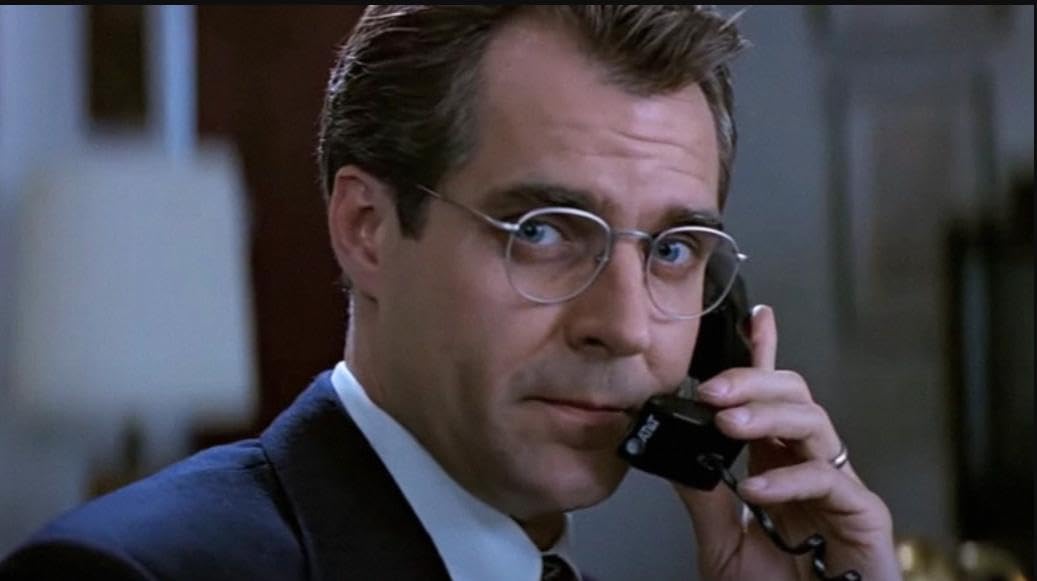
In his recollection of the shoot, Henry Czerny is specific about the character he played, identifying himself as the villain Yuri the Trainer in the Pink Panther story. That role placed him directly opposite Steve Martin’s comedic energy, forcing him to maintain a straight, often menacing presence while chaos unfolded around him. Playing Yuri the Trainer meant long days of technical blocking and repeated takes, the kind of work that can easily fray tempers if the mood on set is not carefully protected.
Czerny has described the experience of filming Pink Panther scenes as “charming,” a word that stands out given how physically demanding villain roles can be. He credits that charm in part to the way Martin carried himself as the central figure on the call sheet, noting that the star’s approach filtered down through the entire crew. By the time Czerny was deep into Yuri the Trainer’s arc, he had seen enough to conclude that Martin’s quiet leadership was not an accident but a deliberate choice that made the job easier for everyone involved in the Pink Panther production.
The One “Lovely” Habit That Changed the Mood
According to Czerny, the most memorable part of working with Steve Martin was not a single joke or a grand gesture, but a recurring act of consideration between setups. He recalls that Martin would consistently bring a sense of levity to the set in the quiet moments, checking in with people, sharing a gentle comment, or offering a small bit of humor that acknowledged how hard everyone was working. Czerny characterizes this pattern as a “lovely” addition to the day, something that did not interrupt the workflow but subtly softened its edges.
What struck Czerny was how this one habit, repeated over and over, gradually put the cast and crew at ease. Instead of disappearing into a private space or staying locked in character, Martin used the downtime to connect, which signaled that no one needed to walk on eggshells around him. Czerny has said that those moments of levity became his defining memory of the shoot, a reminder that a star’s smallest choices can have an outsized effect on everyone else’s stress level, especially on a set as intricate as Pink Panther.
How Martin’s Levity Put the Cast at Ease
Czerny’s description of Steve Martin’s behavior makes it clear that the effect went beyond simple friendliness. He notes that in the midst of all the technical demands, Martin’s light touch helped everyone breathe, which in turn made performances feel less forced. When a lead actor signals that it is acceptable to laugh at a flubbed line or to acknowledge fatigue, the rest of the cast tends to relax, and Czerny credits Martin with creating exactly that kind of environment on their Pink Panther set.
He explains that the atmosphere shifted whenever Martin engaged with people between takes, as if the collective shoulders of the crew dropped a few inches. That sense of ease did not just make the day more pleasant, it also supported better work, because actors who are not bracing for tension can take more creative risks. Czerny has framed Martin’s approach as a kind of emotional ballast, something that kept the production steady even when the schedule tightened, and he points to those calming interactions as a key reason the cast felt at.
Creating Humor Without Stealing Focus
One of the subtler points in Czerny’s account is that Steve Martin knew how to create humor on set without turning every pause into a performance. The levity he brought was calibrated, often emerging as a quiet aside or a shared look rather than a full routine. That restraint matters on a film like Pink Panther, where the actual scenes already demand big comedic beats; by keeping his between‑take behavior gentle and inclusive, Martin avoided exhausting the crew or blurring the line between rehearsal and rest.
Czerny emphasizes that this kind of humor functioned as a pressure valve rather than a distraction. It allowed people to reset after a complicated take, then return to work with a clearer head. In his telling, Martin’s instinct for when to lighten the mood and when to stay focused was as sharp as his timing in front of the camera, and it helped maintain a professional rhythm on the Pink Panther set.
Why Czerny Calls It His Most Memorable Takeaway
For an actor with Henry Czerny’s résumé, it is telling that the detail he singles out from Pink Panther is not a stunt or a plot twist, but Steve Martin’s consistent kindness between takes. Czerny has said that this pattern of behavior became the most memorable part of making the film, precisely because it affected every corner of the production. When he looks back on the experience, he does not just remember playing Yuri the Trainer, he remembers watching a veteran star use small gestures to keep a large team grounded.
That perspective reflects how deeply the habit resonated with him. Czerny has framed Martin’s approach as something he was grateful to witness, a model for how to carry responsibility on a set without adding to the stress around you. In his view, the “lovely” ritual that calmed everyone was not an extra, it was central to why the days felt manageable, and he has pointed to that as the lasting lesson he took from working on Pink Panther with Steve Martin.
The Weight of a Franchise With “Great History”
Czerny has also acknowledged that part of what made Martin’s calming presence so important was the weight of the property they were handling. He has referred to Pink Panther as having a great history behind it, a nod to the long line of films and characters that preceded their work. That history can be both a gift and a burden, offering built‑in audience recognition while also inviting constant comparison to earlier versions of Clouseau and his adversaries.
In that context, Czerny’s appreciation for Martin’s behavior becomes even clearer. When everyone knows they are contributing to a franchise with such a deep cultural footprint, the risk of overthinking every choice increases. Martin’s ability to keep the mood light, even as they honored the series’ legacy, helped prevent that anxiety from taking over. Czerny has suggested that this balance between respect for the past and ease in the present was a defining feature of their time on the Pink Panther set.
How Czerny’s Story Fits Into Martin’s Larger Reputation
Hearing Henry Czerny describe Steve Martin’s conduct on set aligns with the broader image of Martin that has emerged over decades in the industry. He is widely regarded as a meticulous craftsman who pairs sharp comedic instincts with a calm, almost professorial demeanor. Czerny’s account of a star who uses gentle humor and steady attention to put colleagues at ease fits that pattern, reinforcing the idea that Martin’s off‑camera choices are as intentional as his performances.
For Czerny, who has worked across genres and with a wide range of directors and co‑stars, the Pink Panther experience appears to have crystallized what thoughtful leadership can look like on a film set. His decision to highlight one “lovely” habit, rather than a single dramatic incident, suggests that he sees value in the cumulative effect of small, respectful actions. By sharing how that ritual calmed the cast and crew, he has added another concrete example to the portrait of Steve Martin as a colleague who understands that the atmosphere between takes can shape the work that ends up on screen, a point he underscored when the story was amplified in an exclusive feature.
More from Vinyl and Velvet:

Leave a Reply