

When this grandmother was a girl, comic books were a grocery store treat. They cost a dime or fifteen cents, her mother tossed one in the cart, and that was the afternoon’s entertainment. She still has them, a stack that stretches across the decades, and she brought them out for an interview with @jaykinjournal.
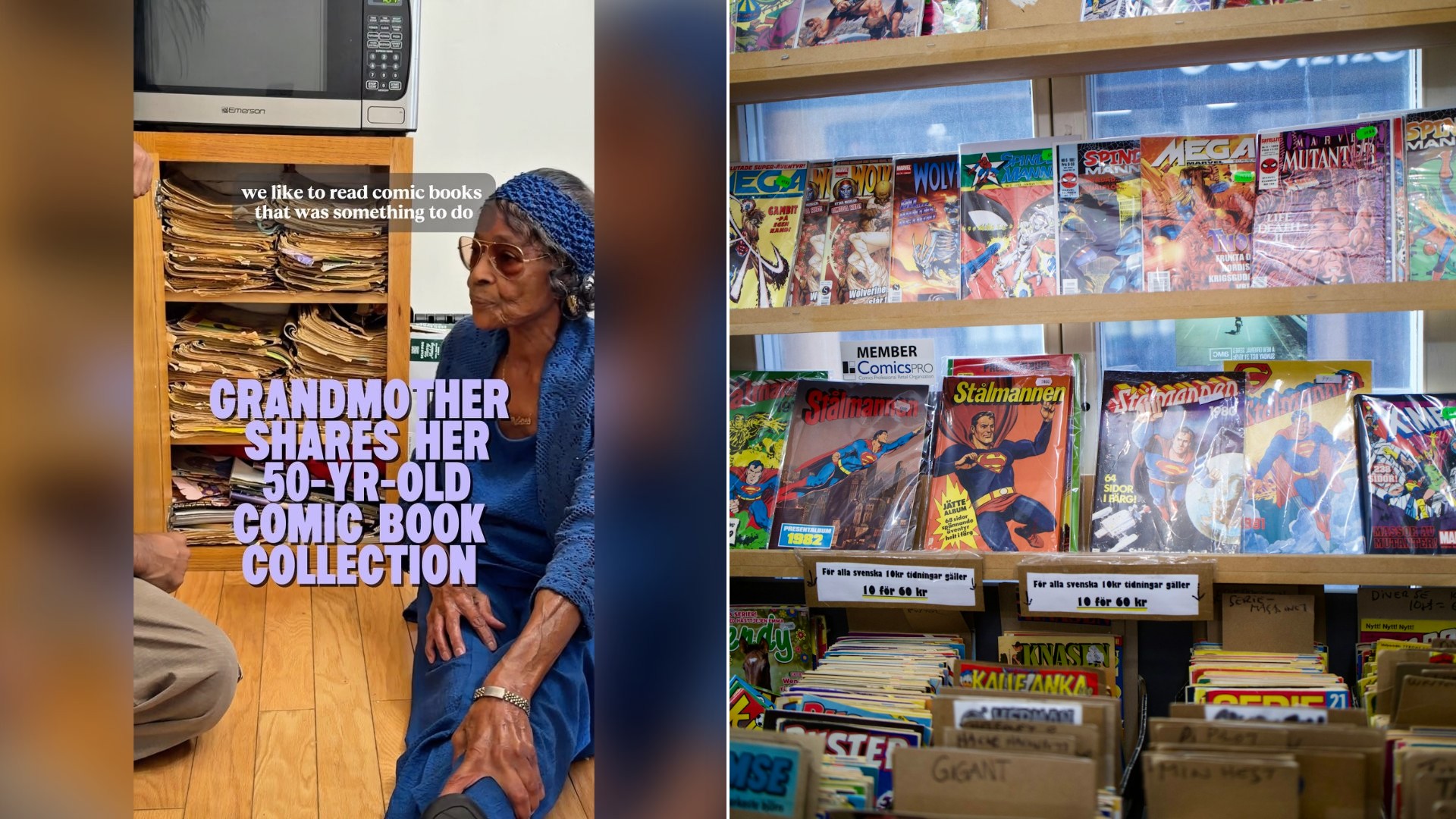
“We were children of mine. We like to read comic books,” she says. “It was something to do.” It is the kind of memory that takes a lot of people right back to the kitchen table.
View this post on Instagram
“We Didn’t Have A Whole Lot Of Toys,” She Says
She explains that comics were sold at the grocery store for 10 or 15 cents, and her mother would buy them so the children had something to read and keep busy. There were no shelves of toys back then, she says, so reading was the entertainment.
As she got a little older, she developed a taste for the love comics. That is where her collection took a turn that surprised even her interviewer.
A 25¢ Cover From 1975 And A Casper That Jumped To 60¢
She holds up one issue and reads the price off the front. “This was 25 cents from 1975,” she says. The oldest covers she shows are from about 50 years ago.
Then she turns to an old friend. “Very familiar with Casper, the Friendly Ghost,” she says. She points out that the price on this Casper had climbed to 60 cents.
Another one she opens is 35 cents. Prices that were once pocket change now read like a history lesson on how much everything has gone up.
“It’s Probably Juicy” Said The Interviewer, And Grandma Agreed
Then comes the spicy part. She pulls out a stack of what the interviewer calls the adult comics, a 25 cent issue titled For Lovers Only.
“It’s probably juicy,” says the interviewer. “Oh yeah, it is juicy,” she replies, adding that it is a little risqué. The memories come flooding back for both of them.
Why She Kept Every One Of Them
The interviewer asks the obvious question. Why did she decide to keep all of these comic books?
Her answer is as simple as it gets. “I just bought them and I just, you know, kept them and when my kids came along, they like to read the comic books.”
That is the whole story of a family collection. Nobody set out to build an archive. A mother bought comics at the grocery store, a daughter kept them, and then the next generation read them too.
“It’s History. I Think It’s Important To Share History.”
Then the interviewer asks what lesson she would share with people about keeping things. She says she does not look at them often, but sometimes she does, and they bring back memories.
She believes these are items that could have been packed away and forgotten. Instead she is glad to bring them out and show them to people. “Yes, it’s history,” she says. “I think it’s important to share history. Think of it now. It is history.”
From A Grocery Aisle To A Family Heirloom In Three Generations
Think about how that chain works. Her mother picked the comics up with the weekly shopping, the children read them on the floor, and decades later the grandchildren’s generation is looking at the same covers on a screen.
Many of us have a version of that story. A stack of paperbacks, a box of baseball cards, a shelf of records, all saved without a plan, and all more precious now than anyone expected.
What The Old Prices Tell Us About Comic Collecting
Cover prices show how much the comic book business has changed. A dime or fifteen cents at the grocery store in her childhood became 25 cents by 1975 and 60 cents for the Casper issue she holds. New comics usually cost several dollars each.
Those old books were sold on spinner racks next to the bread and milk, and many were read until the pages fell apart. That is part of why copies in good shape can be harder to find than people think.
How To Look After A Family Stash Of Old Comics
If you have a box of old comics in the attic, a few easy steps can protect them and the memories that come with them.
- Store them upright in a cool, dry place. Heat, damp and sunlight are the main enemies of old paper.
- Use acid free backing boards and clear sleeves, which are sold at most hobby shops and online.
- Handle them by the edges with clean, dry hands, and never use tape to fix a tear.
- Write down who bought them and when. A short family note makes a stack of comics into a story.
As for value, a comic is worth what a buyer will pay for the specific issue in its specific condition, so check recent sold prices before you decide anything. Many families find that the real value is the afternoon spent flipping through the pages together.
Whether your comics cost a dime or a dollar, they are a piece of the days you grew up in. As she says, it is history, and it is worth sharing.
More Stories You May Like
- Record Store Owner Chases A Metal Collection For 3 Years, Then Finds About 3500 Records Waiting Where Everything Faith No More Is Off Limits
- Stevie Wonder Books A Stalybridge Restaurant For 11 PM On A Sunday, Walks In At Half Past Midnight, And Staff Split A £1,000 Tip
- Georgia O’Keeffe Painting Bought For $3,800 In 1963 Went Into A Closet In Its Original Box After The Owner Worried A Guest Was Eyeing It Too Closely, And Christie’s Now Expects Up To $3 Million

Leave a Reply