

The first time Peter Criss got Gene Simmons on the phone, he was not grilled about drum chops or studio credits. Instead, the bassist who would help build KISS into a rock juggernaut wanted to know if this Brooklyn drummer had long hair, would wear a dress and high heels, and was cool with lipstick. For Criss, that off‑kilter line of questioning was so strange it instantly felt like destiny rather than just another audition call.
Decades later, the founding KISS drummer is still unpacking that conversation, treating it as the moment the band’s larger‑than‑life concept snapped into focus. His memories sketch out a story that is part New York hustle, part rock‑and‑roll fairy tale, and part reminder that one weird phone call can change everything.
The ad, the honeymoon and a drummer on a mission
Before the makeup and the arena pyrotechnics, Peter Criss was simply a working musician scanning classifieds for a break big enough to pull him out of the club grind. In late 1972, Simmons and Stanley were doing the same thing from the other side of the equation, hunting for a drummer who could anchor their new vision after the collapse of Wicked Lester. They spotted an ad in the East Coast version of Rolling Stone placed by Peter Criss, a small notice that would quietly reroute rock history once Simmons and Stanley picked up the phone. Criss had put himself out there as a serious, road‑tested player, but he had no idea the response would come from two New Yorkers quietly plotting a costumed rock revolution.
Criss has said that when the call finally came, he was at home with his wife, still riding the glow of a recent trip to London for their honeymoon. That journey to London for a young couple from Brooklyn had already stretched their sense of what was possible, and it colored how he heard the opportunity on the other end of the line. He later recalled turning to his wife and saying, “I’ve got to meet this guy,” a gut reaction that framed the phone call as more than just another audition, a moment he would later describe while revisiting that first conversation with Gene Simmons.
“Do you have long hair?”: the strangest audition questions
What really stuck with Criss was not the logistics of the meeting but the questions Simmons fired off. Instead of asking about time signatures or studio experience, Simmons went straight for image. “He asked me ‘Do you have long hair? Are you willing to wear a dress and high heels? Are you willing to wear lipstick?’” Criss has recalled, adding that those questions fascinated him because they hinted at a band that wanted to be more than just another bar act. The way Simmons leaned into those details, especially the blunt “Are you willing to wear lipstick?” line, told Criss that this was a project where visuals and attitude would matter as much as the backbeat, a point he has underlined while revisiting that call in recent interviews.
For a drummer who had cut his teeth in more traditional rock and R&B settings, the idea of pairing heavy music with theatrical gender‑bending outfits was both jarring and oddly liberating. Criss has said those questions did not scare him off, they pulled him in, because they suggested a band willing to take risks that other New York outfits were too cautious to touch. The conversation made it clear that Simmons was already thinking in terms of characters and spectacle, not just songs, and that Criss would be expected to lean into that vision from day one if he joined what would soon become KISS.
The birth of a concept as much as a band
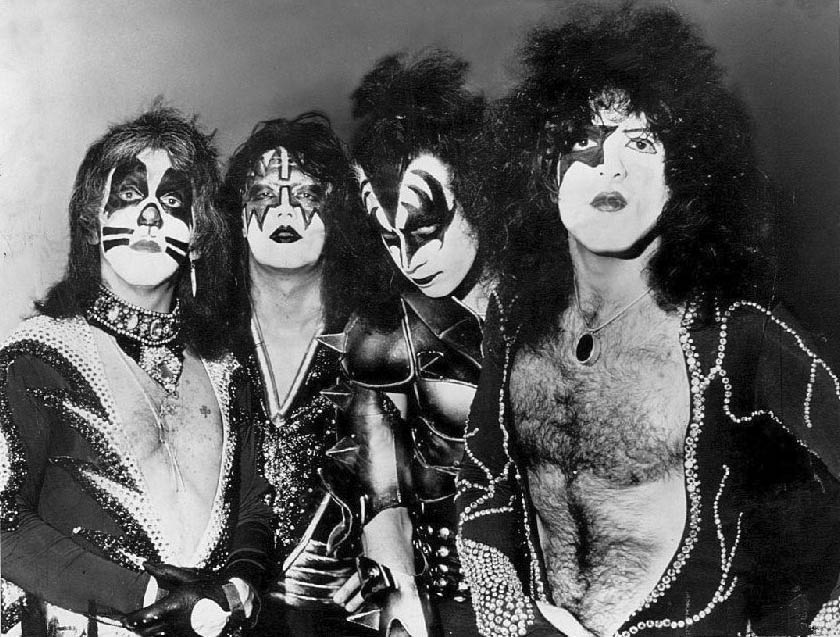
Looking back, Criss frames that first conversation as the real starting gun for KISS, even more than the first rehearsal. The talk about long hair, dresses and lipstick was not a throwaway bit, it was the early sketch of the personas that would eventually become the Catman, the Demon, the Starchild and the Spaceman. Criss has described how the call made him realize he was not just signing up to be a drummer, he was being invited into a concept where each member would embody a larger‑than‑life figure, a point he has emphasized while recounting the birth of the band with writer Stef Lach. That sense of stepping into a role, not just a band, would shape everything from the way Criss played to how he moved onstage.
The conversation also highlighted Simmons’s knack for branding long before that word became standard music‑industry jargon. By zeroing in on how the band would look and what kind of shock factor they could generate, Simmons was already thinking about how to stand out in a crowded New York scene. Criss has said that the oddball questions made him feel like he was being recruited into a small, secret club, one that would only work if everyone committed fully to the bit. That early buy‑in from the drummer helped solidify the group’s identity once they finally plugged in together, a dynamic he has revisited while telling the story of how that phone call led directly to the band’s first steps as KISS with later reflections.
From phone call to full‑blown Catman
Once Criss agreed to meet, the pieces started snapping into place quickly. The drummer who had just come back from London for his honeymoon suddenly found himself rehearsing with Simmons and Stanley, testing how his swing‑inflected style meshed with their heavier riffs. Criss has said that the same openness that made him say yes to dresses and lipstick also made him willing to experiment musically, leaning into harder edges while keeping the groove that would become a KISS trademark. That willingness to adapt, which he has tied directly to the curiosity sparked by that first call, helped turn a raw trio into a band with a distinct rhythmic identity, a point he has underlined while revisiting those early days and telling his wife at the time that he had simply “got to meet this guy” after that initial conversation about image and attitude with Simmons.
As the band refined its look, Criss’s role evolved from anonymous drummer to the Catman, complete with whiskers, fangs and a feline swagger that matched his heavy yet fluid playing. The seeds of that transformation were all present in Simmons’s early questions about hair, clothes and makeup, which had signaled that every member would need to inhabit a character fully. Criss has credited that initial phone call with giving him permission to lean into his theatrical side, a shift that helped KISS connect with fans who saw the band as a kind of rock comic book brought to life. The Catman persona, born out of that strange conversation, would become one of the most recognizable images in rock, a legacy that still traces back to a few unexpected questions about how far a drummer was willing to go.
A strange conversation that still echoes
Criss’s memory of that first talk with Simmons has stayed remarkably sharp, down to the cadence of the questions and the way they made him pause before saying yes. He has joked that most audition calls blur together after a while, but this one never did, partly because it was so unlike the usual “what gear do you use” chatter. When he revisits the story now, he often circles back to how those questions fascinated him, how they hinted at a band that would live or die on its willingness to push boundaries. That fascination has become a kind of shorthand for the moment KISS stopped being an idea in Simmons’s head and started becoming a real, if still untested, project, a turning point he has described in detail while looking back on the band’s origins with interviewers.
More from Vinyl and Velvet:

Leave a Reply