

You’ll want to know quickly whether this probe is a routine enforcement action or a politicized attack on a daytime talk show. The FCC says it’s examining whether a recent guest appearance on The View violated “equal time” rules, while critics contend the move reflects political targeting rather than neutral enforcement.
This post will unpack what the commission is actually investigating, explain the equal-time rules and how they apply to talk shows, and lay out who appeared on the program and why those appearances matter. Expect clear context about policy changes, the specific episodes at issue, and the partisan debate surrounding the probe so you can judge the stakes for yourself.
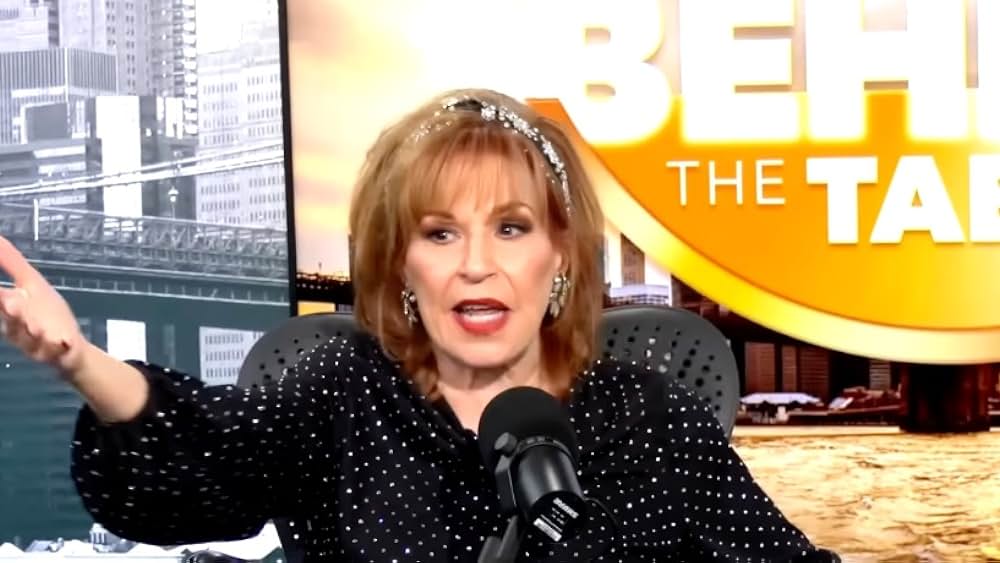
Overview of the FCC Probe Into ‘The View’
The Federal Communications Commission opened an inquiry into whether ABC’s daytime show complied with the statutory equal-time requirement after a recent candidate appearance. The probe focuses on whether networks must provide comparable opportunities to other legally filed candidates and whether any news-exemption applies.
Background on the Investigation
The FCC initiated a review of equal-opportunity rules that date to the Communications Act of 1934. The agency signaled a tighter enforcement posture in late 2025 and early 2026, asserting networks and broadcasters must adhere to equal-time obligations even for daytime and late-night talk shows.
Historically, networks claimed a “bona fide news” exemption for interviews on news programs. The FCC has said it lacks evidence that talk-show interview segments automatically qualify for that exemption under its renewed interpretation.
ABC and parent company Disney did not file an equal-time notice tied to the contested appearance, which regulators view as an implicit claim the program qualified as bona fide news. The inquiry will examine airtime lengths, filing practices, and whether comparable access was offered to other candidates on the same ballot.
Triggering Events and Key Dates
The immediate trigger was Texas state Rep. James Talarico’s appearance on The View earlier in 2026. That interview followed other candidate appearances on the program, including Texas Rep. Jasmine Crockett’s segment which aired before the FCC’s enforcement announcement.
The FCC announced its enforcement shift publicly in late 2025; the Talarico appearance came soon after, prompting the agency to open a probe in early February 2026.
Officials will review the amount of airtime each candidate received, timing relative to the FCC announcement, and whether the network filed equal-time paperwork. If the agency finds noncompliance, it could request corrective steps or remedies under the Communications Act.
Role of Fox News Digital in Breaking the Story
Fox News Digital published early reporting that the FCC had launched the probe and attributed details to unnamed FCC sources. Its coverage cited the agency’s position that talk-show interviews may not meet the “bona fide news” exemption, and highlighted quotes from FCC officials about enforcing the rule.
Fox News Digital’s report amplified the story across conservative and industry outlets, prompting broader media pickup. That reporting also noted Disney’s lack of an equal-time filing tied to The View segment, a detail that drew regulatory attention and public scrutiny.
For additional reporting context, see Fox News Digital’s article on the probe (Fox News Digital).
Equal Time Rules and Their Relevance
The rules force broadcasters to treat candidates for the same office fairly and explain when interviews count as campaign appearances. They define which appearances trigger obligations, what exceptions exist, and why enforcement matters for shows that book political guests.
Statutory Equal Opportunities Requirement
The statutory equal opportunities requirement comes from federal law and directs that a broadcast licensee must provide “equal opportunities” to legally qualified candidates for the same office. It applies to airtime offered to one candidate and, if triggered, requires comparable time, advertising rates, and scheduling opportunities for opposing candidates.
Licensees must track appearances and respond if one candidate receives a program segment that could influence voters. Violations can lead to FCC investigations and administrative penalties, because broadcasters operate under licenses granted by the government.
The Communications Act of 1934
The Communications Act of 1934 created the Federal Communications Commission and set the regulatory framework for broadcast licensing. Section 315 of the Act contains the equal opportunities rule that governs candidate access to broadcast media.
The statute ties equal opportunities to the public interest obligation of licensees. It does not create a broad speech ban; instead, it conditions the privileges of operating a broadcast facility on compliance with candidate-access rules administered by the FCC.
What is the Equal Time Rule?
The equal time rule requires broadcasters to offer comparable airtime to opposing candidates when a legally qualified candidate appears in a “program” on a station. A single interview or appearance can trigger the rule if it is deemed a use of broadcast facilities by a candidate.
Triggered obligations include offering equivalent time, charging the lowest unit rate for paid time, and providing reasonable scheduling. The rule focuses on candidates for the same office, not issue advocates, and it does not automatically apply to every mention or news report.
Bona Fide News Exemption Explained
The bona fide news exemption excludes regularly scheduled news programs, interviews, and news documentaries from equal time obligations when they cover candidates as part of news reporting. A station may rely on this exemption if the appearance results from news judgment, not candidate solicitation.
To qualify, the program must be a genuine news broadcast or interview and not a staged campaign event. The FCC assesses context, timing, and editorial control to decide whether a program segment was bona fide news rather than a use that triggers the statutory equal opportunities requirement.
Details of Candidate Appearances on ‘The View’
The segments in question featured distinct guests, different topics, and varying lengths of airtime that critics cite when alleging unequal treatment. Each appearance and the network’s stated policies factor into whether the show met federal equal-time expectations.
James Talarico and His Airtime
Texas Democrat James Talarico appeared on The View for an extended interview that covered his family background, faith, and opposition to Texas redistricting. He spoke about his legislative record and plans for the U.S. Senate campaign, which anchors highlighted across roughly one full segment of the program during a single episode.
Critics argue that the depth of questioning and the positive framing gave Talarico more favorable exposure than typical non-candidate guests receive. The FCC said it opened a probe after the appearance to examine whether the show’s treatment triggered equal-time obligations for his campaign.
Talarico’s segment aired during daytime programming when many viewers are tuned in, which factors into complaints about “equal airtime” for candidates running for the same office.
Jasmine Crockett’s Segment
Congresswoman Jasmine Crockett’s appearance on The View occurred in a separate episode and focused on her policy positions and voting record as a member of Congress from Texas. The segment lasted multiple minutes but was shorter than the Talarico interview, according to published reports.
Supporters of Crockett point out that she received direct questioning on policy specifics, but critics say the cumulative visibility across shows still favored Democrats. Crockett’s segment became part of the broader debate about whether daytime shows must balance appearances by candidates from opposing parties.
The timing and promotional lead-up for Crockett’s interview differed from Talarico’s, which critics say affected viewer reach and comparative impact.
Ahmad Hassan and Republican Candidates
Ahmad Hassan, another guest tied to the Texas races, appeared but received less airtime than the Democratic candidates mentioned. Coverage of Republican candidates on The View during the same period was limited or framed as brief rebuttals rather than full interviews, according to reports that prompted questions about balance.
Republican office-holders such as Senator John Cornyn and other GOP figures did not appear in matching lengths or depth on the show around the same cycles. That disparity is central to complaints about whether The View violated the equal opportunity expectations that prompted the FCC probe.
Show producers have noted editorial decisions and format constraints as explanations for differing guest slots, while critics cite those differences as evidence of political motivation.
Airtime Discrepancies and Responses
Observers tallied segment lengths, promotional mentions, and contextual framing to compare candidate exposure across episodes. Those tallies suggest Democrats received longer, more in-depth guest slots in the contested period, which critics say undermines the program’s claim to a bona fide news exemption from equal-time rules.
ABC and The View producers have defended booking choices as editorial and format-driven, noting that daytime talk shows routinely host politicians, activists, and entertainers without intending to favor one party. The FCC’s review will assess whether the show’s format qualifies for the longstanding exemption or whether the interviews required balancing under equal-time regulations.
Advocates for stricter enforcement argue that clear logs of appearances and segment durations provide the factual basis needed for regulatory action.
FCC Policy Changes Affecting Daytime and Late-Night Talk Shows
The Federal Communications Commission clarified that interviews on entertainment talk shows may not automatically qualify for the long-standing “bona fide news” exemption. The change could force networks to track appearances by political candidates and, in some cases, offer comparable time to opponents.
New January 2026 FCC Guidelines
The FCC issued guidance in January 2026 saying daytime and late-night talk-show interviews should be evaluated case-by-case rather than assumed exempt. The agency emphasized factors such as program format, the intent behind booking a guest, and whether the segment serves a news function.
Commissioner Brendan Carr framed the guidance as enforcing the equal-time rule more strictly, especially when programs appear politically motivated. The guidance notes that shows labeled as entertainment but frequently hosting candidates may lose the exemption and that stations must then log appearances in their political files.
Networks can petition the FCC for an exemption, but the agency signaled it will scrutinize requests. Cable channels and non-broadcast platforms remain outside the FCC’s broadcast equal-time obligations.
Impact on Daytime Talk Shows
Daytime television talk shows that regularly host politicians face the greatest immediate risk. Programs like The View that blend opinion, panel discussion, and celebrity interviews now confront potential equal-opportunity claims if they host candidates running for office.
Stations may respond by tightening booking practices, adding disclaimers, or shifting interviews to news-branded programs to preserve the exemption. When free time is provided to one candidate, rival campaigns can request comparable time, which could force networks to allocate paid ad inventory elsewhere.
Producers may avoid pre-election candidate interviews or insist on format changes to emphasize newsworthiness. The FCC’s actions could also prompt legal challenges from networks arguing editorial discretion and First Amendment protections.
Status of Late-Night Programs
Late-night shows such as those hosted by Stephen Colbert and others now face scrutiny if they feature political guests. Historically, a 1996 exemption protected late-night interviews; the FCC’s update narrows that protection by focusing on partisan motivation and program context.
If a late-night segment is deemed non-exempt, broadcasters would need to record the appearance in their political files and possibly offer comparable time to opponents. Networks airing these shows might shift political interviews to network news hours or purchase ad time to avoid equal-opportunity obligations.
The change does not directly regulate streaming-only or cable outlets, but broadcast affiliates carrying late-night shows must assess compliance. Legal and programming teams will likely re-evaluate guest lineups ahead of election cycles.
Political Debate and Claims of Partisan Motivation
The dispute centers on whether the FCC’s renewed scrutiny treats daytime talk shows as ordinary news outlets or as partisan platforms requiring equal time. The debate threads include statements from the FCC chair, sharp pushback from critics who call the moves politically motivated, and responses from ABC and Disney defending editorial choices.
Brendan Carr’s Statements and Position
Brendan Carr, the FCC chair, has argued that programs motivated by partisan political purposes should not receive the longstanding “bona fide news” exemption from equal-time rules. He has repeatedly signaled interest in evaluating whether shows like The View qualify for that exemption, saying such a review is warranted given the agency’s updated guidance. Carr’s public remarks and the Media Bureau’s guidance emphasize assessing a program’s “partisan motivation” when deciding equal-time applicability. He has framed the effort as an enforcement of existing statutory rules rather than ideological censorship, and his office has pointed to recent rule clarifications that narrowed automatic exemptions for certain talk formats.
Critics’ Responses and Intimidation Claims
Senate Democrats, media watchdogs, and some former commissioners have described the FCC’s actions as politically motivated and as an attempt to intimidate broadcasters. They argue that reviving complaints and focusing on entertainment-talk programs amounts to weaponizing the agency to punish editorial choices. Critics cite the timing—amid a heated 2026 election cycle—and Carr’s previous public skepticism of networks as evidence of partisan intent. Letters from lawmakers and public statements frame the inquiries as a threat to press freedom, warning that forcing equal-time obligations on programs like late-night shows or daytime panels could chill political coverage.
Reactions from ABC, Disney, and Others
ABC and parent company Disney have defended programming decisions and pushed back against any suggestion they acted to favor candidates. Network representatives and legal teams typically assert that talk and entertainment shows fall into established exemptions and that routine interviews are editorial, not campaign coordination. Broadcasters worry that expanded enforcement would create logistical and legal burdens—potentially obligating stations to offer opposing candidates airtime or face investigations. Industry groups and some broadcasters have also voiced concern that the Media Bureau’s guidance could upend decades of practice for daytime and late-night formats.
Notable Hosts and Panelists Involved
The show’s anchors and rotating co-hosts have been central to the FCC attention, because their on-air comments and guest bookings often intersect with active political campaigns. Specific remarks, guest choices, and prior public disputes have made certain panelists focal points of the controversy.
Whoopi Goldberg’s Role
Whoopi Goldberg serves as the long-running moderator and often frames the conversation on policy and politics for the panel. She manages segment flow, decides when debates escalate, and routinely offers guiding commentary that can shape viewer perception of political guests.
As moderator, Goldberg has faced criticism and praise for how she balances advocacy and neutrality. Critics say she sometimes lets personal views steer the discussion; supporters argue she curates civil conversation and keeps strong personalities from derailing interviews.
Her prominence means FCC scrutiny directed at the show frequently lands on her shoulders first. That matters because enforcement questions about equitable airtime and “bona fide” news exemptions hinge on how segments are presented and moderated.
Joy Behar and Political Controversies
Joy Behar has a long record of outspoken political commentary and viral moments that draw public and political attention. Her direct criticisms of presidents and prominent politicians have led to high-profile reactions from political figures and partisan media outlets.
Behar’s remarks have triggered both advertiser attention and public controversy, which feeds into wider claims that the program broadcasts partisan messaging rather than neutral interviews. Those incidents are often cited by critics arguing the show should fall under stricter equal-time scrutiny.
At the same time, Behar’s role as a comedian-commentator is part of the show’s format. That mix of opinion and conversation complicates legal questions about whether specific interview segments qualify for newsroom exemptions under FCC rules.
Alyssa Farah Griffin and Sunny Hostin
Alyssa Farah Griffin and Sunny Hostin bring contrasting backgrounds that shape how the show covers politics. Griffin, a former Republican White House staffer and communications official, offers conservative-leaning perspectives and often pushes back on progressive viewpoints during panels.
Sunny Hostin, a former federal prosecutor and legal analyst, focuses on legal and civil-rights angles in political coverage. Her questions and legal framing frequently shift conversations toward accountability, investigations, and court implications for political figures.
Together, Griffin and Hostin create visible on-air ideological tension that viewers and critics cite when assessing whether the program functions as a debate forum or a platform favoring certain candidates. Their differing professional histories also affect how guests are challenged and which lines of questioning dominate interviews.
More from Vinyl and Velvet:

Leave a Reply