

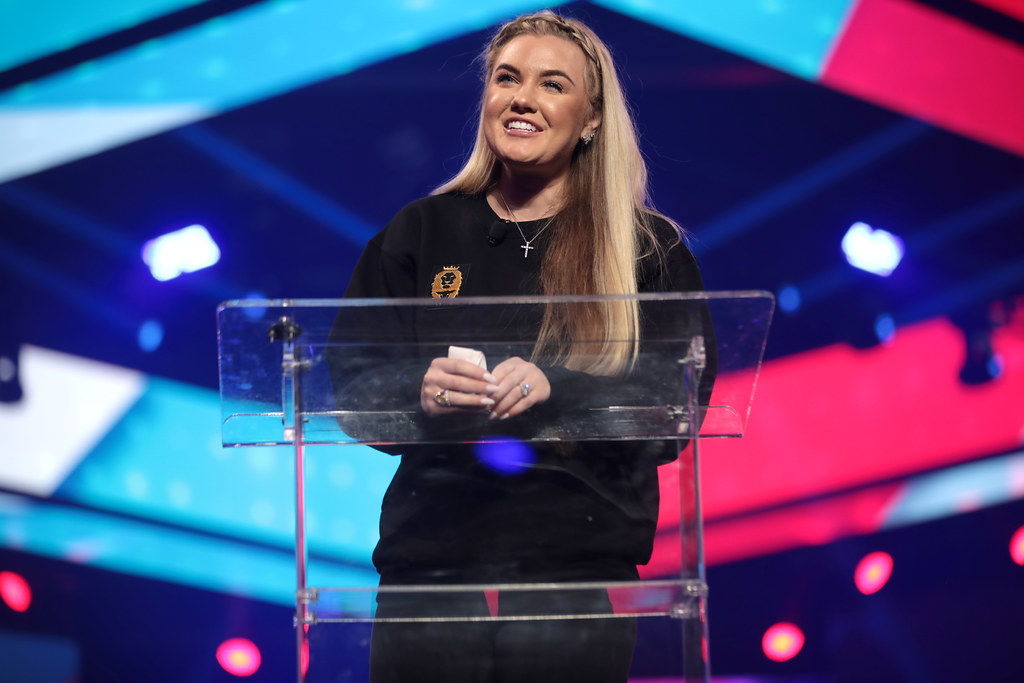
Erika Kirk has spent the past year trying to turn personal tragedy into a polished conservative brand, but the internet is not buying the act. After a string of viral clips and appearances, critics are now blasting her as a “total hypocrite,” accusing her of cashing in on grief while pushing messages that do not match her own life.
The backlash has grown into a full‑blown culture‑war skirmish, with progressive podcasters, conservative influencers and everyday commenters all weighing in on what, exactly, Erika Kirk represents. At the center of it is a simple question with messy answers: is she a grieving widow finding her footing, or a political entrepreneur using that story to sell a lifestyle she never actually lived?
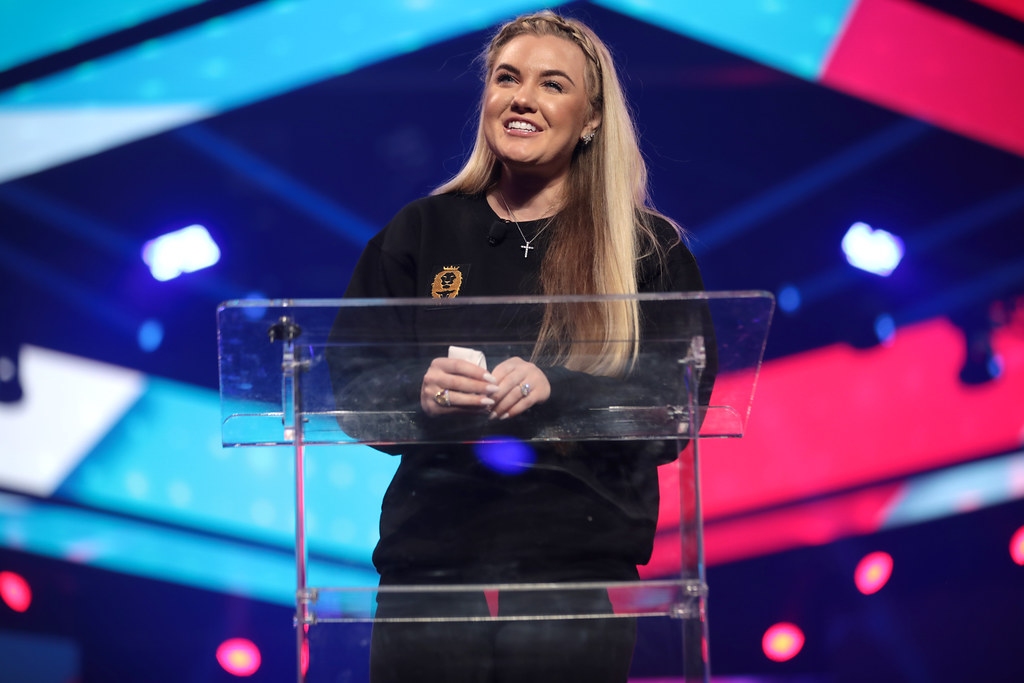
From grieving widow to conservative influencer
Erika Kirk’s public role shifted dramatically after the assassination of her 31‑year‑old conservative activist husband, Charlie Kirk, who co‑founded the youth organization Turning Point USA. In the months that followed, she stepped more fully into the spotlight at Turning Point events, positioning herself as both a keeper of his legacy and a voice for conservative women navigating faith, family and politics. That evolution, framed as a natural extension of her late husband’s work, quickly made her a fixture on the right’s influencer circuit.
Supporters cast this as a story of resilience, but critics argue that the branding has been aggressive and carefully curated. Coverage of how she “addresses recent criticism” notes that her appearances are tightly tied to the Turning Point USA ecosystem, where she is introduced through the lens of martyrdom and mission rather than as a private person still processing loss. That framing, they say, sets the stage for the harsher judgments that follow when her rhetoric on women, motherhood and morality collides with the details of her own life.
The “have kids young” message that lit the fuse
The loudest accusations of hypocrisy started with Erika Kirk’s advice to young women about motherhood. In a widely shared clip, she urged women to prioritize having children early, even suggesting they might wait to get a degree or launch a career so they do not “put off” starting a family. According to one report, Erika Kirk framed children as a woman’s primary calling, warning that delaying pregnancy for education or work could leave women regretful and alone.
Online, that message landed like a slap. Commenters pointed out that Erika herself had children later than she now recommends, accusing her of selling a fantasy path that she did not walk. One viral write‑up described how people branded her a “Hypocrite” for “pressuring” young women to make life‑altering choices on a timeline stricter than her own. For critics, it was not just the content of the advice, but the moralizing tone, that made it feel cruel.
Podcaster Jennifer Welch calls her a “grifter”
If the motherhood comments lit the match, progressive podcaster Jennifer Welch poured gasoline on the fire. In a viral segment, Welch said she had “had it” with Erika’s brand of conservative femininity and labeled her an “absolute grifter,” arguing that the widow was monetizing tragedy while pushing policies that harm women. One detailed account of the rant describes how Welch compared Erika to other right‑wing figures, calling her a “grifter” in the same breath as “Donald Trump and” other conservative power players.
Welch did not stop at Erika. She also tore into Charlie Kirk’s record, describing him as an “unrepentant racist and a homophobe” and arguing that Erika’s rhetoric makes women “less safe all across the board.” In one version of the exchange, a co‑host named Sullivan even interjected that “maybe there’s” a more charitable way to read Erika’s motives, but Welch doubled down, insisting that “Your language and organization makes women less safe” and that Erika’s late husband’s politics were part of the problem.
Outrage, memes and the ethics of attacking a widow
The Welch rant did not exist in a vacuum. It followed an earlier wave of anger when a left‑wing commentator shared a meme depicting Erika Kirk in a way many saw as ghoulish, given the circumstances of Charlie’s death. Conservative author Carol Roth pushed back, warning that “When one of your loved ones passes, someone will remind you of this,” and arguing that the meme said more about its creator than its target. Coverage of that dust‑up noted Roth’s view that “The only person this reflects” is the person mocking a grieving spouse.
That earlier controversy primed conservatives to see Welch’s “grifter” label as part of a pattern of cruelty toward Erika. Some on the right argued that whatever one thinks of her politics, there should be a line when it comes to a widow whose husband was killed in a political context. Others, including some center‑right voices, countered that once Erika chose to become a high‑profile surrogate for Charlie’s ideas, her messaging and business choices were fair game. The fight over tone and tactics became its own subplot, separate from the question of whether her advice to women is actually helpful.
TPUSA, Candace Owens and the right’s internal drama
Turning Point USA did not stay silent as the “grifter” clip spread. The organization publicly defended Erika, framing Welch’s comments as an attack on conservative women more broadly and highlighting the way Erika has tried to carry on Charlie’s work. One account of the response notes that TPUSA allies rallied around her, casting Welch as a liberal bully and using the moment to energize their own base.
At the same time, Erika has faced scrutiny from inside the right. In one viral Instagram reel, Candace Owens complained that “That Charlie Kirk’s wife exudes the most inauthentic” energy, and said she would only stop criticizing if Kirk specified which of her statements were lies. The clip, which framed Owens as engaged in a kind of “visibility” war with Erika, raised questions about whether Erika’s rapid rise is rubbing other conservative influencers the wrong way. Coverage of the spat highlighted how Owens responded by insisting she was simply telling the truth and that Erika’s curated image deserved scrutiny.
Stagecraft, “the enemy” and a glitchy iPad
Erika’s critics have also seized on smaller moments that, in isolation, might have passed as forgettable. At one Turning Point USA conference, her iPad reportedly failed just as she was about to deliver a speech, leaving her scrambling on stage. Instead of chalking it up to bad luck or tech issues, she blamed “the enemy” for the malfunction, saying the device “wouldn’t even turn on.” That framing, reported in detail in one recap, led detractors to mock her for spiritualizing a simple glitch and to question whether Erika Kirk was leaning too hard on religious language to keep audiences engaged.
That same instinct to dramatize has shown up around AmFest, Turning Point USA’s splashy conference known for pyrotechnics and theatrical staging. When organizers recreated the scene of Charlie Kirk’s murder, Candace Owens blasted the decision, saying “Pretend like Erica didn’t know…” and expressing disgust at the spectacle. A detailed account of her comments notes that Candace Owens condemned AmFest for turning a killing into content, and suggested that the whole production said something unsettling about what it takes to travel in modern America’s political media ecosystem.
Nicki Minaj, petitions and the broader culture‑war swirl
The fight over Erika Kirk is also tangled up with a wider backlash against celebrity politics on the right. After rapper Nicki Minaj appeared with Erika at a Turning Point USA event, social media erupted, not just over Minaj’s presence but over her political choices. One Instagram post about the fallout drew 1,334 comments, many of them blasting Minaj for cozying up to conservative activists and criticizing her political choices.
That anger spilled into a Change.org campaign, where tens of thousands signed a petition calling for Nicki Minaj to be removed from the United States after her high‑profile appearance with Erika. A separate post described how Nicki Minaj had not publicly responded to the petition, even as it became a talking point in debates over immigration, celebrity influence and the boundaries of political protest. For Erika, the Minaj saga reinforced her status as a lightning rod: anyone who stands next to her on stage now risks being pulled into the same storm.
How Erika is answering the “hypocrite” label
Faced with accusations that she is a “total hypocrite” and a “grifter,” Erika Kirk has tried to reframe the conversation. In a recent sit‑down, she addressed the criticism head‑on, arguing that her message about family and faith is rooted in personal conviction, not opportunism. Coverage of that appearance notes that some social media users criticized her for leaning on her widow status at a Turning Point USA event, while others praised her for refusing to apologize for her beliefs.
Her defenders also point to moments when she has shown a lighter, more self‑aware side, such as when She garnered more love for her comments to She told Jimmy Kimmel that she did not need him to apologize for making fun of conservatives. Supporters say those glimpses reveal someone trying to navigate an impossible mix of grief, fame and ideological warfare. Her critics are not convinced. For them, the polished speeches, the iPad drama, the AmFest stagecraft and the hardline advice to young women all add up to a brand that feels more performative than authentic, and they are not shy about saying so.
Why the fight over Erika Kirk matters
The intensity of the reaction to Erika Kirk is not just about one woman’s Instagram feed. It is about what happens when personal loss, political branding and the influencer economy collide. On the right, she has become a symbol of how conservative movements package grief and family values for mass consumption. On the left, she is held up as a case study in how culture‑war entrepreneurs, in the words of one critic, turn tragedy into a business model while telling other women how to live.
That is why figures as different as Jennifer Welch, Carol Roth and Candace Owens keep circling back to her. Welch’s Dec tirade, the detailed breakdowns of how Your support for certain rhetoric can “demean women,” and the way She said she found it “ironic” that so many women backed candidates like Mamdani, all feed into a bigger argument about who gets to define empowerment. Whether Erika Kirk ultimately shakes off the “hypocrite” tag or leans into the martyr role her allies are building around her, the fight swirling around her shows no sign of cooling down.
More from Vinyl and Velvet:

Leave a Reply