

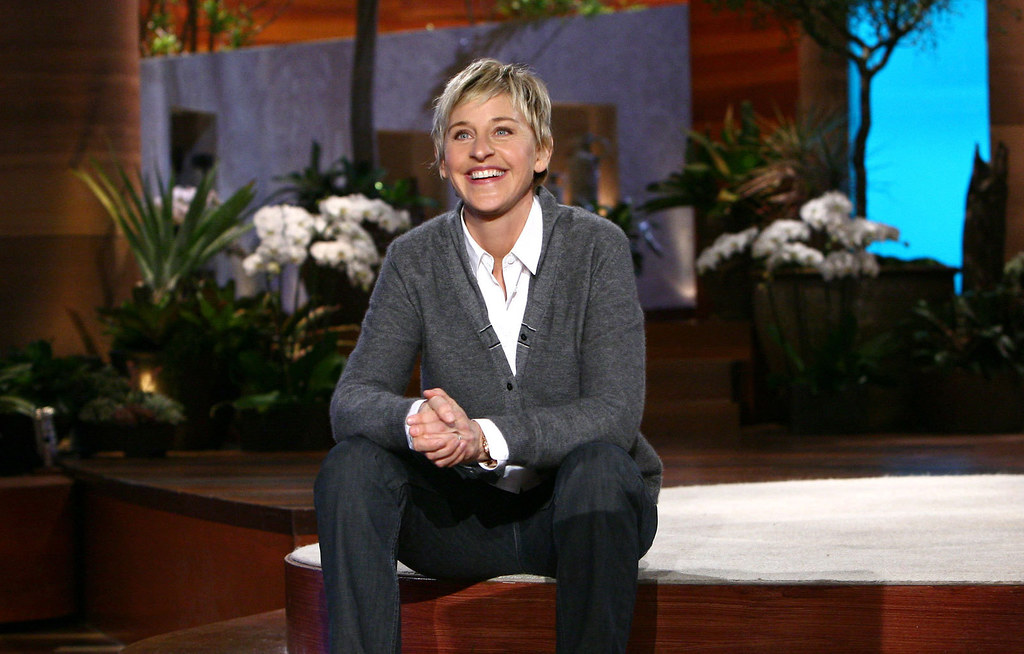
Ellen DeGeneres has stepped into one of the most emotionally charged stories of the year, voicing anger over the killing of Renee Good by immigration agents and calling the shooting “wrong.” Her attempt to frame the tragedy in moral terms has collided with a skeptical public that still associates her with allegations of workplace toxicity and Hollywood detachment. The clash between DeGeneres’ outrage and the backlash from viewers reveals how little patience many fans now have for celebrity interventions in life‑and‑death politics.
The Renee Good case that shook the country
The outcry around Ellen DeGeneres cannot be understood without first grasping who Renee Good was and why her death has become a national flashpoint. Good was killed after an encounter with ICE agents that, according to her wife, ended when officers opened fire as they claimed she was using her vehicle as a weapon. In the aftermath, images described as Polaroids of Becca circulated on Instagram, putting a human face on a case that might otherwise have been reduced to a brief law‑enforcement statement.
Those close to the family have stressed that Renee Good leaves behind three children, two from her first marriage and a third from her relationship with her wife, underscoring the scale of the loss for those who knew her best. The account that she was accused of trying to ram ICE agents with her car has become a central point of contention, with supporters arguing that the official narrative does not justify the level of force used. As the story spread, it quickly moved from a local tragedy into a symbol of the broader debate over immigration enforcement and the conduct of ICE, setting the stage for Hollywood figures, including DeGeneres, to weigh in on what happened to Renee Good.
Ellen’s “angry” response and what she actually said
Into this fraught context stepped Ellen DeGeneres, who used her platform to express anger at the killing and to insist that what happened to Renee Good was wrong. Coverage of her comments has emphasized that she framed her reaction in moral terms, presenting herself as “angry” at the idea that a woman could be shot dead in front of her family during an immigration operation. One widely shared write‑up of her remarks highlighted that the piece had drawn 58 responses in its early run, a small but telling indicator of how quickly her intervention became a talking point.
DeGeneres’ comments were framed as a straightforward condemnation of the shooting, with her anger directed at the system that allowed ICE agents to use lethal force in a residential setting. She positioned herself as a voice of conscience, aligning with those who see the killing as an unacceptable escalation in immigration enforcement. Yet the reaction to her words showed that, for many viewers, the messenger mattered as much as the message, and DeGeneres’ own history complicated how her outrage was received.
Why fans are telling Ellen to “stay in your lane”
The backlash to DeGeneres’ remarks has been sharp, with critics accusing her of oversimplifying a complex and dangerous confrontation. One widely quoted social media response told her to “Stay in your lane Ellen…no one deserves to die but maybe if she wasn’t out antagonizing law enforcement that had NOTHING to do with her immigration status this wouldn’t have happened,” capturing a sentiment that she was ignoring the risks officers said they faced. That reaction, preserved in a report on viewer comments, shows how some people have seized on the word NOTHING to argue that Good’s actions, not her immigration status, were at the center of the confrontation.
Other commenters have pushed back on DeGeneres’ framing by insisting that the situation was more volatile than a simple narrative of an unarmed woman gunned down without cause. They argue that celebrities like DeGeneres are too quick to condemn law enforcement without acknowledging the split‑second decisions officers claim they had to make. The phrase “Stay in your lane Ellen” has become shorthand for a broader frustration with entertainers who, in the eyes of some viewers, parachute into complex policy debates with moral certainty but limited expertise, especially when the facts of a case are still being contested.
Hollywood’s uneven response to Renee Good and ICE
DeGeneres’ comments have also been judged against a wider backdrop of Hollywood’s hesitant engagement with the Renee Good story. At major industry events, some stars have tried to signal solidarity through symbolic gestures, including small accessories meant to reference the controversy around Renee Good and. Yet reporting from inside those ceremonies has noted that many of the pins and slogans were so vague that viewers struggled to decode what they were supposed to represent, leaving the impression of a half‑hearted or muddled protest.
Critics of the industry’s response have argued that such gestures amount to platitudes, allowing stars to appear engaged without taking clear positions on the policies and agencies involved. In that context, DeGeneres’ explicit condemnation of the shooting stands out as more direct than the quiet symbolism favored by some of her peers. At the same time, the lack of a unified, clearly articulated message from Hollywood has made it easier for skeptics to dismiss individual statements like hers as isolated or opportunistic, rather than part of a sustained push for accountability in immigration enforcement.
A muted awards season amid a national reckoning
The entertainment world’s discomfort with the Renee Good case has been especially visible during this year’s awards season. Coverage of the Golden Globes described a ceremony that was calm, tightly scripted, and largely apolitical, even as the country was still processing the killing of Renee Nicole Good by ICE agents. The tension between the polished show inside the ballroom and the anger outside it highlighted how reluctant many stars and producers were to let real‑world crises disrupt the entertainment machine.
Observers noted that, rather than addressing the shooting directly from the stage, references to the broader political climate were largely relegated to red‑carpet chatter or subtle visual cues. That choice reinforced a sense that Hollywood was trying to keep its distance from a story that touches on immigration, policing, and federal power, all of which remain deeply polarizing. Against that backdrop, DeGeneres’ decision to speak bluntly about the killing has been interpreted by some as a rare moment of candor, and by others as an outlier that only underscores how cautious the rest of the industry has been.
How Ellen’s past scandals color every new controversy
The skepticism greeting DeGeneres’ anger over Renee Good is inseparable from the damage to her reputation over the past few years. Her public image shifted dramatically after a wave of allegations about a toxic workplace on her daytime show, a saga that, as one detailed retrospective noted, began when comedian Kevin T. Porter posted a tweet inviting stories about her alleged cruelty. That single prompt unleashed a flood of criticism that shattered the carefully curated persona of Ellen as daytime television’s kindest host.
Since then, every move DeGeneres makes has been filtered through the lens of that fall from grace, with many former fans questioning whether her public empathy is genuine or strategic. When she expresses outrage over a case like Renee Good’s, critics are quick to contrast her moral certainty with the unresolved feelings around her own workplace scandal. The result is that even when she aligns herself with causes that many progressives support, a sizable portion of the audience remains wary, seeing her as a symbol of Hollywood hypocrisy rather than a credible advocate.
Ellen’s complicated relationship with politics and privilege
DeGeneres’ attempt to speak out on Renee Good also revives long‑running debates about her relationship to politics and power. She has often presented herself as a unifying figure who prefers kindness to confrontation, a stance that has sometimes put her at odds with more outspoken activists. In one past conversation about her life in California, she told broadcaster Richard Bacon that “We got here the day before the election,” a remark that was later cited in coverage exploring her proximity to political elites and the way she navigates partisan divides.
That history of trying to float above the fray has made her sudden, pointed anger over an ICE shooting feel jarring to some observers. Critics argue that DeGeneres has benefited from a system of wealth and celebrity that insulates her from the consequences of the policies she now condemns. Supporters counter that her platform can still be useful in drawing attention to abuses, regardless of her past missteps. Either way, the reaction to her comments on Renee Good shows how difficult it is for a star with her level of privilege to enter a conversation about state violence without having her own position scrutinized.
Social media, PARADE posts, and the speed of backlash
The rapid spread of DeGeneres’ remarks, and the equally rapid backlash, has been fueled by the way entertainment news now circulates across platforms. A promotional post highlighting her “angry” reaction appeared on Facebook under the branding of PARADE, with the names Angry, Ellen, Weighs In, and Renee Good all clustered together in a way that invited quick, emotional responses. In the comments beneath that post, users debated not only the facts of the shooting but also DeGeneres’ right to speak on the issue at all.
Within hours, the thread had turned into a referendum on celebrity activism, with some praising her for using her reach to highlight a grieving family and others accusing her of exploiting tragedy for relevance. The structure of social media, where complex stories are compressed into a few charged words and a thumbnail image, encouraged snap judgments rather than nuanced discussion. That environment has made it easier for narratives like “fans aren’t having it” to take hold, even when the underlying reactions are more varied and complicated than a simple thumbs‑up or thumbs‑down.
What the Renee Good debate reveals about celebrity activism now
The controversy around Ellen DeGeneres and Renee Good ultimately says as much about the state of celebrity activism as it does about either of them individually. On one side are those who believe that high‑profile figures have a responsibility to speak out when state power results in a death like Good’s, especially when a family is left to mourn a spouse and parent whose story might otherwise fade. On the other are viewers who see figures like DeGeneres as compromised messengers, shaped by past scandals and insulated by wealth, and who therefore treat their outrage as performative rather than principled.
As the legal and political fallout from the shooting continues, the divide over DeGeneres’ comments is unlikely to be the most important part of the story. Yet it does highlight how trust in celebrity voices has eroded, particularly when those voices weigh in on policing, immigration, and federal agencies like ICE. For Ellen DeGeneres, the reaction to her anger over Renee Good is another reminder that rebuilding credibility is a long process, and that in the current climate, even a call for accountability in a fatal shooting can be met with suspicion from the very fans who once embraced her as a moral compass of daytime television.
More from Vinyl and Velvet:

Leave a Reply