

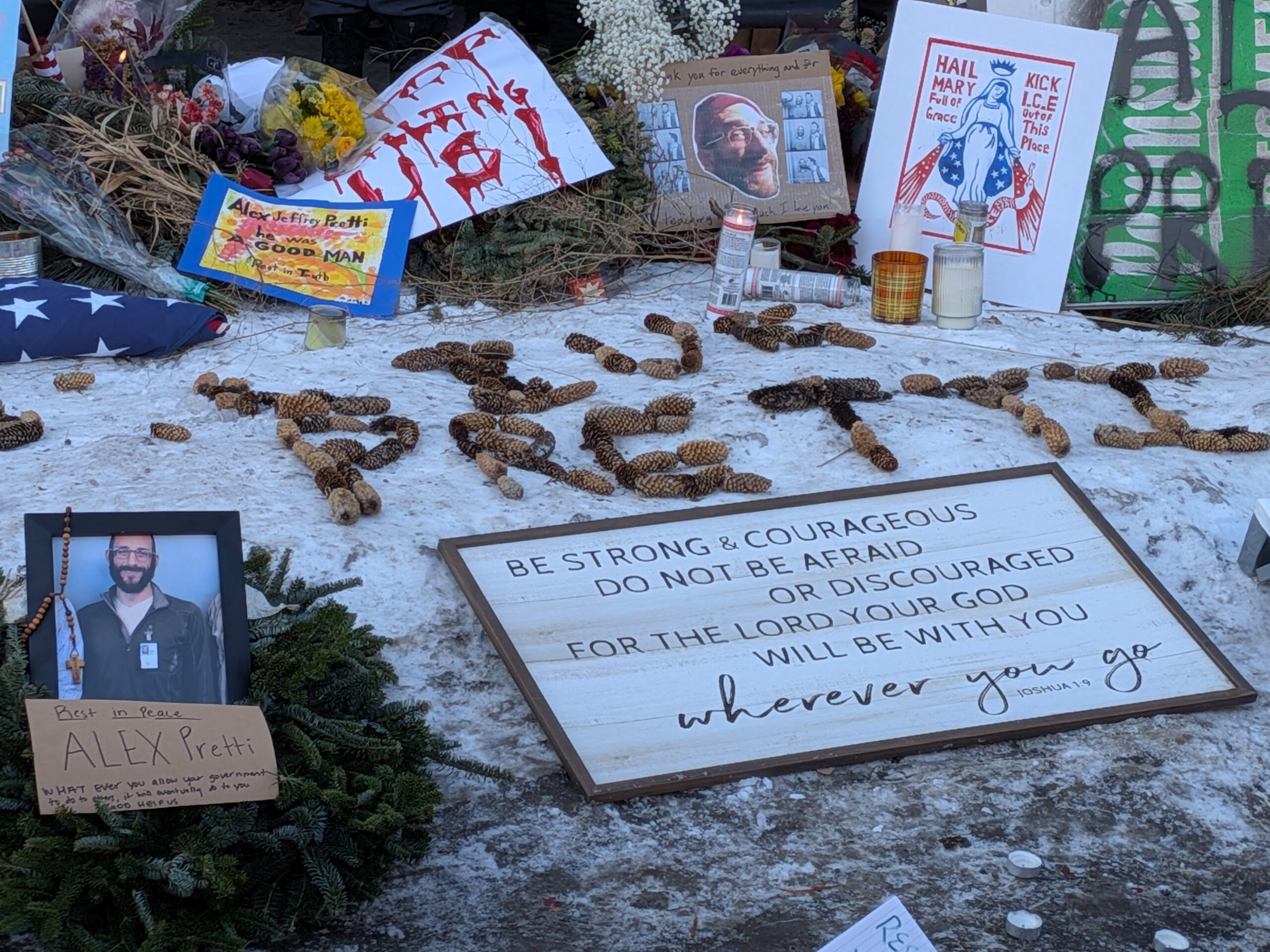
The scene around Alex Pretti’s final moments was chaotic, loud, and filmed from multiple angles, but one detail has cut through the noise: a doctor says federal agents were more focused on counting bullet wounds than on keeping him alive. That allegation has turned a deadly encounter in Minneapolis into a broader test of how federal power is used on American streets. It is also forcing a hard look at what it means when trained medical help is pushed aside at the exact moment it is needed most.
What happened to Pretti is not just another viral clip of violence. It is a story about a registered nurse who had spent his career caring for others, a protest that ended in gunfire, and a physician who says they were blocked from doing their job. Together, their accounts raise uncomfortable questions about force, accountability, and the basic duty to preserve life, even in the middle of a tense operation.
The shooting that stunned Minneapolis
The confrontation that left Alex Pretti dead unfolded in Minneapolis during a protest that had already drawn a heavy federal presence. Witness video captured a tense standoff that escalated into a deadly shooting, with federal officers closing in on Pretti as onlookers shouted and recorded. The images are grainy and chaotic, but they show a crowd that understood in real time that something had gone terribly wrong.
According to a live account of the incident, footage appears to show a federal officer taking a gun away from Pretti shortly before a Border Patrol agent fired the shots that killed him, a sequence that has fueled outrage over why lethal force was used after the apparent disarming. That detail, drawn from a stream of updates on the deadly shooting, has become central to public debate in Minneapolis and beyond, because it suggests the threat may have been neutralized before the final volley.
Who Alex Pretti was before the gunfire
Long before his name was attached to a shooting, Alex Pretti was known in his community as a caregiver. He was a registered nurse who worked in the ICU at the Veterans hospital, spending his days with some of the sickest patients in the system. Colleagues and friends have described him as the kind of person who stayed late, took extra shifts, and treated his patients like family.
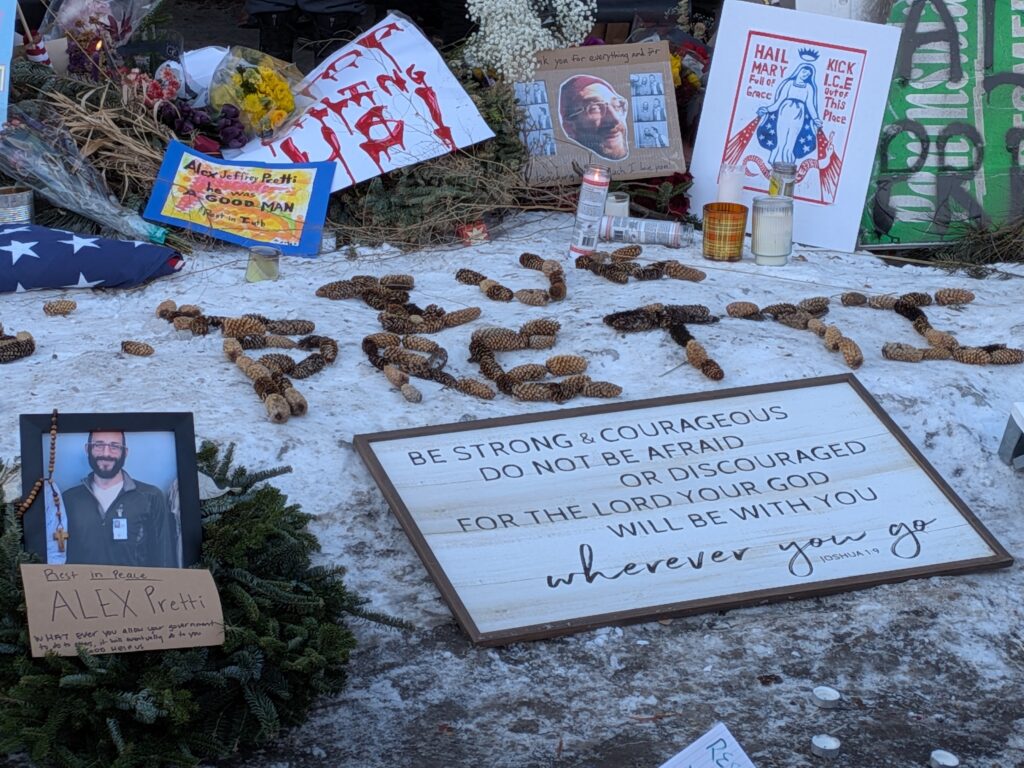
That background has made his death feel especially bitter to those who knew him. In tributes shared online, people have emphasized that Pretti, who was fatally shot by Border Patrol agents on a Saturday, had devoted his professional life to stabilizing others in crisis. One remembrance noted that Alex Pretti was an ICU nurse at the Veteran facility, a detail that has become a rallying point for those who see his killing as a tragic inversion of his life’s work.
A doctor runs toward danger
As the shots rang out and people scattered, one person moved in the opposite direction. A doctor who was present at the protest has said they ran toward Pretti as soon as they realized someone had been hit. In their telling, training and instinct kicked in at the same time, and the only priority was to reach the man on the ground and start life-saving care.
The physician later described how they identified themselves and tried to get close enough to check for a pulse and begin CPR. They say they made it to Pretti’s side and immediately started chest compressions, only to find federal agents crowding around his body. That account, shared in detail in an interview about the Minneapolis shooting, paints a picture of a medical professional fighting not just against blood loss and time, but also against a wall of uniforms.
“Counting bullet wounds” instead of saving a life
The most searing part of the doctor’s story is not just that they were delayed, but what they say agents were doing instead. According to the physician, federal officers moved Pretti’s body and focused on tallying his bullet wounds, treating his injuries like evidence to be cataloged rather than trauma to be treated. The doctor has said that while they were trying to keep his heart beating, agents were fixated on how many times he had been shot.
In their account, the doctor describes pleading to be allowed to work uninterrupted, only to watch as agents shifted Pretti’s position and handled his body in ways that made resuscitation harder. They say they were stunned to see law enforcement personnel more interested in counting entry points than in helping with CPR. That allegation, relayed in a detailed description of how agents counted bullet wounds, has become the emotional core of the public backlash.
CPR, blocked and delayed
The doctor’s frustration is rooted in something very basic: time lost. They have said that once they reached Pretti, they immediately began CPR, only to be interrupted as agents repositioned his body and questioned their presence. Every second spent arguing or adjusting his body, they argue, was a second when oxygen was not reaching his brain. For a man with multiple gunshot wounds, that delay could be the difference between life and death.
In a more detailed retelling, the physician recalls introducing themselves, explaining that they were a doctor, and insisting on continuing compressions even as agents hovered. They say they were forced to work around officers who seemed more concerned with control of the scene than with the quality of the medical response. That tension is captured in a passage describing how the doctor said, “I immediately began CPR,” in a report that focuses on how agents let me only after asserting their authority.
Border Patrol, ICE, and the federal footprint
Part of what makes this case so charged is the mix of federal agencies involved. The shooting itself has been tied to Border Patrol agents operating in Minneapolis, a city far from any international border. Their presence at a protest has raised questions about why a force typically associated with border crossings was deployed in a Midwestern downtown and what rules governed their use of force.
On top of that, the doctor has specifically accused ICE agents of interfering with medical care, saying that personnel from Immigration and Customs Enforcement were among those who moved Pretti’s body and focused on his wounds as evidence. In their account, the physician describes a scene dominated by federal jackets and tactical gear, with local voices largely sidelined. Those claims are laid out in a report on how ICE agents and Border Patrol officers handled the aftermath, highlighting the blurred lines between law enforcement and emergency response when multiple federal entities converge on a single city block.
Video evidence and the fight over the narrative
In the hours after the shooting, clips from bystanders’ phones began to circulate, each one offering a slightly different angle on the same chaotic scene. Some show the moment when a federal officer appears to take a gun from Pretti’s hand, while others capture the seconds just before the shots, with agents shouting commands and protesters yelling back. Together, the videos have become a kind of public archive, replayed frame by frame as people try to understand whether lethal force was justified.
One live update on the case has zeroed in on footage that seems to show a federal officer disarming Pretti before a Border Patrol agent fires, a sequence that has become a flashpoint in arguments over whether the shooting was necessary. That detail, highlighted in coverage of the video evidence, has fueled calls for a full release of all recordings and for independent analysis of the timeline. For many watching from home, the clips are not just proof of what happened, but a rare window into how federal power is exercised in real time.
The human cost for a community already on edge
For Minneapolis residents, the killing of a protester by federal agents has reopened wounds that never fully healed. The city has spent years grappling with its relationship to law enforcement, and the sight of Border Patrol and ICE personnel on its streets has only deepened that unease. People who turned out to demonstrate say they expected a show of force, but not live rounds and a body on the pavement.
Pretti’s identity as a registered nurse who worked in the ICU at the Veteran hospital has added another layer of grief. Friends and former patients have shared stories of his calm presence in the worst moments of their lives, contrasting that with the way his own final minutes unfolded. In one remembrance, the note that fatally shot by Border Patrol agents on a Saturday has become shorthand for a city that keeps watching caregivers become victims. For a community already wary of federal power, the idea that a man who spent his days stabilizing others died while agents allegedly counted his wounds feels like a breaking point.
What accountability could look like
In the wake of the shooting, calls for accountability have focused on two main questions: why lethal force was used at all, and why medical care was not prioritized once Pretti was on the ground. Civil rights advocates and medical professionals alike have argued that if a doctor was on scene and ready to work, there should have been no hesitation in clearing space for them. The allegation that agents instead moved his body and tallied bullet holes has become a rallying cry for those demanding new rules for how federal officers handle wounded people.
Any meaningful response will likely have to address both the tactical decisions that led to the shots and the conduct that followed. That could mean revisiting training for Border Patrol and ICE personnel deployed in domestic operations, tightening protocols around when they can intervene in protests, and setting clear standards for deferring to civilian medical professionals. The detailed accounts of the doctor who tried and the descriptions of how agents handled his body are already shaping that conversation, turning one man’s final moments into a test case for how far federal power should reach when lives hang in the balance.
More from Vinyl and Velvet:

Leave a Reply