

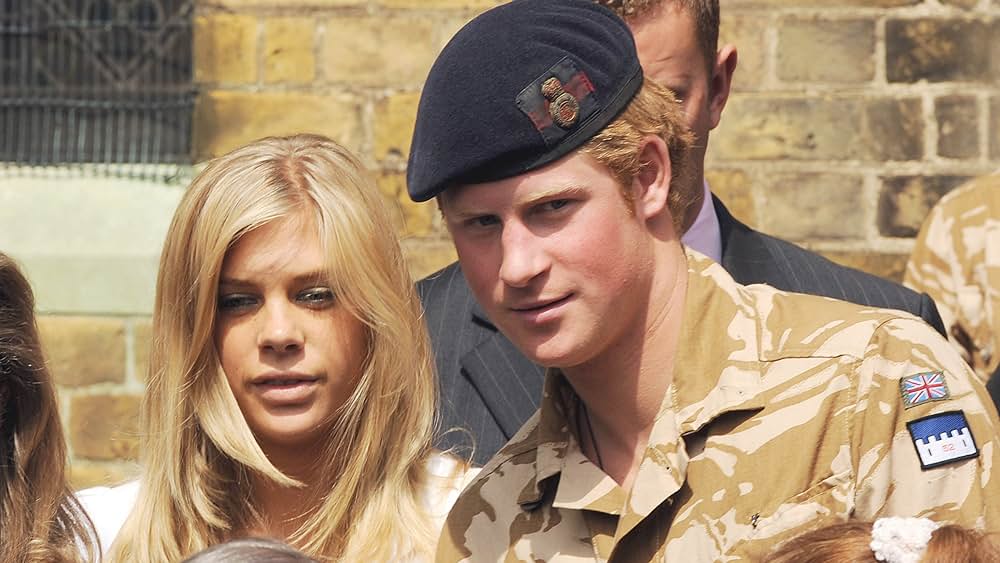
Allegations that the Daily Mail’s publisher covertly accessed deeply personal information about Prince Harry and his former girlfriend Chelsy Davy have pushed long running concerns about tabloid tactics back into the spotlight. At the heart of the case are claims that intimate details of the couple’s private life, including where they slept and how they arranged visits, could only have been obtained through unlawful methods rather than voluntary leaks. The dispute now sits before the High Court, where the Duke of Sussex is using his own history with the press to test how far British privacy law will go in policing newsroom behavior.
The case that put Prince Harry and the Mail in direct confrontation
The legal battle pits Prince Harry against the publisher of the Daily Mail and Mail on Sunday over what he describes as years of covert intrusion into his personal life. According to court filings, his claim is part of a broader action in which he and several other public figures accuse the company of systematic “unlawful information gathering” that allegedly involved private investigators, data brokers and other clandestine techniques to fuel stories about his relationships, health and movements, including coverage of his time with Chelsy Davy in London and abroad, as outlined in a detailed overview.
In his pleadings, Harry argues that the alleged misconduct was not a handful of rogue incidents but a sustained pattern that left him feeling under siege from coverage that appeared to draw on confidential sources no friend or aide would reasonably share. The High Court case, which he has framed as a test of accountability for powerful media groups, focuses on 14 specific articles that his lawyers say relied on unlawfully obtained material, a list that includes stories about his romantic life and communications with Chelsy Davy, as described in a breakdown of Harry’s claim.
How Harry says Chelsy Davy’s private life was exposed
Central to the current hearings are allegations that reporters obtained granular information about how Prince Harry and Chelsy Davy arranged their nights together, including where they stayed and how they tried to avoid attention. Harry’s legal team argues that such intimate details about his relationship with Chelsy could not plausibly have come from casual gossip, because he insists that Davy and their closest friends “would not possibly have betrayed their confidence” by sharing bedroom logistics or travel plans with journalists, a point that was relayed to the Court.
Reports from the hearings say that articles described the couple’s sleeping arrangements in a level of detail that Harry views as inherently suspicious, including references to where he stayed when visiting Chelsy and how often they managed to spend the night together. One account of the evidence notes that these stories were presented as inside knowledge of the couple’s private routine, which Harry believes could only have been pieced together through unlawful access to phone data, travel records or other confidential sources, a concern echoed in coverage of the Chelsy Davy allegations.
The Independent’s reporting on “intimate” details and why they matter
Accounts of the case highlight that the disputed stories did not simply mention that Prince Harry was dating Chelsy Davy, but delved into what one report described as “Intimate details” of their relationship, including how often they saw each other and where they spent the night. Those details, which were presented to readers as if they came from someone inside the couple’s circle, are now being scrutinized as potential evidence that private data was accessed without consent, a concern that has been amplified by coverage noting how “Intimate” the reporting on Prince Harry and Chelsy had become.
Another detailed account by Holly Evans for the Independent’s Irish edition stresses that “Intimate details about Prince Harry’s relationship with his former girlfriend Chelsy” were at the center of the claim that their sleeping arrangements were “obtained unlawfully by Daily Mail publisher,” and notes that the company “denies the ‘preposterous allegations’,” underscoring how sharply the two sides are divided on what those stories reveal about newsroom methods, as summarized in the report by Holly Evans.
Harry’s broader claim of a “terrifying intrusion”
Beyond the specific stories about Chelsy Davy, Harry has described the alleged tactics used by the publisher as a “terrifying intrusion” into his life, arguing that the pattern of coverage left him feeling that nothing, from medical information to private conversations, was safe from being turned into copy. His legal team says his claim relates to 14 articles, bylined to various journalists but “most prominently Katie Nicholl and Rebecca English,” which he believes relied on information that no ethical reporter should have been able to access, a characterization that appears in a detailed account of Harry’s claim.
In court, his lawyers have argued that the cumulative effect of these alleged intrusions was to undermine his trust in those around him, because stories kept appearing that seemed to draw on confidential exchanges he believed were limited to a tiny group of confidants. One live account of the hearings notes that the duke feels he has “endured a sustained campaign of attacks against him” because he “had the temerity to stand up” to the publisher, and that the High Court case focuses on whether there was a corporate culture of “unlawful information gathering,” a phrase that has been used to describe the allegations against Associate.
What the publisher says in its own defense
The publisher of the Daily Mail and Mail on Sunday has rejected the accusations in forceful terms, arguing that Prince Harry and his co-claimants are misreading ordinary newsgathering as evidence of a conspiracy. In opening arguments reported from court, its lawyers have suggested that Harry, Liz Hurley and others are “clutching at straws” and that the stories in question can be explained by legitimate sources, such as tip offs, authorized briefings or information already circulating in social circles, a stance captured in a live account that describes how Prince Harry, Liz others were criticized.
Another detailed report on the defense position notes that the company, formally named Associated Newspapers Limited, or ANL, has insisted that it did not commit the alleged unlawful acts and that the claimants are relying on speculation rather than hard proof. In that account, the publisher’s barrister is quoted as saying that the allegations are problematic because they imply that “everyone around” the claimants “had also done something wrong,” a line that underscores ANL’s argument that Harry, Sir Elton John and Liz Hurley are unfairly casting suspicion on friends and staff as part of their case against Associated Newspapers Limited.
A coalition of celebrity claimants and a nine week trial
Harry is not alone in taking on the publisher. He is one of seven claimants, a group that includes Sir Elton John and Liz Hurley, who allege that Associated Newspapers Limited engaged in illegal data collection to fuel stories about their private lives. One report on the case notes that Elton John, Prince Harry and Liz Hurley accuse the company of using unlawful methods to obtain personal information and that the trial is expected to last nine weeks, with their lawyer David Sherborne arguing that the alleged misconduct went far beyond what any public figure should be expected to tolerate, as summarized in coverage of Elton John, Prince.
Separate reporting on the same coalition emphasizes that Prince Harry, Sir Elton John and Liz Hurley are using the courts to test whether long standing rumors about tabloid tactics can be translated into legal findings against ANL. In that account, the group’s allegations are framed as part of a wider push to hold the publisher responsible for what they say was a pattern of unlawful behavior, with the case against ANL seen as a potential watershed for privacy law if the court accepts that such practices were systemic.
Harry’s personal appearance in court and what it signals
Harry’s decision to travel from his home in California to give evidence in person underscores how personally he views the case and how determined he is to confront the publisher directly. One account of his travel notes that Harry journeyed to the U.K. from California to testify and highlights that the story was significant enough to be featured in a segment timed at 1:27, with the report specifying the figure “55” in its rundown of the coverage, details that underline how closely his movements are followed whenever he returns for a high profile legal battle, as described in the report by Katie Kindelan.
His appearance in the witness box also fits a broader pattern in which Harry has chosen to personally front legal challenges against media organizations rather than leaving them entirely to lawyers. Earlier coverage of his legal strategy notes that he has already brought cases against other tabloid groups and that he has framed this latest action as part of a wider effort to change the way powerful publishers operate, a theme that appears in analysis of how the Duke of Sussex has “put the Daily Mail on trial” and how the publisher is being accused of violating the prince’s privacy, as summarized in a piece illustrated with a Max Mumby / Indigo / Getty Images photograph and written by Dave Lozo.
The legal stakes for British privacy law and tabloid culture
The High Court proceedings are being watched closely by lawyers and media executives because they could clarify how far British privacy law reaches into the newsroom. If the court accepts Harry’s argument that the pattern of stories about his relationship with Chelsy Davy, including coverage of their sleeping arrangements, can only be explained by unlawful information gathering, it would send a strong signal that publishers cannot rely on the public interest defense to justify intrusive reporting on the private lives of even the most high profile royals, a possibility that has been flagged in detailed coverage of the High Court case.
At the same time, the publisher’s insistence that the claimants are “clutching at straws” and that their allegations are “preposterous” reflects a deep resistance within parts of the British press to any ruling that could chill aggressive reporting on powerful figures. Legal commentators note that the case will likely turn on whether the claimants can link specific stories to specific unlawful acts, rather than relying on inference from the tone and detail of the coverage, a challenge that has been highlighted in analysis of how Prince Harry and others are pressing their claims against the Daily Mail publisher.
Why Harry’s fight over Chelsy Davy resonates beyond one relationship
For many observers, the focus on Chelsy Davy’s private life is not just about revisiting a past royal romance, but about testing whether the law can protect the partners and friends of public figures from being treated as collateral damage. The reporting on “Intimate details about Prince Harry’s relationship with his former girlfriend Chelsy” and the claim that their sleeping arrangements were “obtained unlawfully by Daily Mail publisher” has raised questions about how far tabloids can go in mining the lives of those who never chose public roles, a concern that is spelled out in the Independent’s Irish coverage of Chelsy.
Harry’s insistence that Davy and their closest friends “would not possibly have betrayed their confidence” is also a direct challenge to a familiar tabloid defense, namely that much of their most sensitive material comes from willing insiders. By arguing that the stories about his relationship with Chelsy could only have been produced through covert methods, he is effectively asking the court to draw a line between robust reporting and what he calls a “terrifying intrusion,” a line that will have implications for how future stories about royals, celebrities and their partners are sourced and scrutinized, as reflected in the detailed accounts of the Duke of Sussex and Davy and their closest friends.
More from Vinyl and Velvet:

Leave a Reply