

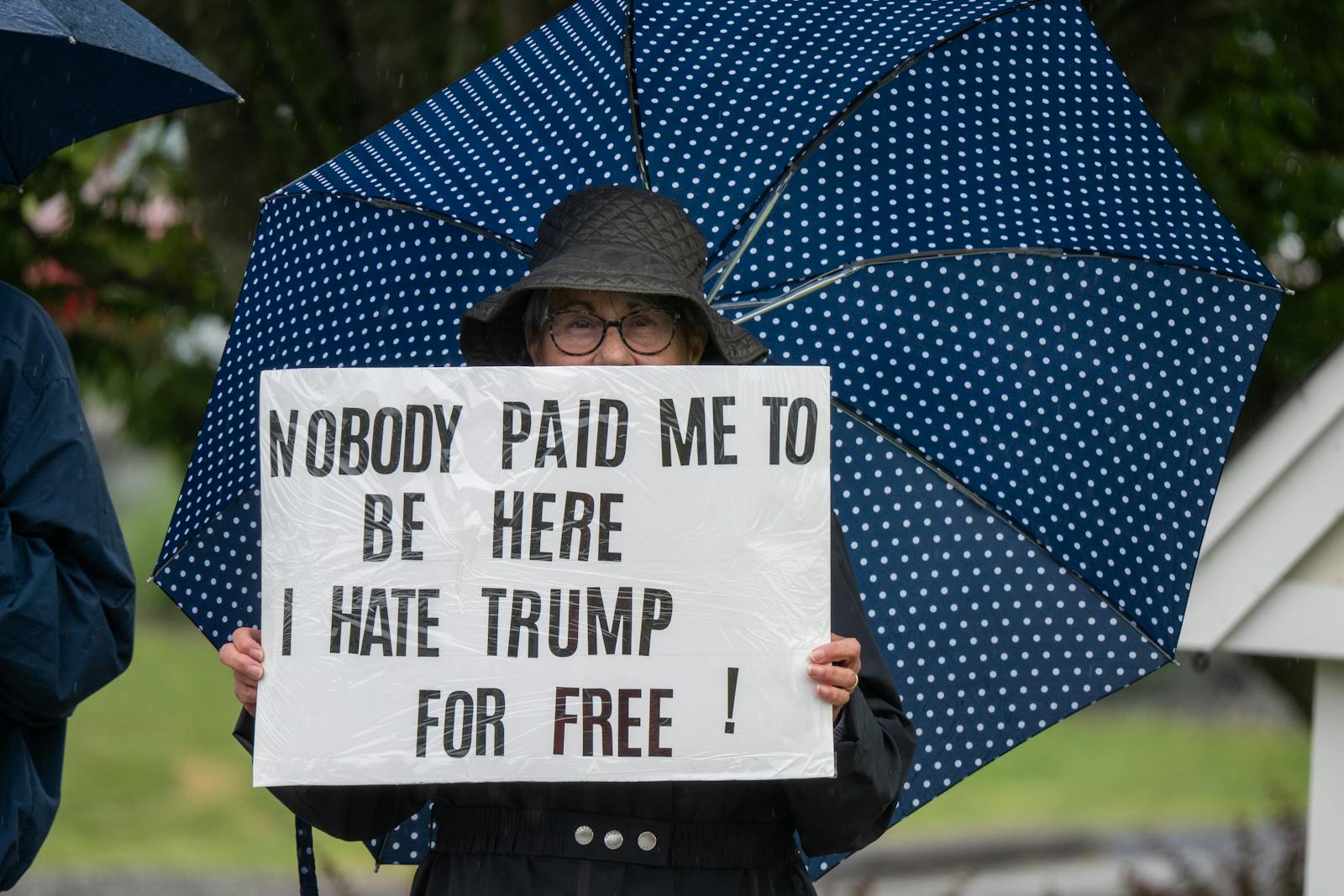
You’ve likely seen the exchange: Chuck Schumer publicly called one of Donald Trump’s recent claims an “outright lie,” and that sharp rebuke has reignited debates over truth, tactics, and political theater. This post breaks down what Schumer said, why the claim provoked such a forceful response, and how that moment fits into the larger clash between the two camps.
You’ll get a clear account of Schumer’s response, the factual issues behind Trump’s brag, and the political stakes that make this more than another headline. Expect to see how the controversy spread through political and media circles and what it might mean for the 2024 election.
Schumer’s Response to Trump’s Claim
Schumer rejected the claim as false and framed it as part of a pattern of misinformation. He singled out specific factual errors in the statement and pointed to political motives behind the messaging.
Breaking Down the Statement
Schumer called the central assertion an “outright lie,” arguing it misstates facts about congressional procedures and outcomes. He identified at least two concrete errors: a mischaracterization of how Congress voted and an incorrect timeline about when legislation moved through committees. Schumer cited roll-call practices and the official record to counter the timeline claim.
He also emphasized who benefits politically from the falsehood. Schumer said the claim appears aimed at energizing a 2024 election base by simplifying complex legislative processes into a catchy but inaccurate slogan. Reporters noted his use of specific examples rather than broad rhetoric.
Context Surrounding the Accusation
The exchange occurred amid heated debate over immigration and voting policy, issues central to both parties’ 2024 strategies. Schumer placed the claim in the broader context of repeated public statements by the former president that courts or congressional records later contradicted. He argued that pattern matters because it misleads voters and shifts media coverage away from policy detail.
Media outlets and fact-checkers quickly weighed in on the factual points Schumer raised. Schumer also referenced recent congressional votes and public statements by Republican leaders to demonstrate the inconsistency he highlighted.
Immediate Political Reactions
Democrats rallied around Schumer’s framing, repeating the “outright lie” language in press releases and on social channels. Several Senate Democrats echoed his demand for corrections and for mainstream outlets to treat the claim as demonstrably false. That unified response aimed to blunt any October surprise effect heading into the 2024 cycle.
Republicans pushed back, with some accusing Schumer of partisan spin and urging attention to substantive policy differences instead. Conservative commentators emphasized electoral strategy and attacked Schumer’s credibility in turn, turning the dispute into another talking point for both sides. For live coverage and social posts that amplified the back-and-forth, see this example of public reaction.
Trump’s Latest Brag: What Sparked the Controversy
Trump claimed that a recent policy win and a related intelligence disclosure vindicated his stance and proved critics wrong. Critics, including Senate Majority Leader Chuck Schumer, called the statement an “outright lie,” citing mismatches between the claim and available evidence.
Details of Trump’s Statement
He said federal agencies had confirmed his version of events and that the announcement proved his critics lied about national security. He framed the claim as a direct rebuttal to media reports he characterized as “fake news,” and pointed to a document he said corroborated his position.
Reporters quickly noted the document did not state what he asserted. Schumer and other Democrats publicly disputed the timeline Trump gave and the existence of agency confirmations. The mismatch focused attention on whether the White House was presenting a disputed intelligence note as definitive proof.
Fact-Checking the Claim
Independent fact-checkers and journalists examined the cited document and found key phrases and context missing from Trump’s summary. The document’s language, officials said, was tentative and did not amount to the categorical confirmation Trump described.
Media outlets flagged selective quoting and absence of corroborating agency statements. Those tracking disinformation categorized the messaging as consistent with tactics that amplify uncertainty and portray mainstream outlets as biased. The crucial issue became whether the claim distorted evidence rather than presenting new facts.
Previous Patterns of Exaggeration
This episode fit a broader pattern in which Trump magnified partial or unverified information into sweeping claims. Past examples include disputed election fraud assertions and other headline-grabbing statements labeled by critics as conspiracy-driven or plainly false.
Political opponents and some media outlets treat such patterns as deliberate messaging to delegitimize dissenting coverage. Supporters often accept the framing as correcting mainstream narratives, while fact-checkers maintain a record of repeated inaccuracies tied to the same rhetorical strategy.
Public and Political Reactions
Schumer’s charge that the former president’s claim was an “outright lie” set off immediate pushback and support across Washington, social platforms, and broadcast media. Responses split along partisan lines, with congressional leaders, TV commentators, and public figures weighing in loudly.
Responses from Congressional Leaders
Senate Democrats quickly backed Schumer, repeating his characterization during floor remarks and in statements to major television networks. Their messaging linked the allegation to broader concerns about truth in public officials’ statements and called for congressional oversight where appropriate.
Republican leaders defended the former president, calling Schumer’s language partisan and accusing Democrats of politicizing routine claims. Some GOP members attacked Schumer’s credibility in return, citing past disputes and emphasizing different policy priorities.
A few swing-district lawmakers tried to steer clear, urging fact-based review rather than rhetorical escalation. Congressional staff on both sides circulated memos summarizing key factual disputes for senators and representatives to use in statements and interviews.
Reactions Across Social Media
Social platforms erupted with clips of Schumer’s remarks and the contested claim; television pundits amplified snippets that fit their narratives. Hashtags supporting both sides trended at different points, and several viral posts came from celebrity accounts that framed the dispute as part of a larger cultural fight.
Fact-checking organizations and journalists posted rapid threads examining the specific numbers and documents at issue. Those threads frequently appeared in television coverage and were shared by members of Congress.
Misinformation surfaced alongside verified reporting, prompting platforms to label or remove certain posts. Influencers and late-night shows turned the exchange into shareable content, driving more engagement than the underlying policy details.
Perspectives from the American Public
Polls taken within days showed a familiar polarization: Democrats were more likely to accept Schumer’s wording, while Republicans largely dismissed it. Independents split, with many citing distrust of both parties and saying they wanted more documentary proof.
People who follow political television closely expressed stronger opinions, often mirroring cable news talking points. Those outside heavy political media consumption tended to focus on practical impacts—how the dispute might affect legislation or everyday costs—rather than the rhetorical battle.
Community leaders and local newspapers emphasized consequences for civic trust, noting that repeated high-profile disputes can deepen skepticism about institutions and elected officials.
Misinformation, Media, and Propaganda
Misinformation, propaganda, and biased coverage reshape what people believe about public figures and policy. Media outlets, partisan platforms, and social networks all influence which claims spread and which get labeled false.
Analyzing Media Coverage
They should assess specific headlines, sourcing, and corrections rather than rely on outlet reputation alone. Look for primary documents, direct quotes, and timestamps; these reveal whether a claim was taken out of context or repeatedly amplified.
Pay attention to language choices. Terms like “outright lie” or “fabrication” carry different weights than “misleading” or “disputed.” Repeated use of dramatic labels can signal editorializing rather than neutral reporting.
Compare coverage across outlets with different ownership and audiences to spot selective emphasis. A side-by-side check can expose how the same event becomes different narratives through omission, framing, or selective sourcing.
Role of Misinformation in U.S. Politics
Misinformation and disinformation often aim to shift voter perceptions quickly ahead of key events, such as debates or legislation. False claims about candidates’ actions or policies can suppress turnout, energize bases, or create cognitive dissonance when individuals encounter contradictory facts.
Propaganda techniques—such as repetition, emotional appeals, and false equivalence—persist across broadcast, cable, and social platforms. These tactics exploit confirmation bias and entrenched perspectives, making corrections less effective for those already persuaded.
Fact-checking frequently corrects specific claims, but the initial impression may stick. That makes timing and reach of corrections critical; a correction buried in a small outlet rarely reverses a widely shared falsehood.
Combating Disinformation
They can reduce spread by combining platform policies, rapid fact-checking, and public media literacy campaigns. Platforms should label or downrank demonstrably false claims and elevate primary-source documents for context.
Journalists and watchdogs must publish clear, concise corrections with the same prominence as the original claim. Civic groups can teach people to verify images, check dates, and consult multiple reporting strands before sharing.
Individuals play a role too: pause before resharing, inspect screenshots for edits, and follow reputable verification projects. Together these steps lower the reach of fake news and weaken coordinated propaganda efforts.
Schumer, Trump, and the Broader Political Landscape
Schumer’s critique hits on party strategy and public messaging. It frames disputes over factual claims, institutional norms, and the balance between partisan gain and civic responsibility.
Partisanship and Political Correctness
Schumer’s characterization of Trump’s statement as an “outright lie” reflects a sharp partisan divide in Congress over factual accuracy and rhetoric. Democrats view repeated falsehoods as corrosive to democratic norms, while many Republicans defend aggressive messaging as necessary to mobilize voters. This battle affects legislative priorities: funding for domestic programs and judicial confirmations can stall when trust breaks down.
Political correctness enters as a cultural wedge. Democrats often emphasize accurate, inclusive language tied to civil liberties, while some Republican leaders cast that emphasis as censorship. That clash reshapes media narratives and campaign strategy for both Donald Trump and Joe Biden, influencing debate tone and voter outreach.
Comparisons to Past Political Clashes
Comparisons to earlier confrontations show continuity and escalation. Past leaders have exaggerated claims during campaigns, but recent frequency and scale differ, with social media amplifying each statement across millions of voters. Congress has previously rebuked presidents, yet current clashes feature faster, broader public reactions and fewer bipartisan rebukes.
The role of institutions matters. When Congress acts—through hearings, statements, or legislation—it signals whether norms will be reinforced. Civil liberties advocates watch for overreach in response to disinformation, while partisans push for accountability. These dynamics echo earlier fights but occur in a media environment that rewards immediate, polarized responses.
The Impact on the 2024 Election
Schumer’s public characterization sharpened partisan lines and shifted immediate media attention toward accountability and truth claims. The dispute has tangible effects on voter trust, campaign messaging, and how investigations intersect with congressional activity and market reactions.
Voter Perceptions
Schumer labeling the claim an “outright lie” crystallizes doubts among independents and moderate Republicans about the veracity of competing narratives. Polling after high-profile disputes typically shows small but meaningful movement among swing voters; here, skepticism rose in districts where local news amplified both the accusation and the rebuttal.
Trust in institutions matters: ongoing federal and congressional investigations into related matters heighten the salience of truthfulness for voters deciding in 2024. Black and Latino turnout models indicate that claims perceived as dishonest can depress enthusiasm, while clear rebuttals can mobilize opposition turnout.
Media framing affects perceptions quickly. Cable coverage and social posts that highlight Schumer’s wording led campaign operatives to adjust talking points within days, targeting suburban precincts where margins are thin.
Influence on Campaign Strategies
Campaigns recalibrated messaging to exploit or neutralize the exchange. The Trump campaign emphasized skepticism of partisan critiques to shore up base turnout, while Democratic strategists used Schumer’s phrase to argue for accountability and to press congressional allies on legislative responses.
Fundraising teams tracked donor response: negative headlines about dishonesty often trigger small-dollar surges on both sides, and digital ads were reallocated toward rapid-response buys in battleground counties. Campaigns also timed visits and local events to overlap with congressional hearings and investigative milestones to tie the narrative to institutional action.
Markets reacted modestly to heightened political risk when the accusations intersected with legislative agendas affecting regulation and spending. Investors watch congressional investigations and campaign volatility; increased scrutiny of leadership statements can influence sector-focused political spending and short-term market sentiment.
More from Vinyl and Velvet:

Leave a Reply