

Chevy Chase has long been known as a volatile comedy legend, but a new documentary reframes that reputation through the lens of addiction, trauma, and the people who tried to pull him back from the brink. Rather than a simple career retrospective, the film turns into a case study in how substance abuse and untreated wounds can warp a family and a workplace, then slowly be confronted through intervention. It is a story about a Hollywood icon, but also about the cost of denial and the fragile possibility of repair.
The documentary’s focus on family intervention gives rare visibility to the spouses, children, and colleagues who lived with the fallout of Chase’s behavior and still chose to sit for the camera. Their accounts, paired with Chase’s own reflections, trace a path from childhood abuse to a “pyramid” of cocaine, from public meltdowns to private health scares, and finally to a late‑life reckoning that is still very much in progress.
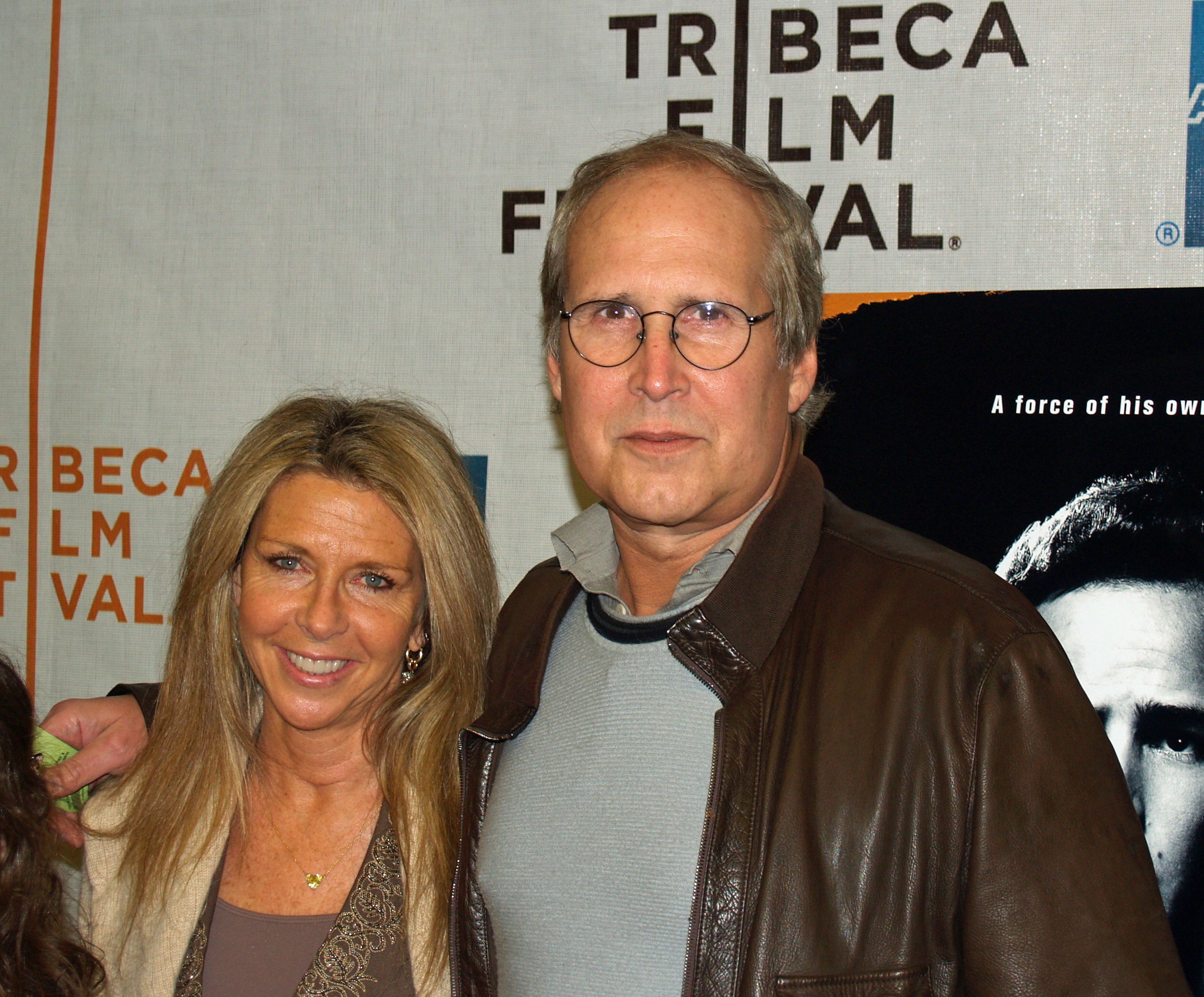
The film that finally confronts Chevy Chase’s demons
The project at the center of this reckoning is the feature documentary “I’m Chevy Chase and You’re Not,” a film that treats its subject as both a cultural fixture and a deeply complicated man. Directed by Marina Zenovich, it is framed as an intimate portrait of an American comic whose public persona as a smirking wiseguy masked decades of pain, addiction, and self‑sabotage. The film’s existence is itself a statement: a star who once deflected criticism with sarcasm is now sitting for a long, unflinching look at his own life.
Viewers encounter the documentary as part of a broader ecosystem of coverage that has sprung up around it, from basic background searches on I’m Chevy Chase and You’re Not to detailed explainers that position it as CNN’s latest high‑profile nonfiction bet. One overview of the Chevy Chase Documentary spells out how the film is being marketed as “Everything to Know” about a longtime Hollywood funnyman, but the content goes far beyond nostalgia. It leans into the messy parts of Chase’s story, setting up the addiction and intervention narrative that runs through the film.
How CNN and streaming turned a Hollywood cautionary tale into an event
The documentary is not just a creative exercise, it is a carefully packaged television event. CNN acquired the film as part of its growing slate of personality‑driven nonfiction, positioning it as a marquee title that could draw both older viewers who remember “Saturday Night Live” in the 1970s and younger audiences who know Chase from “Community.” Coverage of the rollout emphasizes that the American documentary is part of a broader push to mine Hollywood history for stories that double as social commentary, in this case on addiction and accountability.
Distribution strategy is central to that ambition. The film is airing on CNN’s linear channel while also being made available on demand to subscribers through CNN.com, mobile apps, and cable operator platforms, with one press notice stressing that Starting today, CNN streaming users can access it across devices. Another guide for viewers underscores that the Chevy Chase Documentary is also reachable through live TV bundles such as Hulu + Live TV, turning a single film into a multi‑platform conversation starter about Hollywood, addiction, and aging fame.
Marina Zenovich’s approach: from enigma to human being
Director Marina Zenovich has built a reputation for tackling complicated public figures, and her approach here is to strip away the myth of Chevy Chase as an untouchable star. In interviews, she has described the actor as one of Hollywood’s great enigmas, someone whose timing and physical comedy made him a household name while his off‑screen behavior alienated colleagues. The official description of the Documentary Film notes that Zenovich wanted to capture both the “CHEVY” who dominated late‑night television and the “CHASE” who struggled to connect with people off camera, turning “AND YOU NOT” into a commentary on the distance he kept from others.
Zenovich’s method is to let the people closest to Chase talk, then confront him with their accounts. She sits him down alongside his wife Jayni and their children, but also brings in former colleagues who describe him as “a monster” at the height of his cocaine use. A critic who called the film Ugly and Deep in its excavation of personal history noted that the director refuses to rationalize his behavior, instead tracing it back to formative experiences without letting him off the hook. The result is a portrait that treats addiction and cruelty as learned responses that can be unlearned only if they are first acknowledged.
Childhood abuse and the roots of self‑destruction
One of the film’s most bracing choices is to linger on Chase’s early years, which he describes as a gauntlet of physical and emotional abuse. He recalls growing up in New York with a mother he labels “an out‑of‑control woman,” recounting incidents in which she hit him and humiliated him in front of others. A detailed account of His childhood in New York emphasizes that this violence did not come from nowhere and that it left scars that would later surface in his own volatility. The documentary uses these memories not as excuses but as context, suggesting that the comedian’s instinct to lash out was forged long before he ever stepped onto a soundstage.
Critics who have seen the film highlight how this section reframes Chase’s later addictions as part of a continuum of self‑destruction. The same review that called the movie “Ugly” and “Deep” points out that the personal background arrives late in the narrative, after viewers have already seen the damage he inflicted on others, which forces them to hold both truths at once. By the time the documentary circles back to his childhood, the audience has watched him berate colleagues and sabotage his own career, so the revelation of early abuse functions as a key that explains patterns without absolving them. That structural choice is crucial to understanding how the film links trauma, addiction, and the need for intervention.
Cocaine, alcohol, and the “pyramid” that nearly toppled him
The heart of the documentary’s addiction narrative lies in its depiction of Chase’s cocaine and alcohol use at the height of his fame. Former collaborators describe a “pyramid” of cocaine that seemed to follow him from set to set, a visual metaphor for the way drugs became both a status symbol and a crutch. One report on the film’s revelations details how this pyramid of cocaine coincided with what colleagues call a “full meltdown,” a period when he was so erratic and cruel that some simply refused to work with him again. The film does not shy away from these accounts, letting them play out in painful detail.
Alcohol abuse is treated as a parallel and compounding problem. Loved ones describe nights when Chase would drink until he blacked out, then wake up with no memory of the insults he had hurled or the promises he had broken. In one profile, his wife and children recall how his substance use led to memory loss and health crises, with Jayni Chase explaining that he once tried to justify his behavior as part of the job. The documentary uses these testimonies to show how addiction narrows a person’s world until the only relationships that matter are with the substances themselves, leaving family members to decide whether to walk away or intervene.
Family intervention: Jayni Chase and the children draw a line
For all its focus on Chase’s misdeeds, the film is equally interested in the people who refused to give up on him. Chief among them is his wife, Jayni, who emerges as both a truth‑teller and a reluctant caretaker. She recounts how she met him, fell for his charm, and then slowly realized that she was living with someone who could be both loving and terrifying. In one account of the documentary’s themes, Chevy Chase is described as having spent decades with the label of one of Hollywood’s most difficult personalities, while Jayni explains that he was also a “risk‑taker” who pushed boundaries in ways that were thrilling on screen and exhausting at home. The documentary captures the moment when that exhaustion turned into a demand for change.
The couple’s children add another layer, describing how they experienced their father’s addiction and the interventions that followed. Separate coverage of Chevy Chase and Jayni Chase at public events, such as The Anniversary Special for “SNL50” in New York City, contrasts sharply with their private recollections of hospital visits and rehab stays. The film shows them confronting him with the impact of his behavior, a process that is less about dramatic ultimatums and more about a slow accumulation of boundaries: refusing to cover for him, insisting he seek treatment, and making clear that their love did not mean endless tolerance.
Health scares, relapse fears, and the cost of survival
By the time the documentary reaches Chase’s later years, addiction is no longer just a moral or professional issue, it is a medical emergency. He speaks candidly about a heart scare in 2021 that left him hospitalized and, in his words, feeling as if he had “basically come back from the dead.” A detailed report on how Chevy Chase “came back from the dead” underscores that his body has paid a steep price for decades of abuse. The film uses this episode as a pivot point, suggesting that survival itself became a kind of intervention, a wake‑up call that no family ultimatum could match.
Health concerns are not limited to Chase. The documentary and related coverage also touch on the struggles of his son, with one report noting that NEED to KNOW details about Tylor Chase being treated at a hospital before entering rehab. Chase speaks about these challenges as part of a generational pattern, acknowledging that his own behavior and genetics may have contributed to his children’s vulnerabilities. The film treats these parallel crises as a stark illustration of how addiction ripples through families, making intervention not a one‑time event but an ongoing process of support, treatment, and vigilance.
Reckoning with racism, reputation, and the “monster” label
Any honest portrait of Chevy Chase has to grapple with the accusations of racism and cruelty that have dogged him, particularly from his time on “Community.” The documentary addresses a notorious incident in which he allegedly used the N‑word on set, an episode that led some colleagues to label him irredeemable. In a joint interview with The New York Times, Chevy Chase and Marina Zenovich discuss this moment directly, with Chase insisting “I’m not racist” while acknowledging that his attempt at edgy humor caused real harm. The film uses this exchange to explore how addiction, ego, and a warped sense of what is funny can combine into behavior that others experience as hateful.
Colleagues interviewed for the documentary describe him as “a monster” during his worst years, a phrase that recurs in coverage of the film’s most damning revelations. One piece on the Wildest moments in “Chevy Chase and You Not” highlights stories of childhood abuse, the cocaine “pyramid,” and a secret health scare, but it is the testimonies about his on‑set behavior that linger. The documentary does not try to rehabilitate his image so much as to complicate it, suggesting that someone can be both a victim of early trauma and an adult who inflicts trauma on others, and that any path to redemption must start with owning both sides.
From NEW YORK screenings to public empathy: why this story lands now
The timing of the documentary’s release is not incidental. It arrives as Hollywood and audiences are rethinking how they respond to stories of abusive behavior, addiction, and mental health, especially when the subject is a beloved figure from an earlier era. An entertainment brief notes that in NEW YORK, early screenings of the film were framed as part of a broader Entertainment conversation about how to handle flawed icons. That same summary, timestamped at 6:44 p.m. EST, underscores how Chase’s new documentary is being presented as both “brutal” and “lovely,” like a massage that hurts while it is happening but leaves a lingering sense of relief.
Public reaction so far suggests that viewers are willing to sit with that discomfort. Some see the film as overdue accountability for a man who coasted on charm for too long, while others focus on the courage it takes to let cameras capture interventions, hospital stays, and apologies that may never fully repair the damage. What makes the documentary resonate is not just the celebrity at its center but the universality of its themes: families pushed to their limits, the slow grind of recovery, and the question of whether someone who has been called a “monster” can ever be seen as simply human again. In that sense, the deep dive into addiction and family intervention is less a detour from Chevy Chase’s Hollywood story than the key to understanding it.
More from Vinyl and Velvet:

Leave a Reply