

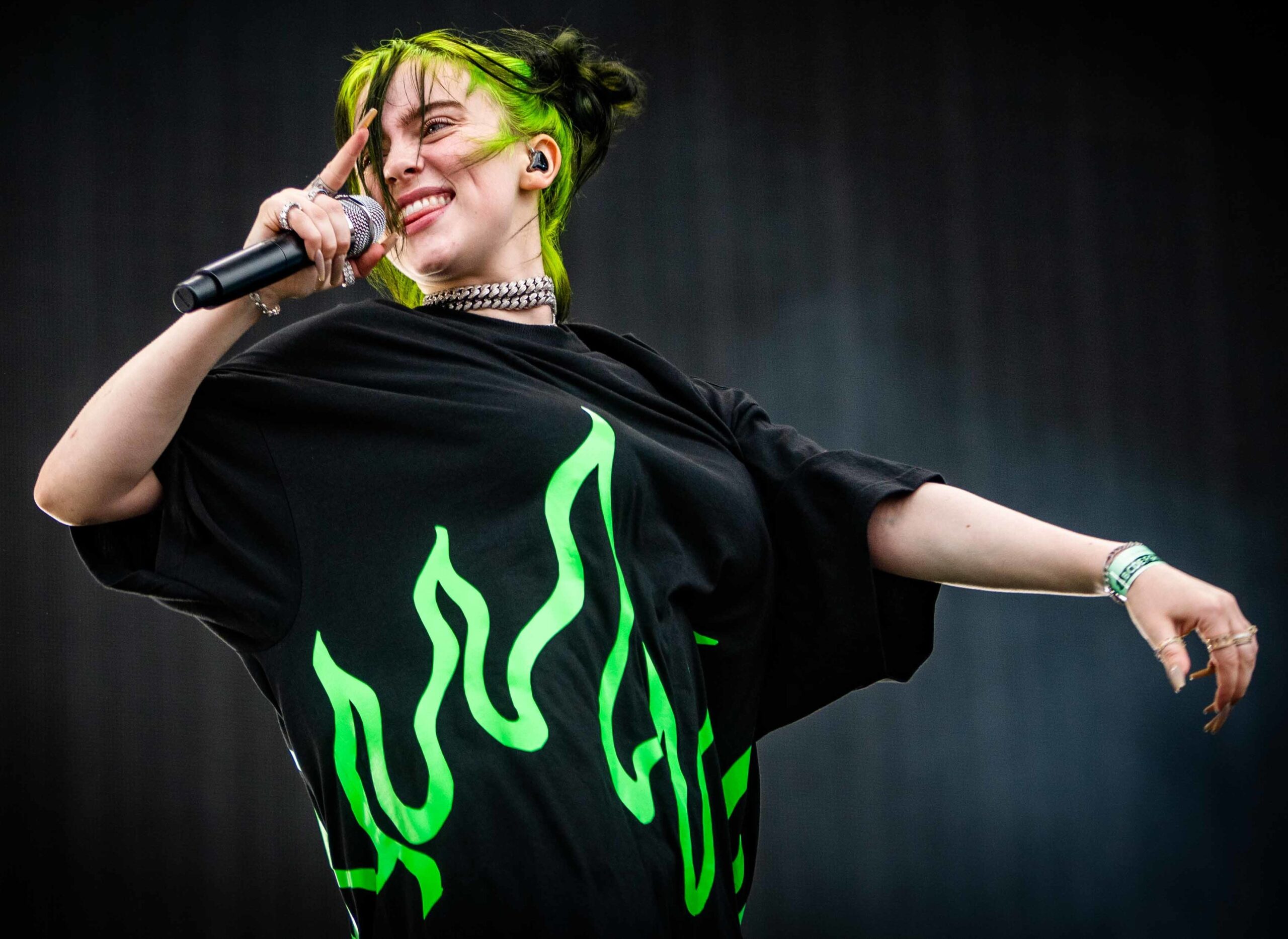
Billie Eilish has turned a routine awards acceptance into a flashpoint over immigration and civil rights, warning that “people are being kidnapped” in communities across the United States. Her decision to use a celebration of her environmental work to denounce federal enforcement tactics has split fans, energized activists and drawn fresh scrutiny to how celebrities confront the Trump administration’s policies.
By tying her remarks to images of neighbors taken away and peaceful protestors attacked, Eilish framed immigration enforcement as a crisis of basic rights rather than a niche policy fight. The reaction to her comments at an event honoring the legacy of Martin Luther King Jr. shows how sharply cultural figures are now judged when they step into explicitly political territory.
The MLK stage where Billie Eilish chose to speak out
Billie Eilish did not pick a random microphone for her latest political intervention, she chose a podium dedicated to Martin Luther King Jr. and the idea of a “Beloved Community.” The American singer-songwriter was in Atlanta to receive the 2026 MLK Jr. Beloved Community Environmental Justice Award, a recognition from the King Cen that highlighted her climate advocacy and the way she has woven environmental themes into her music and touring practices. By accepting the Beloved Community Environmental Justice Award in a city that was central to the civil rights movement, she stepped into a space already charged with expectations about moral clarity and social justice.
Footage and social posts from the event show the Pop star walking onstage in Atlanta to accept the MLK Beloved Community Environmental Justice Award and then pivoting quickly from gratitude to a pointed critique of government power. Organizers framed the honor as a bridge between environmental justice and broader human rights, and Eilish’s decision to expand her remarks beyond climate issues fit that framing. Her presence at an MLK ceremony, as an American artist with a global following, ensured that whatever she said would travel far beyond the room where the King Cen gathered its guests.
Inside the Environmental Justice Award that set the scene
The specific award Eilish received helps explain why she felt compelled to address more than carbon emissions or recycling on tour. The MLK Jr. Beloved Community Environmental Justice Award is designed to honor figures who connect ecological concerns with the lived experiences of marginalized communities, and Eilish has increasingly used her platform to argue that pollution, climate disasters and displacement hit vulnerable groups first. By the time she stepped up to accept the Environmental Justice Award at the MLK event, she had already been introduced as someone who sees environmentalism as inseparable from human dignity.
In that context, her speech flowed from the idea that environmental justice cannot be separated from the safety of neighbors and the treatment of migrants. Video of the ceremony, shared with the prompt to Watch the full speech, shows Billie thanking the organizers for the Environmental Justice Award at the MLK gathering before turning to the human cost of current immigration enforcement. The King Cen’s decision to spotlight her as a young artist linking climate and civil rights effectively gave her a mandate to talk about how state power, from pollution to policing, shapes who gets to live safely in their own communities.
The line that lit up social media: “neighbors being kidnapped”
What transformed a relatively niche awards segment into a national talking point was a single, searing line. In the middle of her remarks, Eilish said that Americans are watching their “neighbors being kidnapped,” a phrase that instantly ricocheted across social platforms and fan forums. She described a country where people see loved ones taken away, peaceful protestors being assaulted and murdered, and civil rights stripped in real time, language that echoed earlier statements captured in coverage under the banner Billie Eilish Speaks Out and the quote about Seeing Our Neighbors Being Kidnapped, Peaceful Protestors Being Assaulted and Murdered.
Her choice of the word “kidnapped” was deliberate and provocative, casting immigration arrests and crackdowns on dissent not as routine law enforcement but as the disappearance of community members. In extended versions of the speech, she warned that “we’re seeing our neighbors being kidnapped, peaceful protesters being assaulted and murdered, our civil rights being stripped” and argued that these abuses are reshaping “our country.” That framing, highlighted in detailed accounts of her comments, turned a policy critique into a moral alarm and made it almost impossible for listeners to stay neutral about what she was describing.
Targeting ICE and the Trump administration by name
Eilish did not leave listeners guessing about who she believed was responsible for the abuses she described. She explicitly denounced ICE, the federal Immigration and Customs Enforcement agency, accusing it of tearing families apart and operating in ways that violate basic human rights. Reports on the speech note that Billie Eilish denounces ICE at MLK awards and says Americans are watching their neighbours being kidnapped, underscoring that she was not speaking in abstractions but calling out a specific arm of the Trump administration’s enforcement apparatus.
She also tied her criticism directly to the current White House, condemning Trump Admin ICE raids as part of a broader pattern of state violence against migrants and protestors. In the video shared from the event, Billie links the Environmental Justice Award at the MLK ceremony to a demand that the administration stop using ICE raids to terrorize communities, arguing that no environmental progress is meaningful if people are too afraid to leave their homes. By naming both ICE and the Trump administration, she moved beyond the safer territory of generic “injustice” and into a direct confrontation with the sitting president’s policies.
From Minnesota to Atlanta: a pattern of protest
The Atlanta speech did not come out of nowhere, it extended a pattern of Eilish using high profile moments to challenge immigration enforcement. Earlier coverage of her activism notes that she has slammed ICE actions in Minnesota, describing how raids and detentions there left families in fear and sparked protests that sometimes turned violent. In those remarks, echoed in the Jan reporting that Billie Eilish Divides Fans With Latest Political Statement At Awards, she framed the agency’s tactics as part of a nationwide campaign that treats migrants as disposable rather than as neighbors.
By the time she reached the MLK stage, Eilish had already warned that “we’re seeing our neighbors being kidnapped” and that peaceful protestors were being assaulted and murdered in response to those enforcement actions, language that appears in multiple summaries of her comments. Her Atlanta speech, captured in the Key Points recap of Billie Eilish receiving the MLK Jr. Beloved Community Environmental Justice Award, simply brought that critique into a more symbolic venue. The continuity between her Minnesota comments and the MLK address suggests she sees ICE’s behavior as a systemic problem, not a series of isolated incidents.
Why an environmental honor became a human rights indictment
Some viewers were surprised to see an environmental justice award acceptance turn into a denunciation of immigration raids, but for Eilish the connection appears straightforward. She has long argued that environmental harm, from polluted air to climate driven displacement, falls hardest on migrants, low income communities and people of color, the same groups most likely to be targeted by ICE. By accepting the Beloved Community Environmental Justice Award and then talking about neighbors being taken away, she was effectively saying that a healthy environment includes freedom from state violence and the ability to exist without fear of sudden detention.
Accounts of the ceremony emphasize that American singer-songwriter Billie Eilish received the 2026 MLK Jr. Beloved Community Environmental Justice Award from the King Cen in recognition of work that spans climate, touring sustainability and advocacy for vulnerable communities. In Atlanta, where the Pop star made headlines as she accepted the MLK Beloved Community Environmental Justice Award and used the moment to address immigration, she treated environmental justice as a gateway to a broader human rights indictment. That framing aligns with a growing movement that sees climate policy, policing and immigration as interlocking systems that determine who gets to live safely and with dignity.
Fans split over a star who will not stay apolitical
The reaction from Eilish’s fan base has been sharply divided, reflecting the broader polarization around immigration and the Trump administration. Some supporters praised her for using a prestigious MLK platform to speak plainly about ICE and to insist that Americans are watching their neighbours being kidnapped, arguing that silence from influential artists would amount to complicity. Others complained that she was turning an awards ceremony into a political rally, with social media threads echoing the sentiment that Billie Eilish Divides Fans With Latest Political Statement At Awards and that they preferred when she focused on music rather than policy.
That split is particularly striking given Eilish’s reach among younger listeners, many of whom encounter political news most vividly through artists and influencers rather than traditional outlets. Coverage of her remarks notes that she used her enviable platform to call out ICE at MLK awards, says Americans are watching their neighbours being kidnapped and frames the loss of safety as a violation of a basic human right. For some fans, that stance cements her as a principled voice willing to risk backlash, while for others it raises uncomfortable questions about whether pop stars should wield that kind of moral authority.
How her words echo a longer tradition of celebrity activism
Eilish’s decision to confront ICE and the Trump administration at an MLK themed event places her in a long line of artists who have used award stages to challenge government power. From musicians who spoke out against wars to actors who denounced apartheid, the pattern is familiar, but the stakes feel heightened in an era when clips can be shared instantly and outrage can be organized in minutes. The detailed write ups of her speech, including the Sign in prompt attached to Billie Eilish Speaks Out and the description of Seeing Our Neighbors Being Kidnapped, Peaceful Protestors Being Assaulted and Murdered, show how quickly a few sentences can be extracted, reframed and debated far beyond their original context.
At the same time, the MLK setting gives her comments a particular resonance, since the civil rights leader’s legacy is often invoked in abstract terms while contemporary abuses go unaddressed. By using the Environmental Justice Award at the MLK gathering to condemn Trump Admin ICE raids and to describe Americans watching their neighbours being kidnapped, Eilish effectively argued that honoring King requires confronting present day state violence, not just celebrating past victories. That move aligns her with activists who insist that celebrity platforms should be used to amplify urgent struggles, even at the cost of alienating parts of their audience.
What comes next for Billie Eilish and political pop
In the immediate aftermath of the speech, Eilish has not signaled any intention to retreat from political commentary, and the intensity of the reaction may only reinforce her sense that these issues cannot be left to politicians alone. The detailed accounts of her remarks, from the descriptions of Billie Eilish denounces ICE at MLK awards and says Americans are watching their neighbours being kidnapped to the reports that she has slammed ICE over murdered protestors, suggest she is prepared to keep linking her art, her touring and her activism. For an artist who built her career on intimate, emotionally direct songs, the shift toward equally direct political language feels like an extension rather than a departure.
Her next moves will test how sustainable that approach is in a fractured media environment. As American singer-songwriter Billie Eilish continues to be celebrated for honors like the MLK Jr. Beloved Community Environmental Justice Award from the King Cen and as Pop star Billie Eilish keeps making headlines in Atlanta style moments that blend entertainment and protest, she will face pressure from both supporters and critics to clarify where she stands. Whether she doubles down on calling out ICE and Trump Admin ICE raids or chooses more subtle forms of advocacy, the debate she sparked with a single phrase about neighbors being kidnapped has already reshaped expectations for what political pop can sound like in the current era.
More from Vinyl and Velvet:

Leave a Reply