

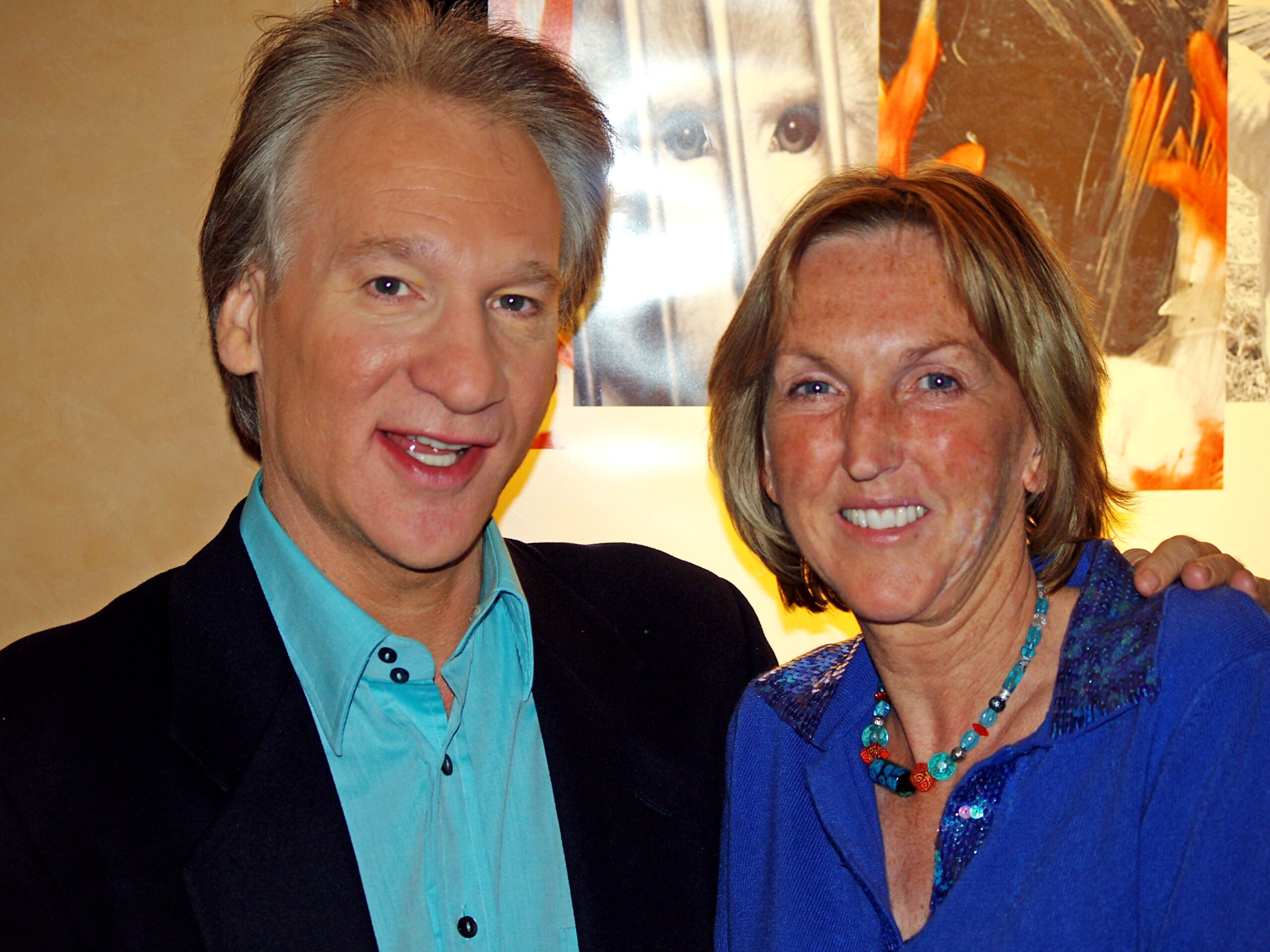
Bill Maher has turned a routine awards-season slight into a broader indictment of Hollywood’s cultural instincts, accusing the Golden Globes of shutting out Joe Rogan to protect a fragile worldview. His on-air tirade framed Rogan’s omission from the new podcast category as proof that the industry is rewarding ideological comfort over audience reach. By telling the Globes to “get out of your bubble,” Maher is challenging not just one show’s ballot, but the way elite tastemakers decide which voices count as legitimate.
The clash lands at a moment when podcasting has become one of the most influential mediums in American life, and when debates over “wokeness,” censorship, and platforming are already running hot. Maher’s criticism, sharpened by his own loss in the same category, has exposed a rift between Hollywood institutions and the massive audiences that flock to figures like Rogan outside traditional media channels.
Maher’s on-air broadside against the Golden Globes
When Bill Maher lit into the Golden Globes over their new podcast category, he did not treat it as a minor programming gripe. He argued that the awards body had “only nominated like the super woke stuff,” casting the ballot as a curated list of ideologically safe shows that flatter the sensibilities of a narrow cultural elite. In his telling, the omission of Joe Rogan was not an oversight but a deliberate signal that the Globes prefer politically aligned content to the messy, unpredictable conversations that dominate the wider podcast market.
Maher’s language was characteristically blunt. He reportedly called the Golden Globes “f–king smug a–holes,” accusing them of rewarding each other for staying inside a comfort zone rather than engaging with the full spectrum of popular audio. His complaint that the category highlighted “super woke stuff” while Rogan was left out framed the decision as a kind of cultural gatekeeping, a claim he underscored by blasting the Globes for the Joe Rogan podcast snub in front of his own audience.
“Get out of your bubble”: the Bluesky critique
At the core of Maher’s argument is the idea that Hollywood has sealed itself inside what he called a “Bluesky bubble.” He mocked the notion that an awards body could introduce an inaugural podcast category and still ignore one of the most listened-to hosts in the world, suggesting that the decision reflected a social feed mentality where only certain viewpoints are visible. By telling the Globes to “get out of your bubble,” Maher was effectively accusing them of curating reality the way a user might curate a timeline, filtering out dissenting or uncomfortable voices.
Maher’s “Bluesky bubble” line was not just a throwaway joke about a social platform, it was his shorthand for a cultural ecosystem that talks mostly to itself. He argued that the Globes live in a “f—— bubble” that treats Rogan’s popularity as irrelevant because it does not match the tastes of Golden Globes Hos and their peers. In his view, the decision to exclude Rogan from the best podcast field “really is” a symptom of that insulated mindset, a point he drove home while shredding the Golden Globes for their choices.
How Rogan became the flashpoint of the new podcast category
The Golden Globes’ decision to create a best podcast category instantly raised the stakes around who would be included, and Joe Rogan’s absence made that tension explicit. Rogan, host of “The Joe Rogan Experience,” has built a sprawling audience by inviting a wide range of guests, from comedians and fighters to scientists and political figures, and by letting conversations run for hours. His show is one of the defining properties of the medium, which is why his omission from a high-profile awards ballot was always likely to be read as a statement rather than a neutral programming choice.
Critics of the Globes have argued that leaving Rogan off the list reveals what Hollywood really fears: a host who does not fit neatly into partisan categories and who is willing to platform controversial voices. Supporters of Rogan point out that he does not present himself as a traditional political pundit, and that his appeal rests on a mix of curiosity, irreverence, and long-form discussion that rarely appears on legacy television. One analysis framed the decision as the Golden Globes snubbing Rogan from the new best podcast category and using the ballot to signal which kinds of audio storytelling are acceptable, a move that, in this view, reveals what Hollywood.
Maher’s personal stake: losing to “super woke stuff”
Maher’s outrage is not purely abstract. He was himself a contender in the same Golden Globes podcast race and ultimately lost, a result that he has used as further evidence that the category is tilted toward ideologically fashionable shows. On his program, he suggested that the nominees reflected a narrow slice of the audio landscape, one that prizes a particular brand of progressive politics and avoids the kind of heterodox or combative conversations that define both his own work and Rogan’s.
His reaction to the loss has been described as a kind of meltdown, with Maher venting that the outcome “just speaks to living in the Bluesky bubble.” That phrase, repeated in different contexts, has become his shorthand for an awards culture that rewards social-media-approved viewpoints over broad public resonance. The same coverage that chronicled his frustration also noted how other comedians, including Wanda Sykes, have used the Globes stage to call out figures like Gervais for their own controversial jokes, underscoring how the ceremony has become a recurring battleground over what kind of comedy and commentary is acceptable at a high-profile event, a dynamic captured in reports on Maher’s Golden Globes.
From late-night contrarian to awards-season critic
Maher’s attack on the Golden Globes fits neatly into the persona he has cultivated over decades as a late-night contrarian. On his shows, he has repeatedly criticized what he sees as excesses of “woke” culture, arguing that an obsession with ideological purity is strangling open debate and comedy. His defense of Rogan, framed as a defense of free conversation rather than an endorsement of every guest or claim on “The Joe Rogan Experience,” is consistent with that long-running theme.
By turning the podcast snub into a referendum on Hollywood’s values, Maher is also reinforcing his own brand as someone willing to call out institutions that once embraced him. He has positioned himself as a liberal who is disillusioned with parts of the left, and his willingness to blast the Golden Globes as “f–king smug a–holes” for their choices underscores that posture. In one account, writer Richard Pollina described how Maher tore into the Golden Globes while defending Rogan, a moment that crystallized his evolution from awards-show regular to one of its loudest critics.
Inside Maher’s argument about audience and legitimacy
Underlying Maher’s fury is a specific claim about who gets to define cultural legitimacy. He argues that awards bodies like the Golden Globes are ignoring the actual listening habits of the public in favor of a smaller circle of tastemakers who share similar politics and social circles. In his view, a best podcast category that does not include Joe Rogan is not just incomplete, it is dishonest about where the medium’s center of gravity really lies.
Maher’s critique also hinges on the idea that popularity should at least factor into awards recognition, especially in a medium where audience engagement is easy to measure. He has suggested that the Globes are effectively punishing Rogan for being too controversial, or for hosting guests who challenge progressive orthodoxies, rather than evaluating the show on its impact and craft. That argument mirrors broader debates in entertainment about whether institutions should honor work that draws huge audiences but stirs political backlash, or whether they should prioritize alignment with the values of the people handing out the trophies.
How other coverage framed the Rogan snub
Maher is not the only commentator to see the Rogan omission as a revealing choice. Other observers have argued that the Golden Globes used their new podcast category to send a message about which voices they consider respectable. Some have suggested that the snub reflects a fear of backlash from activists and social media users who have criticized Rogan over past episodes, including his handling of sensitive topics and controversial guests, even as his audience has remained enormous.
Those analyses often point out that Rogan’s show occupies a unique space in the media ecosystem, blending long-form interviews, comedy, and unfiltered conversation in a way that does not map neatly onto traditional news or entertainment formats. By leaving him off the ballot, the Globes may have been trying to avoid a public fight over his inclusion, but in doing so they created a different controversy about their own willingness to recognize work that sits outside their ideological comfort zone. For Maher and his allies, that trade-off is precisely the problem: it suggests that awards bodies are more concerned with avoiding criticism from within their own circles than with acknowledging the full range of influential content.
Echoes across platforms: Yahoo, radio, and the “bubble” narrative
Maher’s “bubble” critique has echoed across multiple platforms, reinforcing his central message that the Golden Globes are out of touch with the broader public. In one widely circulated segment, he emphasized that “You’re going to have an inaugural podcast category” and still ignore Rogan, a decision he said “just speaks to living in the Bluesky bubble.” He followed that up with the blunt admonition, “But get out of your bubble. It really is,” turning the phrase into a kind of catch-all indictment of awards-season groupthink that was later highlighted in coverage of Maher’s remarks.
His comments have also been amplified on radio, where summaries of his rant stressed that he had shredded the Golden Globes for not nominating Joe Rogan for best podcast and accused them of living in a “f-bubble.” Those retellings repeated his core claim that the awards body is rewarding a narrow slice of content that fits a particular worldview, while sidelining shows that command huge audiences but generate controversy. By spreading across television, digital outlets, and stations like WCCS AM1160 & 101.1FM, the narrative that the Globes are trapped in a cultural bubble has taken on a life of its own, with one radio write-up noting how Maher shreds Golden their decision.
What the fight reveals about Hollywood’s culture wars
The dispute over Joe Rogan’s absence from the Golden Globes ballot is about more than one category or one host. It exposes a deeper tension between Hollywood institutions that see themselves as guardians of cultural values and a sprawling media ecosystem where influence is increasingly measured in downloads, streams, and subscriber counts rather than in statues. For Maher, the Rogan snub is a case study in how awards bodies can drift away from the audiences they claim to represent, especially when they prioritize ideological comfort over engagement with messy, real-world conversations.
At the same time, the backlash to the snub shows how figures like Maher and Rogan have become focal points in the broader culture wars, with their supporters framing them as defenders of free speech and their critics warning about the impact of giving large platforms to controversial ideas. The Golden Globes, by trying to navigate that minefield, have found themselves accused of cowardice by one side and caution by the other. Maher’s demand that they “get out of your bubble” is less a polite suggestion than a challenge to the entire awards ecosystem to decide whether it wants to reflect the full spectrum of contemporary media or remain a curated mirror of its own values.
More from Vinyl and Velvet:

Leave a Reply