

Bill Maher walked into the Golden Globes already convinced he was walking out a loser. Long before another name was read for the podcast prize, he was telling interviewers that the town he works in “would never give it to me” because, in his view, Hollywood punishes him for speaking his mind. When he later summed it up as a “woke town” that “f**king hates” his brand of freewheeling commentary, he turned a routine awards snub into a referendum on the industry’s comfort level with dissenting voices.
His complaint lands at a moment when awards bodies are trying to project a more progressive image while still rewarding familiar stars and safe choices. Maher, who has built a career on poking at liberal orthodoxies as much as conservative ones, is now casting himself as a casualty of that shift. The question is whether his Golden Globes loss really proves that “woke Hollywood” is out to get him, or whether it simply confirms that his confrontational style has never translated into trophies.
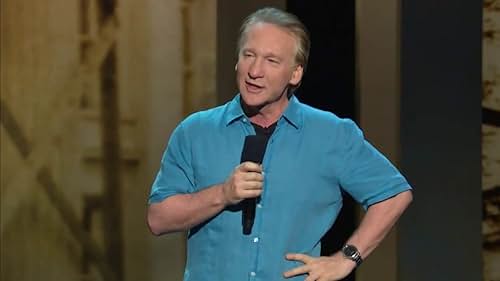
Maher’s first Golden Globes shot, and why he expected to lose
For all his decades on television, Maher only just earned his first Golden Globes nomination, a late‑career nod that underscored how rarely awards groups have embraced him. The recognition put him in the podcast race alongside shows that are far less polarizing, and he made clear he did not expect to prevail once the winners were announced. In pre‑show conversations he framed the nomination as a kind of ceiling, suggesting that the Hollywood establishment was willing to acknowledge his audience but not to celebrate him onstage.
Maher’s skepticism was not casual pessimism, it was rooted in his long record of near‑misses. He has talked about racking up a staggering 41 Emmy nominations without a single win, a statistic he cites as proof that voters are happy to keep him in the conversation but reluctant to hand him hardware. That history colored his approach to the Globes, where he treated the nomination as another chapter in a familiar story of being invited to the party but kept away from the podium.
“This woke town f**king hates that I speak freely”
Maher’s most explosive comments came as he tried to explain why he believed the Golden Globes were out of reach. In an interview ahead of the ceremony, he argued that “they would never give it to me” because, as he put it, “this woke town f**king hates” that he “speak[s] freely,” casting Hollywood as a monolith that punishes him for refusing to self‑censor. He has long positioned himself as a comic who will not bend to prevailing liberal sensitivities, and he framed the podcast category as another arena where that stance carries a cost, a point he reiterated in remarks captured in an interview before the show.
He sharpened that critique in a separate exchange that highlighted how personal he believes the snub to be. Describing his relationship with the industry, Maher said he had “made [his] peace” with the idea that awards voters would not reward someone who takes aim at their politics, a sentiment echoed in coverage that quoted him lamenting that “woke” Hollywood is hostile to his style. In his telling, the loss was not about the strength of the competition or the quirks of a voting body, it was the inevitable outcome of an ideological clash between a town eager to signal its values and a host who delights in puncturing them.
A long history of nominations without wins
Maher’s frustration is easier to understand when set against his broader awards track record. As host of Real Time, he has been a fixture in late‑night political comedy, yet the industry has repeatedly stopped short of crowning him. Those Emmy numbers, with dozens of nods and no wins, have become part of his public narrative, a running joke that he now treats as evidence of institutional discomfort rather than mere bad luck.
After the Golden Globes ceremony, he leaned into that storyline, again tying his loss to what he calls “woke Hollywood.” In his post‑show commentary he argued that the same sensibility that has kept him from winning television’s biggest prizes is now shaping podcast honors, suggesting that voters prefer hosts who echo their politics rather than challenge them. Coverage of his reaction noted that he “didn’t win the” podcast award and immediately pivoted to blaming Hollywood culture, reinforcing his image as a perennial nominee who sees ideology, not taste, as the deciding factor.
Clashing with the Golden Globes crowd in real time
Maher’s sense of alienation from the awards circuit was also visible in how he reacted to the room itself. During the Golden Globes festivities he mocked celebrities who arrived wearing pins in support of Renee Good, treating the gesture as a hollow display of virtue rather than a meaningful stand. Reports described how Bill Maher laughed at the sight of the Renee Good pins, a reaction that underscored the cultural gap between a host who delights in skewering symbolic activism and a crowd eager to be seen taking the right side.
That moment fed directly into his broader critique of the industry. By ridiculing the Renee Good show of solidarity, Maher was not just taking a shot at individual actors, he was challenging the performative politics that often define awards nights. His comments about “woke” Hollywood were not abstract, they were grounded in his real‑time disdain for the symbolic politics on display in the ballroom, and they helped explain why he believes the same people applauding those pins would never vote to put him onstage as a winner.
Free speech, “woke Hollywood,” and what the loss really means
Maher’s argument ultimately hinges on the idea that his commitment to “speaking freely” is incompatible with the values of the town where he works. On social media, posts circulated quoting him saying he predicted his Golden Globes loss because “this woke town f**king hates” that he “speak[s] freely,” a line that captured both his defiance and his resentment. One widely shared Facebook post highlighted that phrasing, turning his complaint into a rallying cry for fans who see him as a rare voice willing to challenge progressive dogma from inside the entertainment industry.
At the same time, some of the coverage of his reaction suggested a more complicated picture. One account noted that Maher “didn’t have high hopes” that he would win and quoted him saying he had “made [his] peace” with that outcome, framing his comments as a mix of resignation and calculated provocation rather than pure outrage. Reporter Tyler McCarthy relayed how Maher blamed “woke” Hollywood and his own unfiltered style for the loss, but also emphasized that he seemed to understand the dynamic and even use it to reinforce his brand as an outsider.
That outsider posture has become central to how Maher navigates awards season. In one recap of his comments, he was described as taking aim at “woke” Hollywood while predicting a Golden Globes snub, explicitly tying his free‑speech rhetoric to the expectation of losing. Another summary of his remarks on “woke Hollywood” and awards culture, headlined around how he attacks that ecosystem “After He Fails” to “Win Award Yet Again,” underscored that this is now a recurring script for Bill Maher Attacks Woke Hollywood After He Fails to Win Award Yet Again. Whether one sees his Golden Globes loss as proof of ideological bias or simply another data point in a long pattern of near‑misses, it is clear that Maher intends to keep using each snub as fresh evidence that he is at odds with the town that made him famous.
More from Vinyl and Velvet:

Leave a Reply