

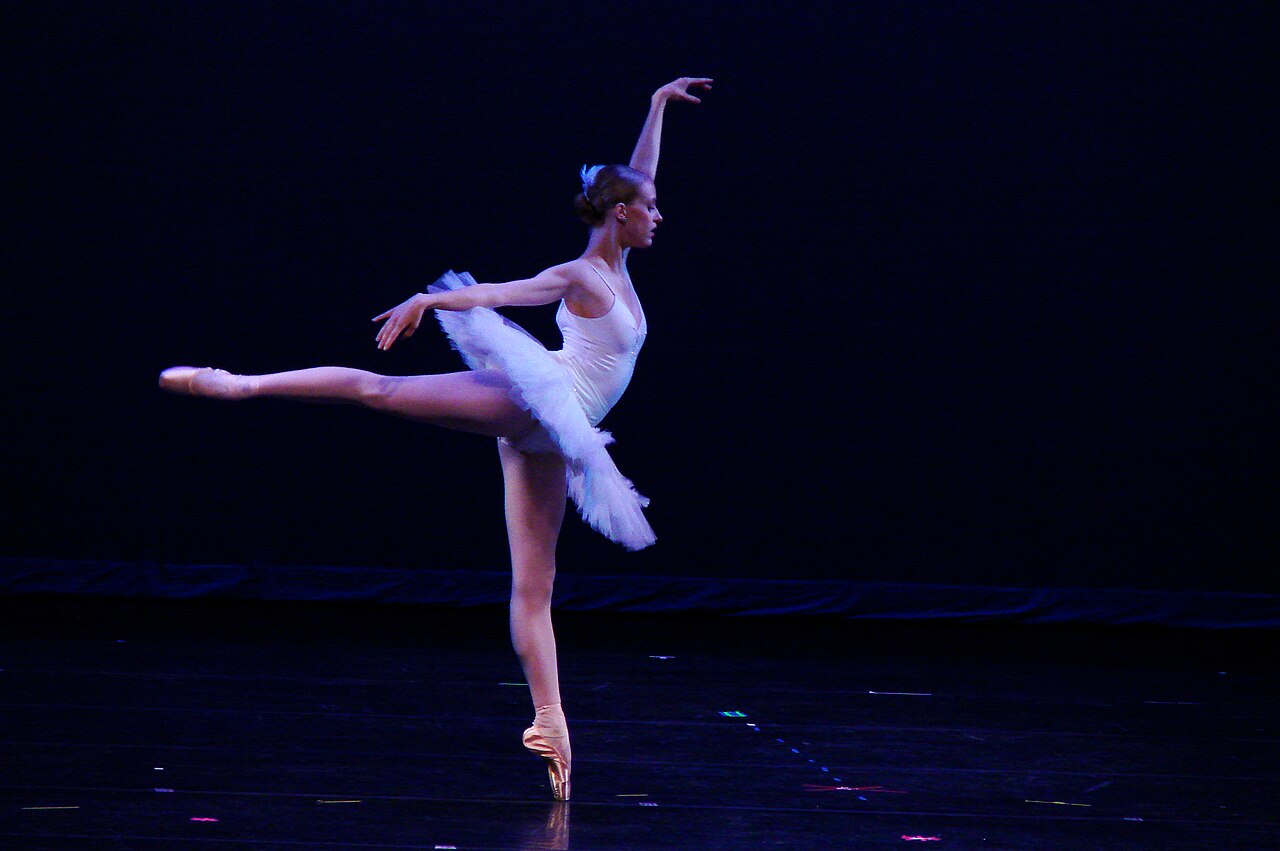
Nikisha Fogo has spent her whole life chasing the ballerina dream, but it was not until she crossed the Atlantic that she realized she would have to change how she moved through the industry, not just across a stage. Moving to the United States forced her to rethink how she presents herself, how she talks about race, and how openly she claims space as a Black woman in ballet. That shift has turned her from a rising star into a quietly radical presence in one of the country’s most tradition‑bound art forms.
Her story is not just about a promotion or a big debut, it is about what happens when a dancer raised in European institutions suddenly lands in an American conversation about identity, visibility, and power. The result is a ballerina who still loves the classical canon, but now carries herself with a different kind of authority, one that reflects both her technique and her lived experience.
From Vienna prodigy to San Francisco principal
Before audiences in California ever saw her onstage, Nikisha Fogo had already checked off the kind of milestones that usually define a career. She trained in Europe, rose through the ranks, and became a standout at Vienna State Ballet, where she built the classical chops that would later anchor her work in the United States. That European foundation, with its emphasis on hierarchy and tradition, shaped her early sense of what a ballerina should look like and how she should behave in the studio.
Her leap to the West Coast came when she joined San Francisco Ballet as a principal, a title that instantly placed her at the top of one of the country’s most visible companies. The move was not just a change of employer, it was a shift into a city and a company that talk openly about diversity and representation. For a dancer who had already achieved the “Principal” label, the new environment raised a different question: what does it mean to lead, not only in the repertory, but in the culture of the ballet world itself.
A pandemic‑scrambled transition
The journey from Europe to California did not unfold in a neat, cinematic arc. Her transition to San Francisco was delayed by the, which meant closed borders, disrupted flights, and a long stretch of uncertainty about when she would actually be able to start her new life. Instead of a triumphant arrival, she was stuck in limbo, trying to stay performance‑ready while the world shut down around her. That kind of delay can rattle even the most confident dancer, especially one who has just bet her future on a new continent.
Behind the scenes, the move was also shaped by leadership changes in Europe. When Legris announced he would leave Vienna, Fogo began to map out her own exit, eventually connecting with Helgi Tomasson at SFB and starting the practical work of looking for an apartment in San Francisco. That mix of artistic uncertainty and logistical grind set the tone for her American chapter: nothing about it was simple, but every step pushed her toward a version of herself that was more self‑directed and less willing to just go along with the system around her.
Race, visibility, and a new kind of self‑possession
Once she finally landed in the United States, the biggest adjustment was not the repertory, it was the conversation around race. Growing up in Europe, she has said that race had a different presence in her life, and that the topic felt less front‑and‑center than it did when she first came to the U.S. That contrast hit hard when she realized how much American audiences and colleagues expected her to speak about identity, and how much her own story resonated with dancers who rarely saw themselves represented at the top of major companies. In interviews, Fogo has described how that shift forced her to think more deliberately about how she walks into a room, how she advocates for herself, and how she uses her platform.
Earlier this Feb, she went even further, explaining that the move to the U.S. completely reshaped how in the industry. She talked about learning to be more vocal, more protective of her boundaries, and more intentional about the roles she takes on. That evolution is not about ego, it is about survival in a field where Black women are still treated as exceptions. By naming that reality out loud, she has shifted from simply being a talented principal to being a reference point for younger dancers who are watching how she navigates the same rooms they hope to enter.
First Black principal and the weight of a milestone
Her personal recalibration is tied to a very public milestone. When she stepped into leading roles in San Francisco, she became part of a historic moment for the company. In widely shared clips, Nikisha Fogo is celebrated as the first Black principal ballerina in the San Fransisco company, a designation that is both overdue and heavy. It means that every time she walks onstage, she is not just dancing for herself, she is carrying decades of exclusion and expectation on her shoulders. That kind of visibility can be thrilling, but it can also be exhausting, especially when the label “first” keeps getting attached to your name.
The symbolism of that moment was amplified when she appeared in the company’s production of the Nutcracker at the War Memorial Opera House for the San Francisco holiday season. The production has a long history in the city, and seeing a Black principal at the center of such a tradition sent a clear message about where the company is heading. For Fogo, it also crystallized the stakes of her move: she was no longer just a visiting star, she was part of the institution’s public face, and that required a new level of confidence in how she stands, speaks, and claims her place in the repertory.
Redefining the ballerina dream on her own terms
What makes her story resonate is that she is not interested in being defined only by her résumé. As a Principal at San Francisco Ballet, she has talked about achieving the ballerina dream without letting it swallow her entire identity. That means prioritizing close connections with people around her, paying attention to her mental health, and remembering that the title on the program is not the only measure of her worth. It is a subtle but important shift from the old narrative of the self‑sacrificing ballerina who gives everything to the stage and expects nothing in return.
Her move to the U.S. has also sharpened her sense of responsibility to the next generation. In recent conversations, Ballerina Nikisha Fogo to a country where race is discussed so openly pushed her to think about what younger dancers see when they look at her. She has acknowledged that, obviously, because she and other Black artists are still so visible as “firsts,” there is pressure to represent more than just personal ambition. Instead of shrinking from that, she has started to lean into it, using her platform to normalize the idea that a Black woman can be both deeply classical and unapologetically herself.
More from Vinyl and Velvet:

Leave a Reply