

You watched Bad Bunny center Puerto Rican culture, language, and identity on the Super Bowl stage — and you noticed how many critics fixed on the fact he sang in Spanish instead of the show’s choreography, symbolism, and production choices. That focus tells you something about cultural expectations in big moments like this, and it matters for how we evaluate artistry on a national stage.
Bad Bunny’s all‑Spanish halftime set changed what a mainstream American spectacle can look and sound like, and the real story isn’t the language — it’s the bold artistic decisions that made those choices resonate.
You’ll explore why the performance was historic, break down the visual and musical references that shaped it, track how language became the headline controversy, and consider what this moment might mean for Latino culture and mainstream America.
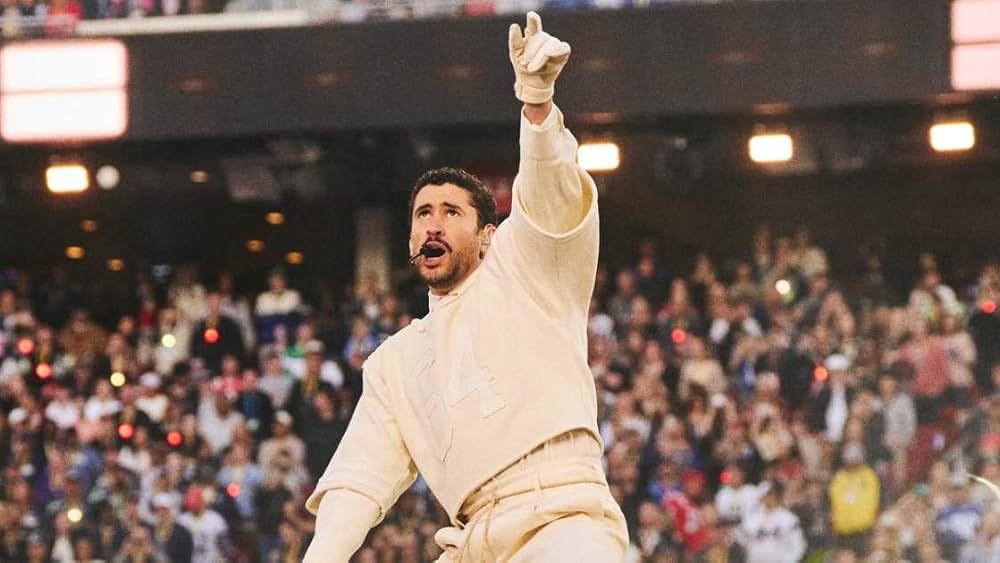
Why Bad Bunny’s All-Spanish Super Bowl Halftime Show Was Historic
Bad Bunny centered Puerto Rican music, language, and symbols on the most-watched live stage in the U.S., while breaking industry milestones and shifting expectations about language and mainstream pop spectacle.
Breaking Records and Making History
Benito Antonio Martínez Ocasio arrived at Super Bowl LX already a global streaming force and the most streamed artist on Spotify. Your awareness of his commercial power matters: his halftime slot translated that streaming dominance into a cultural milestone on live television.
The performance followed his Grammy-winning album DeBÍ TiRAR MáS FOToS, which helped push reggaetón and plena into mainstream award recognition. Those industry wins and streaming numbers gave the NFL’s halftime choice weight beyond novelty — it was a mainstream validation of a non-English pop trajectory.
This moment also cemented his place among iconic halftime headliners while marking the first time a solo artist performed predominantly in Spanish at the Super Bowl. For you, that signals how chart success and audience reach can reshape what networks consider “universal” entertainment.
First All-Spanish Performance on America’s Biggest Stage
When Bad Bunny performed primarily in Spanish at Levi’s Stadium, the move changed expectations about language on a national broadcast. You saw lyrics, call-and-response moments, and stage design delivered in Spanish to a U.S. audience of over 100 million viewers.
Language choices mattered practically: they affected sing-alongs, social-media clips, and which outlets framed the performance as political or cultural. The show proved Spanish-language songs can carry blockbuster staging, choreography, and guest turns without translation crutches.
That precedent makes it easier for other Spanish-language acts to be booked for major U.S. broadcasts. For your perspective, it means network executives and advertisers now must consider bilingual and Spanish-centered programming as commercially viable at scale.
Showcasing Puerto Rican Identity and Pride
Bad Bunny wove Puerto Rican imagery and references throughout the set, from the casita staging to raising a Puerto Rican flag onstage, signaling Boricua pride on a national platform. Those gestures weren’t decorative; they pointed to island history, diaspora ties, and ongoing political conversations.
You could see traditional genres and collaborators included—plena groups and younger Puerto Rican musicians—connecting popular reggaetón roots to folk forms. The choice to spotlight Puerto Rican culture also amplified conversations about colonial status and identity without requiring explicit policy statements.
For you, the visual and musical specificity made the halftime show feel less like generic pop and more like a curated statement about belonging, representation, and the endurance of Puerto Rican culture in mainstream global pop.
The Artistry: Performance Details and Cultural References
Bad Bunny staged a tightly choreographed, culturally dense set that used visuals, guests, and song choices to assert Puerto Rican identity and reggaeton’s global reach. You’ll notice stagecraft, guest cameos, and dance cues all worked together to shift attention from language to craft.
Set Design and Powerful Stagecraft
The field transformed into layered environments: a barrio street, a sugar-cane–lined promenade, and a rooftop block party. Lighting shifted from warm amber to stark white to isolate moments — intimate verses got low, focused spotlights while chorus sections opened into widescreen, saturated color.
Props mattered. A working piragua cart appeared during a brief, atmospheric interlude, grounding the show in island daily life. Elevated platforms let dancers and guests move vertically, creating quick but memorable tableau shots for TV and social clips. Camera choreography matched physical staging so you rarely lost the thread of the performance.
Symbolic Songs and Special Guests
Song choices and guests read like a cultural résumé. Bad Bunny opened with high-energy reggaeton cuts that recalled the urgency of “Gasolina” era parties, then threaded in melodic passages that echoed salsa phrasing and bolero softness.
Cardi B and Toñita-style harmonies surfaced in cameo spots, shifting texture and reminding you of diasporic collaborations. A cameo that channeled Ricky Martin-era showmanship tied contemporary reggaeton to Latin pop’s stadium history. Each guest arrived for a specific narrative beat: celebration, memory, or challenge. Those moments underscored artistry more than soundbites about language.
Honoring Reggaeton, Salsa, and Puerto Rican Traditions
You can hear reggaeton’s dembow backbone across the set while salsa percussion punctuated brass stabs in transitional sections. Producers layered live percussion over programmed beats to preserve rhythmic authenticity and give salsa-inspired breaks verve.
Lyrical nods and melodic interpolations referenced classics without direct covers, letting tracks like “Tití Me Preguntó” sit beside salsa-leaning arrangements. The sugar cane—visual and sonic—appeared as a motif, evoking labor history and rural roots. That motif tied modern reggaeton back to island musical ecosystems rather than isolating it as a pop export.
Baile Inolvidable: Iconic Dance and Visual Storytelling
Choreography balanced street-stepping with polished, theatrical movement. Dancers executed reggaeton floorwork and salsa turn patterns in rapid rotation, making transitions feel like storytelling beats rather than costume changes.
Signature moves were staged for replay: a synchronized spike moment, a pirouette sequence that echoed classic salsa solos, and a call-and-response section where the crowd’s motion became part of the mise-en-scène. The term baile inolvidable fit — you could map the show by its dances, each one signaling a mood shift or lyric cue. Visuals and steps reinforced lyrical themes, so the performance read clearly even if you didn’t catch every word.
Language vs. Artistry: The Critical Backlash and Viral Controversy
Bad Bunny’s decision to perform mainly in Spanish at Super Bowl LX shifted attention away from staging, choreography, and musical choices. Critics zeroed in on language, politicians amplified the debate, and rapid misinformation spread online — all shaping how many viewers interpreted the performance.
Why the Focus on Spanish Sparked Debate
You noticed that critics treated language as the story, not the artistry. Some commentators framed an all-Spanish setlist as a challenge to an “all‑American halftime show” ideal, using phrases like “God bless America” or insisting the performance should prioritize English for a national broadcast. That rhetorical framing turned a programming choice into a cultural test about belonging.
Others argued Bad Bunny’s Spanish-language prominence was itself political: a visible pushback against U.S. imperialism and colonial histories tied to Puerto Rico. Fans and cultural critics countered that the music’s production values, live band choices, and set design deserved primary attention — not the vocabulary of lyrics. You saw both camps conflate language with intent, which obscured concrete artistic decisions like song order and arrangement.
Political Reactions and Social Media Outrage
You watched political figures quickly turn the halftime show into a talking point. Donald Trump publicly criticized the lineup, calling it a “terrible choice” and framing the event as a cultural threat. That comment amplified online outrage and drew attention away from the show’s technical and creative merits.
On social platforms, hashtags split into pro- and anti-Bad‑Bunny camps within hours. Viral clips emphasized either his wardrobe and choreography or isolated Spanish lyrics presented as evidence of a political statement like “ICE out.” Activists and opponents both edited footage to score political points, boosting polarization. The result: the conversation centered more on identity and less on stagecraft.
Fact-Checking Misinformation After the Show
You likely saw quick claims about lyrics, guest appearances, and alleged political calls-to-action. Fact‑checkers combed performance footage to correct false reports — for example, misattributed chants suggested a coordinated political message when in many cases they were crowd reactions or sampled lines from earlier tracks.
Misinformation often used context stripping: a shot of signage or a shouted phrase became “proof” of a political agenda tied to colonization or policy stances. Reliable checks pointed to setlists, official broadcasts, and direct quotes to verify what happened on stage. When judging the show, you should weigh documented production elements over viral clips that lack timestamps or full context.
Legacy and Lasting Impact on Latino Culture and Mainstream America
Bad Bunny’s halftime set changed how many people see Puerto Rican creativity and Latino presence in mainstream moments. It reinforced cultural pride, pushed Spanish-language music into prime-time conversation, and shifted expectations for mass‑market entertainment.
Elevating Latino and Boricua Identity
You saw Puerto Rican symbols, rhythms, and phrases placed at the center of a global stage, not as an add-on but as the main act. That visibility validated Boricua identity for millions who rarely see their heritage treated as core American culture.
Artists who grew up in Nuyorican neighborhoods and smaller island towns now get a clearer path to mainstream recognition because Bad Bunny showed that authenticity sells at scale.
Political and historical references in the performance — like nods to Hurricane Maria — connected cultural pride to lived experience. For Latino audiences, that made the show feel less like spectacle and more like representation.
Encouraging Spanish Language Learning
You noticed more people asking about lyrics and translations after the show. That curiosity can translate into classroom enrollments, streaming playlists, and bilingual programming demand. Spanish-language songs starting conversations on social feeds often lead newcomers to learn simple phrases or grammar to understand the message.
Institutions and content platforms may respond by adding more Spanish instruction and subtitled content. For learners, Bad Bunny’s catalog becomes a modern, culturally relevant curriculum supplement that combines grammar, slang, and cultural context.
Global Influence of Puerto Rican Music and Art
Puerto Rican sounds — reggaetón, plena, and experimental pop — reached listeners who previously streamed only Anglo pop. Bad Bunny’s role as a Puerto Rican superstar and his status as a most‑streamed artist on Spotify amplified island-born artists worldwide. Your playlists now likely include older salsa and newer trap tracks alongside his hits.
The performance also spotlighted collaborators and scenes like P FKN R and Nuevayol influences, giving producers and visual artists a larger platform. That ripple effect fuels international tours, cross-genre collaborations, and more investment in Puerto Rico’s creative infrastructure.
Redefining Super Bowl Halftime Shows
You watched the halftime show reset the template: language and local history can lead a mainstream spectacle. Producers now have a contemporary model showing that viewers will accept — even prefer — an all‑Spanish set if it’s framed with storytelling and production value.
Future halftime acts might take greater risks with non‑English headliners, multicultural staging, and political voice. Networks and advertisers will need to plan for multilingual campaigns and audiences who expect authenticity over neutralized pop.
More from Vinyl and Velvet:

Leave a Reply