

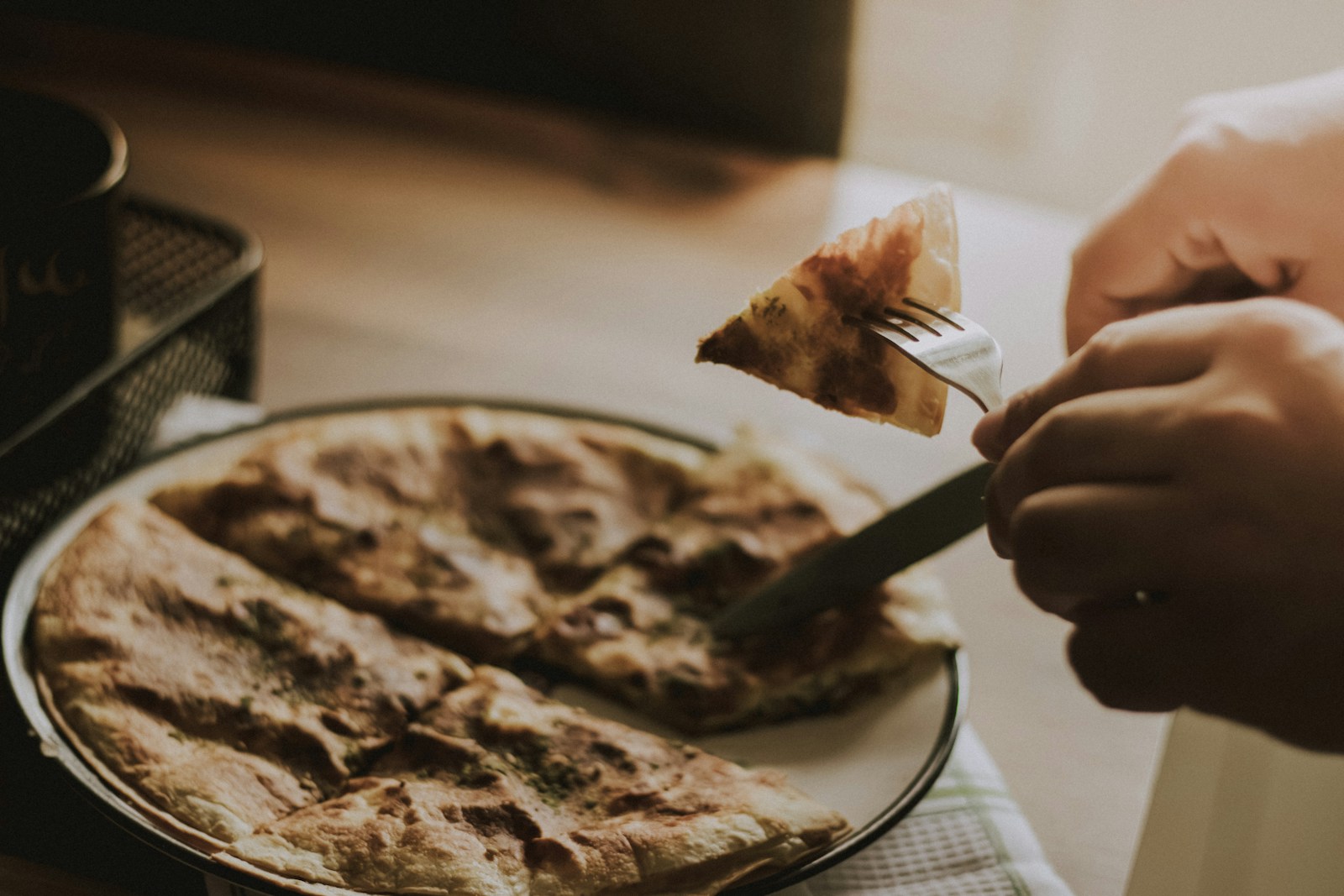
You’ve probably grabbed a slice with your hands a thousand times and never questioned it — but an etiquette expert says that’s not always the best approach. William Hanson argues that most pizza was meant to be folded and eaten with clean hands, while certain styles, like deep-dish or heavily topped pies, call for knife and fork. Follow his simple rule and you’ll avoid floppy slices and runaway toppings: fold typical slices and switch to cutlery when the pizza is too heavy to hold.
This article will walk through Hanson’s practical guidance, show when utensils actually improve the experience, and explain how cultural styles like pizza al taglio and Chicago deep-dish change the rules. Expect clear, usable tips you can apply the next time a pie arrives at the table.
An Etiquette Expert’s Guide: The Right Way to Eat Pizza
Most advice below emphasizes using hands correctly, managing hot or soggy slices, and keeping the plate and table tidy. Specific grips, folding techniques, and small table-manner habits prevent spills and look more polished.
William Hanson’s Pizza Etiquette Advice
William Hanson recommends eating a pizza slice with hands rather than insisting on cutlery in casual settings. He says pick up the slice by the crust, support the midpoint with your fingers, and bite from the point while keeping the slice angled slightly upward to let toppings settle toward the crust.
He advises against stabbing the slice with a fork or letting cheese and sauce drip onto the table. For very saucy or loaded slices, Hanson suggests a short napkin or plate beneath the tip to catch drips. In restaurants that provide cutlery or at formal events, he notes using a knife and fork is acceptable.
Proper Folding and Handling Techniques
Fold the slice lengthwise once along the center to create a manageable, semi-rigid shape that keeps toppings from sliding. Use the thumb and middle finger to pinch the crust, while the index finger steadies the fold at the back of the slice.
If the pizza is greasy, blot the crust with a napkin before lifting to avoid slippery hands. For thin-crust Neapolitan styles, let the slice cool one bite if the center is floppy; eating too hot increases the chance of sag and sauce loss. When sharing, cut slices neatly with a pizza cutter and transfer with a server to avoid touching others’ portions.
Avoiding Pizza Messes with Good Table Manners
Keep a stack of napkins and a small plate next to you to catch stray toppings and crumbs. Place the plate slightly forward and hold the slice over it while taking bites to minimize drips on clothing or the tablecloth.
When sauce or cheese drops occur, use a napkin immediately rather than wiping on clothing. If dining with others, offer a hand towel or extra napkin and slide any fallen garnishes onto a shared plate. In mixed-formal settings, watch others: follow the host’s lead on cutlery and maintain quiet, tidy eating to respect shared space.
Cutlery, Deep-Dish, and Cultural Differences: When Eating Pizza Gets Tricky
Pizza behavior changes with slice thickness, toppings, and setting. People should consider utensil practicality, the slice’s structural integrity, and local norms when deciding whether to cut, fold, or use a fork and knife.
When to Use a Pizza Cutter or Cutlery
A rotary pizza cutter or a large chef’s knife works best for evenly portioning pies before serving. In a shared setting, cutting into neat wedges avoids disputes and keeps slices consistent, especially for thin-crust pies that tear easily when pulled apart.
Cutlery—fork and knife—becomes practical when toppings slide, slices are oversized, or the crust is soggy. Restaurants often provide a fork and knife for personal comfort; diners should use them discreetly if the slice can’t be handled cleanly. For takeaway, a pizza cutter at home yields neat reheats and safer slices than ripping with bare hands.
Deep-Dish Pizza and Knife-and-Fork Rules
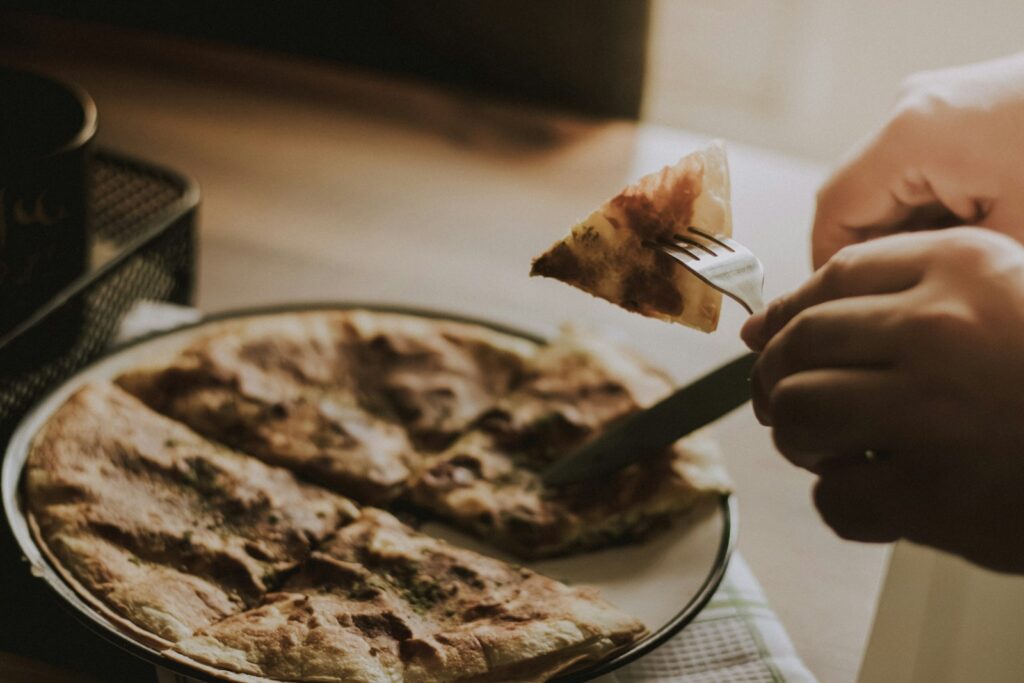
Deep-dish pies usually demand cutlery. Their tall, sauce-heavy structure and chunky fillings make a fold impractical and messy. A table knife slices cleanly through the crust and filling; a fork secures bites while cutting keeps the plate tidy.
In casual settings, some people cut deep-dish into smaller, fork-sized pieces first. At dine-in restaurants, using a knife and fork signals practical respect for the dish’s design. Servers may expect this; it reduces spill risk and shows awareness of the pizza’s texture and internal temperature.
The Pizza Sandwich Fold
The “pizza sandwich” or fold is common with thin-crust, New York–style slices. Folding the slice lengthwise creates a stiffer, two-layered bite that prevents toppings from sliding and reduces drip. This method suits oversized slices eaten on the go.
Don’t fold heavy-topping slices; the fold can cause uneven distribution and mid-bite collapse. For crunchy or brittle crusts, a slight fold near the back of the slice gives structure without breaking the crust. If etiquette matters, fold subtly and avoid loud, messy bites when others are present.
How Pizza Etiquette Changes Around the World
In the U.S., casual handling—folds and hands-only eating—dominates for most pizza styles. In parts of Europe, like Italy, pizza often comes whole and is eaten with a knife and fork in sit-down meals, especially when served on a plate with cutlery already placed.
Elsewhere, variations appear: some countries treat pizza like a street food and expect hands-only eating; others prioritize table manners and provide cutlery. Readers traveling should observe what hosts or servers do first. Adapting to local practice—using a pizza cutter, employing a knife and fork, or folding—shows cultural awareness and practical respect.
More from Vinyl and Velvet:

Leave a Reply