


Owen Cooper’s Golden Globe win for his breakout turn in the TV drama Adolescence has rewritten the record books, making him the youngest performer ever to claim the supporting actor prize in the television categories. The 16-year-old’s victory in Best Performance by a Male Actor in a Supporting Role on Television caps a rapid rise from school acting classes to the center of Hollywood’s awards spotlight. His moment on stage also crystallized how a teen star can carry both the emotional weight of a hit series and the expectations of a global fan base.
More than a feel-good milestone, Cooper’s achievement signals a shift in how prestige television is casting and writing for younger performers. His work on Adolescence has become a touchpoint for conversations about youth, vulnerability, and masculinity on screen, and his historic trophy now anchors that conversation in awards history as well as in popular culture.
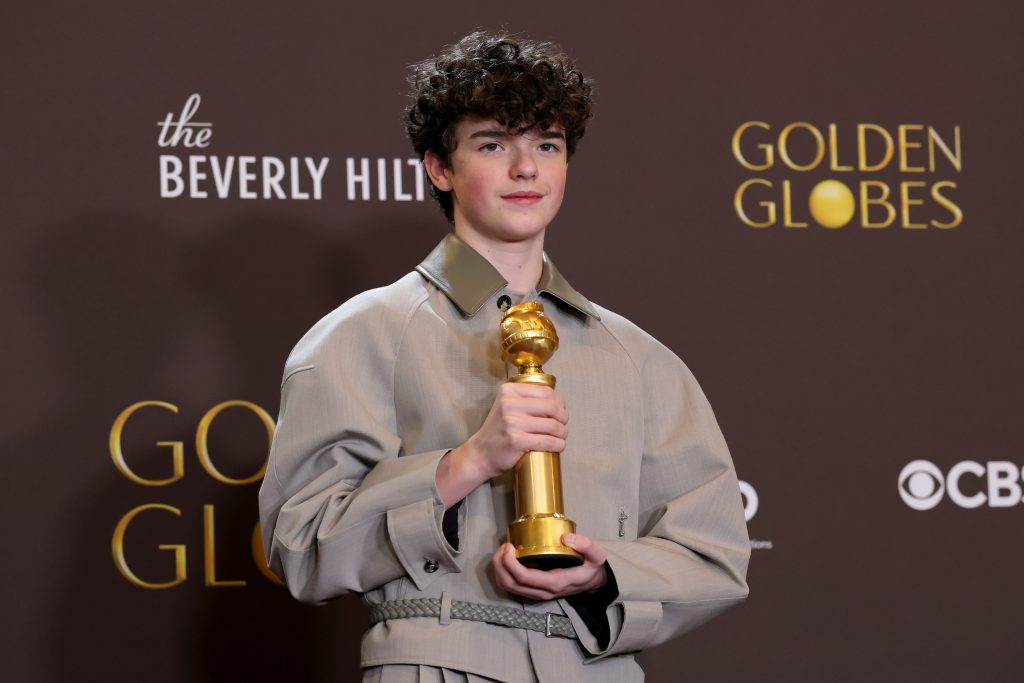
The performance that redefined a supporting role
Cooper’s path to the Golden Globes began with a character who was never meant to be background. In Adolescence, he plays a teenager whose storyline threads through the show’s family and school plots, turning what could have been a side role into one of the series’ emotional centers. Voters responded to that blend of fragility and defiance, elevating him to Best Supporting Actor in a TV Series at the Golden Globes and, in the process, setting a new age benchmark for the category.
The win was confirmed across the television industry as Cooper collected the Golden Globe for Best Performance by a Male Actor in a Supporting Role on Television, a prize that had typically gone to veterans with decades of credits. Coverage of the ceremony underscored that the Adolescence star was not only a first-time nominee but also the youngest performer to secure the supporting actor trophy in the TV field, a detail highlighted in reports on his historic victory. That context helps explain why his name was treated as a breakthrough rather than just another addition to the franchise of awards-season regulars.
A 16-year-old juggling GCSEs and global acclaim
Part of the fascination with Cooper’s ascent is how firmly he still lives in the world his character inhabits. At 16, he is not only the youngest supporting actor winner in Golden Globes TV history but also a student preparing for GCSE mock exams while working abroad on a major production. Social media posts noted that the Adolescence star was fitting revision around filming, describing how Owen Cooper was navigating schoolwork and set life at the same time his profile exploded.
That double life has been a recurring theme in coverage of his year. One widely shared update described “16 year old Owen Cooper” taking GCSE mock exams overseas while shooting, framing him as a teenager whose classroom obligations have not disappeared just because he is now a Golden Globe winner. The post about his GCSE schedule resonated with young fans who see their own pressures reflected in his, even as he stands on one of the industry’s biggest stages.
A speech steeped in humility, Liverpool pride and fan culture
When Cooper stepped to the microphone, the tone of his speech reinforced the sense that he is still adjusting to the scale of his success. He referenced being the “only boy” in his early acting class and stressed that he was “still learning every day,” a line that echoed through coverage of his acceptance remarks. That humility contrasted with the historic nature of his win and helped frame him as a grounded figure despite the sudden spotlight.
The speech also carried a distinctly Liverpool flavor. Cooper, a vocal supporter of the club, closed with a nod to the Anfield anthem, telling the room, “You’ll never walk alone,” a moment that was clipped and shared widely after he dropped the line on stage. One viral video celebrated how Never Walk Alone became the emotional capstone of his night, while another report noted that he concluded his speech with “Bring on 2026. You’ll never walk alone,” tying his club loyalty to his new status as a record-setting winner and highlighting how Liverpool fandom shaped the moment.
How Adolescence turned a teen into an awards-season force
Cooper’s win did not happen in isolation. Adolescence has been one of the season’s dominant TV stories, with its ensemble cast and serialized storytelling helping it sweep key categories at the Globes. Reports from the ceremony described how the show’s success culminated in the supporting actor gong for its breakout performer, noting that Adolescence star Owen Cooper continued the series’ awards triumph on the night.
Social posts from the event captured the same narrative in real time, celebrating how the Adolescence actor took home his first Golden Globe on Sunday night and emphasizing that this was his debut win at a major Hollywood ceremony. One widely shared update highlighted that Adolescence star Owen Cooper had turned his breakout role into tangible awards recognition, reinforcing the sense that the series has become a launchpad for a new generation of talent.
Sorting out the records and what comes next
As the dust settled, awards watchers moved quickly to clarify exactly which records Cooper had broken. Industry coverage agreed that he is the youngest performer to win the Golden Globe for Best Supporting Actor in a TV Series, a point underlined in analysis of how the Adolescence star became the youngest Golden Globes winner for Supporting Actor in a TV Series. At the same time, some awards specialists noted that while he set an age record in this specific category, he did not surpass every age-related mark in Golden Globes history overall.
One detailed breakdown pointed out that Cooper had already made history at the Emmys and that his Golden Globes win, while groundbreaking for TV supporting actor, did not replicate the exact age record he achieved there. The analysis of Golden Globes and Emmys records stressed that his victory at the 83rd Golden Globes still marked a significant milestone, even if some broader age superlatives remained intact. That nuance has not dimmed the impact of his achievement, which continues to be framed as a defining moment for both Cooper and the evolving landscape of television awards.
For Cooper himself, the night was as much about gratitude as it was about statistics. In extended remarks shared after the show, he thanked his Adolescence colleagues and the people who had supported him from his earliest days in class, telling them he would not be there without them. Coverage of his backstage comments highlighted how Owen Cooper framed the win as a collective achievement, while social clips of the moment he was announced as Best Supporting Actor in a TV Series for ADOLESCENCE captured the shock and joy that came with becoming the youngest supporting actor winner in Golden Globes TV history. Even as other stars such as Timothée Chalamet grabbed headlines for film victories, reports on the Golden Globes made clear that the night also belonged to a teenager who insists he is still learning every day.
More from Vinyl and Velvet:

Leave a Reply