

Erika Kirk has stepped into the harshest spotlight of her public life, fighting a high stakes courtroom battle over her husband Charlie Kirk’s killing while unveiling a visibly altered image that has become its own flashpoint. Her sharpened features, heavier makeup and curated social media presence now collide with a legal war over how the trial of accused shooter Tyler Robinson will unfold, turning her appearance into a proxy for deeper questions about power, grief and control. As the case accelerates, the contrast between the former Miss Arizona and the current CEO and widow at the center of a national drama has rarely looked more stark.
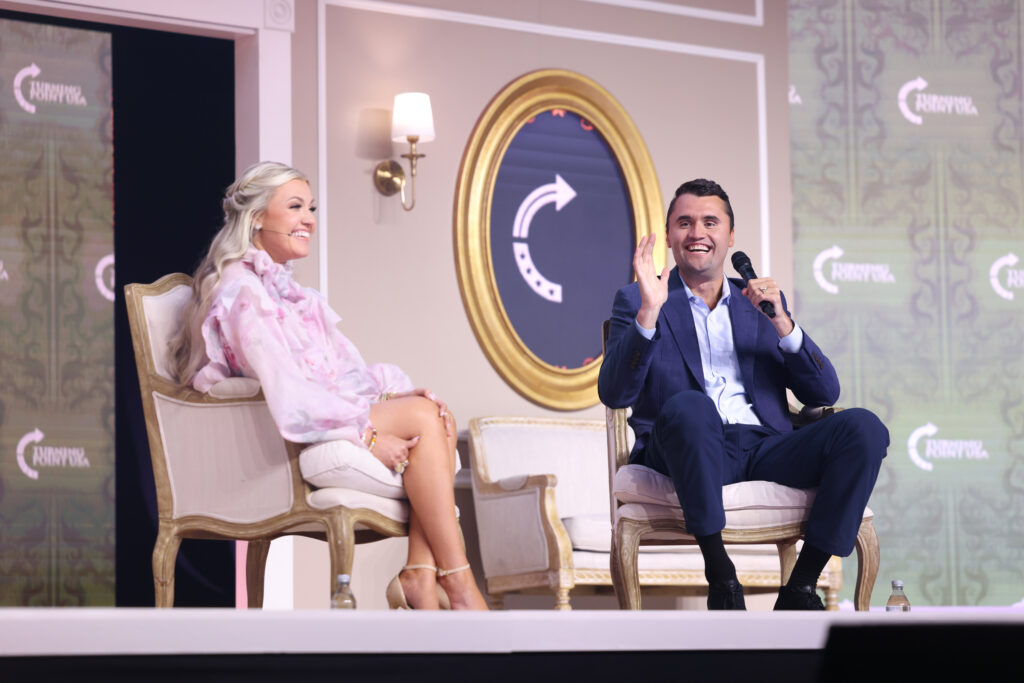
The killing of Charlie Kirk and the case against Tyler Robinson
The legal storm surrounding Erika Kirk began with the death of her husband, conservative activist Charlie Kirk, who was shot in Orem, Utah, during what supporters describe as a politically charged attack. Prosecutors have charged Tyler Robinson with aggravated murder after investigators said he fired a 30-06 rifle from a rooftop, a detail that underscores both the planning and lethality alleged in the case and that could expose him to the death penalty in Utah if he is convicted, according to charging information cited in Utah. For Erika, the case is not only about accountability for a high profile killing but also about how the justice system treats the family of a victim whose name has become synonymous with the modern conservative movement.
As the widow, Erika has been formally recognized as the victim’s representative in court filings, a role that gives her standing to weigh in on scheduling, transparency and other procedural questions that might otherwise be left to prosecutors and defense lawyers. In public comments and legal motions, she has framed Robinson’s prosecution as a test of whether political violence will be met with swift and visible justice, a framing that resonates with supporters who see Charlie Kirk as a fallen standard bearer. That framing is reflected in coverage that describes her as pressing for a trial that is not only fair but also fast, including a detailed account of the charges and potential penalties in Erika Kirk Requests.
From Miss Arizona to MAGA power player
Long before she was a courtroom fixture, Erika was a familiar face on the pageant circuit, competing as Miss Arizona and cultivating a look that leaned on soft glam and minimal contouring. Throwback photos from that era show a young woman with understated eye makeup, a lighter hand with foundation and a style that emphasized her natural features rather than the sculpted, high contrast aesthetic she favors today, a contrast that is laid out in side by side images of the former Miss Arizona. Those early photos, including an August 2015 Instagram snap, have become reference points for critics and fans alike who now dissect how far her appearance has shifted.
The transformation accelerated as Erika moved deeper into Republican politics and became one of the most visible faces of the MAGA movement after teaming up with Donald Trump and taking on a larger role at Turning Point USA. Commentators who have tracked her evolution note that she looks “vastly different” from her 2012 pageant year images, pointing to sharper cheekbones, fuller lips and a more dramatic eye look that aligns with the high gloss aesthetic common at Mar-a-Lago events, a shift documented in detailed comparisons of Erika Kirk. Whether the changes stem from aging, styling, cosmetic procedures or all three, the visual break between the pageant contestant and the political spouse has become central to how the public reads her current persona.
The “Mar-a-Lago face” and a polarizing makeover
In recent months, online commentators have latched onto what they call Erika’s “Mar-a-Lago face,” a shorthand for the heavily contoured, bronzed and filtered look that has become common among women in Trump’s orbit. Side by side comparisons of her older Instagram photos with current event shots show a woman who is almost “unrecognizable,” with thicker brows, more pronounced filler-like volume and a spray tanned complexion that photographs very differently under harsh TV lighting, as seen in galleries that track her face transformation. Supporters argue that the shift reflects a woman stepping into a more powerful role and adopting the armor of high glam, while critics see it as a loss of individuality in favor of a movement specific template.
The scrutiny has intensified as unfiltered images circulate, stripping away the smoothing effects of social media filters and professional retouching. Commenters point out that in candid shots, the contrast between her current full coverage foundation, heavy contour and thick false lashes and her earlier, more natural approach is even more pronounced, a gap that has fueled think pieces about how political women are pressured to maintain a certain kind of perfection. One widely shared analysis of her “before and after” look notes that Erika has become one of the most recognizable faces in MAGA circles, with her evolving style treated as a barometer of the movement’s own aesthetic, a point underscored in coverage of her throwback images.
Heavy glam, “downgrade” debates and the natural look backlash
As Erika’s makeup has grown more dramatic, a parallel conversation has emerged about whether the shift actually flatters her. Some beauty commentators argue that her current routine, with dense foundation, intense contour and dark, overdrawn lips, amounts to a “downgrade” from the softer, more natural approach she embraced in her pageant days, a critique laid out in side by side breakdowns of her makeup routine. Those analyses highlight how her earlier looks let her bone structure and large eyes stand out without being overwhelmed by product, while her current style can sometimes read as mask like under bright studio lights.
Others have urged her to “go back to basics,” arguing that a simpler routine would soften her image at a time when she is trying to connect with jurors and the broader public as a grieving widow rather than a partisan warrior. Articles that dissect her glam step by step suggest that dialing down the heavy contour, opting for lighter eye makeup and choosing more neutral lip colors would better align with the natural beauty seen in older photos, a case made explicitly in critiques that say One of the most baffling things about her current look is how far it strays from that baseline. The debate is not just about aesthetics but also about authenticity, with critics suggesting that the more she leans into high glam, the harder it becomes for audiences to see the woman behind the brand.
When Erika ditches the glam
Against that backdrop, rare glimpses of Erika without her full glam have taken on outsized significance. In one widely shared set of images, she appears with minimal makeup, softer brows and a more natural hairstyle, revealing features that commentators describe as delicate, with large eyes and soft contours that do not require heavy sculpting to stand out. Those images, which circulated with captions marveling at how different she looks when she “ditches the glam,” have been used to argue that her current routine may be obscuring rather than enhancing her underlying appearance, a point made explicitly in coverage of What Erika Kirk looks like without her usual styling.
These more stripped down appearances have also fed into a broader narrative about vulnerability and control. At a time when Erika is navigating grief, public scrutiny and a complex legal process, the choice to occasionally appear with less makeup can read as a deliberate attempt to humanize herself in the eyes of supporters and potential jurors. Yet because those moments are so rare compared with her usual high glam posts and television hits, they also invite speculation about whether they are spontaneous or carefully timed. The tension between the polished CEO and the more natural widow has become part of the story, especially as commentators contrast those images with the heavily edited photos that dominate her feeds and the critiques that her current routine is a visible downgrade.
Speedy trial demands and a brewing courtroom war
While the internet dissects her face, Erika has been waging an aggressive legal campaign to accelerate the case against Tyler Robinson. She has formally invoked her right as a victim’s representative to a speedy trial, accusing Robinson’s defense team of “undue delay” and arguing that repeated continuances have compounded her family’s trauma, a stance detailed in reports that describe how Charlie Kirk‘s widow has pressed the court. Her filings emphasize that the Constitution protects not only the rights of the accused but also the rights of victims to see cases resolved without unnecessary delay.
In public statements, Erika has framed the drawn out pretrial process as a kind of secondary victimization, saying that each postponement forces her to relive the day Charlie was killed. She has also suggested that the defense is using procedural tactics to push the trial further from the emotional peak of the killing, potentially softening public outrage and making it harder to seat a jury that fully grasps the stakes. That argument is echoed in analyses that describe her as “pushing back” on the defense by invoking her rights under Utah law and challenging what she sees as stalling, a strategy outlined in coverage of how Erika Kirk is asserting those rights.
Cameras in court and Erika’s transparency crusade
One of the most contentious fronts in this courtroom war is the fight over cameras. Robinson’s defense has asked the judge to bar live television coverage, arguing that wall to wall media attention could prejudice jurors and turn the proceedings into a spectacle. Erika has taken the opposite view, insisting that the trial should be broadcast and that the public has a right to see the evidence and hear the testimony in real time, a position she has reinforced in interviews where she explains why she believes cameras are essential to transparency, as described in reports on her effort to keep cameras in the courtroom.
Her stance has been particularly visible in conservative media, where she has argued that shielding the trial from view would only fuel conspiracy theories and undermine confidence in the verdict. In one televised appearance with Jesse Watters, Erika laid out her belief that Robinson should be tried in open court, without hiding his face from the public, framing transparency as a deterrent to future political violence and a check on judicial overreach, a message captured in coverage of her exchanges with Jesse Watters. She has echoed that sentiment in shorter social clips, including a viral video where she responds to the defense’s motion by asking “Why not show the truth?” and insisting there is “nothing to hide,” a line that circulated widely after being posted with the caption NEW.
Instagram statements, CEO status and the politics of image
Erika’s legal and aesthetic battles intersect most clearly on her own social media feeds, where she has blended personal grief, political messaging and corporate branding. In one Instagram post from PROVO, Utah, she identifies herself as the widow of conservative activist Charlie Kirk and the current CEO of Turning Point USA, announcing that she has filed a court motion to enforce her rights as the victim’s representative and vowing to “see this through” on behalf of her late husband, a declaration laid out in the caption of a post tagged PROVO, Utah. The image attached to that statement shows her in full glam, with meticulously styled hair and makeup, underscoring how her public face is inseparable from her political and legal messaging.
More from Vinyl and Velvet:

Leave a Reply