

Bad Bunny’s Super Bowl teaser was designed as a simple celebration of music and movement. Instead, it has detonated into a cultural flashpoint, smashing engagement records while energizing fans who insist “MAGA doesn’t stand a chance.” The promo’s runaway success is colliding with a long‑simmering backlash from Donald Trump supporters, turning a halftime show into a referendum on who gets to define American culture on the sport’s biggest stage.
The Puerto Rican superstar’s rise from streaming phenom to Super Bowl LX headliner has always carried political undertones, but the new teaser crystallizes that tension. As the video races past previous benchmarks set by Rihanna and Kendrick Lamar, the numbers are giving Bad Bunny’s supporters fresh ammunition in an online war over language, identity and the future of the NFL’s most coveted slot.
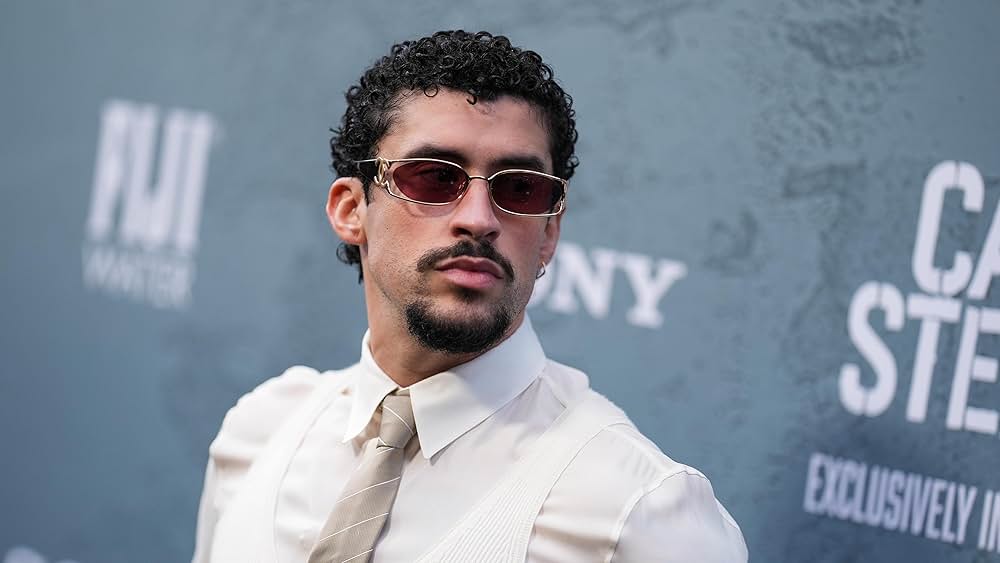
The teaser that lit the fuse
The new promo is a tightly cut burst of color, choreography and swagger, with Bad Bunny front and center as dancers move through a collage of Latin rhythms and street‑party energy. A few days before the latest wave of headlines, the Grammy winner had already primed his audience by dropping a clip built around Latino music and dancing, signaling that the halftime show would lean unapologetically into his roots rather than chase a generic stadium‑rock formula. The teaser that followed sharpened that message, presenting Bad Bunny as a global ringmaster inviting viewers into his world rather than asking permission to join theirs.
Visually, the spot mirrors the kinetic style that has defined his videos, but the staging is tailored to the Super Bowl LX moment. Reports describe the promo as part of a broader campaign around the Super Bowl LX, with imagery that feels less like a commercial and more like a global invitation to dance. That framing is crucial: it positions Bad Bunny not just as an entertainer hired to fill a slot, but as a cultural ambassador whose presence is meant to say something about who the NFL believes is watching.
Record‑breaking numbers before kickoff
Even before a single note is played live, the teaser has already rewritten the Super Bowl halftime record book. Ahead of the actual performance, Bad Bunny’s clip has drawn more likes than comparable promos from Rihanna and Kendrick Lamar, a staggering feat given how dominant both artists are on social media. One fan account highlighted that Bad Bunny’s Super Bowl teaser hit 3,000,000 likes on Instagram, edging past the 2,900,000 likes on Rihanna’s own halftime promo and becoming the most‑liked promotional video in the game’s history on that platform, a milestone that was quickly amplified across fan celebrations.
The raw engagement has stunned even seasoned observers of halftime hype cycles. Coverage notes that while the video itself is relatively straightforward, the sheer volume of likes and views speaks to the scale of Bad Bunny’s global fanbase and the intensity of anticipation around his set, with one report bluntly marveling at the numbers he is putting up. That surge has turned the teaser into more than a marketing asset; it is now a data point in the argument that the NFL’s future audience looks a lot more like Bad Bunny’s followers than the movement trying to boycott him.
Fans turn metrics into a political clapback
For Bad Bunny’s supporters, the record‑setting stats are not just bragging rights, they are a rebuttal to months of outrage from MAGA activists. On social media, fans have seized on the 3,000,000‑to‑2,900,000 comparison with Rihanna’s teaser as proof that the backlash is being drowned out by enthusiasm, with one widely shared comment joking that “MAGA is not gonna survive this” as the promo kept climbing in likes, a sentiment captured in coverage of the online reaction. Another fan quipped that the teaser alone had already “won” the Super Bowl halftime show, underscoring how the promo has become a rallying symbol before the game even kicks off.
That tone of defiance is sharpened by the context of organized criticism from Trump loyalists. Reports note that MAGA members made their outrage clear in comment sections and calls for boycotts, but that this did not stop people from watching or sharing the clip, a disconnect highlighted in coverage of how MAGA criticism collided with viral interest. In that light, every new million views functions as a kind of scoreboard, one that Bad Bunny’s fans are using to argue that cultural momentum is firmly on their side.
Why MAGA is furious about Bad Bunny
The anger from Trump’s base did not begin with the teaser. It traces back to the NFL’s decision to tap the Puerto Rican star as the headliner for the 2026 Super Bowl Halftime Show, a move that immediately drew fire from right‑wing commentators who branded him a “Trump Hater” and resurfaced a video in which he mocked President Trump, a backlash detailed in coverage of how MAGA rages at the pick. Critics framed the booking as a deliberate provocation by the league and Commissioner Roger Goodell, accusing the NFL of siding with an artist who had publicly ridiculed the president.
Beyond personal animus toward Bad Bunny, the controversy taps into deeper anxieties about language and identity. One detailed examination of Bad Bunny Super controversy notes that MAGA activists were enraged by the prospect of a halftime show performed entirely in Spanish, seeing it as an affront to their vision of American culture. The same reporting underscores that the NFL’s choice of The Puerto Rican superstar, whose tours have generated hundreds of millions of dollars, reflects the league’s calculation that his appeal outweighs the political cost, even as it fuels a narrative on the right that the Super Bowl has abandoned them.
A teaser framed as unity after Trump backlash
Faced with that uproar, the creative team behind the promo leaned into a message of inclusion rather than direct confrontation. The Bad Bunny Super Bowl trailer is explicitly framed as a call for unity after the Trump backlash, presenting the halftime show as a space where differences can be set aside in favor of shared enjoyment, according to reporting on the Bad Bunny Super trailer. Rather than featuring overt political imagery, the teaser foregrounds dancers from different backgrounds and quick shots of fans moving together, visually arguing that the halftime show belongs to everyone who loves the music.
That approach is consistent with how the NFL has tried to position the event since announcing Bad Bunny as headliner in September, presenting the Super Bowl Halftime Show as a celebration of diversity rather than a partisan statement. Coverage of the Super Bowl Halftime strategy notes that the league and its partners have emphasized MUSIC and movement as universal languages, even as they acknowledge that any decision involving Bad Bunny will be read through the lens of his history with Trump. The teaser’s tone, then, is less about backing down and more about inviting skeptics to join a party that is already in full swing.
Culture, identity and a divided audience
The ferocity of the reaction to a ninety‑second clip reflects how much symbolic weight the halftime show now carries. Analysts point out that for years the Super Bowl has been treated as a kind of cultural census, a once‑a‑year snapshot of who holds the microphone in American entertainment, a dynamic explored in a piece on why Bad Bunny’s Super preview is dividing viewers. In that framing, a flashy teaser centered on Spanish‑language lyrics, Caribbean rhythms and queer‑inclusive fashion is not just entertainment, it is a statement about whose stories are being elevated.
That symbolism is landing in an already polarized environment. A national survey found that Americans in the United States are split along party lines over Bad Bunny’s selection, with Democrats broadly supportive of Benito Antonio Martínez Ocasio’s role and nearly as many Republicans opposed, a partisan divide detailed in polling on how Americans view his Super Bowl pick. That split helps explain why a teaser meant to celebrate culture and unity has instead become a proxy battle over what the halftime show should represent, with supporters seeing themselves reflected on the field and opponents insisting the event has drifted away from them.
How the NFL is selling Super Bowl LX
From the league’s perspective, the Bad Bunny era is part of a broader strategy to position Super Bowl LX as a global spectacle. Promotional materials shared on social media highlight that Bad Bunny will headline the Super Bowl LX, with captions reminding fans that before Bad Bunny takes the stage, they will be seeing a performer whose tours and streaming numbers already dominate multiple continents. That framing reinforces the idea that the NFL is chasing international growth and younger demographics, even if it risks alienating parts of its traditional base.
The league is also surrounding the halftime show with other acts that signal a willingness to wade into political waters. A promotional flyer circulating online lists outspoken Donald Trump critics Green Day as part of a separate event, noting that the full lineup of musical artists will be revealed later, a detail captured in an Instagram post featuring a promotional flyer and asking fans how they feel about it. Taken together, those choices suggest that the NFL is betting that controversy will not outweigh the draw of marquee names, and that the future of the Super Bowl lies in embracing, rather than avoiding, the culture wars swirling around it.
Inside the teaser’s storytelling
Beyond the numbers, the teaser’s narrative choices help explain why it resonates so strongly with supporters and rankles critics. Detailed descriptions of the Super Bowl LX Halftime Show promo emphasize how it opens on Bad Bunny in a familiar Puerto Rican setting, then expands outward as dancers and fans join in, creating what one account called a global invitation that feels like an open‑air block party, a mood captured in coverage of the Super Bowl LX teaser. The camera lingers on faces and bodies in motion rather than product shots or celebrity cameos, underscoring that the star is the community around him as much as the artist himself.
Another detailed look at the trailer notes that when Bad Bunny takes the stage for the 2026 Super Bowl Halftime Show, he will be performing in a set that draws heavily on Puerto Rico, including scenes where he shares a dance with locals and moves through spaces that evoke his upbringing, elements highlighted in a breakdown of how When Bad Bunny steps into the spotlight. That emphasis on place and community is not incidental; it is a deliberate assertion that the halftime show can center a Puerto Rican story without translation or apology, a choice that thrills fans who see their culture reflected and infuriates critics who believe the Super Bowl should remain linguistically and aesthetically “American” in a narrower sense.
Months of backlash, and why it has not slowed him
The record‑breaking teaser lands after months of sustained criticism that might have derailed a less entrenched star. Months after he was announced as the headliner for the 2026 Super Bowl Halftime Show, the backlash against Bad Bunny performing at the event was still simmering, with detractors recycling the same talking points about language, politics and patriotism, a dynamic summarized in a post noting that Months of outrage had not changed the NFL’s plans. Supporters, by contrast, argued that his booking felt like a “no‑brainer” given his chart dominance and touring power, framing the controversy as a vocal minority punching above its weight.
In that context, the teaser’s success functions as a stress test of how much influence MAGA activists actually wield over pop culture events. Reports on the promo’s performance stress that, however loud the criticism from the movement’s members, it did not stop people from watching, sharing or liking the video, a point underscored in coverage noting that MAGA members could not dent its reach. For Bad Bunny and the NFL, that outcome sends a clear signal: the political cost of centering a Spanish‑speaking, Trump‑critical artist is real, but the commercial upside appears to be larger.
More from Vinyl and Velvet:

Leave a Reply