

Sheinelle Jones has built a career on bright mornings and easy laughter, but her latest return to television has been anything but effortless. After a year marked by profound personal loss, the longtime morning host has admitted she feared she “wouldn’t know how to smile” when she stepped back into the studio lights. Her new chapter on daytime TV is unfolding in full view of viewers, turning one woman’s grief and resilience into a rare, unscripted storyline about what it means to keep going.
As she settles into a fresh role alongside Jenna Bush Hager, Jones is navigating the tension between a job that demands cheer and a private life still reshaped by grief. Her candor about that conflict, and about the work it takes simply to feel joy again, has reframed her presence on screen from familiar sidekick to central figure whose story is now part of the fabric of Today.
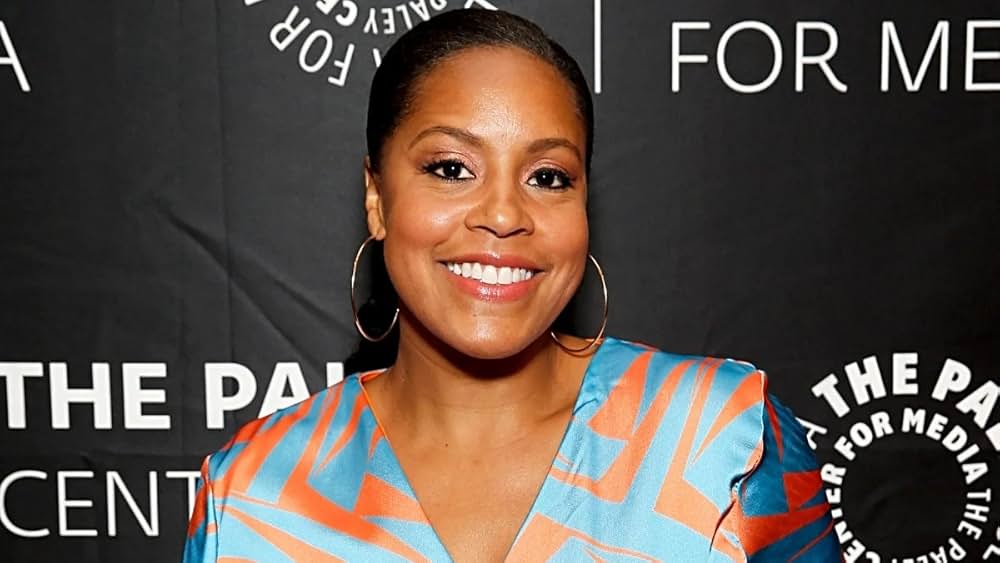
The weight behind a morning-show smile
For years, Sheinelle Jones has been one of the most recognizable faces on the broader Today franchise, a place where the currency is warmth, banter and an almost relentless optimism. That on-air persona made her recent admission all the more striking: ahead of her latest return, she confessed she was afraid she might sit on the couch and find that her trademark smile simply would not come. The comment was not a throwaway line about nerves, it was a window into how deeply her personal life has been altered and how uncertain she felt about stepping back into a role built on lightness.
Her fear speaks to a broader truth about morning television, where hosts are expected to pivot from breaking news to cooking segments without letting their own lives intrude. Jones has chosen a different path, allowing viewers to see the gap between the job’s expectations and her emotional reality. By acknowledging that she worried she would not remember how to project joy, she has effectively redefined what authenticity looks like on a show that has long traded on the illusion that its anchors are untouched by the same grief and exhaustion as the people watching at home.
A heartbreaking year and the loss of Uche Ojeh
The roots of that fear lie in a year that upended every part of Jones’s life. Her husband, Uche Ojeh, died after what has been described as a heartbreaking period for their family, leaving her to raise their three children while still occupying a high-profile seat on national television. In interviews about that time, she has not softened the language, describing herself as grief-stricken and acknowledging that the loss reshaped her sense of self as well as her daily routines. The woman viewers saw laughing on set was, off camera, navigating the raw early stages of widowhood.
Friends and colleagues have recalled Ojeh as a steady presence behind the scenes, and Jones herself has emphasized how central he was to the life they built with their son Kayin and twins Clara and Uche. She has spoken of Uche as “an incredible person” and made clear that the family’s story now includes both the joy of those three young children and the absence of the man who helped raise them, a reality highlighted in coverage that notes how she and Ojeh shared Kayin, 16, and twins Clara and Uche, 13, at the time of his death at home. That context makes her on-air composure less a given and more a daily act of emotional labor.
Returning to Today after loss
Jones did not rush back to work in the immediate aftermath of Ojeh’s death. When she eventually returned to the morning show in September 2025, it was with the knowledge that the set where she had spent so many years was now a place he would never see again. She has described that first day back as surreal, a collision of muscle memory and fresh grief. Sitting alongside colleagues who had supported her off camera, she had to reinhabit a role that once felt effortless but now required conscious effort with every segment.
In later reflections, she has said she was “worried” about how that return would feel, a word that appears repeatedly in accounts of her mindset as she prepared to walk back into Studio 1A heartbreaking year. That anxiety did not vanish once the cameras rolled. Instead, it became part of the subtext of her presence, a reminder that the familiar rhythms of the show were now layered over a private story of loss that viewers only glimpsed in brief on-air acknowledgments and more candid off-air interviews.
“Worried I wouldn’t know how to smile”
It is that single, stark line, “worried I wouldn’t know how to smile,” that has come to define Jones’s latest chapter. She has repeated the phrase in multiple conversations, explaining that she genuinely did not know whether her face would cooperate when the red light went on. The concern was not about faking it, but about whether the part of her that once found joy in the daily chaos of live television was still accessible after so much pain. That she chose to voice this fear publicly is itself a departure from the usual polished messaging around TV comebacks.
Coverage of her remarks has underscored how unusual it is for a daytime host to admit to that kind of vulnerability, especially in the context of a high-profile return to a show as visible as Today. One account framed her as “afraid” she would not remember how to smile amid her return, quoting her as saying she was “worried” she would not know how to do the job she had always done with Ojeh in her life by her side. Another report, written by Sara Nathan, described her as “worried” she would not know how to smile as she prepared for a brave return after a devastating year own words. Together, those accounts paint a picture of a woman who understood that her emotional state was not a side note, but central to whether she could keep doing the work she loves.
Launching a new era with Jenna Bush Hager
Against that backdrop, Jones’s decision to step into a new co-hosting role with Jenna Bush Hager marks a significant professional pivot. Earlier this year, she joined Bush Hager on a reimagined hour of the franchise, positioning the two women as equal partners in a show that blends conversation, interviews and lifestyle segments. The move effectively shifted Jones from a supporting role to a marquee position, putting her name alongside Bush Hager’s in the branding and signaling that the network sees her as a central figure in its daytime strategy.
On their first day together, Jones and Bush Hager leaned into their chemistry, with Jones sharing a text message from Ojeh that she had saved, a quiet acknowledgment that he remains part of her story even as she embarks on this new chapter. Reports on that debut note that Jones took her seat as Bush Hager’s cohost for the first time earlier in the month and that she framed the moment as both exciting and emotionally complex on set. The pairing with Bush Hager, who has her own deeply personal backstory as a former first daughter and mother of three, creates a dynamic in which both women bring lived experience to conversations about family, loss and reinvention.
“I’m rooting for me”: a new spotlight
Jones has been explicit that this phase of her career is not just about surviving, but about advocating for herself. In a wide-ranging interview about her new role, she described this period as her “next chapter” and said she is “rooting for me,” a rare bit of self-directed encouragement from someone more accustomed to cheering on others. The phrase captures a shift in how she sees her own trajectory, from someone who quietly did the work to someone willing to claim space and acknowledge that she deserves to thrive professionally even as she heals personally.
That mindset is reflected in the way she talks about stepping into the spotlight alongside Jenna. She has traced her love of storytelling back as far as elementary school and framed the new show as the culmination of years of preparation, not a sudden promotion. In describing how she is embracing this opportunity, she has spoken about the importance of betting on herself and allowing viewers to see her as a fully realized person, not just a cheerful presence on the couch in the studio. That reframing turns her vulnerability into a kind of strength, inviting viewers to invest not just in the show, but in her personal evolution.
The unexpected push that got her there
Jones has also revealed that she did not arrive at this new role entirely on her own. She has credited an unexpected person with encouraging her to join the revamped hour with Jenna Bush Hager, describing how that nudge helped her see the opportunity differently. Rather than viewing the offer as one more pressure point in an already overwhelming season, she began to see it as a chance to build something new that could honor both her past and her future.
In recounting that conversation, she has emphasized how meaningful it was to have someone outside her immediate circle recognize her potential and urge her to step forward. The story underscores how even seasoned professionals sometimes need a push to claim bigger roles, especially when they are carrying heavy emotional burdens. Her acknowledgment that this encouragement helped her decide to join Today With Jenna and Sheinelle gives viewers a glimpse into the private deliberations that precede public announcements about new projects. It also reinforces the idea that her return is not just an act of individual bravery, but the product of a support system that continues to show up for her.
“Every day, it’s like swimming through mud”
Even as she embraces new opportunities, Jones has been clear that her grief has not magically resolved. She has pushed back on the assumption that appearing on television means she is “better,” saying that people see her on screen and think the hardest part must be over. In reality, she has described her daily life as “like swimming through mud,” a vivid metaphor for the slow, exhausting work of moving forward after a loss that touches every part of her identity. That honesty complicates the tidy narrative of a triumphant comeback and instead presents a more nuanced picture of ongoing struggle.
She has also said explicitly that she is “fighting for my joy,” a phrase that reframes happiness not as a default state but as something she has to actively pursue each day. In one interview, she noted that “every day” is part of that fight, underscoring that there are no shortcuts or quick fixes in this season. Another profile echoed that sentiment, quoting her as saying that people assume she is fine because she is back on TV, but that in truth, “every” day requires effort and intention to find joy. Together, those remarks position her not as a symbol of effortless resilience, but as someone doing the hard, unglamorous work of healing in real time.
How colleagues and viewers are responding
Jones has not walked this path alone. Inside the building, colleagues have rallied around her, with co-anchors acknowledging both her loss and her strength. Accounts of her return note that fellow hosts, including Savannah Guthrie, publicly recognized Ojeh’s death and the impact it had on Jones, framing her comeback as an act of courage rather than a simple resumption of duties on air. That kind of visible support sends a signal to viewers that the show takes her grief seriously and is willing to make space for it, even within the constraints of a tightly timed broadcast.
More from Vinyl and Velvet:

Leave a Reply