

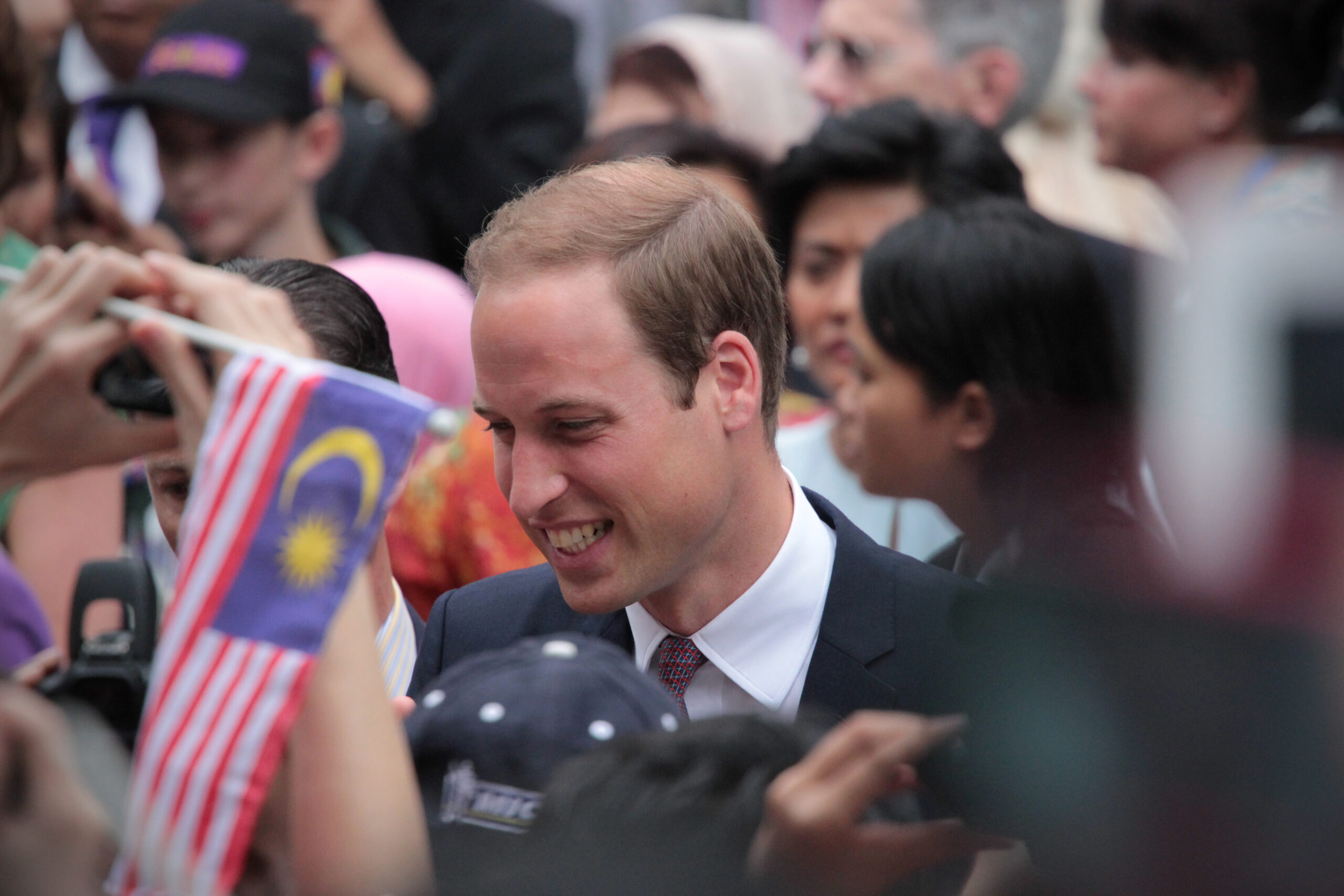
Prince William’s finances have always attracted curiosity, but the latest royal accounts put a striking number on his earnings. A new report on the Duchy of Cornwall shows the Prince of Wales taking home an income that would place him among the world’s highest paid public figures, even before he eventually becomes king. The figures also reveal how that money is generated, how it is used to fund his family’s life and work, and why the scale of the income is now sparking political debate.
What the new royal report actually says
The headline figure is clear: Prince William’s income from the Duchy of Cornwall for the most recent financial year is reported at roughly $30 million, putting a concrete number on what had long been an abstract sense of royal wealth. Multiple breakdowns of the duchy’s finances describe a distributable surplus that translates into an annual payment to the Prince of Wales of around $30M, with one detailed analysis putting the total at Prince William earning $30M in annual salary from the duchy’s net surplus earnings. That number is not a notional valuation or a paper gain, it is the cash that the estate’s managers say is available to support his official role and household.
Further detail comes from royal income summaries that describe how Figures released in a royal report set out Prince William’s latest income as the beneficiary of the duchy. Those figures, echoed in a separate summary of Prince William’s massive annual salary, underline that this is not a one-off windfall but the regular output of a mature, profit-making estate. Together, they form the backbone of the “massive salary” now being discussed.
How Prince William became Duke of Cornwall and Prince of Wales
The scale of the income only makes sense when set against the titles Prince William now holds. He became the Duke of Cornwall when King Charles ascended the throne in 2022, automatically inheriting the duchy that traditionally provides the heir with a private source of income. That same transition also confirmed him as Prince of Wales, a title that carries heavy symbolic weight as well as a demanding public schedule across the United Kingdom. The combination of Duke of Cornwall and Prince of Wales effectively turned him into both a senior royal and the head of a sprawling landed business.
Guides to the new report stress that this is only His income for his second full year in charge of the duchy, which means the $30M figure reflects a relatively early phase of his stewardship rather than a long established plateau. The “NEED TO KNOW” framing around Prince William’s role as Duke of Cornwall highlights that the estate is now expected to support not just his own work but also the life he shares with Catherine Middleton and their three children. That family context is central to understanding why the duchy’s income is treated as both a personal salary and a working budget.
Inside the Duchy of Cornwall’s money machine
The Duchy of Cornwall is not a simple investment portfolio, it is a centuries old estate that owns farmland, commercial property and other assets across England and Wales. The Prince of Wales, who receives his income from the Duchy of Cornwall, benefits from the net surplus that remains after the estate’s costs and investments are covered. The latest integrated report describes that surplus as the pool from which his annual payment is drawn, effectively making him the shareholder of a large, privately managed royal enterprise.
One social media summary of PRINCE WILLIAM’S 2025 INCOME notes that the royal checkbook seems to be in good shape for Prince William, underscoring how robust the duchy’s performance has been in the period covered by the report. That same snapshot, which points back to the 2025 Duchy of Cornwall report, reinforces the idea that his earnings are directly tied to the estate’s profitability rather than to a fixed civil service style wage. In practice, that means his “salary” can rise or fall with the duchy’s fortunes.
The exact salary: $30.9 million and how it is calculated
While some coverage rounds the figure to $30M, the most precise breakdowns put Prince William’s income slightly higher. According to the Duchy of Cornwall estate’s Integrated Annual Report, the Prince and Princess of Wales made $30.9 m (or $30.9 million) from the duchy in the year in question. That figure, which is also presented as £22 million in sterling terms, is described as the amount available to support the Prince and Princess of Wales and their children George, Charlotte and Louis. It is therefore best understood as a household income rather than a single individual’s pay packet, even if it is formally attributed to the heir.
Other financial explainers echo that number, with one report on how much money the couple made noting that, According to the Duchy of Cornwall estate’s Integrated Annual Report, the Prince and Princess of Wales’ income is drawn directly from the estate’s distributable surplus. A separate breakdown titled How Much Money Did Prince William Make in 2025 explains that, How Much Money Did Prince William Make is answered by looking at the distributable surplus paid out to William, which is set out in the Integrated Annual Report duchy publishes each year. Together, these documents pin his annual earnings at $30.9 million, not just “around” $30M.
Comparing William’s income with King Charles and the wider royal budget
Prince William’s $30.9 Million income looks even more striking when set alongside other royal funding streams. Campaigners scrutinising the Duchy of Cornwall’s Integrated Impact Report have highlighted that King Charles earns $25 million from his own duchy holdings, a figure cited in a post that notes King Charles earns $25 million from his duchy. That comparison suggests the heir’s estate is currently generating a larger surplus than the monarch’s, at least in the period covered by the latest reports.
Beyond the duchies, the monarchy is also funded by the sovereign grant, which is drawn from Crown Estate profits and used to pay for official duties, staff and palace upkeep. A widely shared explainer on the British Royal Family’s 2025 to 2026 “pay rise” notes that there has been a lot of talk about the 132 m sovereign grant allocated to the British monarchy for 2025 to 2026. That £132 million pot is separate from the Duchy of Cornwall income, but when viewed together they show just how much public and private money now flows through the royal system that supports Prince William and his relatives.
What “salary” means for a working royal
Describing Prince William’s income as a salary can be misleading if it suggests a straightforward wage for hours worked. The Prince of Wales, who receives his income from the Duchy of Cornwall, is expected to use that money to fund official travel, staff, charitable work and the running costs of his household, not just his personal lifestyle. One social media breakdown of Prince of Wales’s 2025 income stresses that the duchy’s surplus is intended to underwrite his royal role, which includes a packed calendar of engagements and patronages.
Analysts who have pored over the duchy’s numbers point out that the estate’s profits are treated as a working fund that must cover everything from the couple’s communications team to the upkeep of their residences. A detailed explanation of how much money the heir made in 2025 notes that, How Much Money Did Prince William Make is only part of the story, because the distributable surplus paid out to William is balanced against the costs of running his office as set out in the How Much Money breakdown. In that sense, his $30.9 million looks less like a personal jackpot and more like the annual budget of a medium sized public institution.
William and Kate’s household: what the money supports
The duchy income is formally paid to Prince William, but it is widely understood to support the entire Wales family. Coverage of the couple’s finances notes that the Prince and Princess of Wales made $30.9 million from the duchy, with the Integrated Annual Report explicitly stating that the money supports the Prince and Princess of Wales and their children George, Charlotte and Louis. One analysis of William & Kate’s exact salary explains that, According to the Duchy of Cornwall estate’s Integrated Annual Report, the Prince and Princess of Wales made $30.9 million (or £22 million), underlining that this is a joint working income.
Public facing moments, such as the Prince William family Christmas card, offer a softer reminder of what that money underwrites. A feature on the Prince William family notes that the Prince of Wales and Princess Kate release an annual Christmas card that showcases their life with their three children. That same coverage, which mentions the Christmas card alongside the revelation that Prince William earned $30M in annual salary, implicitly links the image of a modern royal family with the financial engine that keeps their public and private lives running.
Why critics are targeting the Duchy of Cornwall
The sheer size of Prince William’s income has inevitably drawn political scrutiny, particularly from groups that question the monarchy’s constitutional role. Republic, which backs an elected head of state, is urging the Government to abolish the ancient Duchy portfolios and pass all revenue to the Treasury, according to a post discussing the duchy’s latest impact report. That post, which highlights the duchy’s profitability and notes that Republic wants the Government to end the special status of the Duchy, frames Prince William’s $30.9 million as a symbol of what critics see as unearned privilege.
Those campaigners argue that the duchy’s revenues, like the profits of the Crown Estate that fund the sovereign grant, should be treated as public money. They point to the 132 m sovereign grant allocated to the British monarchy for 2025 to 2026, highlighted in a video explaining the British Royal Family’s “pay rise”, as evidence that taxpayers already provide substantial support. In that context, the idea that the heir to the throne also receives a private income of $30.9 million from a historic estate has become a focal point for debates about fairness, transparency and the future of the monarchy’s finances.
How William’s earnings fit into the broader narrative of royal wealth
For supporters of the monarchy, Prince William’s earnings are framed as the cost of maintaining a high profile public figure who represents the country at home and abroad. Commentators who take this view note that the Prince of Wales and Princess Kate carry out hundreds of engagements each year, often highlighting causes that might otherwise struggle for attention. A lifestyle focused analysis of Prince William’s 8 figure income argues that Prince William’s Figure Salary From a Very, Very Wealthy Man, but also notes that, As Prince of Wales and heir, he is expected to use that wealth in the service of his role.
More hard edged financial reporting takes a similar line while focusing on the numbers. One breakdown of the duchy’s performance notes that the Prince of Wales’s Duchy generated $30 million in 2025 alone, underlining the estate’s strength as a commercial operation. Another report on how much money the heir made in 2025 states that, How Much Money Did Prince William Make in 2025 is answered by the distributable surplus paid out to William, which is detailed in the How Much Money analysis. In both cases, the narrative is that of a future king presiding over a thriving business empire that funds his public life.
The bottom line: a future king with a CEO-level income
When all the reports are lined up, a consistent picture emerges of a royal heir with a CEO level income. One widely shared summary states that Prince William Earned $30.9 M This Year as Duchy of Cornwall Surplus Revealed, describing $30.9 as the wage for his royal role. That same report emphasises that Prince William earned $30.9 Million from the duchy’s surplus, reinforcing the idea that his income is directly tied to the estate’s performance rather than to a fixed stipend.
More from Vinyl and Velvet:

Leave a Reply