


Nicki Minaj is facing one of the most intense backlashes of her career, as online campaigns demand that the Trinidad-born rapper be deported from the United States over her vocal embrace of MAGA politics and her recent comments about religion and sexuality. After briefly vanishing from social media, she has reappeared to defend herself, insisting that political speech should not be grounds for exile. The clash has turned her personal evolution into a test case for how far celebrity politics can go before fans and critics try to draw a legal line.
Her response arrives after months of escalating controversy, from a high-profile appearance at a conservative conference to petitions accusing her of “harmful rhetoric.” The uproar now stretches beyond stan wars into debates about immigration law, free expression, and the limits of tolerance in an era when pop culture and partisan identity are tightly intertwined.
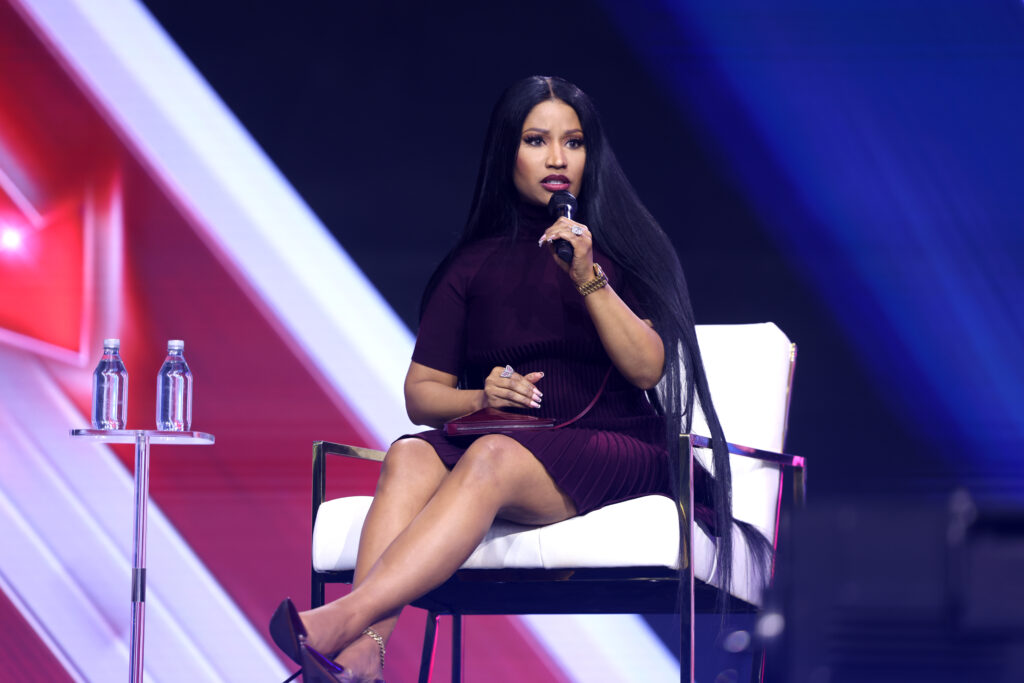
From Trump Critic To MAGA Ally
Nicki Minaj’s current alignment with Donald Trump is striking because it reverses positions she once stated publicly. Earlier in her career she criticized Trump’s immigration stance and vowed that she would never support him, presenting herself as an artist who understood the stakes of hardline border policies for people who arrived in the United States without papers. In a 2018 Instagram post, she described coming to America “as an illegal immigrant” and used that experience to condemn Trump’s approach to migrants, underscoring how personal the issue felt to her at the time.
That history makes her recent praise for Trump and his movement feel like a whiplash turn for many longtime followers. Commentators have traced how she moved from those earlier critiques into a phase where she publicly expressed admiration for the president and echoed themes associated with MAGA politics, a shift that has been dissected in political commentary and in video explainers that chart how Nicki Minaj went from Trump critic to supporter. The reversal is central to why the backlash now carries such intensity: fans are not only reacting to what she says today, but to the sense that she has abandoned values she once claimed as her own.
The Turning Point At TPUSA AmFest
The controversy sharpened when Nicki Minaj stepped into explicitly conservative spaces and framed her politics as an expression of faith. At TPUSA AmFest, she delivered remarks that Christian activists later celebrated as “bold faith” and “unapologetic truth,” casting herself as someone willing to speak about religion and culture in a way that aligned with the right. Supporters circulated clips of her appearance with slogans like “BOLD FAITH” and “UNAPOLOGETIC TRUTH,” presenting her as a celebrity voice for a spiritual and cultural “awakening” that dovetailed with MAGA themes.
That moment helped cement the perception that she had undergone a full MAGA “conversion,” rather than simply flirting with a few conservative talking points. Religious and political groups amplified her comments from TPUSA as proof that a major hip hop figure was willing to “stand for truth,” while critics saw the same footage as evidence that she had chosen a side in the culture wars. The AmFest stage, with its mix of politics, patriotism and evangelical rhetoric, became the visual shorthand for her new identity in the public imagination.
Petitions, “Harmful Rhetoric,” And The Deportation Demand
As her rhetoric hardened, organized opposition followed. A Change.org campaign titled “Deport Nicki Minaj to Trinidad” gathered more than 120,000 signatures, turning fan anger into a concrete demand that immigration authorities remove her from the country. The petition framed her as a noncitizen whose speech had crossed a line, arguing that her comments were not just offensive but dangerous enough to justify expulsion from the United States. It also highlighted that she is not a U.S. citizen, a detail that made the threat feel more plausible to supporters of the effort.
Another petition, launched after her appearance at a conservative youth conference, accused her of “harmful rhetoric” and warned that her words had a “significant impact” on people from diverse communities who once saw her as an ally. Organizers said that deporting her would “send a strong message” about the consequences of using a massive platform to amplify bigotry, a framing that was echoed in coverage of the thousands who signed on to the petition. The language of “harmful rhetoric” has since become a shorthand for critics who argue that this is not just about politics, but about the safety and dignity of marginalized groups.
Nicki Minaj Breaks Her Silence
Under mounting pressure, Nicki Minaj briefly deleted her Instagram account, a rare retreat for an artist who has long used social media as a direct line to her fan base. The disappearance fueled speculation that the deportation campaigns and criticism had finally forced her into a defensive crouch. When she returned, she did so with a pointed message: political disagreement, she argued, should not be grounds to strip someone of their home or livelihood, especially when that person has built a life in the United States after arriving as a child.
Her comeback posts referenced her earlier life story and her past criticism of Trump’s immigration policies, reminding followers that she once spoke out as someone who “came to this country as an illegal immigrant” and understood the fear that status can bring. In coverage of her reemergence, reporters noted that the “Superbass” singer had previously condemned Trump’s stance on immigration before later expressing “admiration for our president,” a contradiction that now sits at the heart of the debate over her future. Her decision to break her social media silence after calls for her to be deported was framed as a refusal to be intimidated, with her defenders pointing to her long record of outspoken commentary and her critics citing the same record as proof that she has changed. That tension was captured in reports that Nicki Minaj had shifted from denouncing Trump to praising him.
The Don Lemon Flashpoint
The latest escalation came when Nicki Minaj reacted furiously to an incident involving Don Lemon at a Minnesota church, which she framed as an attack on her faith. In a social media tirade, she wrote, “How dare you? I want that thug in jail!!!!! He would never do that to any other religion. Lock him up!!!!!” The all-caps outrage and repeated exclamation points fit her long-standing persona as an unfiltered commentator, but this time the target was a high-profile journalist and the context was a religious setting, which raised the stakes of her words.
Her comments were widely described as homophobic and inflamed an already tense conversation about how she talks about LGBTQ+ people and religion. Don Lemon responded by telling her critics to “get a life” and defending his own actions, while also pushing back on the idea that he had disrespected Christianity. The back-and-forth was chronicled in reports that quoted her “How dare you?” and “Lock him up!!!!!” posts and detailed Lemon’s rebuttal, including his insistence that he would not be intimidated by online mobs. The exchange, captured in coverage of how she went on a homophobic rant and how Lemon answered, added fuel to the argument that her rhetoric had crossed from political provocation into targeted hostility, a point underscored in accounts of the clash between Nicki Minaj and Don Lemon.
Exploding At Critics And Reframing Herself As A Victim
Nicki Minaj’s reaction to the uproar has not been conciliatory. In addition to her posts about Don Lemon, she has lashed out at detractors who accuse her of bigotry, portraying herself as the real victim of intolerance. Reports on her social media activity describe her “exploding” at critics, using capital letters and multiple exclamation marks to demand accountability for what she sees as disrespect toward her religion and community. Her language, including the call to “Lock him up!!!!!” in reference to Lemon, mirrors the punitive slogans that have long circulated in MAGA circles, further blurring the line between her personal grievances and the broader political movement she now embraces.
Her defenders argue that she is simply exercising the same free speech rights as any other public figure and that calls to deport her prove her point about selective tolerance. They note that she has always been confrontational online and that her current tone is consistent with years of blunt commentary on everything from music rivals to public policy. Coverage of her recent posts, including detailed accounts of how she erupted over the Minnesota church incident and demanded that Lemon be jailed, shows how she is leaning into that persona rather than softening it. The intensity of her response, as described in reports that quote her “HOW DARE YOU?” and other all-caps declarations, has become part of the story, with writers like Afouda Bamidele chronicling how Nicki Minaj chose confrontation over contrition.
Pulling Back On MAGA Rhetoric, At Least On The Surface
Despite the defiant tone, there are signs that the deportation campaigns have prompted some tactical recalibration. Reports note that Nicki Minaj has “stepped back” her more overtly MAGA-flavored posts after petitions demanding her removal from the United States gained 120,000 signatures. The suggestion is not that she has abandoned her new political identity, but that she is more carefully curating what appears on her feeds, perhaps to avoid giving critics fresh ammunition or to reassure business partners wary of being dragged into a culture war.
Coverage of this shift emphasizes that the rapper has faced sustained criticism for her “MAGA conversion” and that calls for her to be deported have surfaced across multiple platforms. Some observers interpret the quieter tone as a strategic pause rather than a genuine change of heart, pointing out that she continues to align herself with conservative causes even as she trims the most inflammatory slogans. The dynamic is captured in reports that describe how Nicki Minaj pulled back on MAGA rhetoric after the petitions surged, suggesting that even a superstar with a fiercely loyal fan base must weigh the practical consequences of political branding.
Career Fallout And The MAGA Brand
The question of whether Nicki Minaj’s MAGA turn is hurting or helping her career has become a subject of its own. Some analysts argue that her embrace of Trump and his movement is “doing nothing” for her mainstream appeal, pointing to brand unease and fan fatigue with constant controversy. Others counter that aligning with a passionate political base can create new revenue streams and speaking opportunities, even if it alienates parts of her original audience. The debate reflects a broader uncertainty about how celebrity endorsements of Trump-era politics play out in the long term.
Commentary on her trajectory notes that she has become part of a small but visible group of entertainers who have chosen to identify with MAGA, a label that can be polarizing but also intensely galvanizing for supporters. Writers have connected her shift to figures like JD Vance and Char, situating her within a constellation of personalities who see value in courting Trump’s base. Analyses of her “Maga conversion” argue that the move may not be straightforwardly good or bad for her career, but that it has undeniably redefined her public image, with some fans embracing “Nicki Minaj MAGA” as a badge of honor and others treating it as a betrayal. That tension is explored in pieces that dissect how Nicki Minaj MAGA has become its own brand, separate from the music that first made her famous.
Immigration, Free Speech, And The Law
Behind the social media drama lies a serious legal and ethical question: should political speech, even when offensive, be grounds for deportation. The petitions against Nicki Minaj lean heavily on the fact that she is not a U.S. citizen and that she was born in Trinidad, arguing that her immigration status makes her vulnerable to removal if authorities deem her rhetoric dangerous. Commentators have pointed out the contradictions in this stance, noting that many of the same voices who champion free speech and oppose “cancel culture” are now calling for the state to expel an artist over her opinions.
More from Vinyl and Velvet:

Leave a Reply